

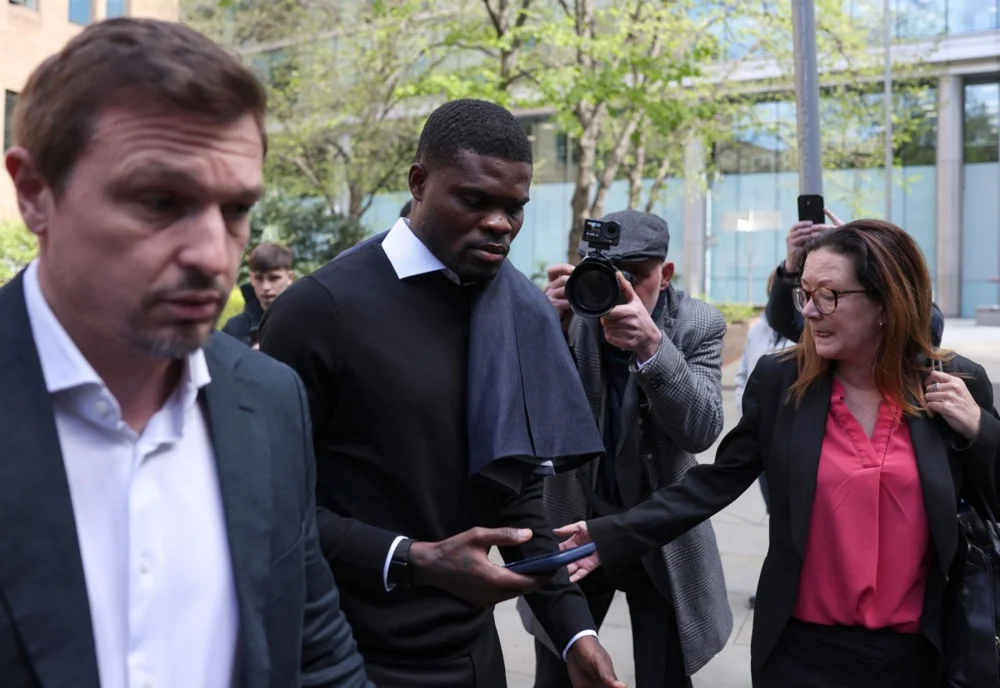
Thomas Partey, the experienced midfielder currently playing for Villarreal in Spain’s La Liga, has been included in Ghana’s preliminary 28-man squad for the upcoming 2026 FIFA World Cup, despite facing severe legal challenges in the United Kingdom. The 32-year-old former Arsenal star has pleaded not guilty to seven charges of rape and one count of sexual assault and is scheduled to stand trial in the UK next year. This development casts a significant shadow over his participation and raises profound ethical questions for the Ghana Football Association (GFA) as the team prepares for one of football’s most prestigious tournaments.
Partey’s inclusion comes at a time when the Black Stars are also grappling with the confirmed absence of key attacker Mohammed Kudus. The 25-year-old West Ham United forward has been ruled out of the tournament due to a quad injury, a major setback for Ghana’s attacking aspirations. Kudus, known for his dynamic play and goal-scoring ability, was considered vital to Ghana’s strategy in Group L, where they are set to face formidable opponents Croatia, England, and Panama.
The decision by Ghana’s head coach, Carlos Queiroz, to name Partey in the provisional squad underscores the complex dilemma faced by national football associations when star players are embroiled in serious legal issues. While the principle of "innocent until proven guilty" is a cornerstone of legal systems, the gravity of the allegations against Partey inevitably draws scrutiny and provokes debate regarding the moral responsibility of sporting bodies.
The Allegations and Legal Proceedings: A Detailed Timeline
The legal saga surrounding Thomas Partey dates back several years, with the alleged offenses spanning a significant period. According to court documents, the seven rape charges and one count of sexual assault relate to allegations made by four different women, with the incidents purportedly occurring between 2020 and 2022. The timeline of his legal troubles has intermittently intersected with his professional football career, creating a challenging backdrop for both the player and his clubs.
Chronology of Key Events:
- 2020-2022: The period during which the alleged offenses are said to have taken place, involving four different women. Partey was a player for Arsenal for much of this period, having joined the North London club in October 2020.
- July 2025: Thomas Partey’s contract with Arsenal officially expires. Shortly after, initial charges related to the allegations are reportedly brought against him in the UK. This marked a pivotal moment, occurring just as his tenure with one of England’s top clubs concluded.
- August 2025: Partey is granted bail in the UK. Following this, he secures a move to Spanish La Liga club Villarreal CF, signing a new professional contract. This transfer allowed him to continue his playing career despite the looming legal proceedings.
- March 2026 (implied from article context): Partey formally pleads not guilty to the seven charges of rape and one count of sexual assault during a court appearance in the UK. This plea sets the stage for a full trial.
- June/July 2026 (implied): The 2026 FIFA World Cup is scheduled to take place, for which Partey has now been provisionally selected. His availability will depend on the timing of his trial and any potential travel restrictions.
- 2027 (implied): The trial for Thomas Partey is currently scheduled to commence in the United Kingdom. The outcome of this trial will have profound implications for his career and personal life.
The decision to include Partey in the World Cup squad, knowing a trial awaits him, highlights the GFA’s position that, in the absence of a conviction, a player remains eligible for selection. This stance, while legally sound under the presumption of innocence, is often met with public debate regarding moral and ethical responsibilities, especially for figures in the public eye.
Partey’s Football Journey: From Arsenal to Villarreal
Thomas Partey’s professional career has been marked by significant moves and a reputation as one of Africa’s premier defensive midfielders. He first rose to prominence at Atlético Madrid, where his combative style, tactical intelligence, and powerful long-range shots made him a fan favourite and a key component of Diego Simeone’s disciplined side. His performances in La Liga and the UEFA Champions League earned him a €50 million move to Arsenal in October 2020, a transfer that generated considerable excitement among the Gunners’ faithful.
During his five seasons at Arsenal, Partey was often lauded for his ability to break up play, dictate tempo from midfield, and contribute to both defensive solidity and offensive transitions. However, his time in North London was also punctuated by various injury concerns, which limited his consistent availability. Despite these setbacks, when fit, Partey was an integral part of Arsenal’s midfield, showcasing his leadership and experience.
His move to Villarreal in 2025, after his Arsenal contract expired, marked a return to Spanish football. At Villarreal, he quickly re-established himself as a vital cog in the midfield, bringing stability and experience to the team. His continued high-level performance in La Liga, coupled with his consistent involvement in Ghana’s World Cup qualifying campaign, where he has accumulated 58 international caps, solidified his standing as a crucial player for the Black Stars. His ability to anchor the midfield, protect the defence, and initiate attacks is invaluable, particularly for a team aiming to navigate a challenging World Cup group.
The Black Stars’ Dilemma: Balancing Talent and Ethics
Ghana’s decision to include Thomas Partey in the preliminary World Cup squad is not unprecedented in the world of football, yet it undeniably places the Ghana Football Association in a delicate position. On one hand, Partey is a pivotal player, arguably one of the most talented and experienced members of the squad, whose presence significantly enhances their chances on the global stage. Omitting him would mean sacrificing a considerable amount of on-field quality and leadership. On the other hand, the serious nature of the charges he faces brings forth ethical considerations and the potential for reputational damage to the national team and the country as a whole.
The GFA’s inferred position appears to align with the legal principle that an individual is innocent until proven guilty. This allows Partey to continue his professional duties, including representing his country, while the legal process unfolds. However, this stance often clashes with public opinion, where the severity of allegations can lead to calls for immediate suspension or exclusion, irrespective of a verdict. The potential for the ongoing legal battle to become a significant distraction for the player and the squad during the tournament is a tangible concern that the coaching staff and management will need to address.
Furthermore, the media scrutiny surrounding Partey’s case will inevitably intensify during the World Cup. This could place additional pressure on the player, the coaching staff, and the entire Ghanaian delegation, diverting focus from the sporting objectives. The GFA will likely need to issue formal statements addressing the situation, reaffirming their commitment to upholding legal processes while also emphasizing the team’s focus on performance. This balancing act requires careful navigation to maintain team morale, manage public perception, and ensure fair treatment of the player.
Mohammed Kudus’ Absence: A Significant Blow to Ghana’s Attack
While the focus on Partey’s legal situation is prominent, Ghana’s World Cup preparations have also been dealt a significant blow by the confirmed absence of Mohammed Kudus. The highly-rated 25-year-old attacking midfielder, who has become a standout player for West Ham United in the Premier League, will miss the tournament due to a quad injury.
Kudus joined West Ham United from Ajax in August 2023, quickly establishing himself as a fan favourite with his electrifying pace, dazzling dribbling skills, and clinical finishing. He has been a consistent performer for the Hammers, contributing vital goals and assists in domestic and European competitions. For Ghana, Kudus has been an equally influential figure, scoring 13 goals in 46 international appearances, showcasing his prowess on the international stage. His ability to play across the attacking midfield and forward lines, creating chances and linking up play, makes him an indispensable asset.
The injury, a quad issue sustained in January (2026), initially had a recovery timeline that suggested a return by March (2026). However, a subsequent setback in his recovery meant that Kudus has not been able to return to competitive action, ultimately ruling him out of the World Cup. This is a devastating blow for both the player, who would have been eager to shine on the biggest stage, and for the Black Stars, who will now have to reconfigure their attacking strategy without one of their most potent weapons. His absence will place additional pressure on other forwards like Antoine Semenyo and Inaki Williams to step up and fill the creative and goal-scoring void.
Ghana’s World Cup Campaign: Hopes and Challenges in Group L
Ghana finds itself in a challenging Group L for the 2026 FIFA World Cup, drawn alongside football giants Croatia and England, as well as CONCACAF representative Panama. This group presents a formidable test for the Black Stars, who will need to be at their absolute best to navigate past such strong opposition and progress to the knockout stages.
- Croatia: A nation with a rich World Cup history, having reached the final in 2018 and the semi-finals in 2022. Known for their technical prowess, midfield maestros, and tactical discipline, Croatia will be a tough opponent. Their experience in major tournaments makes them perennial contenders.
- England: One of the favourites for the tournament, boasting a squad replete with Premier League and European club stars. England’s attacking talent and depth make them a formidable force, and they will be expected to top the group.
- Panama: Representing CONCACAF, Panama will likely be considered the underdog in the group. However, they will bring tenacity, defensive organisation, and a desire to prove themselves on the global stage. While perhaps lacking the individual star power of their European counterparts, they cannot be underestimated.
Ghana’s historical performance at the World Cup includes reaching the quarter-finals in 2010, an achievement that cemented their place in African football history. They have participated in several previous editions (2006, 2010, 2014, 2022) and consistently aim to represent African football with distinction. Their hopes for 2026 will heavily rely on their ability to forge a cohesive unit, execute tactical plans effectively, and leverage the individual brilliance of their remaining key players. The absence of Kudus and the cloud over Partey will undoubtedly add to the pressure, demanding even greater resilience from the squad.
Carlos Queiroz’s Vision and Squad Selection
Veteran Portuguese coach Carlos Queiroz, renowned for his extensive experience with various national teams and top clubs, has been tasked with guiding Ghana at the 2026 World Cup. Queiroz, who has previously managed Iran, Egypt, Portugal, and served as an assistant at Manchester United, brings a wealth of tactical knowledge and big-tournament experience to the Black Stars. His approach is often characterised by meticulous preparation, tactical flexibility, and a focus on defensive solidity while looking for opportunities to exploit opponents on the counter.
The preliminary 28-man squad announced by Queiroz on Tuesday reflects a blend of seasoned professionals and promising young talent. The inclusion of Thomas Partey, despite his legal troubles, signifies Queiroz’s belief in his footballing capabilities and his importance to the team’s structure. The squad selection also highlights the coach’s reliance on key figures such as Manchester City’s forward Antoine Semenyo and Athletic Club’s Inaki Williams, who will be expected to shoulder a significant portion of the goal-scoring responsibility in Kudus’ absence.
A notable recall to the squad is former Chelsea defender Abdul Rahman Baba, who currently plays for PAOK. His inclusion marks his first return to the national team set-up since 2023, bringing valuable experience to the defensive line. The squad also features players from various European leagues and some from the Ghanaian domestic league, demonstrating Queiroz’s extensive scouting and commitment to selecting the best available talent. The coming weeks will see Queiroz refine this preliminary list down to the final squad, a process that will involve careful assessment of fitness, form, and tactical fit, while also navigating the external pressures and ethical considerations surrounding Partey’s situation.
Reactions and Ethical Debates: The Wider Implications
The inclusion of Thomas Partey in Ghana’s provisional World Cup squad while he faces serious criminal charges has ignited considerable debate within football circles and among the broader public. This situation brings to the forefront the complex interplay between legal due process, sporting ethics, and public image.
- Ghana Football Association (GFA) Stance (Inferred): The GFA’s decision implicitly signals a commitment to the principle of "innocent until proven guilty." A formal statement, if issued, would likely reiterate this position, emphasizing that Partey remains eligible for selection until a legal verdict is reached. They would also likely stress their focus on the team’s performance and the national objective of the World Cup. This approach aims to protect the player’s rights while also maximizing the team’s on-field potential.
- Villarreal CF (Inferred): Partey’s club, Villarreal, would likely maintain a similar stance, supporting their player’s professional engagements while acknowledging the ongoing legal process. Clubs typically defer to the judicial system and avoid pre-judging their employees in such situations, focusing on their contractual obligations and performance.
- Partey’s Legal Team (Inferred): Partey’s legal representatives would continue to assert his not guilty plea and express confidence in the judicial process, urging for respect of his privacy and the legal proceedings.
- Public and Fan Reaction: Public opinion is likely to be divided. Some fans and commentators will support the GFA’s adherence to legal principles, arguing that a player should not be punished before conviction. Others will express strong reservations, citing the severity of the allegations and the potential moral implications for the national team’s image. There may be calls for greater accountability from sporting bodies, urging them to consider the broader ethical responsibilities beyond purely legal definitions.
- Broader Sporting Implications: This case contributes to a growing discussion within professional sports about how to handle athletes accused of serious crimes. It highlights the tension between a player’s contractual rights and the ethical obligations of clubs and national federations to maintain a positive public image and uphold societal values. The outcome of Partey’s trial, regardless of his World Cup participation, will set a significant precedent for future cases involving high-profile athletes. The mental and emotional toll on Partey himself, as he juggles elite football with a looming criminal trial, cannot be underestimated.
The confluence of Partey’s legal battle, Kudus’ injury, and a tough World Cup group presents Ghana with a challenging yet defining moment. The Black Stars will need to demonstrate exceptional unity, resilience, and focus to overcome these obstacles and make a significant impact on the global stage.
Ghana Preliminary World Cup Squad
Goalkeepers:
Benjamin Asare (Accra Hearts of Oak SC), Lawrence Ati-Zigi (St Gallen), Joseph Anang (St Patrick’s Athletic), Solomon Agbasi (Accra Hearts of Oak SC), Paul Reverson (Ajax).
Defenders:
Baba Abdul Rahman (PAOK), Gideon Mensah (Auxerre), Marvin Senaya (Auxerre), Alidu Seidu (Rennes), Abdul Mumin (Rayo Vallecano), Jerome Opoku (Istanbul Basaksehir), Jonas Adjetey (Wolfsburg), Kojo Peprah Oppong (Nice), Alexander Djiku (Spartak Moscow), Elisha Owusu (Auxerre).
Midfielders:
Thomas Partey (Villarreal), Kwasi Sibo (Real Oviedo), Augustine Boakye (Saint-Etienne), Caleb Yirenkyi (Nordsjaelland), Abdul Fatawu Issahaku (Leicester City).
Forwards:
Kamaldeen Sulemana (Atalanta), Christopher Bonsu Baah (Al Qadsiah), Ernest Nuamah (Lyon), Antoine Semenyo (Manchester City), Brandon Thomas-Asante (Coventry City), Prince Kwabena Adu (Viktoria Plzen), Inaki Williams (Athletic Bilbao), Jordan Ayew (Leicester City).
