

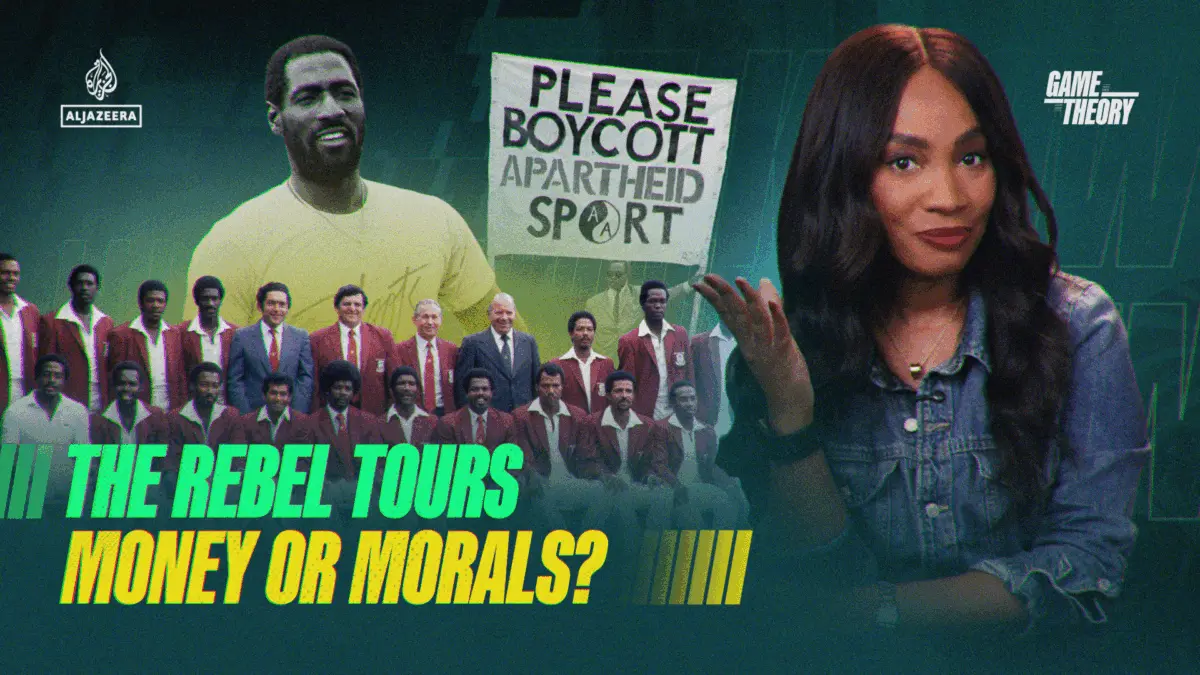
In the politically charged atmosphere of the 1980s, a profound ethical dilemma confronted several West Indies cricketers: would they betray one of sport’s most significant boycotts for financial inducements that promised to transform their lives? The decision by certain prominent players to tour apartheid South Africa ignited a firestorm of global outrage, casting a long shadow over their careers and the illustrious reputation of West Indies cricket. Al Jazeera’s Samantha Johnson explores the complex interplay of money, morals, and severe consequences that defined these controversial tours, revealing a poignant chapter in the history of sports, politics, and human rights.
The Apartheid Context: A Nation Divided
To comprehend the magnitude of the West Indies rebel tours, one must first understand the oppressive system of apartheid in South Africa. Instituted in 1948 by the National Party government, apartheid, meaning "apartness" in Afrikaans, was a brutal system of institutionalised racial segregation and discrimination. It classified people into racial groups – white, black, coloured, and Indian – and systematically disenfranchised the black majority, denying them basic human rights, political representation, and economic opportunities. Laws such as the Group Areas Act, Pass Laws, and the Population Registration Act enforced residential segregation, restricted movement, and dictated every aspect of life based on race.
The international community largely condemned apartheid. The United Nations imposed arms embargoes and cultural boycotts, while numerous nations severed diplomatic and economic ties. Sporting isolation became a particularly potent weapon in the anti-apartheid arsenal. South Africa was banned from the Olympic Games in 1964 and subsequently expelled from various international sporting federations, including cricket and rugby. The aim was to deny the white minority government the legitimacy and normalcy that international sporting competition would confer, thereby pressuring them to dismantle the racist system.
The Gleneagles Agreement and Sporting Isolation
A pivotal moment in the sports boycott was the 1977 Gleneagles Agreement. Signed by the heads of government of the Commonwealth nations, it formally committed their countries to discouraging contact and competition with sporting organisations, teams, or individuals from South Africa. This agreement solidified a broad international consensus, making it morally and politically untenable for athletes from Commonwealth countries, including the West Indies, to engage with apartheid South Africa. The agreement underscored the principle that sport could not be separated from politics when human rights were at stake.
The West Indies, a collection of predominantly black and multi-racial nations, held a particularly strong moral stance against apartheid. Their own history of colonialism and struggles for self-determination resonated deeply with the plight of black South Africans. Cricket, often seen as a unifying force and a symbol of national pride in the Caribbean, was inherently linked to their identity and resistance against oppression. The idea of West Indian cricketers playing in South Africa was not merely a breach of a sporting boycott; it was perceived as a profound betrayal of shared values and solidarity with oppressed peoples globally.
The Golden Era of West Indies Cricket and Economic Realities
The 1970s and 1980s marked the zenith of West Indies cricket. Under legendary captains like Clive Lloyd and Vivian Richards, the West Indies team was an indomitable force, dominating world cricket with an unparalleled array of fast bowlers and flamboyant batsmen. They won the first two Cricket World Cups in 1975 and 1979 and maintained an unbeaten Test series record for 15 years, from 1980 to 1995. These cricketers were global icons, embodying strength, resilience, and black excellence.
However, beneath the surface of this sporting triumph lay a complex economic reality. While celebrated on the field, many West Indies cricketers, especially those from less affluent backgrounds, often faced financial insecurity compared to their counterparts from wealthier cricketing nations like England or Australia. Professional cricket in the Caribbean, while prestigious, did not offer the same lucrative contracts or endorsement opportunities as it did elsewhere. Many players struggled to provide adequately for their families, a stark contrast to the massive wealth that awaited them if they crossed the picket line.
The Allure of "Life-Changing Money"
It was precisely this financial disparity that the apartheid South African regime, desperate to break its international isolation and gain a semblance of normalcy, shrewdly exploited. White South African cricket administrators, backed by government funds and wealthy patrons, began covertly offering exorbitant sums to international cricketers to undertake "rebel tours." These tours were designed to undermine the boycott, demonstrate that South Africa was not entirely isolated, and provide entertainment for the white populace.
For the West Indies players, the offers were astronomical. Reports suggested that some players were offered sums ranging from $100,000 to $250,000 (equivalent to several hundred thousand dollars in today’s money) for a single tour, along with lavish perks and match fees. To put this in perspective, many West Indies players earned only a fraction of this amount in a year playing for their national team or in county cricket. For individuals from modest backgrounds, these sums represented a chance to secure their families’ futures, purchase homes, and provide education – opportunities often beyond their reach. The temptation was immense, pitching personal financial salvation against collective moral responsibility.
The Rebel Tours Unfold: 1982-1983 and 1983-1984
The first major West Indies rebel tour took place in 1982-83, organised by former English cricketer Geoff Dakin. A squad of 15 West Indian players, led by former captain Lawrence Rowe, secretly travelled to South Africa. The team included established international cricketers and promising talents. Upon their arrival, the news sent shockwaves through the Caribbean and the international anti-apartheid movement.
A second, even more controversial tour followed in 1983-84, featuring a different set of players, led by Richard Austin. While the identities of all players are part of the historical record, the emphasis here remains on the collective action and its ramifications rather than individual names, reflecting the broader impact. These tours, though officially unsanctioned, featured competitive matches against South African provincial teams, playing in front of segregated white audiences. The South African government used these tours extensively for propaganda, portraying them as evidence of crumbling international resistance.
Consequences and Condemnation
The reaction to the rebel tours was swift, severe, and overwhelmingly negative.
- West Indies Cricket Board (WICB) and Governments: The WICB, supported by Caribbean governments, immediately condemned the players. They declared the players "persona non grata" and imposed lifetime bans from playing international cricket for the West Indies. This was a devastating blow to the players’ careers, effectively ending their international aspirations at their peak or early in their development.
- Public Outrage: In the Caribbean, the players were branded "traitors" and "mercenaries." Public sentiment was fiercely against them, viewing their actions as a betrayal of their people, their heritage, and the broader struggle against apartheid. Demonstrations and protests erupted across the islands.
- International Anti-Apartheid Movement: Anti-apartheid leaders and activists globally expressed profound disappointment and anger. Archbishop Desmond Tutu called it a "stab in the back." The tours were seen as a direct affront to the Gleneagles Agreement and a setback for the international campaign.
- Media Response: Global media outlets widely reported on the controversy, highlighting the moral dilemma and the ethical lines crossed. The players were often depicted as having sacrificed principle for profit.
The players who participated faced not only professional ostracisation but also social isolation. Many returned home to find themselves pariahs, struggling to reintegrate into their communities. Their names became synonymous with betrayal, and the financial gains, while substantial, often came at an unbearable personal cost.
The Broader Impact and Implications
The West Indies rebel tours had far-reaching implications:
- Impact on the Anti-Apartheid Movement: While a temporary setback, the widespread condemnation of the tours ultimately reinforced the strength and resolve of the international anti-apartheid movement. The global outrage demonstrated that the sporting boycott remained robust and that transgressions would be met with severe consequences. It solidified the moral high ground held by those advocating for sanctions.
- Legacy for West Indies Cricket: The tours caused deep divisions within West Indies cricket. While the WICB’s swift action preserved the integrity of the official team and its stance against apartheid, the loss of talented players undoubtedly impacted the depth of the player pool, albeit at a time when West Indies cricket was still exceptionally strong. More significantly, it served as a stark reminder of the ethical responsibilities of athletes representing nations with a strong moral compass.
- The Ethical Dilemma of Sport and Politics: The incident starkly highlighted the inescapable link between sport and politics, particularly when human rights are involved. It demonstrated that athletes, despite claims of being apolitical, are often drawn into political struggles, and their actions can have significant political and moral weight. The tours forced a global discussion about the responsibilities of individual athletes versus collective principles.
- Personal Costs and Long-Term Reputations: For the players involved, the tours defined their careers and public perception for decades. Many carried the stigma of their actions long after apartheid ended. While some later sought forgiveness and understanding, the initial bans and public condemnation were indelible.
Reconciliation and Reflection: A Path Towards Forgiveness
The end of apartheid in 1994, marked by Nelson Mandela’s release from prison and the subsequent democratic elections, brought about a period of truth and reconciliation in South Africa. In the wake of this momentous change, the issue of the rebel cricketers resurfaced.
Over time, there has been a degree of re-evaluation and, in some cases, reconciliation. While the initial bans were largely upheld, the passage of time allowed for a more nuanced understanding of the pressures faced by the players. Some players eventually received pardons or had their bans symbolically lifted decades later. Some expressed remorse, citing economic desperation as their primary motivator, while others maintained they had done nothing wrong, asserting their right to earn a living.
The legacy of the West Indies rebel tours remains a complex and poignant one. It stands as a powerful historical case study of the immense pressures faced by athletes, the profound ethical choices demanded by political struggles, and the enduring consequences of prioritizing personal gain over collective moral solidarity. It underscores the belief that while money can offer life-changing opportunities, some moral lines, particularly those drawn against oppression and injustice, come at an incalculable cost. The story continues to serve as a vital reminder of the power of sports boycotts in political activism and the enduring human struggle for dignity and justice.
Published On 15 Oct 2026
