

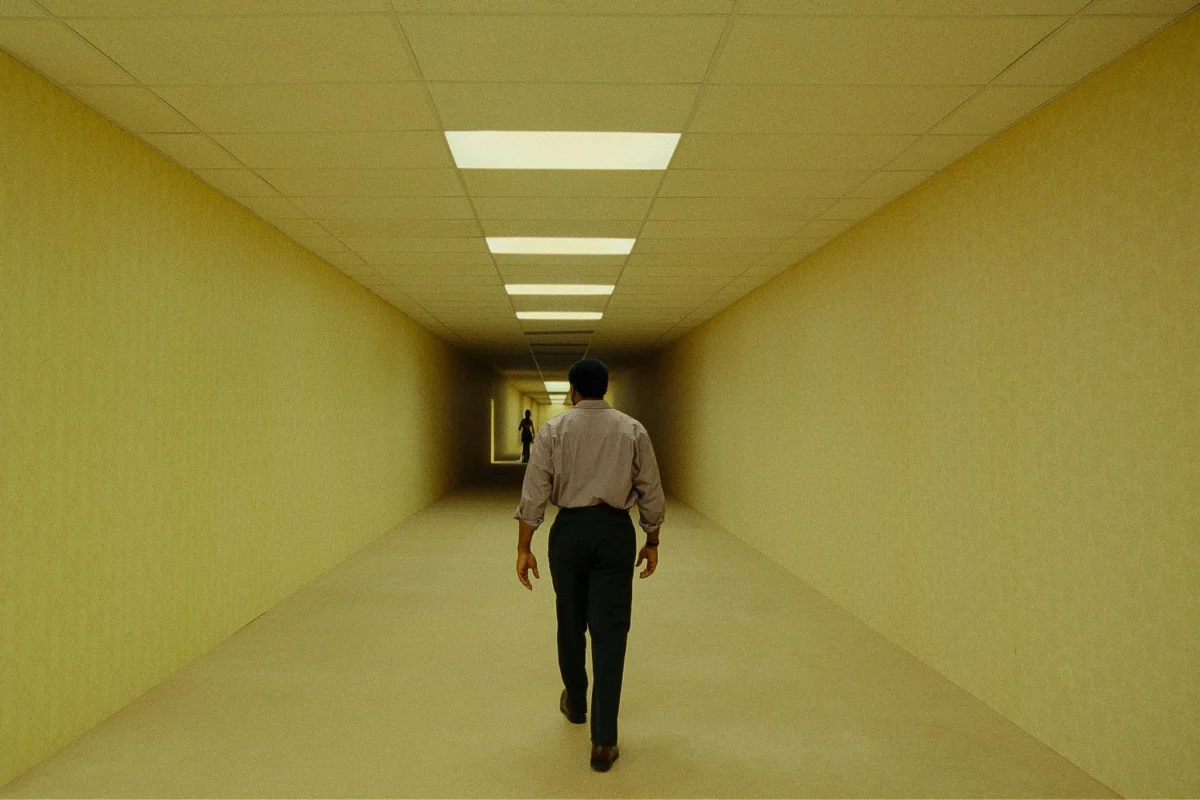
The landscape of modern cinema is undergoing a seismic shift as the boundaries between digital content creation and traditional Hollywood production continue to blur. At the center of this transformation is 20-year-old filmmaker Kane Parsons, whose transition from a high school student creating viral YouTube videos to the youngest director in the history of A24 marks a milestone in the industry. Parsons’ feature-length debut, Backrooms, represents more than just a horror film; it is the culmination of a grassroots internet phenomenon that began on a fringe image board and evolved into a sophisticated, multi-million-dollar cinematic endeavor. As the film prepares for a wide release that is projected to shatter studio records, the industry is closely observing how a narrative born from "creepypasta" and collective digital mythology can be translated for a global theatrical audience.
The Genesis of a Digital Nightmare
The conceptual roots of Backrooms can be traced back to May 2019, when an anonymous user on the 4chan image board /x/ (dedicated to the paranormal) posted a photograph of an empty, fluorescent-lit office space with sickly yellow wallpaper and stained carpets. The accompanying text described a phenomenon known as "noclip," where a person might accidentally fall out of reality and into the "Backrooms"—a nearly infinite labyrinth of randomly segmented empty rooms. This post tapped into a burgeoning internet fascination with "liminal spaces," or transitional areas that feel eerie, unsettling, or nostalgic when devoid of people.
Kane Parsons, then a teenager with a penchant for visual effects, encountered this lore and recognized an untapped potential for immersive storytelling. While the internet was already saturated with static images and short stories about the Backrooms, Parsons sought to bring the environment to life using high-end digital tools. Utilizing Blender 3D graphics software and Adobe After Effects, he spent months meticulously crafting a nine-minute short film titled "The Backrooms (Found Footage)."
Uploaded to his YouTube channel, Kane Pixels, in January 2022, the short film achieved immediate and massive virality. It depicted a young cameraman in 1991 who accidentally "clips" into the yellow-hued dimension and is subsequently pursued by a spindly, shrieking entity. To date, the video has amassed over 60 million views, spawning a complex web series that explored the origins of the anomaly through the lens of a fictional 1980s research organization called ASYNC.
From Viral Success to Studio Acquisition
The speed at which Hollywood responded to Parsons’ work was unprecedented. Within weeks of the initial short film’s success, major production houses began reaching out to the teenager. However, Parsons remained cautious, aware of the pitfalls that often accompany "internet-to-film" adaptations. The young director expressed a desire to protect the integrity of the mythology he had built, fearing that a traditional studio might dilute the atmospheric dread in favor of conventional horror tropes.
The eventual partnership with A24, a studio renowned for its "elevated horror" and director-driven projects, proved to be the catalyst for the feature film. To bolster the production, A24 assembled a formidable creative team. The screenplay was penned by Will Soodik, known for his work on high-concept television such as Westworld and Homeland. Furthermore, the film secured the backing of veteran horror producers, including James Wan (architect of the Conjuring and Insidious franchises) and Osgood Perkins (director of Longlegs). This collaboration provided Parsons with the institutional support and technical resources necessary to expand his nine-minute concept into a nearly two-hour psychological thriller.
Narrative Expansion and the 1990s Setting
The feature-length Backrooms moves beyond the simple "found footage" premise of the YouTube shorts to offer a grounded, character-driven narrative. The film stars Academy Award nominee Chiwetel Ejiofor as Clark, a man struggling with alcoholism and a failing furniture business in San Jose, California. Clark is a character defined by a sense of stagnation—a man whose life has reached a dead end, mirroring the purgatorial nature of the dimension he eventually discovers.
Opposite Ejiofor is Renate Reinsve, who portrays Mary, Clark’s therapist. The narrative explores the parallel traumas of both characters: Clark’s inability to move past the failures of his marriage and career, and Mary’s childhood trauma involving an agoraphobic mother who kept her isolated from the world. This psychological depth serves to ground the supernatural elements of the story, framing the Backrooms not just as a physical location, but as a manifestation of being "stuck" in one’s own mind.
The decision to set the film in the 1990s is a strategic creative choice that enhances the isolation of the characters. By removing the convenience of modern technology—such as smartphones, GPS, and high-speed internet—Parsons ensures that Clark is truly alone in his exploration of the anomaly. Without the ability to crowdsource information or use drones to map the environment, the character is forced to rely on his own wits and rudimentary tools, heightening the tension and the sense of existential dread.
Technical Prowess and Aesthetic Continuity
One of the primary concerns for fans of the original YouTube series was whether the feature film would retain the distinct aesthetic that made the shorts so compelling. Parsons, serving as director, has ensured that the film maintains the "fluorescent dread" that defined his early work. The cinematography emphasizes the unnatural geometry of the Backrooms, utilizing the "impossible architecture" trope to disorient both the protagonist and the audience.
The film’s production design meticulously recreates the "mono-yellow" palette described in the original 4chan post. The use of practical sets combined with seamless digital extensions allows for a sense of scale that was previously impossible on a YouTube budget. Furthermore, the sound design plays a critical role in the film’s atmosphere, utilizing the constant, low-frequency hum of fluorescent lights to create a persistent state of anxiety.
Industry Implications and the New Talent Pipeline
The success of Backrooms is being viewed as a landmark moment for the film industry. Traditionally, the path to directing a major studio feature involved years of film school, assistant positions, and short film circuits. Parsons’ rise suggests a new, more direct pipeline where creators can build their own intellectual property and proof-of-concept projects on platforms like YouTube, effectively bypassing traditional gatekeepers.
This trend is not isolated. Recent years have seen the success of creators like Danny and Michael Philippou, the Australian duo behind the YouTube channel RackaRacka, whose debut film Talk to Me became a critical and commercial hit for A24. However, Parsons’ age and the specific digital-native origins of the Backrooms mythology represent a further evolution of this model.
Industry analysts point to several factors that make YouTube a fertile ground for the next generation of horror auteurs:
- Immediate Feedback Loops: Creators receive instant data on what scares or engages an audience, allowing them to refine their storytelling in real-time.
- Low Barrier to Entry: Modern VFX software allows individuals to create professional-grade visuals from a home computer.
- Built-in Fan Bases: Studios are increasingly risk-averse; a project with an existing audience of millions is a much safer investment than an unproven original script.
Financial Projections and Box Office Impact
Early tracking for Backrooms suggests that the film is poised for a massive opening weekend. Internal projections indicate that it may surpass the opening weekend records currently held by other A24 hits like Hereditary and Civil War. The combination of a "hungry" internet fan base and the prestige associated with the A24 brand has created a perfect storm of anticipation.
Market research suggests that the film is drawing significant interest from the Gen Z and Millennial demographics, many of whom have followed the Backrooms lore for years across TikTok, Reddit, and YouTube. If these projections hold, Backrooms could serve as a "summer blockbuster" that proves original, internet-derived horror can compete with established franchises at the box office.
A Wholly Original Cinematic Rarity
Despite its origins in internet memes, Backrooms is being hailed by critics as a vanishing cinematic rarity: a wholly original film that does not rely on sequels, reboots, or established literary IP. Parsons’ ability to tap into collective digital anxieties—the fear of isolation, the uncanny nature of abandoned spaces, and the fragility of reality—has allowed him to create a narrative that feels both modern and timeless.
As Parsons reflects on his rapid ascent, he emphasizes the importance of the community that helped foster his vision. He notes that the "problem-solvers" and "puzzle-oriented" fans of the internet provided the foundation upon which the film was built. However, by withholding definitive answers and leaning into the mystery of the Backrooms, Parsons has created a film that invites repeated viewing and long-term discussion.
The release of Backrooms marks the beginning of a new chapter for Kane Parsons and, potentially, for Hollywood itself. As studios continue to scout digital platforms for the next breakout talent, the success of this film will likely serve as the blueprint for how to bridge the gap between the chaotic creativity of the internet and the structured excellence of professional cinema. For now, audiences are left to wait for the moment they can step through the "glowing seam" and experience the yellow-walled nightmare for themselves on the big screen.
