

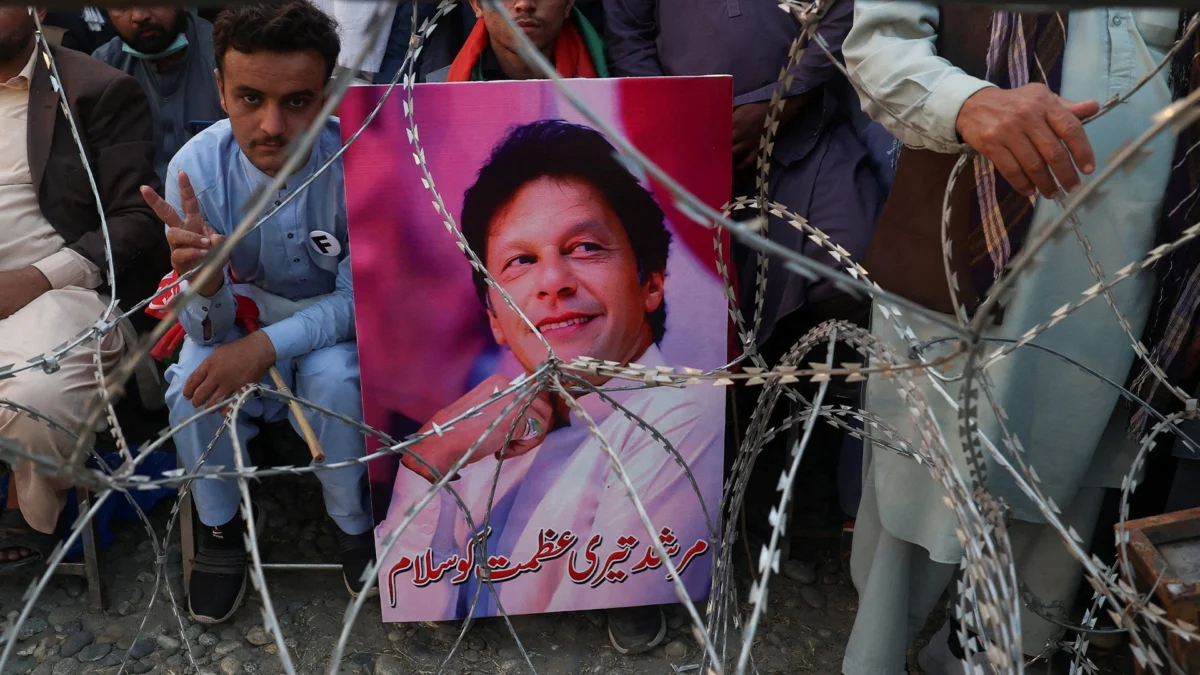
The return of former Pakistani Prime Minister Imran Khan to Adiala Jail on Friday, August 21, 2026, following a court-mandated medical examination, has sparked a fresh wave of political tension and grave allegations from his inner circle. Khan, the founding chairman of the Pakistan Tehreek-e-Insaf (PTI) party, was transported under heavy security from a premier medical facility in Rawalpindi back to the high-security prison facility after a series of diagnostic tests. While the official medical reports released by the state-appointed board suggested a stable condition, Khan’s family members and legal representatives have raised the alarm, alleging that the former premier has been subjected to physical and psychological "torture" during his protracted incarceration.
The developments on Friday represent the latest chapter in a long-standing legal and political saga that has gripped Pakistan since Khan’s removal from office in April 2022. The medical check-up was conducted following a petition filed by Khan’s legal team, citing deteriorating health conditions and a lack of adequate medical facilities within the prison walls. However, the swiftness with which he was moved back to his cell has led to accusations from his relatives that the examination was a mere formality intended to bypass judicial scrutiny rather than address genuine health concerns.
Contextual Background: The Incarceration of a Former Premier
Imran Khan’s current imprisonment is the culmination of a series of legal challenges that began shortly after his ousting via a no-confidence motion. Since mid-2023, the former cricket star turned politician has spent the majority of his time behind bars, facing a litany of charges ranging from corruption and "misuse of authority" to leaking state secrets (the Cipher case) and even charges related to an allegedly "un-Islamic" marriage.
Despite his incarceration, Khan remains the most popular political figure in Pakistan, a fact underscored by the performance of PTI-backed candidates in the February 2024 general elections. His continued detention has become a focal point for his supporters, who view the legal proceedings as politically motivated "lawfare" designed to exclude him from the country’s democratic process. The government, led by a coalition of his traditional rivals, maintains that the cases against Khan are based on merit and that the law is simply taking its course.
The Medical Examination and Torture Allegations
The court order for a medical check-up came after weeks of advocacy by Khan’s sisters and his wife, Bushra Bibi, who have repeatedly expressed fears for his life. According to sources close to the family, Khan has suffered significant weight loss and has complained of digestive issues and chronic pain, which his lawyers attribute to the "abysmal" conditions of his confinement.
Following the check-up on Friday, a spokesperson for the family addressed the media outside the jail, stating that the former Prime Minister appeared frail and showed signs of physical duress. "He is being kept in solitary confinement under conditions that amount to torture," a relative claimed, suggesting that sleep deprivation and restricted access to clean water were being used as tools of coercion.
The Punjab Prisons Department has categorically denied these allegations. In a brief statement, a prison official asserted that Khan is being provided with all facilities mandated for a former Prime Minister under the Pakistan Prison Rules. The official noted that he is housed in a "high-observation" cell for his own security and that his health is monitored daily by a resident medical officer.
A Chronology of Legal and Health Milestones (2023–2026)
To understand the gravity of the current situation, it is necessary to examine the timeline of Imran Khan’s detention and the various health scares that have punctuated his time in custody:
- August 2023: Imran Khan is first arrested and moved to Attock Jail following a conviction in the Toshakhana (state gifts) case. His legal team immediately raises concerns about the "C-class" facilities provided to him.
- September 2023: Following a court order, Khan is moved from Attock to the more modern Adiala Jail in Rawalpindi.
- January 2024: On the eve of the general elections, Khan is sentenced in multiple cases, including the Cipher case and a second Toshakhana reference.
- May 2025: Reports emerge of a significant drop in Khan’s blood pressure, leading to the first major call for an independent medical board.
- Early 2026: Several of Khan’s convictions are overturned or suspended by higher courts, yet he remains in jail due to "preventative detention" orders and new charges filed by the National Accountability Bureau (NAB).
- August 15, 2026: Khan’s legal team files an urgent petition in the Islamabad High Court (IHC) alleging that he has been denied exercise and sunlight for over two weeks.
- August 21, 2026: Khan is taken to a hospital for a check-up and returned to Adiala Jail within hours, sparking the current controversy.
Supporting Data: The Legal Burden
The scale of the legal challenges facing Imran Khan is unprecedented in Pakistani history. As of August 2026, it is estimated that over 150 different cases have been registered against him across various jurisdictions in the country. These include:
- Corruption Charges: Multiple references related to the Al-Qadir Trust and the Toshakhana department.
- Anti-Terrorism Cases: Charges related to the protests of May 9, 2023, where military installations were attacked by protesters following Khan’s brief arrest.
- State Secrets: The Cipher case, involving the alleged mishandling of a diplomatic cable from the United States.
- Civil Cases: Libel suits and challenges to his political eligibility.
The sheer volume of litigation has placed an immense strain on the Pakistani judicial system. Human rights organizations have noted that the "revolving door" of arrests—where a defendant is re-arrested on new charges immediately after being granted bail in another—has become a standard practice in dealing with high-profile political figures.
Official Responses and Political Reactions
The government’s response to the allegations of torture has been one of dismissal. Information Minister Attaullah Tarar, in a press conference held late Friday, characterized the claims as "pathetic attempts to gain sympathy." He argued that the PTI was attempting to distract from the "solid evidence" presented in the various corruption cases against their leader.
"Mr. Khan is a prisoner of the state, and he is being treated according to the law," Tarar said. "The allegations of torture are a figment of the PTI’s imagination. They want to create unrest in the country by spreading fake news about his health."
Conversely, the PTI leadership has called for an international investigation into Khan’s treatment. The party’s acting chairman issued a statement calling on the United Nations and international human rights monitors to intervene. "The world cannot remain silent while a global icon and the leader of millions is being broken down physically in a dark cell," the statement read.
Broader Impact and Implications for Pakistan’s Stability
The treatment of Imran Khan has profound implications for Pakistan’s internal stability and its international standing. Domestically, the perception that the former Prime Minister is being mistreated has further polarized an already divided nation. Protests, though often suppressed by heavy police presence, continue to break out in major cities like Lahore, Karachi, and Peshawar.
From a socio-economic perspective, the political instability linked to Khan’s incarceration has hindered the government’s ability to implement long-term economic reforms. Investors remain wary of a country where the primary opposition leader is behind bars and where the transition of power remains a contentious and often judicialized process.
Internationally, the case has drawn the attention of the UN Working Group on Arbitrary Detention, which previously issued an opinion stating that Khan’s detention was "arbitrary and in violation of international law." The latest allegations of torture are likely to increase pressure on Western allies, including the United States and the European Union, to take a firmer stance on human rights and the rule of law in Pakistan.
Fact-Based Analysis of the Current Situation
Analyzing the situation through a purely objective lens, several key factors emerge. First, the medical examination conducted on Friday appears to have failed in its primary objective: to provide a transparent and undisputed account of the former Prime Minister’s health. By excluding independent doctors or those trusted by the family, the state has left itself open to accusations of a cover-up.
Second, the "torture" mentioned by Khan’s relatives often refers to "white torture" or psychological duress—isolation, lack of communication with the outside world, and the constant threat of new legal actions. While physical violence is difficult to prove without independent verification, the psychological toll of three years of litigation and confinement on a 73-year-old individual is undeniably significant.
Finally, the judicial impasse continues. The Pakistani courts are caught between the executive’s push for "accountability" and the constitutional requirements for due process. As long as Imran Khan remains in Adiala Jail, he will continue to be the "gravity center" of Pakistani politics, with every health update or court appearance serving as a potential catalyst for further unrest.
As the legal teams prepare for the next round of hearings, the focus remains on the medical report from Friday’s check-up. Whether the court will allow an independent review of those findings remains to be seen, but for now, the walls of Adiala Jail continue to hold the man who remains the central figure in Pakistan’s ongoing political crisis.
