

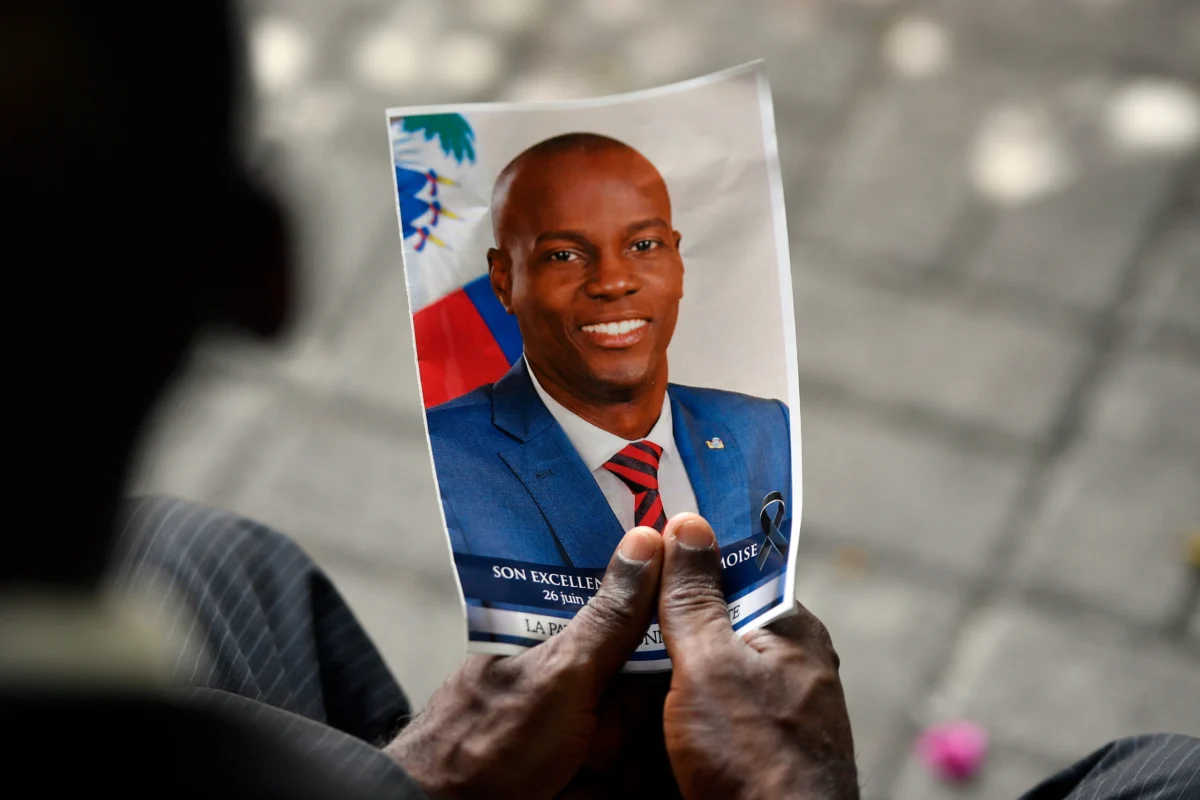
Four individuals have been convicted in the United States for their roles in the 2021 assassination of Haitian President Jovenel Moise, a crime that plunged the Caribbean nation into an even deeper political and humanitarian crisis. Arcangel Pretel Ortiz, Antonio Intriago, Walter Veintemilla, and James Solages were found guilty on Friday of conspiring to kill or kidnap Moise and providing material support for the plot, in violation of US law. The verdict, delivered after a nearly two-month trial, marks a significant milestone in the complex international investigation into the brazen July 7, 2021, attack that left Moise dead in his private residence. Each of the convicted now faces the prospect of life imprisonment, underscoring the severity of their involvement in a plot that prosecutors contend was centrally orchestrated from South Florida, the closest US state to Haiti.
The Verdict and Its Immediate Implications
The convictions of Pretel Ortiz, Intriago, Veintemilla, and Solages represent a crucial step towards accountability for an act that shocked the international community and exacerbated Haiti’s long-standing instability. Arcangel Pretel Ortiz, a Colombian-American businessman, was accused of involvement in a Florida-based company, Counter Terrorist Unit Security (CTU Security), which allegedly recruited the Colombian mercenaries involved in the plot. Antonio Intriago, also a Colombian-American, was the owner of CTU Security. Walter Veintemilla, an Ecuadorian-American financier, was charged with providing financial backing for the operation. James Solages, a Haitian-American, was one of the earliest arrested and was alleged to have played a direct role in the planning and execution stages, including making a video claiming responsibility for a "judicial operation" to arrest Moise.
The jury’s decision to convict on charges of conspiracy to kill or kidnap and providing material support validates the prosecution’s narrative that the defendants were integral to a scheme that escalated from an initial plan to remove Moise from power to his eventual assassination. This outcome sends a clear message about the US government’s reach in prosecuting crimes with international implications, particularly when US territory or citizens are involved.
The Assassination of Jovenel Moise: A Shocking Event
On the morning of July 7, 2021, a commando unit stormed President Jovenel Moise’s private residence in Pèlerin 5, a suburb of Port-au-Prince. The attackers, identified primarily as Colombian ex-soldiers and Haitian-Americans, shot Moise multiple times, leaving him dead at the scene. His wife, Martine Moise, was also wounded in the attack but survived. The assassination was swift and brutal, with reports indicating a sophisticated operation that overwhelmed presidential security. The absence of significant resistance from Moise’s security detail immediately raised questions about potential complicity or a severe lapse in protection.
The perpetrators fled the scene, but many were quickly apprehended by Haitian authorities in the days and weeks that followed. The initial chaos was compounded by conflicting reports and a lack of clear information from Haitian officials, further deepening public mistrust. The killing created an immediate political vacuum, as Moise had been ruling by decree for over a year, and the lines of succession were unclear amidst a constitutional crisis.
The US Investigation Unfolds: Florida as the Central Hub
From the outset, US law enforcement agencies, including the FBI and Homeland Security Investigations, became involved due to the alleged involvement of US citizens and the plot’s ties to Florida. Prosecutors detailed how South Florida served as a crucial logistical and financial hub for the conspirators. Meetings were held in hotels and private residences in the Miami area, where plans were allegedly hatched, funds were exchanged, and the recruitment of mercenaries took place.
Key to the prosecution’s case was the argument that the defendants leveraged Florida’s proximity to Haiti and its large Haitian diaspora community to facilitate their illicit activities. The state’s role as a nexus for international business and travel also made it an attractive base for those involved in the plot. The investigation painstakingly traced financial transactions, communications, and travel records to build a comprehensive picture of the conspiracy originating, in part, from US soil.
Trial Proceedings and Competing Narratives
During the nearly two-month trial, federal prosecutors presented evidence suggesting that the defendants were part of a sophisticated plot that initially aimed to abduct Moise and install a new president. This plan, according to prosecutors, eventually morphed into an assassination. They highlighted communications, financial transfers, and witness testimonies to support their claim that the defendants knowingly participated in an illegal scheme that led to the president’s death.
The defense, however, presented a different narrative. They argued that their clients were scapegoats in a complex "Haitian plot" and were misled into believing they were involved in a legitimate operation to serve Moise an arrest warrant. This warrant, they contended, was intended to remove Moise peacefully amid a constitutional dispute over whether he had overstayed his term. Defense lawyers claimed that the Colombian mercenaries were meant to accompany Haitian police to execute this warrant, but Moise was allegedly killed by his own security forces before the mercenaries could arrive. "This is a Haitian plot, and it is a Haitian conspiracy," defense lawyer Emmanuel Perez was quoted as saying by the Miami Herald, emphasizing the defense’s position that the true masterminds and killers were within Haiti’s own political and security apparatus. This argument sought to shift blame away from the US-based defendants and towards internal Haitian dynamics.
The conflicting narratives underscored the difficulty of uncovering the full truth behind such a multifaceted crime, particularly one involving multiple nationalities and operating across international borders. The jury ultimately sided with the prosecution’s view that the defendants’ actions constituted conspiracy to kill or kidnap, irrespective of any alleged "arrest warrant" pretext.
Other Defendants and the Unfinished Business
The US investigation into Moise’s assassination is far from over. A fifth defendant, Christian Emmanuel Sanon, a Haitian-born doctor and pastor who allegedly harbored presidential ambitions and wanted to replace Moise, was initially slated for trial but had his case delayed due to health issues. He is expected to face trial at a later date. Sanon’s alleged role further complicates the web of motives and actors, pointing to a blend of political ambition, mercenary involvement, and shadowy financial backing.
In addition to the five defendants who went to trial or are awaiting trial, eight other individuals involved in the US investigation accepted plea deals. These plea agreements typically involve cooperation with prosecutors in exchange for reduced sentences, providing valuable insights and evidence that likely strengthened the government’s case against the convicted four. The full extent of their testimonies and contributions remains largely under wraps, but their cooperation suggests a broader network of individuals involved in varying capacities, from planning to financing and logistical support.
Background to Instability: Moise’s Contentious Presidency
Jovenel Moise’s presidency, which began in February 2017, was marked by relentless political turmoil, accusations of corruption, and widespread protests. He came to power following a protracted and controversial election cycle. His term was plagued by allegations of embezzlement of public funds, particularly those from the PetroCaribe oil assistance program. These allegations fueled massive anti-government demonstrations and eroded his public legitimacy.
A central point of contention was the dispute over his presidential term. Moise claimed his five-year term officially began in February 2017, despite the election results being delayed. Opposition parties and civil society groups argued that his term should have ended in February 2021, given that his predecessor, Michel Martelly, left office in February 2016 and Moise was meant to serve the remainder of that term. Moise’s insistence on staying in power beyond February 2021, coupled with his governing by decree after the dissolution of parliament, created a constitutional crisis and deepened political polarization, providing fertile ground for plots against his leadership. The "arrest warrant" defense put forward by the convicted individuals’ lawyers played directly into this narrative of a president clinging to power illegally.
Haiti’s Deepening Crisis Post-Assassination
The assassination of President Moise did not resolve Haiti’s political crisis; rather, it intensified it. The immediate aftermath saw a power vacuum and a struggle for leadership, further destabilizing a nation already grappling with poverty, natural disasters, and rampant gang violence. No national elections have been held since Moise’s death, leaving the country without democratically elected leadership for years.
The political vacuum allowed criminal gangs to expand their control over large swaths of territory, particularly in and around the capital, Port-au-Prince. These gangs have exploited the absence of effective governance, engaging in widespread kidnappings, extortion, and violence. The United Nations has repeatedly highlighted the dire security situation, reporting a staggering increase in gang-related killings. In 2025, at least 8,100 gang killings were documented, reflecting an alarming escalation of violence. This insecurity has led to a massive internal displacement crisis, with approximately 1.5 million people forced to flee their homes, creating a severe humanitarian emergency. Access to food, water, and healthcare has become increasingly difficult for millions.
International Response and Calls for Stability
The international community has watched Haiti’s deterioration with growing concern. The United Nations has been at the forefront of calls for stability, emphasizing that a legitimate and stable government is essential to restoring order, addressing the humanitarian crisis, and paving the way for sustainable development. The UN Security Council has authorized a multinational security support mission to Haiti, led by Kenya, though its deployment has faced significant delays.
The United States, through its diplomatic efforts and support for various initiatives, has also stressed the urgent need for a political resolution and the restoration of democratic institutions. The US has provided humanitarian aid and supported efforts to strengthen the Haitian National Police, but the scale of the crisis often overwhelms these interventions.
The Path Forward: Elections and Governance Challenges
In an attempt to fill the political void and prepare for future elections, a provisional council was appointed in September 2024. This council was tasked with organizing new polls and restoring some semblance of constitutional order. However, the political landscape remains fluid and challenging. The council has since been replaced by a US-backed Prime Minister, Alix Didier Fils-Aime, who has publicly stated that elections will be held by the end of the current year.
Organizing free and fair elections in Haiti presents monumental challenges, including widespread insecurity, a fragmented political class, and a lack of public trust in institutions. The success of any electoral process will hinge on the ability of the interim government and the international community to create a secure environment, engage diverse stakeholders, and implement robust electoral mechanisms to ensure credibility and transparency. Without these fundamental conditions, the cycle of instability is likely to persist.
Legal Implications and Precedents
The convictions in the US trial set an important precedent for prosecuting international political assassinations where there are links to US territory or citizens. It underscores the long arm of American justice and its commitment to addressing crimes that destabilize democratic processes globally. While the US trial has brought some measure of justice for Moise’s assassination, it does not absolve Haiti of its own responsibility to investigate and prosecute those involved within its borders. The Haitian investigation has faced significant hurdles, including judicial instability and political interference, leading to widespread frustration over the slow pace of justice within Haiti itself.
The outcome of this trial provides a partial answer to the question of who was involved in the plot against President Moise, but the deeper questions about the ultimate masterminds and the full scope of internal Haitian complicity may still remain unanswered for years to come. The convictions, while significant, are but one chapter in the ongoing saga of Haiti’s struggle for stability, justice, and a functional democracy. They serve as a stark reminder of the global ramifications of political violence and the interconnectedness of international criminal networks.
