

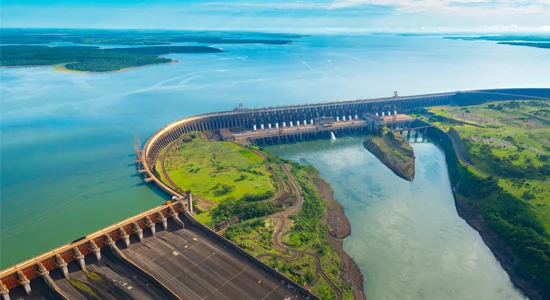
Paraguay’s abundant and cost-effective hydropower resources are emerging as a cornerstone for Hy24’s strategic expansion into the green fertilizer market. This geopolitical and economic synergy is poised to significantly impact the global agricultural landscape, offering a pathway towards more sustainable food production. The news coincides with a robust period of capital deployment within the agricultural investment sector, highlighted by UBS’s AgriVest Farmland Fund achieving a remarkable $1.4 billion in assets under management and Solum Partners successfully raising $130 million for its third dedicated fund. These developments underscore a growing investor confidence in the long-term viability and potential of agriculture as an asset class, particularly as it pivots towards sustainability and technological innovation.
Hy24 Leverages Paraguayan Hydropower for Green Fertilizer Initiative
Hy24, a prominent investment fund manager focused on clean energy transition, has strategically positioned itself to capitalize on Paraguay’s significant hydropower generation capacity. The nation, already a major exporter of hydroelectric power, offers a low-carbon and competitively priced energy source crucial for the energy-intensive production of green ammonia, a key precursor for nitrogen-based fertilizers. This initiative by Hy24 signals a broader trend of global investment flowing into sustainable agriculture technologies, driven by increasing concerns over climate change, food security, and the environmental impact of conventional farming practices.
The production of traditional ammonia, a cornerstone of modern agriculture, is heavily reliant on natural gas through the Haber-Bosch process, a method that is both energy-intensive and a significant contributor to greenhouse gas emissions. Green ammonia, conversely, is produced using renewable energy sources to power the electrolysis of water, separating hydrogen, which is then combined with nitrogen from the air. Paraguay’s extensive network of hydroelectric dams, including the massive Itaipu Dam, operated jointly with Brazil, provides a consistent and scalable source of renewable electricity. This inherent advantage allows for the potential to produce green ammonia at a cost that is increasingly competitive with, or even surpasses, fossil fuel-based alternatives in the long run.
Hy24’s investment thesis likely centers on establishing or partnering with facilities that can harness this readily available clean energy. The company’s focus on the "fertilizer play" suggests a commitment to addressing a critical component of the agricultural value chain. By decarbonizing fertilizer production, Hy24 aims to reduce the carbon footprint of farming operations, a sector responsible for a substantial portion of global greenhouse gas emissions. This move is not just about environmental stewardship; it is also about future-proofing the agricultural industry against stricter environmental regulations and fluctuating fossil fuel prices.
Background Context: Paraguay’s commitment to hydropower dates back decades, with significant investments made in large-scale projects that have transformed its energy landscape. The country is a net exporter of electricity, primarily to neighboring Brazil and Argentina. This surplus of clean energy presents a unique opportunity for industrial development that aligns with global decarbonization efforts. The concept of green ammonia has gained traction in recent years as a vital element in achieving net-zero emissions targets, with significant research and development focused on scaling up production and reducing costs.
UBS AgriVest Farmland Fund Reaches $1.4 Billion Milestone
In parallel with Hy24’s strategic move, UBS’s AgriVest Farmland Fund has announced a significant achievement, reaching $1.4 billion in assets under management (AUM). This landmark figure underscores the growing appeal of agricultural land as a stable and inflation-hedging investment, particularly among institutional investors. The fund’s success is indicative of a broader trend where investors are increasingly seeking tangible assets that offer diversification and potential for long-term capital appreciation, especially in an era of economic uncertainty and evolving geopolitical landscapes.
The AgriVest Farmland Fund typically invests in high-quality agricultural land, focusing on regions with favorable growing conditions, access to water, and robust agricultural infrastructure. The fund’s strategy often involves acquiring land and then leasing it to experienced farmers, thereby generating stable income streams through rental agreements. This model provides investors with exposure to the agricultural sector without the direct operational complexities of farming.
The substantial growth in AUM for the AgriVest fund suggests that its investment strategy is resonating with a wide range of investors, including pension funds, endowments, and high-net-worth individuals. The long-term nature of farmland as an asset, coupled with its intrinsic value as a provider of essential food and fiber, makes it an attractive proposition for those seeking to preserve and grow capital over extended periods. Furthermore, in the context of climate change and its potential impact on crop yields, investing in well-managed agricultural land can be seen as an investment in resilience and adaptability.
Supporting Data: The global agricultural land market has witnessed consistent appreciation in value over the past decade. Factors contributing to this include rising global food demand, limited arable land availability, and the increasing recognition of agriculture’s role in providing essential commodities. Studies by organizations like the Food and Agriculture Organization of the United Nations (FAO) consistently highlight the growing global population, which is projected to reach nearly 10 billion by 2050, placing increasing pressure on food production systems. This demographic trend inherently supports the long-term value of agricultural land.
Solum Partners Secures $130 Million for Fund III
Adding to the positive momentum in agricultural investment, Solum Partners has successfully closed its third fund, raising $130 million. This capital infusion signifies continued investor confidence in Solum’s expertise in identifying and managing agricultural investments. The firm’s focus on delivering sustainable and profitable agricultural operations likely appeals to investors looking for a combination of financial returns and positive environmental and social impact.
Solum Partners typically invests in a range of agricultural assets, which may include direct ownership of farmland, investments in agricultural technology, and ventures focused on improving agricultural sustainability and efficiency. The firm’s ability to attract significant capital for its third fund suggests a proven track record and a clear vision for future growth. The $130 million raised will likely be deployed across a diversified portfolio, seeking opportunities that align with its investment mandate.
The success of Solum Partners’ fundraising efforts, following in the wake of UBS’s milestone, reinforces the narrative of a thriving agricultural investment ecosystem. These funds are critical for injecting capital into a sector that requires ongoing investment in infrastructure, technology, and sustainable practices to meet the challenges of the 21st century.
Broader Impact and Implications: The collective capital being deployed by entities like Hy24, UBS, and Solum Partners has far-reaching implications for the agricultural sector and beyond.
- Accelerated Transition to Sustainable Agriculture: The investments signal a clear shift towards more environmentally responsible farming practices. By supporting initiatives like green ammonia production and investing in sustainable farmland, these firms are helping to de-risk and scale up solutions that can mitigate agriculture’s environmental footprint.
- Enhanced Food Security: As global food demand continues to rise, investments in efficient and resilient agricultural systems are paramount. The capital raised can contribute to improving yields, reducing waste, and ensuring a more stable and accessible food supply for a growing world population.
- Economic Development in Emerging Markets: For countries like Paraguay, leveraging natural resources for sustainable industrial development can foster economic growth, create jobs, and enhance export capabilities. The focus on green industries can attract foreign investment and promote technological advancement.
- Investor Diversification and Risk Management: The appeal of agricultural assets as a diversifier in investment portfolios is growing. Their tangible nature, inflation-hedging properties, and essential role in the global economy offer a degree of stability that can be valuable in turbulent economic times.
- Innovation in Agribusiness: The influx of capital often fuels innovation. Investments can support the development and adoption of new technologies, from precision agriculture and biotech to more efficient supply chain management and novel fertilizer solutions.
Timeline and Chronology of Developments:
- Past Decades: Paraguay invests heavily in developing its hydropower infrastructure, establishing itself as a significant regional energy producer. Global awareness of agriculture’s environmental impact begins to grow, prompting research into sustainable farming methods.
- Recent Years: The concept of green ammonia gains momentum as a key decarbonization pathway for the fertilizer industry. Investment funds focused on clean energy and sustainable agriculture begin to emerge and gain traction.
- Current Period: Hy24 identifies Paraguay’s hydropower advantage as a strategic enabler for its green fertilizer ambitions. UBS’s AgriVest Farmland Fund reaches a significant AUM milestone, reflecting strong investor demand for agricultural land. Solum Partners successfully closes its third fund, demonstrating continued confidence in its agricultural investment strategy.
Official Responses and Industry Reactions (Inferred):
While direct statements from Hy24, UBS, and Solum Partners regarding these specific announcements are not detailed in the provided excerpt, the broader industry sentiment is likely positive.
- Governmental Bodies: Paraguayan officials are likely to welcome foreign investment that leverages the nation’s natural resources for sustainable industrial development, viewing it as an opportunity for economic growth and job creation. International bodies focused on climate action and sustainable development would likely commend initiatives that reduce greenhouse gas emissions in critical sectors like agriculture.
- Agricultural Industry Stakeholders: Farmers and agricultural businesses are likely to see these developments as positive indicators of future support for sustainable practices and potentially more stable input costs (e.g., fertilizers). The increased availability of capital can lead to improved infrastructure and access to advanced technologies.
- Investment Community: The success of these funds signals to the broader investment community the growing attractiveness and viability of the agricultural sector, particularly for impact-oriented and sustainable investments. This could encourage further capital allocation into similar ventures.
Analysis of Implications:
The convergence of Paraguay’s energy advantage with Hy24’s strategic investment in green fertilizers represents a significant step towards decarbonizing a vital global industry. This move is not merely incremental; it has the potential to reshape fertilizer production and consumption patterns, thereby influencing agricultural practices worldwide. The scale of hydropower available in Paraguay offers a compelling economic rationale for establishing large-scale green ammonia facilities, potentially leading to cost reductions that can be passed down the agricultural value chain.
The robust performance of UBS’s AgriVest Farmland Fund and Solum Partners’ successful fundraising underscore a profound shift in investor perception. Farmland is increasingly viewed not just as a commodity but as a strategic asset class offering resilience, inflation protection, and a tangible connection to essential global needs. This capital inflow is crucial for modernizing agricultural infrastructure, adopting advanced technologies, and implementing sustainable land management practices.
Collectively, these developments highlight a growing momentum towards a more sustainable and resilient global food system. The strategic deployment of capital, facilitated by innovative investment vehicles and favorable resource endowments, is setting the stage for a future where agriculture plays a pivotal role in both economic prosperity and environmental stewardship. The challenges of feeding a growing population while mitigating climate change are immense, but the increasing sophistication and scale of investment in this sector offer a promising pathway forward.
