

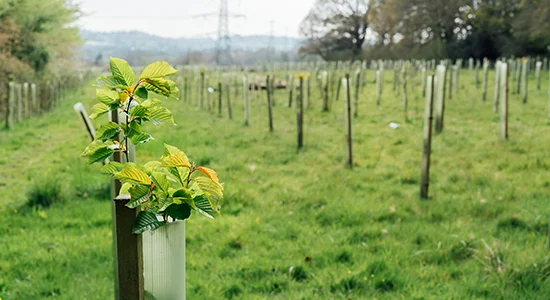
The burgeoning demand for natural capital investments from Local Government Pension Schemes (LGPS) is driving significant growth opportunities, with Foresight Group targeting a substantial £500 million expansion in this asset class. This strategic push underscores a broader trend of institutional investors increasingly allocating capital towards sustainable and environmentally focused assets, recognizing their potential for both financial returns and positive societal impact. The sector is witnessing a surge in activity, from the robust performance of US timberland assets to substantial financing rounds for innovative agricultural technologies.
LGPS Natural Capital Ambitions Fuel Foresight’s Expansion
Foresight Group’s ambition to grow its natural capital investments by £500 million (approximately $669 million USD or €584 million EUR) highlights the increasing maturity and attractiveness of this sector for institutional investors. Natural capital, encompassing assets like forests, wetlands, and agricultural land, offers a compelling proposition for pension funds seeking diversification, inflation hedging, and long-term, sustainable returns. LGPS funds, in particular, are under pressure to meet their long-term liabilities while also aligning their portfolios with environmental, social, and governance (ESG) principles.
The UK’s LGPS, a collective of defined benefit pension funds for local government employees, manages substantial assets, estimated to be in the tens of billions of pounds. Historically, these schemes have been more conservative in their investment strategies, but a growing awareness of climate change risks and the opportunities presented by the green economy has prompted a re-evaluation. Natural capital investments fit well within this evolving landscape, offering tangible, real-world assets that can provide stable income streams and appreciate in value over time. Furthermore, the inherent carbon sequestration capabilities of forests and healthy soils align with net-zero commitments that many LGPS funds are now making.
Foresight Group, a prominent alternative asset manager with a strong track record in infrastructure and private equity, is well-positioned to capitalize on this demand. Their focus on natural capital likely encompasses a range of strategies, from direct investment in sustainable forestry and agricultural land to funding projects that enhance biodiversity and ecosystem services. The £500 million target suggests a significant scaling up of their existing natural capital operations or the launch of new dedicated funds. This move is not merely about financial returns; it is also about actively contributing to conservation efforts and supporting the transition to a more sustainable economy.
US Timberland Delivers Solid Returns
In parallel with the growing interest in natural capital, US timberland assets have demonstrated resilient performance, generating a 4.9 percent return in the year ending in the first quarter of 2026. This figure, while specific to a recent period, reflects a longer-term trend of timberland being a stable and attractive investment. Timberland’s appeal lies in its dual income generation potential: periodic timber harvests provide cash flow, while the underlying land value can appreciate over time. Furthermore, timber is a renewable resource, and as demand for sustainable building materials and bio-based products increases, timberland becomes an even more compelling asset.
The 4.9 percent return should be viewed in the context of prevailing economic conditions. In an environment of fluctuating interest rates and potential economic uncertainty, a steady, tangible return from a real asset like timberland is highly desirable for institutional investors. Factors influencing this return would include timber prices, harvest volumes, land appreciation, and management costs. The US, with its vast forested areas and established forestry industry, remains a key market for timberland investments. Data from industry associations, such as the National Council of Real Estate Investment Fiduciaries (NCREIF) Timberland Index, typically track these performance metrics and often show consistent, long-term growth for the asset class.
The performance data suggests that timberland continues to be a valuable component of diversified institutional portfolios. Its low correlation with traditional financial assets like equities and bonds further enhances its appeal as a risk-mitigating investment. As investors increasingly seek assets that offer both income and capital appreciation, while also contributing to environmental goals, timberland is likely to remain a favoured choice.
Pollen Street Backs InSoil with £120 Million for Regenerative Agriculture
The agricultural sector is also undergoing a significant transformation, with a growing emphasis on regenerative practices that aim to improve soil health, biodiversity, and water quality, while also sequestering carbon. In this context, Pollen Street Capital’s backing of InSoil with a £120 million facility marks a significant development. This substantial financial commitment signals strong confidence in InSoil’s business model and the broader potential of regenerative agriculture.
Regenerative agriculture represents a paradigm shift from conventional farming methods, which can often lead to soil degradation and environmental damage. Regenerative practices, such as no-till farming, cover cropping, and crop rotation, focus on building soil organic matter, enhancing microbial activity, and improving the overall resilience of the farming system. These practices not only benefit the environment but can also lead to improved crop yields and reduced input costs for farmers in the long run.
The £120 million facility provided by Pollen Street, a specialist investor in financial and business services, will likely enable InSoil to scale its operations significantly. This could involve expanding its reach to more farmers, developing new technologies or services to support regenerative practices, or investing in infrastructure that facilitates the adoption of these methods. InSoil’s specific focus within regenerative agriculture will be crucial in understanding the precise deployment of these funds. For instance, they might be developing a platform that connects farmers with buyers of regeneratively produced goods, offering financial incentives for adopting sustainable practices, or providing the technology and expertise to implement these changes on the ground.
The involvement of a significant investor like Pollen Street suggests that the financial viability and scalability of regenerative agriculture are becoming increasingly recognized. This investment could serve as a catalyst for further capital flow into the sector, encouraging other investors and financial institutions to explore opportunities in sustainable food production. The long-term implications of such investments are substantial, potentially leading to a more resilient and environmentally sound food system, reduced greenhouse gas emissions from agriculture, and improved livelihoods for farmers.
Deals Round-Up and Broader Market Dynamics
The news of Foresight’s natural capital expansion, US timberland performance, and InSoil’s funding round are part of a larger ecosystem of deals and investment activity within the sustainability and alternative assets space. This broader "deals round-up" indicates a vibrant market characterized by innovation, strategic partnerships, and substantial capital deployment.
Other recent developments in the alternative investment landscape might include:
- Green Bonds and Sustainable Debt: An increasing number of corporate and governmental entities are issuing green bonds to finance environmentally beneficial projects. These instruments offer investors a way to support sustainability while earning a fixed return.
- Venture Capital in Climate Tech: Venture capital firms are actively investing in early-stage companies developing innovative solutions for climate change, ranging from renewable energy storage to carbon capture technologies and sustainable materials.
- Infrastructure Funds with ESG Mandates: Traditional infrastructure funds are increasingly incorporating ESG criteria into their investment strategies, focusing on renewable energy projects, sustainable transportation, and resilient infrastructure.
- Private Equity in Renewable Energy: Private equity firms are actively acquiring and developing renewable energy assets, such as solar farms, wind parks, and battery storage facilities, driven by strong policy support and growing demand for clean energy.
The confluence of these trends—institutional demand for natural capital, robust returns from established sustainable assets like timberland, and significant funding for innovative agricultural technologies—points towards a fundamental shift in investment priorities. Investors are no longer viewing sustainability as a niche or a philanthropic endeavour but as a core component of prudent financial management and a source of competitive advantage.
Analysis of Implications
The implications of these developments are far-reaching:
- Accelerated Transition to a Green Economy: Increased capital allocation towards natural capital, regenerative agriculture, and renewable energy projects will accelerate the transition to a low-carbon and sustainable economy. This can lead to significant reductions in greenhouse gas emissions, improved environmental quality, and enhanced biodiversity.
- Enhanced Financial Returns and Risk Management: For institutional investors like LGPS, these investments offer the potential for stable, long-term returns, diversification benefits, and a hedge against inflation and climate-related risks. By aligning portfolios with sustainability goals, they are also mitigating reputational and regulatory risks.
- Innovation and Job Creation: The growth in these sectors will spur innovation in green technologies and sustainable practices, leading to the creation of new jobs and industries. The development of regenerative agriculture, for example, could revitalize rural economies and create opportunities for skilled agricultural professionals.
- Evolving Investor Landscape: The increasing participation of institutional investors in these markets signifies a maturation of the sustainable finance landscape. It suggests that these asset classes are becoming more mainstream, with greater transparency, liquidity, and regulatory oversight.
- Impact on Food Security and Land Use: Investments in regenerative agriculture have the potential to improve soil health, reduce reliance on synthetic inputs, and enhance the resilience of food systems to climate change. This could contribute to greater food security and more sustainable land management practices.
The ongoing interest and substantial capital flowing into natural capital, sustainable agriculture, and renewable energy underscore a powerful momentum towards a more sustainable and resilient future. As more institutional investors recognize the financial and environmental benefits, the pace of change is likely to accelerate, shaping the global economy for decades to come. The strategic moves by firms like Foresight and the support for innovators like InSoil are not just financial transactions; they are investments in a healthier planet and a more prosperous future.
