

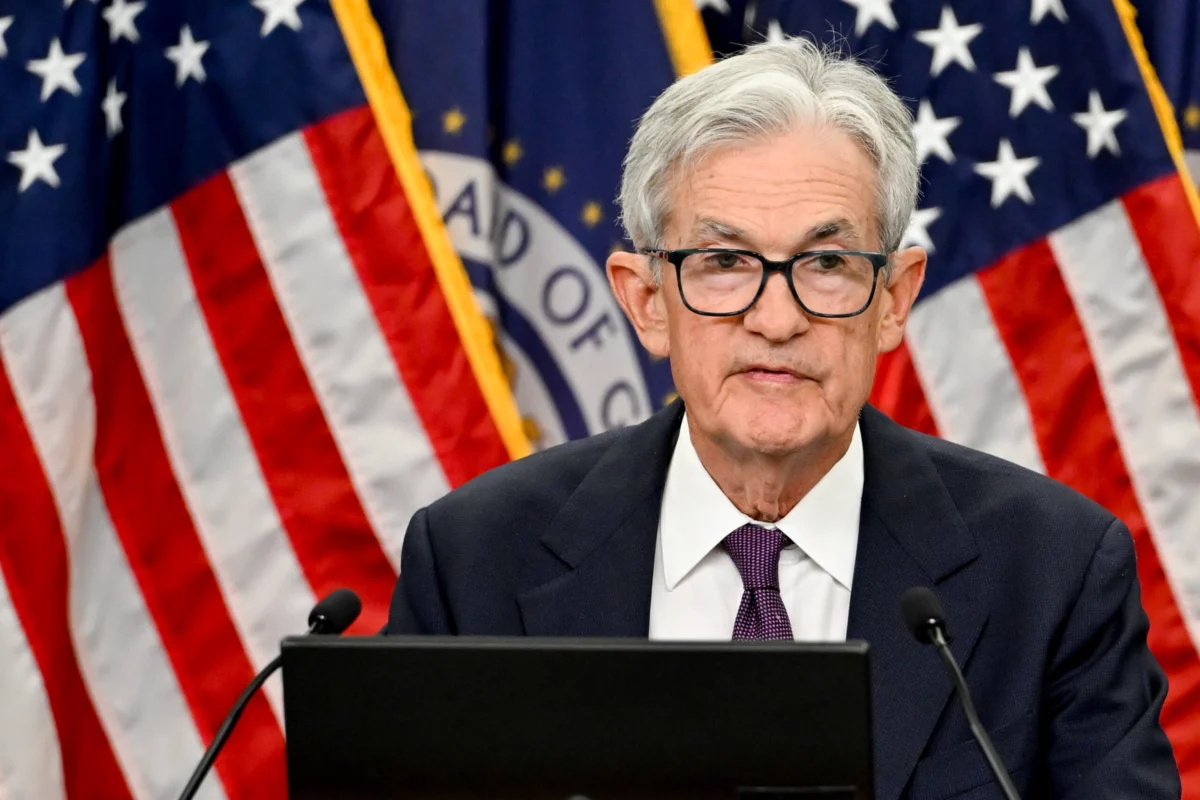
The Federal Reserve concluded its pivotal policy meeting on Wednesday, opting to maintain the federal funds rate within its current target range of 3.5% to 3.75%. This decision, widely anticipated yet fraught with significant implications, reflects a central bank navigating a complex economic landscape marked by an unexpected surge in inflation, escalating geopolitical tensions, and an impending leadership transition. For Chairman Jerome Powell, this meeting could potentially mark his penultimate — or even final — major policy announcement, as President Donald Trump’s yet-to-be-confirmed nominee, Kevin Warsh, stands poised to potentially take the helm.
A Deliberate Pause Amidst Mounting Pressures
The Fed’s decision to hold rates steady comes at a time when the U.S. economy faces a confluence of powerful forces. Prior to the outbreak of the war with Iran, inflation, while above the central bank’s long-term 2% target, was showing signs of stabilization, albeit stubbornly high. Policymakers had been carefully monitoring economic data, seeking opportune moments to potentially adjust rates in response to evolving conditions. Indeed, the latter half of 2025 saw the Fed implement three strategic rate cuts, signaling a cautious pivot aimed at supporting economic growth while still keeping a vigilant eye on price stability. These cuts were largely a response to earlier concerns about a potential economic slowdown and a desire to bring monetary policy closer to a "neutral" stance that neither stimulated nor restricted growth excessively.
However, the eruption of conflict in the Middle East fundamentally altered this delicate equilibrium. The war with Iran immediately triggered an "oil shock," sending energy prices soaring and injecting a new, unpredictable variable into the inflation equation. This sudden and substantial increase in energy costs has economists and policymakers deeply concerned about its potential for broader and longer-term inflationary effects, extending beyond just the price at the pump to impact manufacturing, transportation, and ultimately, consumer goods across the board. Sean Snaith, the director of the University of Central Florida’s Institute for Economic Forecasting, encapsulated the prevailing sentiment, describing the current situation as "a kind of suspended animation — between Iran and the Fed transition." This apt description highlights the paralysis facing policymakers, caught between the imperative to combat inflation and the uncertainty introduced by both geopolitical instability and a looming change in leadership.
The Intricacies of Monetary Policy in a Volatile Climate
The Federal Open Market Committee (FOMC), the Fed’s primary monetary policy-making body, found itself in a challenging position. Hiking rates in the face of an oil-induced inflation surge could risk stifling economic activity at a precarious moment, potentially tipping the economy into recession. Conversely, cutting rates could be interpreted as condoning higher inflation, further eroding purchasing power and consumer confidence. The current federal funds rate target range of 3.5% to 3.75% is considered by many analysts to be broadly neutral, meaning it’s neither highly restrictive nor overtly accommodative. This neutral stance allows the Fed to observe how the economy absorbs the shocks from the Iran conflict and to gather more data on inflation’s trajectory before committing to a definitive tightening or easing cycle.
The decision to maintain rates reflects a strategic patience, a wait-and-see approach as the full economic ramifications of the geopolitical situation unfold. The Fed’s dual mandate of maximum employment and price stability becomes particularly challenging in such an environment. While the labor market has shown resilience, persistent inflation, particularly that driven by external supply shocks, poses a significant threat to the purchasing power of American households. The central bank’s public statements often emphasize data dependency, and with current data points fluctuating wildly due to external events, a steady hand was deemed the most prudent course of action.
A Looming Leadership Transition: Powell to Warsh?
Adding another layer of complexity to the Fed’s current posture is the political backdrop surrounding its leadership. Jerome Powell’s term as Federal Reserve Chair is approaching its conclusion, and President Trump has signaled his intention to nominate Kevin Warsh as his successor. Warsh, a former Fed governor with a background in economic policy and market dynamics, represents a potentially significant shift in leadership style and monetary policy philosophy. While details of his exact policy leanings in the current environment remain speculative, his nomination introduces an element of political uncertainty into an already volatile economic picture.
A change in leadership could lead to a reassessment of the Fed’s long-term strategy, its approach to inflation targeting, and its communication style with markets. For now, Powell continues to steer the ship, but the shadow of a potential transition undoubtedly influences the committee’s cautious approach. The markets, too, are keenly watching this development, as the leadership of the world’s most influential central bank has profound implications for global financial stability and economic direction. This transition period, as Snaith notes, contributes to the overall "suspended animation," as economic actors and policymakers alike await clarity on both geopolitical and domestic policy fronts.
The Consumer’s Reality: No Immediate Relief
For millions of Americans grappling with the day-to-day realities of higher costs, the central bank’s decision to keep interest rates unchanged offers little immediate comfort. Rising gas prices, driven by the war in Iran, coupled with broader affordability challenges across various sectors, continue to strain household budgets. Sean Snaith’s stark assessment that "The cavalry isn’t coming anytime soon" resonates deeply with consumers who had perhaps hoped for some monetary policy intervention to ease their financial burdens.
This period of stagnation in interest rates means that many common forms of consumer debt will remain expensive, and the prospect of significant relief in monthly payments for loans or a substantial boost in savings yields is remote. The cumulative effect of sustained high prices for essentials like fuel, food, and housing continues to erode real wages, making it harder for families to save, invest, or simply make ends meet. The Fed’s actions, or lack thereof in terms of rate changes, directly translate into tangible financial consequences for individuals and families across the nation.

How the Fed’s Decision Trickles Down to Everyday Finances
The Federal Reserve’s benchmark federal funds rate serves as the foundational interest rate in the U.S. economy. It dictates what banks charge each other for overnight lending, and its influence then cascades through the entire financial system, affecting a myriad of consumer borrowing and savings rates. While short-term rates are often more directly pegged to the prime rate – typically 3 percentage points above the federal funds rate – longer-term rates, such as those for home loans, are also significantly influenced by inflation expectations, economic forecasts, and the broader bond market.
Credit Cards:
Credit card interest rates are among the most directly impacted by the Fed’s benchmark. Most credit cards operate with variable rates, meaning their Annual Percentage Rates (APRs) are directly tied to the prime rate. Following the Fed’s three rate cuts in the latter half of 2025, the average APR on credit cards had settled just under 20%, according to Bankrate. However, with no further cuts on the horizon, consumers carrying a balance will continue to face substantial interest charges. Matt Schulz, chief credit analyst at LendingTree, highlighted this reality, stating, "Without Fed rate cuts, there’s not much reason to expect meaningful declines anytime soon, so carrying a balance will remain very expensive." This financial burden disproportionately affects lower-income households and those managing existing debt, making it harder to pay down principal and escape the cycle of high interest.
Mortgage Rates:
Unlike credit card rates, fixed mortgage rates do not directly track the federal funds rate. Instead, they typically follow the lead of long-term Treasury rates, particularly the 10-year Treasury note, which are heavily influenced by inflation expectations and global economic sentiment. The recent concerns surrounding the Iran war and its potential impact on the U.S. economy have already had a pronounced effect on the housing market. Mortgage News Daily reported that the average rate for a 30-year, fixed-rate mortgage surged to 6.38% as of Tuesday, a significant jump from 5.99% at the end of February.
This upward trend in mortgage rates creates a challenging environment for both prospective homebuyers and existing homeowners. For those looking to purchase, higher rates translate into significantly larger monthly payments, reducing affordability and potentially pushing homeownership out of reach for many. For homeowners with existing low mortgage rates, often secured during periods of historically low interest, the current rate environment creates a "lock-in effect." Michele Raneri, vice president and head of U.S. research and consulting at TransUnion, noted that such homeowners are "feeling stuck." This phenomenon stifles housing market activity, as homeowners are reluctant to sell and forfeit their advantageous rates, thereby reducing inventory and further complicating the market dynamics. The "churn" that typically drives housing transactions—people selling to buy new homes—is severely curtailed, leading to a less fluid and more constrained market.
Student Loans:
Federal student loan interest rates are primarily fixed and are determined annually based in part on the May auction of the 10-year Treasury note. This structure means that most federal student loan borrowers are somewhat shielded from immediate Fed moves and recent economic uncertainty. For the current academic year, interest rates on undergraduate federal student loans made through June 30 stand at 6.39%, as reported by the U.S. Department of Education. While future rates will be influenced by the upcoming Treasury auction, the fixed nature provides a degree of predictability. However, private student loans, which often carry variable rates tied to benchmarks like the prime rate or LIBOR (or its successors), are more susceptible to the Fed’s policy decisions and overall market rate fluctuations.
Car Loans:
Auto loan rates are tied to a combination of factors, including the Fed’s benchmark, the borrower’s creditworthiness, and the competitive landscape among lenders. With financing costs remaining elevated due to the broader interest rate environment, new car buyers are increasingly resorting to longer loan terms to keep their monthly payments manageable. Data from Edmunds reveals that the average monthly payment on a new car soared to an all-time high of $773 in the first quarter of 2026, even as the rate on a five-year new car loan hovered near 7%.
Joseph Yoon, a consumer insights analyst at Edmunds, articulated the predicament facing car buyers: "Car buyers are in a tough spot right now because they’re getting squeezed from both ends: high sticker prices and high interest rates, with neither showing any signs of letting up." This strategy of stretching loan terms, while offering immediate relief in monthly payments, ultimately adds significantly to the total cost of ownership over the life of the loan. As Yoon explained, "Until the rate picture shifts, buyers will keep stretching loan terms to make payments work, which only adds to the total cost of ownership down the road," trapping many consumers in longer-term debt for depreciating assets.
Savings Rates:
While the Fed does not directly control deposit rates, the yields offered on savings accounts and certificates of deposit (CDs) tend to correlate closely with changes in the target federal funds rate. Although yields on high-yield savings accounts and CDs have receded from their peaks observed in previous years, they continue to offer attractive returns compared to the historical averages of the past decade. Currently, top-yielding online savings accounts and one-year CD rates are paying around 4%, according to Bankrate.
For savers, this environment, while not as lucrative as earlier highs, still presents opportunities to earn a meaningful return on their deposits, particularly when compared to the paltry rates seen for much of the 2010s. Matt Schulz noted, "Yields on high-yield savings accounts and certificates of deposit are down from their peaks of a few years ago, but they’re still strong compared to what we’ve seen for most of the past decade." This means that proactive savers can still find options that help mitigate some of the inflationary pressures by preserving the purchasing power of their cash. However, these rates are often still below the headline inflation rate, meaning real returns might still be negative depending on the specific inflation figures.
Broader Economic Implications and Future Outlook
The Federal Reserve’s decision to hold rates steady underscores a period of profound uncertainty for the U.S. and global economies. The immediate economic impact of the war with Iran, particularly on energy markets, has complicated the inflation outlook, pushing it back to the forefront of the Fed’s concerns. The potential leadership transition at the Fed adds another layer of unpredictability, as markets and policymakers alike await clarity on the future direction of monetary policy.
The "suspended animation" described by economists is likely to persist as long as geopolitical tensions remain high and the transition of power at the Fed looms. This implies that consumers should not anticipate significant relief from high borrowing costs or dramatic shifts in savings rates in the near term. The burden of high gas prices and overall affordability challenges will likely continue to weigh on household budgets, requiring careful financial planning and adaptation.
Looking ahead, the Fed’s next moves will be heavily contingent on how the Iran conflict evolves, its sustained impact on global energy prices, and the subsequent trajectory of inflation. Policymakers will also be closely monitoring other key economic indicators, including employment figures, consumer spending, and manufacturing data, to gauge the underlying health of the economy amidst these external shocks. Any future adjustments to the federal funds rate will be a delicate balancing act, aiming to cool inflation without triggering a recession, a task made exponentially more challenging by the current geopolitical and political landscape. For now, the message is clear: stability, however uneasy, is the order of the day.
