

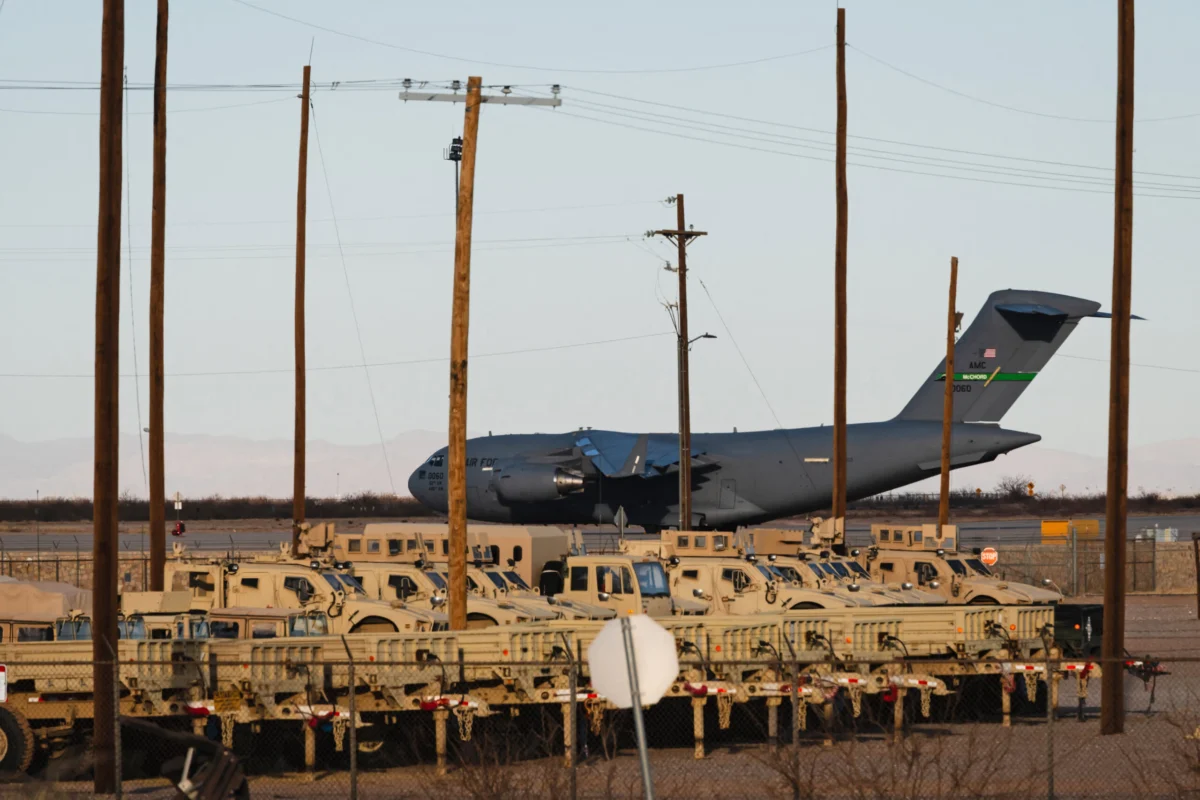
In a significant legal rebuke to the executive branch’s immigration enforcement strategies, U.S. District Court Judge Brian Murphy of Massachusetts ruled on Wednesday that the Trump administration acted in direct violation of a standing federal injunction during the deportation of eight migrants earlier this week. The ruling follows reports that a group of individuals, many of whom originated from Southeast Asia and the Caribbean, were placed on a Boeing C-17 transport plane destined for South Sudan—a country currently grappling with internal conflict and designated by the U.S. State Department as a high-risk zone for travelers.
Judge Murphy’s decision centers on an injunction he issued in March, which mandated that the Department of Homeland Security (DHS) and Immigration and Customs Enforcement (ICE) provide detainees with a meaningful opportunity to raise legal objections or claims of potential torture and persecution before being deported to a country other than their own. During a tense hearing on Wednesday, Murphy characterized the government’s recent actions as "unquestionably violative" of the court’s authority, raising concerns about the erosion of due process in the administration’s accelerated deportation program.
The Legal Conflict and the March Injunction
The core of the legal dispute rests on the administration’s use of "third-country deportations." Under standard international and domestic legal frameworks, individuals are typically repatriated to their country of citizenship. However, the current administration has increasingly sought to deport non-citizens to third-party nations with which they may have no prior connection.
In March, Judge Murphy intervened in this practice by issuing a preliminary injunction. The order was designed to ensure that if the government intended to send a migrant to a third country, that individual must be given sufficient notice and access to legal counsel to argue that such a move would violate the principle of non-refoulement—the international legal prohibition against returning refugees or asylum seekers to a country where they are liable to be subjected to persecution.
The Wednesday ruling confirmed that the administration failed to meet these procedural requirements. According to the court, the migrants were notified of their final destination only hours before their flight departed, effectively neutralizing their ability to seek judicial intervention or consult with their attorneys.
Chronology of the Deportation Flight
The events leading to the court’s ruling unfolded rapidly over a 48-hour period, highlighting what advocates describe as a "blackout" strategy used by immigration authorities to minimize legal challenges.
- Monday Evening: Migrants held in ICE custody were reportedly notified of their deportation destination "sometime in the evening," well outside of standard business hours for legal firms and courts.
- Tuesday Morning: Between 9:00 a.m. and 10:00 a.m., the eight individuals were moved from an ICE facility and boarded a U.S. Air Force Boeing C-17 at Biggs Army Airfield in Fort Bliss, El Paso, Texas.
- Tuesday Midday: Reports began to surface from immigration attorneys that their clients—some of whom are from Vietnam and Myanmar—were being sent to South Sudan.
- Wednesday Morning: DHS officials confirmed during a press briefing that the flight had occurred, identifying the deportees as citizens of Myanmar, Laos, Vietnam, Cuba, Mexico, and South Sudan.
- Wednesday Afternoon: Judge Murphy convened a hearing, including 30 minutes of sealed proceedings, before publicly declaring the administration in violation of his previous order.
As of Wednesday evening, government attorneys confirmed the plane had landed but refused to disclose the exact location of the migrants, stating only that they remained in ICE custody.
Profiles of the Deportees and DHS Justification
The Department of Homeland Security has defended its actions by focusing on the criminal records of the individuals involved. According to DHS statements, the group included Enrique Arias-Hierro, Jose Manuel Rodriguez-Quinones, Thongxay Nilakout, Jesus Munoz-Gutierrez, Dian Peter Domach, Kyaw Mya, Tuan Thanh Phan, and Nyo Myint.
The agency asserted that many of these individuals had been convicted of violent crimes, including murder and sexual assault. By highlighting these convictions, the administration has sought to frame the deportations as a necessary measure for national security and public safety.
However, legal advocates argue that the severity of a person’s criminal history does not waive their constitutional right to due process or their protection under international human rights treaties. Jonathan Ryan, a San Antonio-based immigration attorney representing Nyo Myint, expressed alarm over the lack of transparency. Ryan noted that his client, a native of Myanmar (Burma), may have been diverted, but the government has provided no proof of his whereabouts. "I have not heard from my client," Ryan stated. "How am I supposed to take their word that they sent him to Burma? The government is acting as if due process is a privilege."
South Sudan: A Destination of Extreme Risk
The choice of South Sudan as a destination for migrants from countries like Vietnam and Mexico has drawn sharp criticism from humanitarian organizations and the court itself. South Sudan is currently under a Level 4 "Do Not Travel" advisory from the U.S. State Department—the highest level of warning.
The advisory cites rampant crime, kidnapping, and ongoing armed conflict. In March, the State Department ordered the departure of non-emergency U.S. government employees from the country due to the deteriorating security situation. While a 2018 power-sharing agreement between President Salva Kiir and Vice President Riek Machar ended a five-year civil war that claimed nearly 400,000 lives, the peace is fragile. Recent reports indicate that violent clashes between rival factions have intensified, leading many international observers to warn that the nation is on the cusp of another full-scale civil war.
Sending individuals with no cultural, linguistic, or familial ties to such a volatile environment is viewed by critics as a "death sentence" in all but name. Judge Murphy’s ruling emphasized that the migrants were denied the "meaningful opportunity" to argue that South Sudan was an unsafe destination for them.
The Strategy of Third-Country Deportations
This incident is not an isolated occurrence but rather part of a broader, more aggressive strategy by the Trump administration to clear the backlog of deportable non-citizens. Earlier this month, Judge Murphy blocked a similar attempt by the administration to deport individuals from the Philippines, Vietnam, and Laos to Libya—another nation currently designated as a high-risk conflict zone.
The administration’s reliance on third-country deportations is often necessitated by the refusal of certain "recalcitrant" nations to accept their own citizens back. Countries like China, Vietnam, and Iran have historically limited the number of repatriation flights they accept. By utilizing countries like South Sudan or Libya, the U.S. government attempts to bypass these diplomatic hurdles.
However, this strategy faces significant legal obstacles. The "Notice of Intent to Deport" must traditionally include a country that has agreed to accept the individual. If the destination is a third country, the legal burden on the government to ensure the safety of the deportee increases significantly.
Implications for Executive Power and Due Process
The ruling by Judge Murphy serves as a critical check on executive power, highlighting the ongoing tension between the administration’s "maximum pressure" immigration policy and the judicial branch’s mandate to uphold constitutional protections.
From a legal perspective, the administration’s decision to move migrants during "off-hours" is seen as a tactical move to evade the "stay of removal" orders that attorneys often file the moment a destination is disclosed. By shortening the window between notification and boarding, the government limits the ability of the courts to intervene.
Judge Murphy’s finding that this was "impossible" for the individuals to object to suggests that the court may consider further sanctions or more stringent oversight of ICE flight manifests in the future. Legal experts suggest that if the administration continues to ignore injunctions, it could face contempt of court charges, which would represent a major escalation in the conflict between the White House and the federal judiciary.
Broader Impact on Immigration Policy
The fallout from this ruling is likely to resonate across the national immigration landscape. It emboldens advocacy groups who argue that the administration is prioritizing speed and optics over the rule of law.
Furthermore, the use of military assets like the Boeing C-17 for deportation flights signals a shift toward the militarization of civil immigration enforcement. These aircraft, designed for heavy strategic airlift, allow the government to transport large groups of people over long distances without relying on commercial charters, which are increasingly sensitive to the political and reputational risks associated with deportation contracts.
As the legal battle continues, the fate of the eight individuals remains uncertain. If they have already been offloaded in a third country, the process of returning them to the United States for a proper hearing will be legally complex and diplomatically sensitive. For now, the ruling stands as a stern reminder that even in matters of national security and border enforcement, the government must operate within the boundaries of established judicial orders.
The Department of Justice has not yet indicated whether it will appeal Judge Murphy’s ruling. Meanwhile, immigration attorneys are calling for an immediate accounting of all individuals currently scheduled for third-country deportations, fearing that more flights may be planned to other high-conflict zones in the coming weeks.
