

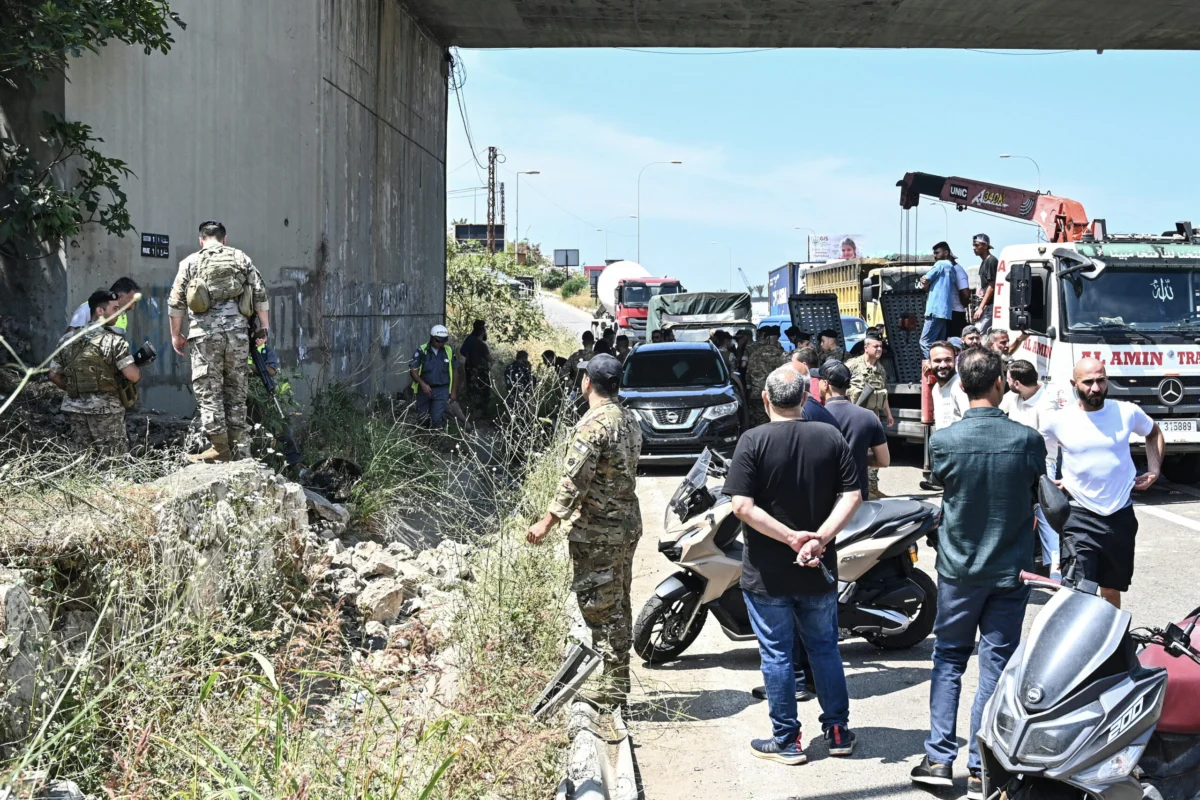
Israel has intensified its aerial and ground assaults across Lebanon, including audacious strikes dangerously close to the capital, Beirut, resulting in the deaths of at least nine individuals and numerous injuries. These aggressive military actions unfold paradoxically amidst ongoing, delicate US-mediated diplomatic discussions in Washington aimed at de-escalating the very conflict they exacerbate. The persistent violence underscores the profound challenges in curbing hostilities between Israel and Hezbollah, casting a long shadow over efforts to secure a durable peace and stability in the volatile region.
Escalation on the Lebanese Front
The latest wave of Israeli offensives, specifically on Wednesday, marked a significant escalation in the protracted conflict. Lebanese state media and the Ministry of Public Health meticulously documented a series of at least ten vehicle strikes, one of which directly targeted an ambulance, a grave violation of international humanitarian law designed to protect medical personnel and facilities. These attacks were geographically widespread, reaching as far north as a few kilometers south of Beirut, in the Khaldeh area on the capital’s southern outskirts, a region previously spared from such direct incursions. Further south, near the coastal city of Tyre and in the municipality of Chehour, intense bombardments claimed more lives and caused extensive damage.
The human cost of these operations has been immediate and tragic. Lebanon’s Health Ministry confirmed the deaths of two medics in Chehour, individuals dedicated to providing vital care in a conflict zone. Additionally, six civilians perished near Tyre, a densely populated area often caught in the crossfire. The Lebanese army also reported the killing of a soldier while he was traveling on a southern road, highlighting the indiscriminate nature of the violence that affects both combatants and non-combatants. The attack in Khaldeh alone resulted in two injuries, according to Lebanese security sources quoted by Reuters, amplifying fears among Beirut residents about the expanding scope of the conflict.
Al Jazeera correspondents on the ground reported a palpable sense of alarm. Ali Hashem, reporting from Beirut, observed that the recent hours had witnessed "an escalation," ominously stating, "This is taking us back to square one." His colleague, Zeina Khodr, also in Beirut, articulated the growing concern that "there is no front line in this ongoing conflict," as the violence creeps ever closer to civilian population centers previously considered relatively safe. Khodr further highlighted Lebanon’s consistent demand for Israel to adhere to a comprehensive ceasefire, a demand that the Israeli government has steadfastly refused to accept, citing its own security imperatives.
A Volatile Regional Backdrop and Diplomatic Fissures
The current surge in hostilities is not an isolated incident but rather a localized manifestation of a broader, more intricate regional conflict, significantly influenced by a larger "US-Israel war on Iran," as alluded to in the original reports from March 2. This overarching geopolitical tension has created a highly combustible environment, with various proxy conflicts and direct confrontations threatening to destabilize the entire Middle East. Iran, a key regional player and supporter of Hezbollah, has explicitly warned that Israeli attacks in Lebanon and Gaza directly jeopardize US-brokered ceasefire talks, underscoring the interconnectedness of these regional flashpoints.
The context of the "US-Israel war on Iran" provides a critical lens through which to understand the current escalation in Lebanon. While specific details of this broader conflict remain beyond the immediate scope of the Lebanese front, its existence implies a heightened state of alert and a willingness by all parties to engage in more aggressive military actions. For Israel, this regional posture likely translates into an imperative to neutralize perceived threats on its northern border, particularly from Hezbollah, which it views as a direct extension of Iranian influence.
Diplomatic efforts, though ongoing, appear increasingly strained. Just days prior to the recent attacks, United States President Donald Trump had conveyed that Israeli Prime Minister Benjamin Netanyahu had committed to halting any planned attacks on Beirut. However, Netanyahu’s office promptly issued a clarifying statement, asserting Israel’s continued right to strike Beirut if Hezbollah’s actions persisted. This immediate divergence underscored the deep chasm between diplomatic assurances and military realities.
Speaking on the "Pod Force One" podcast on Wednesday, President Trump publicly acknowledged a "recent tense exchange" with Netanyahu, expressing that he was "a little bit perturbed at his constantly fighting with Lebanon." This rare public display of frustration from a key ally highlights the difficulties Washington faces in reining in its partners amidst a complex security landscape. Netanyahu, for his part, remained resolute in his stance, reiterating Israel’s strategic objectives to "disarm Hezbollah" and "demilitarise Lebanon" as preconditions for achieving peace with its northern neighbor. These objectives are deeply contentious and are vehemently rejected by Lebanon and Hezbollah, who view such demands as infringements on national sovereignty and legitimate resistance.
The Illusion of Ceasefire and Cycles of Retaliation
Despite a nominal "ceasefire" agreement reached in mid-April, the reality on the ground has been a continuous cycle of attacks and counter-attacks between Israel and Hezbollah. Both sides routinely accuse the other of violating the truce, using alleged breaches as justification for their own military responses. Israeli forces have reportedly broken the ceasefire on a near-daily basis, according to Lebanese authorities, maintaining a consistent pressure campaign.
Hezbollah, the powerful Lebanese Shia political party and militant group, has not remained passive. On Wednesday, the group launched its own retaliatory strikes against Israel, including firing rockets at Israeli soldiers in northern Israel. The Israeli military confirmed these actions, stating that it had successfully downed a "hostile aircraft" and two projectiles that had crossed into Israeli territory from Lebanon. Israeli Ambassador to the US, Michael Leiter, quickly characterized the interception as having prevented "what could have been a deadly attack on civilians, including children," reinforcing Israel’s narrative of defensive action.
Washington Talks: A Glimmer of Hope Amidst the Storm
Against this backdrop of escalating violence, Israeli and Lebanese negotiators convened in Washington for a second consecutive day of direct talks, marking the fourth round of such crucial discussions. US Secretary of State Marco Rubio, addressing a congressional panel, expressed cautious optimism, indicating his hope that the two sides would issue a joint statement and an actionable plan "on the track for security" in Lebanon, critically adding, "independent from Hezbollah." This particular phrase underscores a key US and Israeli objective: to diminish Hezbollah’s influence and ultimately disarm the group, which they consider a terrorist organization and a destabilizing force.
The mediation efforts are not confined to Washington. Al Jazeera’s Ali Hashem, citing well-informed political sources in Beirut, indicated that the next 24 hours would be "very crucial," with additional mediation efforts also underway in Qatar, a country known for its diplomatic engagement in regional conflicts. "There are attempts to arrive at a comprehensive ceasefire in Lebanon, which everyone here in Lebanon would love to see in order to end their plight," Hashem conveyed, reflecting the profound yearning for peace among the Lebanese population, which has borne the brunt of successive conflicts.
The Devastating Toll: A Humanitarian Crisis
The statistics paint a grim picture of the humanitarian catastrophe unfolding in Lebanon. Since Israel intensified its attacks on March 2, shortly after the commencement of the broader "US-Israel war on Iran," the country has witnessed an appalling death toll. According to Lebanon’s Health Ministry, a staggering 3,516 people have been killed, and 10,674 wounded. These figures represent not just numbers but countless shattered lives, families torn apart, and communities traumatized.
Beyond the immediate casualties, the conflict has triggered a massive displacement crisis. Invading Israeli forces have pushed north of the Litani River in Lebanon, a strategically significant geographical boundary, leading to the forced displacement of more than one million people from their homes. These internally displaced persons (IDPs) face immense challenges, including lack of adequate shelter, food, medical care, and education, placing immense pressure on Lebanon’s already fragile infrastructure and economy. The displacement also has long-term socio-economic consequences, disrupting livelihoods and exacerbating poverty.
The destruction of infrastructure has been extensive. Reports indicate widespread damage to residential areas, roads, agricultural lands, and vital public services. The targeting of vehicles, including ambulances, further compounds the humanitarian crisis by impeding rescue efforts and access to medical aid for the injured. This systematic destruction is often seen as a tactic to exert pressure on the local population and to degrade the operational capabilities of opposing forces, but it invariably results in immense civilian suffering.
Implications and Future Outlook
The continued escalation in Lebanon carries severe implications for regional stability. The direct involvement of the United States in mediation, coupled with the explicit mention of a wider "US-Israel war on Iran," suggests that the Lebanese front is not isolated but part of a larger geopolitical chessboard. A failure to secure a lasting ceasefire in Lebanon could easily trigger a wider conflagration, drawing in more regional and international actors, with potentially catastrophic consequences for the entire Middle East.
For Lebanon, the implications are dire. The country, already grappling with a severe economic crisis and political instability, can ill afford another large-scale conflict. The humanitarian toll, the displacement of its population, and the destruction of its infrastructure will further cripple its ability to recover and rebuild. The insistence by the US and Israel on disarming Hezbollah, while a clear strategic objective for them, is a highly complex internal Lebanese issue that touches upon national sovereignty, political representation, and the very fabric of the state.
The current diplomatic efforts in Washington and Qatar, while offering a sliver of hope, face formidable obstacles. The fundamental disagreement between Israel’s demand for demilitarization and Lebanon’s insistence on a full ceasefire, coupled with Hezbollah’s continued operational capabilities, creates a seemingly intractable dilemma. The role of external powers, particularly the US, in navigating these intricate dynamics will be crucial. However, as President Trump’s "perturbed" reaction suggests, even strong alliances are tested when faced with the relentless realities of conflict and the divergent priorities of sovereign nations. The next days and weeks will be critical in determining whether diplomacy can finally prevail over the escalating violence or if the region is condemned to further cycles of conflict and suffering.
