

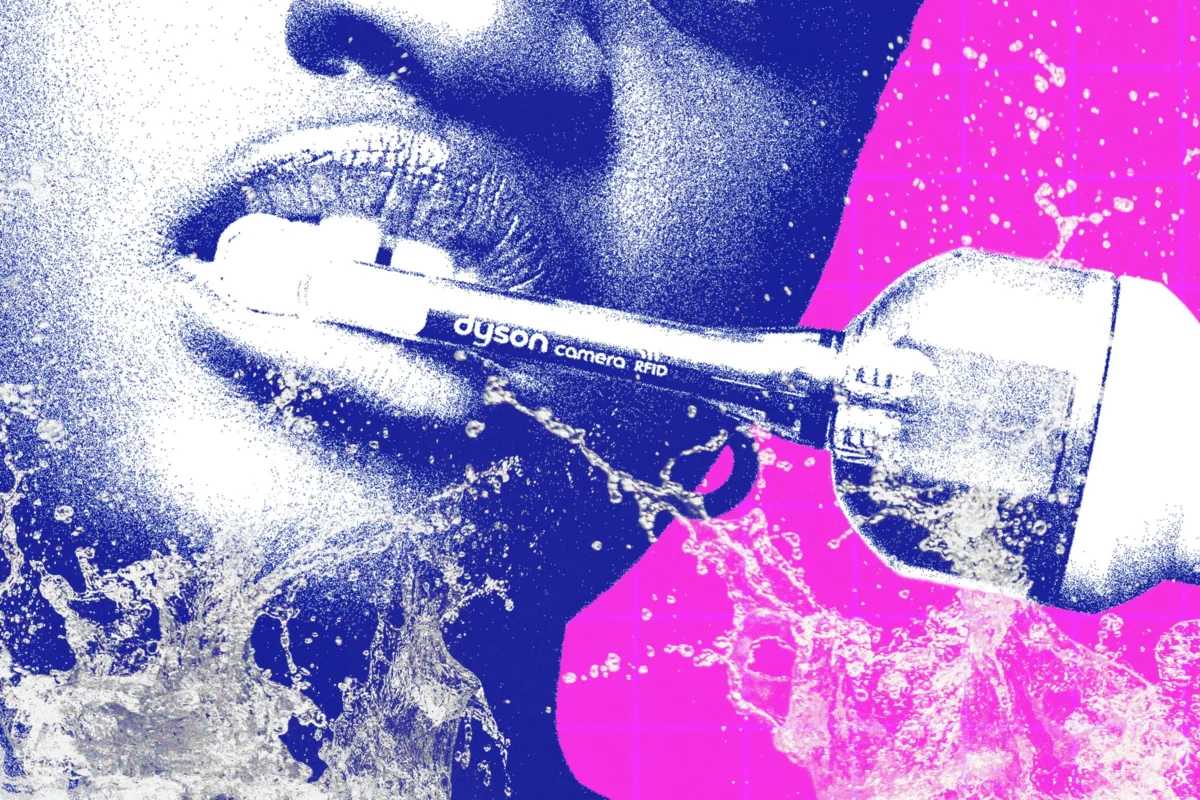
The intersection of luxury consumer technology and everyday hygiene has encountered a significant hurdle as Dyson, the British technology giant known for its vacuums and hair care products, faces a global setback with its latest innovation. After six years of research and development, the Dyson CameraJet—a $499 high-tech electric toothbrush and water flosser hybrid—has been pulled from shelves in multiple international markets just days after its high-profile launch. The disappearance of the product from digital and physical storefronts has sparked intense scrutiny over its engineering and the company’s handling of what appears to be a systemic hardware failure.
The CameraJet was designed to be a revolutionary leap in oral hygiene, merging traditional brushing with a sophisticated "Gap Optical Targeting system." This system utilized a macro-lens camera and an onboard processor trained on 470,000 dental images to identify gaps between teeth within 100 milliseconds, delivering precise bursts of mouth rinse from a built-in 12.5-milliliter reservoir. However, the complexity of the device, which includes 38 patents and a price tag five times higher than many premium competitors, may have been its undoing. Reports of total hardware failure and water ingress into sensitive electronics have surfaced almost immediately following the product’s release, raising questions about the limits of over-engineering in household appliances.
A Brief History of Oral Care Innovation
To understand the scale of Dyson’s ambition, one must look at the evolution of the toothbrush. The origins of the bristle toothbrush trace back to the Tang Dynasty in China, with more modern designs emerging in the 15th century. For hundreds of years, the manual brush remained the gold standard of dental health. It was not until 1937 that Tomlinson Moseley filed a patent for the first electric toothbrush, eventually leading to the Motodent, which ushered in the era of powered oral care.
In the decades since, the market has seen incremental improvements, such as sonic vibrations and oscillating heads. Companies like Waterpik eventually integrated water flossing with brushing in devices like the Sonic-Fusion 2.0. Dyson, however, sought to apply its signature engineering philosophy—previously seen in its radical reimagining of the vacuum cleaner and the hair dryer—to solve the "problem" of manual flossing. By adding a camera and artificial intelligence to a device meant to operate in a high-moisture environment, Dyson moved into a territory where few consumer electronics companies have successfully ventured.
The Chronology of a Failed Launch
The rollout of the CameraJet was characterized by a rapid transition from celebration to crisis. On a global stage in Paris, Sir James Dyson personally introduced the device, framing it as the ultimate solution for oral health. The subsequent timeline of its market presence, however, suggests a significant disconnect between the laboratory and the real world.
On September 8, the CameraJet officially went on sale in the United States. Within 24 hours, the first wave of consumer complaints appeared on social media and tech forums. Users reported that the devices were failing within 30 seconds of their first use. By September 9, Consumer Reports had documented its own review unit failing less than a day after being unboxed. The primary symptoms included a refusal to charge, overheating, and visible water entering the battery compartment.
The response from international markets was swift. On September 11, French tech outlet Numerama reported that Dyson’s French website and retail stores had ceased sales. By September 15, the withdrawal had spread to the United Kingdom and Singapore—the latter being the location of Dyson’s global headquarters. As of late September, the product remains unavailable for purchase across all major territories, despite the lack of an official safety recall notice.
Technical Analysis and Expert Insights
The failure of the CameraJet appears to be rooted in the fundamental challenge of waterproofing a device that contains both high-speed fluid pumps and delicate optical sensors. Industry experts have pointed to the inherent difficulty of manufacturing such a complex device at scale.
Kyle Wiens, the CEO of the repair and teardown site iFixit, suggests that the problem is likely a "waterproofing issue." According to Wiens, maintaining the tolerances required to keep water out of electronic internals is notoriously difficult during mass production. He posits that the failures could stem from a "tolerance issue where parts aren’t mating perfectly" or a failure in the adhesive curing process. Adhesives used for waterproofing can be compromised by fluctuations in temperature and humidity during international shipping, leading to a product that passes factory testing but fails immediately upon reaching the consumer’s bathroom.

Adam Toner, founder and technical director of Ripcord Designs, further analyzed the device’s architecture. He noted that the design of the battery compartment—specifically how it interfaces with the main body of the brush—appears to be a point of vulnerability. "Once you pull the battery off, it looks like there is probably access from that battery compartment into all of the internals of the device," Toner observed. In a product designed to be submerged and to carry its own liquid reservoir, even a minor failure in a gasket or O-ring can lead to catastrophic short-circuiting.
Dyson’s Official Response and Market Strategy
Despite the widespread reports of defective units and the total removal of the product from the market, Dyson has maintained a defensive public stance. Liv Thomas, Dyson’s Head of Beauty Communications, has denied that the product has been recalled. Instead, the company attributes the lack of availability to "strong demand globally" and "shortages of supply" as they scale production.
However, Thomas did acknowledge the existence of a technical flaw, stating that the company had "identified a single component issue affecting a small number of early batches." Dyson has refused to provide specific details regarding which component is at fault, how many units were affected, or a definitive date for when the product will return to market. This lack of transparency has led to frustration among early adopters, some of whom have taken to Reddit to label the device the "ScameraJet."
The refusal to issue a formal recall is a point of contention. In many jurisdictions, a formal recall is required if a product poses a safety risk, such as fire or electric shock. While Dyson maintains the issue is merely a functional failure, the reports of units overheating while charging suggest a potential safety implication that could eventually draw the attention of regulatory bodies like the U.S. Consumer Product Safety Commission (CPSC).
Broader Implications for the Premium Tech Market
The CameraJet incident serves as a cautionary tale for the "premiumization" of household goods. Dyson has built a multi-billion dollar empire by convincing consumers that basic tasks—vacuuming, drying hair, and purifying air—can be done better with high-priced, over-engineered tools. While this strategy succeeded with the Supersonic hair dryer, it has seen notable misses, such as the Dyson Zone air-purifying headphones, which were criticized for their bulky design and high price.
The failure of the CameraJet may signal a "tipping point" where the complexity of a product outweighs its utility. A $500 toothbrush that requires an AI-driven camera to perform a task that can be accomplished with 50 cents worth of dental floss is, by definition, a luxury niche. When that luxury niche fails to perform its primary function due to basic engineering oversights like waterproofing, the brand’s reputation for "superior engineering" is put at risk.
Furthermore, the incident highlights the growing movement for "right to repair." As Kyle Wiens of iFixit noted, Dyson’s trend toward highly integrated, difficult-to-repair devices makes it harder for the company to "rework" faulty inventory when manufacturing defects occur. If the CameraJet had been designed with modularity in mind, Dyson might have been able to replace the "single faulty component" without pulling the entire product line from global shelves.
Future Outlook
Dyson has promised that the CameraJet will return to stores in the "coming weeks" once the supply chain issues and component faults are addressed. However, the road to recovery for the product will be steep. Consumer trust, particularly among those who spent $500 on a device that lasted less than a day, is significantly damaged.
The company must now decide whether to double down on the CameraJet’s complex design or simplify the device to ensure long-term reliability. As the premium oral care market continues to grow—projected to reach over $30 billion globally by the end of the decade—Dyson remains a potent player with deep pockets for R&D. Whether they can turn the "CameraJet" from a punchline on Reddit into a staple of the high-end bathroom remains to be seen. For now, the "next leap forward for teeth" remains on hold, serving as a reminder that in the world of product design, sometimes simple really is best.
