

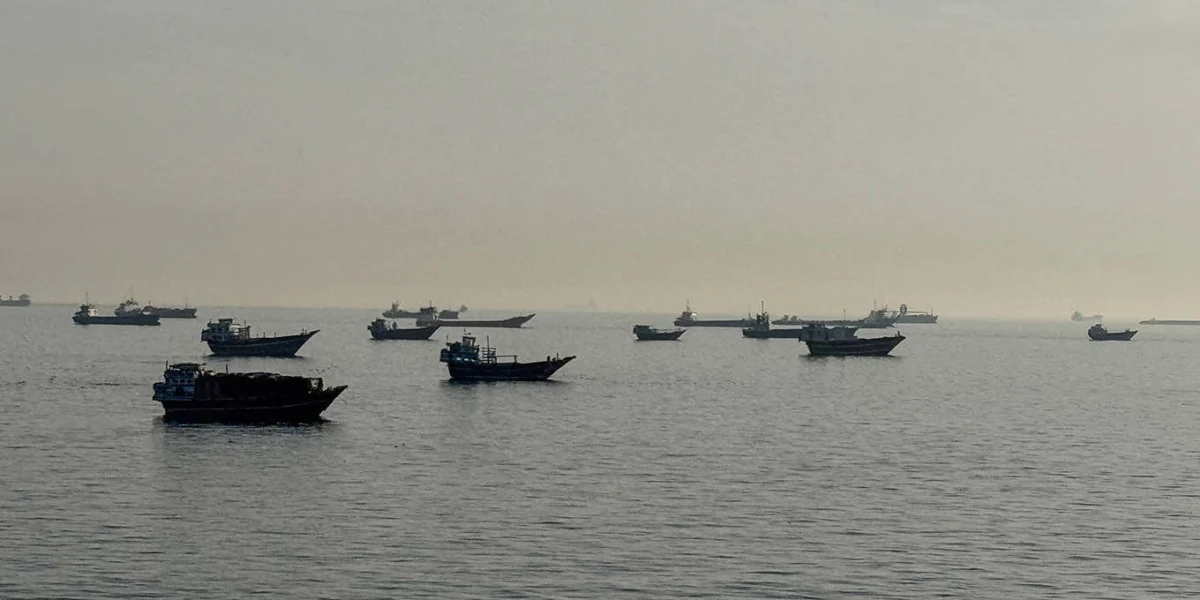
Donald Trump confronts a formidable geopolitical triad in the Persian Gulf, seeking to dismantle Iran’s nuclear ambitions, guarantee the perpetual unimpeded flow through the Strait of Hormuz, and crucially, avoid being the American president who presides over the “loss” of Taiwan to China. The stark reality for the incumbent U.S. president is that his administration can realistically achieve, at best, two of these three ambitious objectives. This complex interplay of strategic priorities and inherent contradictions forms the crux of a precarious balance of power in a region already teetering on the edge of volatility.
The Strategic Imperatives: A Delicate Balancing Act
The Trump administration’s foreign policy in the Middle East has been characterized by a resolute stance against Iran and a broader commitment to asserting American influence. The three stated objectives, while seemingly distinct, are deeply interconnected and present a significant challenge in terms of resource allocation, diplomatic maneuvering, and the potential for unintended consequences.
1. Unwinding the Iranian Nuclear Program: This objective stems from the Trump administration’s withdrawal from the Joint Comprehensive Plan of Action (JCPOA) in May 2018, deeming it insufficient to curb Iran’s nuclear aspirations. The administration has since implemented a "maximum pressure" campaign, imposing stringent sanctions with the aim of forcing Iran back to the negotiating table for a more comprehensive agreement. The core concern is preventing Iran from acquiring nuclear weapons, a prospect that would dramatically alter the regional security landscape and pose a direct threat to U.S. allies like Israel and Saudi Arabia. Data from the International Atomic Energy Agency (IAEA) has consistently monitored Iran’s nuclear activities, and the U.S. has cited specific instances of non-compliance or potential deviations from the JCPOA’s spirit as justification for its policy.
2. Permanently Reopening the Strait of Hormuz: The Strait of Hormuz, a vital chokepoint for global oil shipments, has been a focal point of regional tensions, particularly with Iran’s threats to close it during periods of heightened conflict. The U.S. Navy regularly patrols the strait to ensure freedom of navigation, a commitment that has, at times, led to direct confrontations with Iranian naval forces. The economic implications of a prolonged closure are immense, potentially driving global oil prices to unprecedented levels and triggering a worldwide recession. Ensuring the permanent unimpeded passage through this waterway is thus a critical economic and security imperative for the United States and its allies. Statistics from the U.S. Energy Information Administration (EIA) indicate that approximately 30% of global seaborne oil trade passes through the Strait of Hormuz, underscoring its strategic significance.
3. Preventing the "Loss" of Taiwan to China: While seemingly geographically disparate from the Persian Gulf, the "loss" of Taiwan to China is framed as a critical objective by the Trump administration, reflecting a broader strategic competition with Beijing. The administration has increased military support for Taiwan, a self-governing democracy that China claims as its own. The potential for a Chinese invasion of Taiwan is a scenario that would have profound global economic and geopolitical ramifications, potentially drawing the United States into a direct conflict with China. The administration’s aversion to being remembered as the president under whom this critical geopolitical shift occurred highlights the political stakes involved. Taiwan’s status as a leading producer of advanced semiconductors further elevates its importance in the global supply chain, making its security a matter of international economic stability.
The Interconnectedness and Inherent Contradictions
The challenge lies in the inherent contradictions and the limited resources, both diplomatic and military, available to pursue these objectives simultaneously.
-
Iran and Hormuz: The pursuit of unwinding Iran’s nuclear program through maximum pressure can, paradoxically, increase the likelihood of Iran acting provocatively in the Strait of Hormuz. As Iran feels cornered, its ability to lash out and disrupt maritime traffic becomes a potent tool of asymmetric warfare. Conversely, a strong U.S. military posture to ensure passage through Hormuz could be interpreted by Iran as an escalatory act, further fueling its nuclear ambitions as a deterrent.
-
Iran and Taiwan: The focus on Iran in the Persian Gulf could divert crucial attention and resources away from the Indo-Pacific, potentially emboldening China in its assertiveness towards Taiwan. A protracted conflict or sustained high-tension situation in the Middle East would inevitably strain U.S. military readiness and diplomatic bandwidth, creating openings for adversaries elsewhere.
-
Taiwan and Hormuz: A direct military confrontation with China over Taiwan would almost certainly necessitate a significant redeployment of U.S. naval assets, potentially weakening its ability to project power and maintain stability in the Persian Gulf. This could create a window of opportunity for Iran to exploit the situation in the Strait of Hormuz, further complicating U.S. strategic calculations.
A Timeline of Shifting Dynamics
The Trump administration’s approach to these issues has evolved since its inception.
-
2017-2018: The initial phase saw the withdrawal from the JCPOA and the imposition of stringent sanctions on Iran, signaling a hardline stance. Simultaneously, the administration began to articulate a more robust policy towards China, often framed through trade disputes. Support for Taiwan also saw a gradual increase.
-
2019-2020: Tensions in the Persian Gulf escalated, with several incidents involving Iran and international shipping. The U.S. increased its naval presence in the region. The rhetoric surrounding China and Taiwan also intensified, with increased military sales and diplomatic engagement with Taipei.
-
2021-2022: While the Trump administration’s term concluded, the geopolitical dynamics it helped shape continue to influence global affairs. The ongoing war in Ukraine has further complicated energy markets and redirected some U.S. strategic focus. However, the core challenges in the Persian Gulf and the Indo-Pacific remain, with the underlying tension between Iran and the West, and between the U.S. and China, persisting.
-
May 2026 (Current Context): The article’s dateline suggests a future perspective, implying that these strategic dilemmas have not been resolved. The mention of a "partial reopening of the Strait of Hormuz" suggests a de-escalation of immediate threats but raises questions about the sustainability of such a peace and whether a "lasting regional settlement" is any closer. This implies that the broader tensions, which fuel the need for such a reopening, remain.
Supporting Data and Expert Analysis
Numerous reports and analyses have underscored the complexities of these strategic objectives.
-
Iran’s Nuclear Program: The Stockholm International Peace Research Institute (SIPRI) has documented the global proliferation of nuclear weapons and the ongoing efforts to curb them. Their data often highlights the challenges of verification and the delicate nature of arms control agreements. U.S. intelligence assessments, though often classified, have consistently pointed to Iran’s potential to develop nuclear weapons capabilities, even if the timeline has been debated.
-
Strait of Hormuz Security: The U.S. Department of Defense regularly publishes reports on its global military posture and operations. These reports often detail the significant resources dedicated to maintaining freedom of navigation in critical maritime chokepoints like the Strait of Hormuz. Think tanks like the Center for Strategic and International Studies (CSIS) have produced in-depth analyses of maritime security in the Persian Gulf, detailing the military capabilities of regional actors and the potential for conflict.
-
Taiwan Strait Dynamics: The U.S. Department of Defense’s annual report on "Military and Security Developments involving the People’s Republic of China" provides extensive data on China’s military modernization and its intentions regarding Taiwan. Analyses from institutions like the RAND Corporation consistently explore various scenarios for a potential conflict in the Taiwan Strait, outlining the immense economic and human costs involved.
Official Responses and Inferred Reactions
While the article is from the perspective of Simon Johnson and Amir Kermani, inferring official responses requires understanding the general policy directions of the administrations involved.
-
U.S. Administration (Hypothetical Future): Given the premise, any U.S. administration would likely maintain a strong diplomatic and military stance on all three issues. However, the specific emphasis and the trade-offs made would depend on the prevailing geopolitical climate. For instance, a significant escalation in the Taiwan Strait might necessitate a temporary de-emphasis on Iran, or vice versa. Diplomatic channels would remain open, albeit with varying degrees of engagement, with Iran and China.
-
Iran: Iran’s response would likely be characterized by a continued reliance on asymmetric tactics and a steadfast rejection of what it perceives as external pressure. The nuclear program would remain a key strategic asset, and threats to regional stability would be leveraged as a bargaining chip.
-
China: Beijing would continue its assertive stance on Taiwan, viewing it as a core national interest. Any perceived U.S. distraction in the Middle East would likely be seen as an opportunity to advance its objectives in the Indo-Pacific.
Broader Impact and Implications
The inability to achieve all three of President Trump’s objectives carries significant implications:
-
Regional Instability: A failure to fully neutralize Iran’s nuclear program or secure the Strait of Hormuz could lead to heightened regional tensions, potential proxy conflicts, and an increased risk of larger-scale military confrontations. This would have devastating consequences for the populations of the Middle East and could disrupt global energy supplies.
-
Shifting Global Power Balance: If Taiwan were to fall under Chinese control, it would represent a significant shift in the global balance of power, potentially undermining U.S. credibility and alliances in the Indo-Pacific and beyond. This could embolden other authoritarian regimes and reshape international norms.
-
Economic Uncertainty: Continued instability in the Strait of Hormuz or a conflict in the Taiwan Strait would undoubtedly lead to significant disruptions in global trade and financial markets, exacerbating existing economic challenges and potentially triggering a global recession.
-
The Perils of Overextension: The inherent tension between these objectives highlights the danger of strategic overextension. Attempting to pursue too many high-stakes goals simultaneously with limited resources can lead to dilution of effort, strategic blunders, and ultimately, failure to achieve any of the desired outcomes. The Biden administration, and any subsequent administration, will continue to grapple with these complex interconnected challenges, facing the difficult task of prioritizing and balancing competing interests in a volatile global landscape. The future of regional security and global stability hinges on navigating these intricate geopolitical fault lines with a clear-eyed understanding of the trade-offs involved.
