

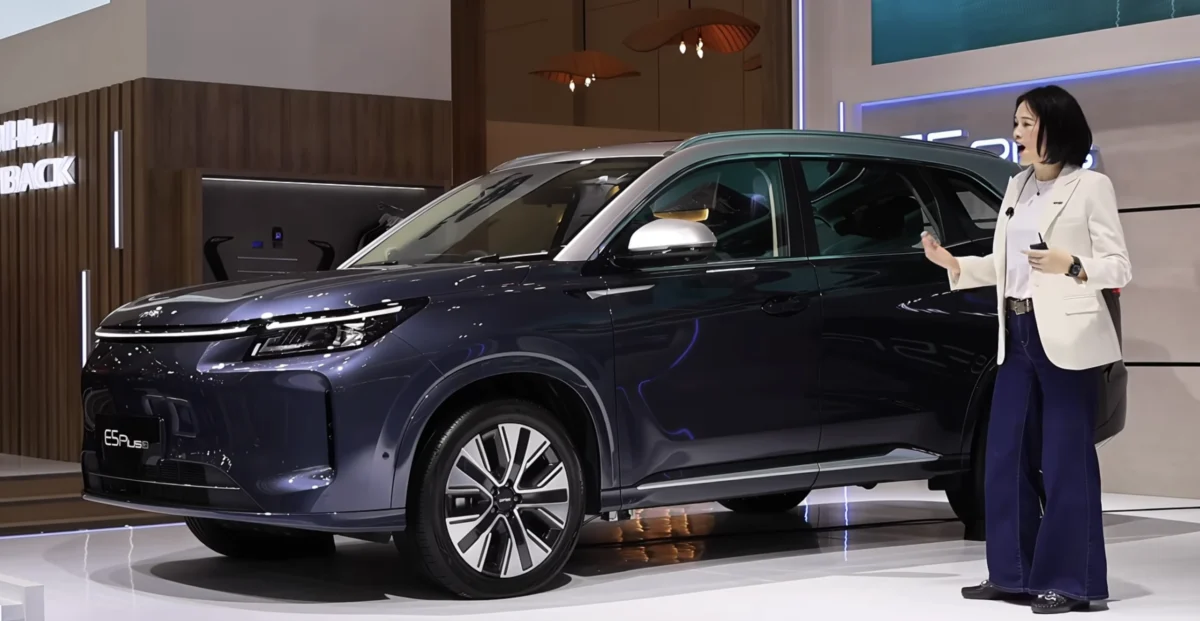
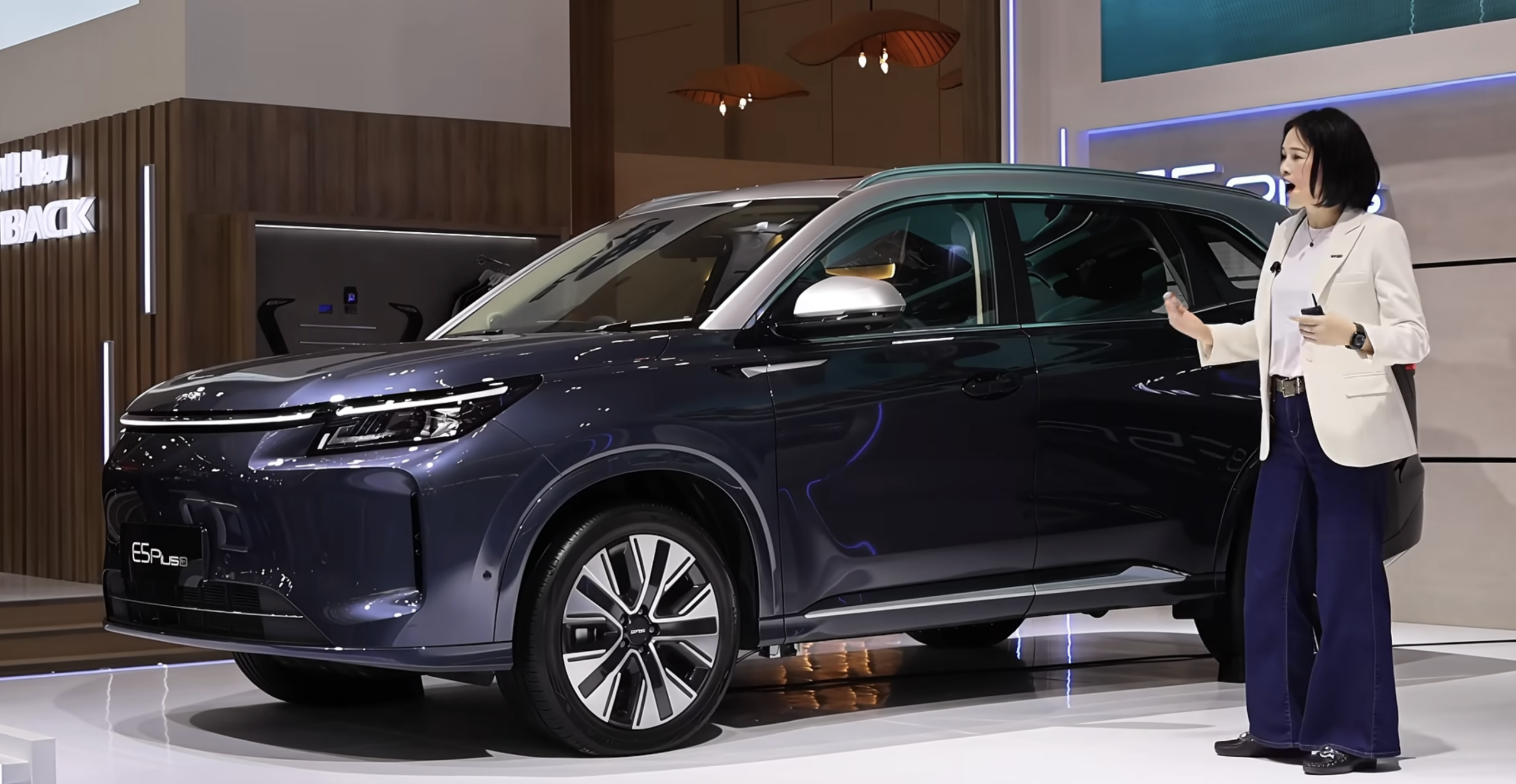
The 2026 Gaikindo Indonesia International Auto Show (GIIAS) in Tangerang served as the stage for a significant shift in the Southeast Asian automotive landscape as Chinese manufacturer DFSK officially unveiled the right-hand drive version of its E5 Plus plug-in hybrid SUV. This debut marks a critical milestone for the brand, representing its first foray into right-hand drive markets with this specific model following a preliminary showcase at the International Automotive and Supply Chain Expo in Hong Kong earlier this year. Operating under the Seres Group umbrella, DFSK’s latest move signals a transition from simple export-oriented operations to a deeply integrated, localized manufacturing and distribution strategy designed to challenge the long-standing dominance of Japanese automakers in the region.
The introduction of the E5 Plus is a calculated response to the unique infrastructure challenges and consumer preferences found across the Association of Southeast Asian Nations (ASEAN). While the global automotive industry has seen a massive push toward battery electric vehicles (BEVs), the reality in markets like Indonesia, Thailand, and Malaysia remains complex. Public charging infrastructure, while expanding, is largely concentrated in major metropolitan hubs such as Jakarta and Bangkok. For the millions of drivers living in provincial areas or those who frequently travel long distances between cities, "range anxiety" and the prospect of long wait times at charging stations remain significant barriers to adoption. By launching a plug-in hybrid vehicle (PHEV), DFSK aims to provide a "bridge" technology that offers the environmental benefits of electric driving without the logistical constraints of a pure BEV.
Technical Specifications and the Seres Super Hybrid System
At the heart of the E5 Plus is the Seres Super Hybrid System, a sophisticated powertrain designed to balance fuel efficiency with high-performance output. The vehicle features a 1.5-liter gasoline engine paired with a 25.3-kilowatt-hour battery pack. According to manufacturer data based on the New European Driving Cycle (NEDC), the E5 Plus can achieve up to 140 kilometers of pure electric range on a single charge. This range is specifically calibrated to cover the average daily commute in congested cities like Jakarta, where stop-and-go traffic can drastically reduce the efficiency of traditional internal combustion engines.

For long-distance travel, the combined gasoline-electric system offers a total driving range of approximately 1,400 kilometers. This dual-source capability allows drivers to utilize electric power for urban errands while relying on the internal combustion engine for inter-provincial journeys, effectively neutralizing the limitations of the current charging network. The powertrain is managed by an intelligent control unit that optimizes energy distribution based on driving conditions, ensuring that the battery remains charged through regenerative braking and engine-assisted generation.
Localized Engineering for Indonesian Terrain
Recognizing that the Indonesian market has distinct requirements, DFSK has implemented several region-specific modifications to the E5 Plus. Indonesia is a market where large family vehicles, particularly Multi-Purpose Vehicles (MPVs) and mid-sized SUVs, dominate sales. To meet this demand, the Indonesian-spec E5 Plus features a six-seat cabin configuration. This layout includes independent second-row captain chairs, a feature highly prized by Indonesian consumers for the increased comfort and "premium" feel it provides for family transport.
The vehicle’s physical engineering has also been tuned for local conditions. The suspension system utilizes an adaptive frequency selective damping (FSD) setup. This technology is designed to maintain vehicle stability during Indonesia’s intense monsoon seasons, where heavy rains can create hazardous, slick road surfaces. Furthermore, the damping system is calibrated to handle the varied quality of Indonesian roads, ranging from smooth tollways to uneven rural paths and unpaved tracks in more remote provinces.
Digital Localization and Advanced Safety Suites
A common critique of early Chinese automotive exports was the lack of localized software, with many vehicles featuring interfaces that were difficult for international users to navigate. DFSK has addressed this by localizing the E5 Plus digital cockpit to support five regional languages: Bahasa Indonesia, Thai, Malay, Vietnamese, and Traditional Chinese. The infotainment system comes standard with Apple CarPlay and Android Auto integration, along with native support for streaming platforms like Spotify, ensuring a seamless transition for tech-savvy younger buyers.
Safety technology is another pillar of the E5 Plus offering. The Indonesian model is equipped with a comprehensive Advanced Driver Assistance System (ADAS). The suite is powered by five millimeter-wave radar units and a total of 22 sensors distributed around the vehicle. Key features include:
- Adaptive Cruise Control (ACC) for highway driving.
- Lane Centering Control (LCC) and Lane Departure Warning (LDW).
- A 360-degree high-definition camera array.
- A "transparent underbody" view, which allows drivers to see obstacles directly beneath the vehicle—a critical tool when navigating narrow urban alleyways or rocky rural terrain.
The Strategic Importance of West Java Manufacturing
The E5 Plus is not merely being imported into Indonesia; it is being assembled at the Seres Group’s state-of-the-art manufacturing facility in Cikarang, West Java. This localized production is a cornerstone of DFSK’s regional strategy. The Indonesian government has instituted strict "Local Content Requirements" (known locally as TKDN) that vehicles must meet to qualify for significant tax incentives and import tariff exemptions. By manufacturing locally, DFSK can price the E5 Plus more competitively against established Japanese rivals.
Furthermore, Indonesia is home to the world’s largest reserves of nickel, a primary component in the lithium-ion batteries used in electric and hybrid vehicles. The Indonesian government has been aggressive in its "downstreaming" policy, encouraging foreign firms to not only extract raw materials but to build processing plants and assembly lines within the country. By anchoring its production in West Java, DFSK aligns itself with Jakarta’s long-term industrial goal of becoming a global hub for the EV supply chain.
The Cikarang plant is also positioned as a strategic export base. Developing right-hand drive (RHD) tooling in Indonesia allows DFSK to streamline the export process to other RHD markets, including Thailand, Malaysia, Australia, South Africa, and potentially the United Kingdom. Historically, Chinese manufacturers focused primarily on left-hand drive (LHD) vehicles for their domestic market, making RHD exports a secondary and often expensive engineering track. By establishing a dedicated RHD production node in Indonesia, DFSK significantly reduces its logistical overhead and time-to-market for the broader Commonwealth and ASEAN regions.

Market Context: Challenging the Japanese Incumbency
The arrival of the E5 Plus comes at a time of shifting loyalties in the Southeast Asian auto market. For decades, Japanese brands such as Toyota, Honda, and Mitsubishi have enjoyed a near-monopoly, often holding more than 80 percent of the market share in Indonesia. These brands built their reputations on reliability, extensive service networks, and high resale values.
However, the transition to electrification has provided an opening for Chinese manufacturers. While Japanese firms were relatively slow to pivot toward full electrification, Chinese brands like BYD, Wuling, and now DFSK have moved aggressively. Early indicators suggest that Indonesian consumers are increasingly willing to switch brands in exchange for advanced technology and lower operating costs. Company officials reported that the E5 Plus secured over 1,200 pre-orders even before its official unveiling at GIIAS 2026, a figure that suggests strong consumer confidence in the Seres-backed platform.
Chronology of DFSK in Indonesia
DFSK’s journey in the Indonesian market has been one of steady evolution:
- 2017: DFSK officially enters Indonesia, focusing primarily on the commercial segment with small pickup trucks and vans (the Super Cab series).
- 2018-2019: The brand shifts toward the passenger segment with the launch of the Glory 580 and Glory 560 SUVs, attempting to disrupt the market with longer warranties and more features than comparable Japanese models.
- 2020-2023: Under the Seres partnership, the brand begins introducing electric solutions, such as the Gelora E (an electric commercial van) and the Seres E1 (a compact city EV).
- 2024-2025: DFSK expands its R&D efforts in Indonesia, focusing on localized software and suspension tuning.
- August 2026: The E5 Plus RHD version is launched at GIIAS, marking the beginning of the brand’s "Hybrid Offensive" in the region.
Broader Implications for Global Trade
The launch of the E5 Plus is a microcosm of a larger trend in global vehicle trade. As major economies like the European Union and the United States implement higher tariffs on Chinese-made vehicles, Chinese automakers are pivoting toward the "Global South." Southeast Asia, with its growing middle class and pro-industrialization governments, represents the ideal frontier.

Amy Gong, President of DFSK, emphasized at the GIIAS event that the brand’s commitment to Indonesia extends beyond sales. The company plans to continue expanding its sales and service network, which is vital for maintaining the long-term resale value that Indonesian buyers prioritize. By integrating local research and development with large-scale manufacturing, DFSK is positioning itself not as a foreign interloper, but as a local player in the ASEAN industrial landscape.
The success of the E5 Plus will likely be watched closely by other global manufacturers. If DFSK can successfully erode the market share of Japanese incumbents through a combination of localized PHEV technology and competitive pricing, it could provide a blueprint for how Chinese automotive groups will dominate emerging markets in the decade to come. As the GIIAS 2026 concludes, the message from Tangerang is clear: the era of uncontested Japanese dominance in Southeast Asia is facing its most significant challenge yet, driven by the flexible, tech-forward, and locally-produced platforms of the Chinese automotive industry.
