


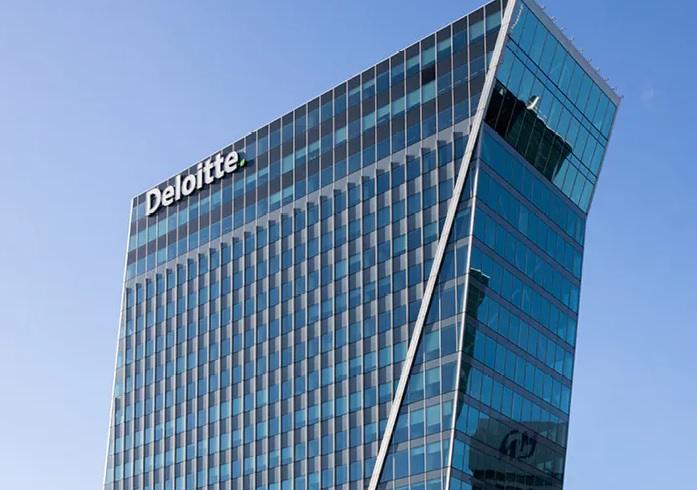
The United States Department of Justice (DOJ) has finalized a landmark $21.5 million settlement with Deloitte, one of the world’s largest professional services firms, following a comprehensive investigation into allegations that the company’s diversity, equity, and inclusion (DEI) policies resulted in unlawful discrimination. The settlement addresses claims that Deloitte utilized race- and sex-based metrics to influence hiring, promotions, and staffing decisions, effectively penalizing or passing over qualified individuals based on demographic characteristics in an effort to meet internal quotas. This case marks a significant escalation in the federal government’s ongoing crackdown on corporate DEI programs, specifically those implemented by federal contractors who receive taxpayer funding.
The allegations against Deloitte were brought forward under the DOJ’s Civil Rights Fraud Initiative, a specialized enforcement program launched last year. The initiative is designed to hold federal contractors and recipients of federal funds—including universities and major corporations—accountable for their internal employment practices. By leveraging the False Claims Act, the DOJ argues that companies certifying compliance with federal civil rights laws while simultaneously practicing demographic-based preference are committing fraud against the government.
Details of the Allegations and Internal Practices
The Department of Justice’s investigation into Deloitte revealed a systematic approach to workforce engineering that the government classified as discriminatory. According to the DOJ’s findings, Deloitte established non-public, race- and sex-based workforce composition goals that influenced nearly every level of the firm’s personnel management. These goals were not merely aspirational but were integrated into the firm’s operational performance tracking.
Central to the DOJ’s case was the revelation that business units within Deloitte received monthly summaries of their demographic progress. These reports utilized a "stoplight" system—highlighting advancement toward specific race and sex goals in green, yellow, or red. Units falling short of their demographic targets (marked in red) were reportedly pressured to adjust their hiring and promotion pipelines to satisfy the firm’s diversity metrics.
Furthermore, the DOJ alleged that Deloitte’s Partners, Principals, and Managing Directors (PPMDs) were evaluated, in part, on their ability to help the firm achieve these workforce composition goals. By tying executive compensation and career advancement to the fulfillment of demographic quotas, the DOJ argued that Deloitte created an environment where race and sex became decisive factors in professional outcomes, rather than individual merit or performance.
The investigation also scrutinized Deloitte’s staffing of federal contracts. The government alleged that the firm set specific demographic goals for teams assigned to work on taxpayer-funded projects. Additionally, certain high-value professional development opportunities—including mentoring, leadership training, and educational resources—were allegedly restricted to employees of specific races or genders, a practice the DOJ labeled as a violation of equal opportunity laws.
The Legal Framework: The False Claims Act and Civil Rights
The settlement is a cornerstone of the Civil Rights Fraud Initiative, which utilizes the False Claims Act (FCA) as its primary enforcement tool. Historically used to combat overbilling or substandard goods in government procurement, the FCA is now being applied to corporate certifications of legal compliance.
Under federal law, any company that enters into a contract with the U.S. government must certify that it adheres to all applicable laws, including the Civil Rights Act of 1964 and Executive Order 11246, which prohibits federal contractors from discriminating in employment. The DOJ’s position is that if a firm like Deloitte implements DEI policies that prioritize race or sex in hiring and promotions, its certification of "non-discrimination" is a false statement. This allows the government to seek damages and penalties for every payment made to the contractor during the period of non-compliance.
"Government contractors cannot reward or penalize employees based on race or sex—and labeling the practice DEI does not make it lawful," stated U.S. Attorney General Todd Blanche. "The Justice Department will aggressively pursue government contractors that have used taxpayer dollars to fund unlawful discrimination."
A Shifting Political and Regulatory Landscape
The settlement with Deloitte is the latest in a series of aggressive actions taken by the U.S. government to dismantle DEI frameworks within the private and public sectors. This trend has accelerated significantly following the inauguration of President Trump and the subsequent signing of a new Executive Order aimed at eliminating DEI preferences in federal contracting.
The Executive Order requires all federal contractors to affirm that they will not engage in "illegal DEI" or any form of identity-based preferencing. This policy shift has empowered federal agencies to revisit the internal handbooks and hiring practices of the nation’s largest employers. The DOJ’s current stance reflects a broader judicial and executive philosophy that views race-conscious decision-making as inherently discriminatory, regardless of the intended social outcome.
U.S. Associate Attorney General Stanley E. Woodward Jr. underscored this sentiment during the settlement announcement. "Today’s settlement is yet another example of this Department’s commitment to eliminating woke, unconstitutional practices from American workplaces," Woodward said.
Chronology of the Anti-DEI Crackdown
The enforcement action against Deloitte follows a timeline of increasing legal pressure on corporate DEI initiatives:

- Early 2025: The DOJ launches the Civil Rights Fraud Initiative, signaling a focus on the False Claims Act to target corporate social policies.
- Spring 2026: The Equal Employment Opportunity Commission (EEOC) launches a high-profile investigation into Nike, following allegations of discrimination against white employees within its corporate offices.
- Summer 2026: PayPal reaches a $30 million settlement with the DOJ to resolve a probe into its programs supporting minority-owned businesses, which were found to have excluded other applicants based on race.
- July 2026: The DOJ initiates a lawsuit against the New York Times, alleging the media organization bypassed a qualified white male for a promotion specifically to meet a DEI-related diversity target.
- August 2026: Deloitte agrees to the $21.5 million settlement, marking one of the largest payments to date by a professional services firm regarding internal DEI practices.
Broader Impact on the Professional Services Industry
The Deloitte settlement is expected to send shockwaves through the "Big Four" accounting and consulting firms, as well as the broader professional services industry. Firms like Deloitte, PwC, EY, and KPMG have historically been vocal proponents of DEI, often publishing annual "Impact Reports" that highlight their progress toward specific demographic representation goals.
Legal analysts suggest that this settlement will force a massive "compliance audit" across the industry. Many firms may now be forced to dismantle their internal demographic dashboards and stoplight reporting systems to avoid similar fraud allegations. The settlement proves that even internal, non-public goals can be used as evidence of discriminatory intent if they influence tangible employment outcomes.
Furthermore, the focus on PPMD evaluations suggests that the DOJ is looking beyond HR departments and into the very structures of corporate partnership and executive leadership. If leadership bonuses are tied to "diversity metrics," those bonuses may now be viewed by federal investigators as evidence of a "pay-for-discrimination" scheme.
Fact-Based Analysis of Implications
The implications of the Deloitte settlement extend far beyond a single firm’s balance sheet. It represents a fundamental shift in how the U.S. government defines "fairness" in the workplace.
- Transition from Equity to Neutrality: For the past decade, the corporate world moved toward an "equity" model, which often allowed for race-conscious efforts to correct historical imbalances. The DOJ’s recent actions signal a mandatory return to "colorblind neutrality," where any consideration of race or sex—even for the purpose of diversification—is treated as a liability.
- Risk for Federal Contractors: Companies that rely heavily on government contracts are now at the highest risk. Given that the False Claims Act allows for "treble damages" (three times the actual loss to the government), the financial stakes of maintaining DEI programs are becoming prohibitively high.
- The End of "Diversity Quotas": While many firms have avoided the word "quota," the DOJ’s focus on Deloitte’s "workforce composition goals" suggests that the government sees no distinction between a "goal" and a "quota" if it results in the same outcome: the exclusion of an individual based on race or sex.
- Employee Litigation: This settlement may open the door for private lawsuits. Current and former employees who believe they were passed over for promotions due to the color-coded systems described in the DOJ’s allegations may use this settlement as a basis for their own civil rights claims.
As of the settlement date, Deloitte has not admitted to legal liability but has agreed to the financial penalty and to modify certain internal practices to ensure compliance with the DOJ’s interpretation of civil rights laws. The firm is expected to overhaul its promotion and staffing procedures to remove demographic considerations from the decision-making process. The $21.5 million payment will be directed to the U.S. Treasury, serving as a stark reminder of the changing legal risks associated with corporate social engineering in the modern era.
