

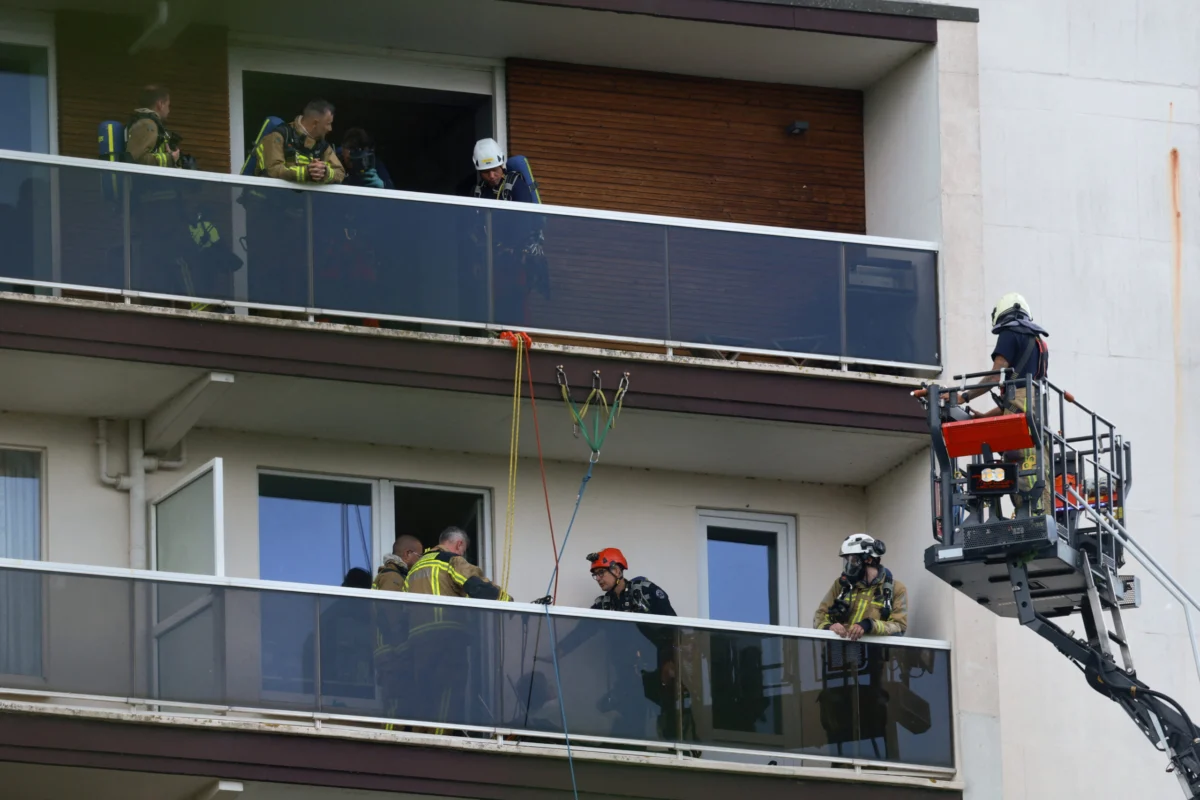
A devastating fire has erupted in a ten-storey apartment block in the Linkeroever area of Antwerp, Belgium, resulting in multiple fatalities and numerous injuries, according to confirmed reports from local authorities. The incident, which saw emergency services battling an intense blaze under arduous conditions, has sent shockwaves through the community and prompted a swift, large-scale response. The high-rise building, home to over 200 residents, became the scene of a harrowing rescue operation as firefighters contended with thick smoke and poor visibility to bring the inferno under control and evacuate trapped individuals.
The Catastrophic Event Unfolds: A Detailed Chronology
The alarm was first raised on Wednesday at 9:53 AM local time (07:53 GMT) when the local fire department received an urgent call reporting a "raging fire" on the eighth floor of the residential tower. The immediate nature of the call signaled a serious incident, prompting an instant dispatch of multiple fire brigades, ambulances, and specialized emergency teams to the Linkeroever district, a prominent residential zone characterized by its numerous high-rise structures.
Upon arrival, first responders were met with a rapidly escalating situation. Flames were visible, and heavy smoke billowed from the upper floors, indicating the significant intensity and spread of the fire. Firefighters immediately began their arduous task, facing conditions described as "very complex" by Marie De Clercq, a spokesperson for the Antwerp Fire Zone. She further elaborated, as quoted by The Brussels Times, that "poor visibility and heavy smoke inside the building" severely hampered efforts to extinguish the blaze and conduct effective search and rescue operations. The vertical nature of the fire’s spread within a multi-storey building presents unique challenges, often leading to rapid smoke logging of stairwells and corridors, which are critical for evacuation and firefighter access.
Throughout the late morning and early afternoon, the emergency operation intensified. Rescuers worked tirelessly, navigating smoke-filled stairwells and utilizing external ladders and platforms to reach affected residents. Footage from the scene captured the desperate plight of some occupants, including one man on an upper floor seen leaning precariously over a balcony to gasp for fresh air before attempting to move towards a nearby window, highlighting the immediate danger faced by those trapped by the fire. Medical personnel established triage areas near the building to assess and treat the wounded, many of whom suffered from smoke inhalation or burns. The tragic confirmation of multiple fatalities underscored the severe and destructive nature of the incident.
As the day progressed, efforts remained focused on fully containing the fire, ensuring no further spread, and meticulously searching all affected floors for victims or survivors. The coordinated response involved not only fire and medical services but also police units securing the perimeter, managing crowd control, and assisting with the identification and support of displaced residents. Local authorities began setting up temporary shelters and support services for those who had lost their homes or were unable to return to the building. The painstaking process of investigation into the fire’s origin and cause was anticipated to commence once the scene was deemed safe.
Background Context: Linkeroever and High-Rise Fire Safety
Linkeroever, meaning "Left Bank" in Dutch, is a distinct and significant part of Antwerp, located on the west bank of the Scheldt River. Developed largely in the post-World War II era, it was designed as a modern, spacious residential area, intended to alleviate housing pressures in the historic city center. It is characterized by its extensive green spaces, including a major park where outdoor summer concerts are frequently held, and its numerous high-rise apartment buildings that accommodate a diverse population. These multi-storey residential complexes are a common feature of urban landscapes globally, providing high-density housing but also presenting specific challenges in the event of emergencies like fires.
The safety of such structures is governed by stringent building codes and fire safety regulations, both at the national Belgian level and within the broader European Union framework. These regulations typically mandate features such as fire-resistant construction materials, compartmentalization to prevent fire spread between floors and apartments, robust fire alarm and detection systems, accessible emergency exits, and often, automatic sprinkler systems in newer or refurbished buildings. Regular inspections are usually required to ensure compliance and functionality of these critical safety measures. However, older buildings, depending on their construction date, may not always incorporate the most advanced contemporary safety technologies, posing unique challenges for fire departments.

Fires in high-rise buildings are inherently complex and dangerous due to several factors. The vertical nature allows for rapid spread of smoke and flames through shafts, stairwells, and external facades. Access for firefighting equipment, particularly water pressure and ladder reach, can be limited to lower floors, necessitating internal operations which are more hazardous. Evacuation of hundreds of residents from multiple floors is a logistical nightmare, requiring clear pathways and calm execution. The structural integrity of a building under prolonged intense heat is also a constant concern for emergency services, adding another layer of risk to their operations.
Official Responses and Expressions of Solidarity
The tragic event immediately drew reactions from the highest levels of Belgian leadership. Belgian Prime Minister Bart De Wever, who previously served as the mayor of Antwerp, took to social media to express his profound sorrow and solidarity. In his post, he conveyed that his "thoughts are with the victims and the evacuated residents of the terrible fire on Linkeroever." He further offered "deep appreciation" to the emergency services, commending their tireless efforts "to help the many affected people as quickly and safely as possible, and who are working hard to bring the fire under control." His statement underscored the gravity of the situation and acknowledged the bravery and dedication of the first responders.
Local authorities in Antwerp, including the current city administration, quickly mobilized to provide support and resources. While specific statements from the current mayor were not immediately detailed in the initial reports, it can be logically inferred that the city government would be coordinating relief efforts, offering temporary accommodation, psychological support, and other essential services to the displaced and affected families. Such incidents invariably lead to a strong community response, often facilitated and organized by municipal bodies.
The Antwerp Fire Zone and the local police department, central to the immediate response, have been instrumental in managing the crisis. Their spokespersons have been crucial in disseminating information to the public, acknowledging the difficulties faced by their personnel, and reiterating their commitment to thorough investigation. The coordinated efforts of these various agencies highlight the robust emergency response protocols in place, designed to manage large-scale urban disasters.
Broader Impact and Implications
The fire in Linkeroever carries significant broader implications, extending beyond the immediate tragedy. The human cost is immeasurable, with families grieving lost loved ones and countless individuals grappling with injuries, trauma, and the sudden loss of their homes and belongings. The psychological impact on residents, witnesses, and the first responders themselves will be profound and long-lasting, necessitating extensive support services in the coming months and years.
On an infrastructural level, the damage to the apartment block is expected to be substantial. Depending on the extent of the fire and water damage, and potential structural compromise, the building may require extensive repairs or even demolition and rebuilding. This will impact not only the immediate residents but also the wider property market in Linkeroever, potentially raising questions about the age and resilience of similar high-rise structures in the area.
Crucially, a comprehensive investigation into the cause of the fire will be launched by forensic experts and fire investigators. This inquiry will seek to determine the precise origin of the blaze, whether it was accidental (e.g., electrical fault, cooking accident), intentional (arson), or due to other factors. The findings of this investigation will be vital not only for accountability but also for informing potential future amendments to building codes, fire safety regulations, and emergency response protocols. It is common after such devastating events for authorities to review existing safety measures, particularly in older buildings, to identify any vulnerabilities and implement improvements to prevent similar tragedies.
The incident also serves as a stark reminder of the challenges inherent in urban living, particularly in densely populated areas with high-rise residential buildings. It underscores the critical importance of public awareness regarding fire safety, including the maintenance of smoke detectors, understanding evacuation routes, and adhering to building regulations. The solidarity shown by the community and the dedication of the emergency services in Antwerp highlight the resilience of a city facing a profound crisis, working collectively to support those most affected and to begin the long process of recovery and rebuilding.
