

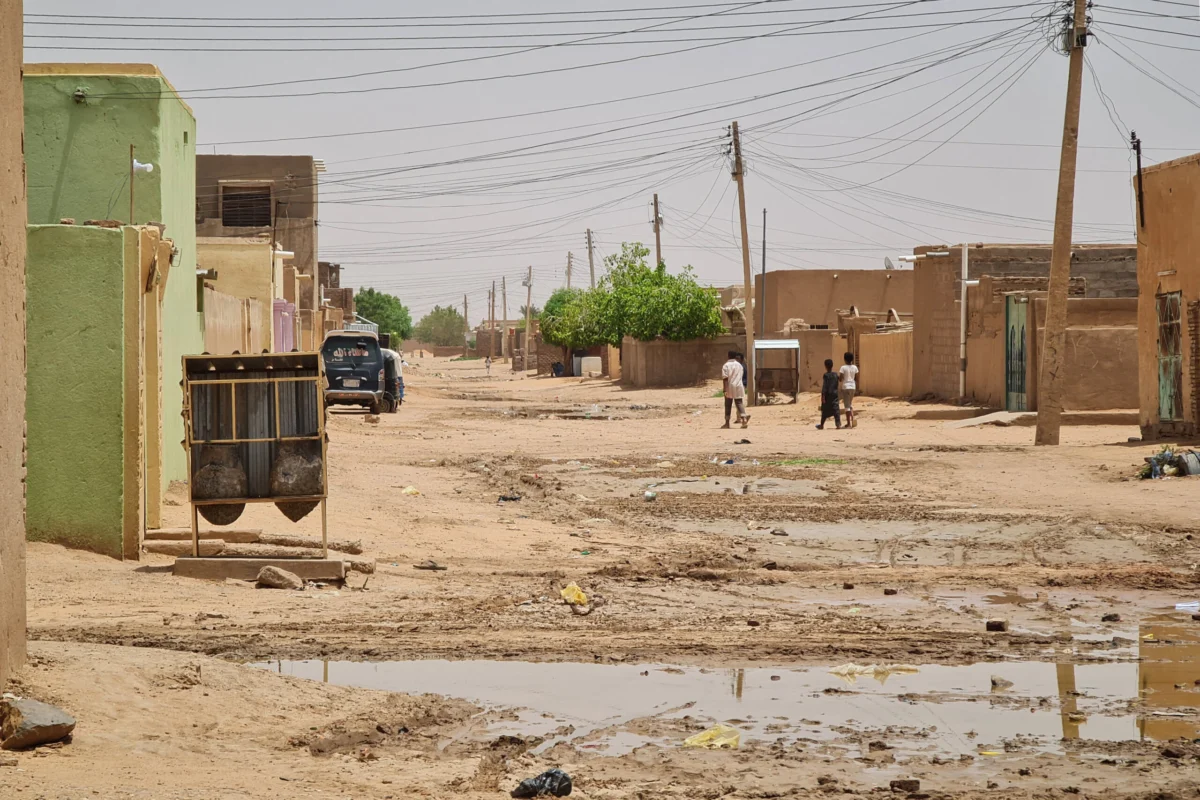
The escalating conflict in Sudan reached a grim new milestone on Saturday when a devastating airstrike struck a residential neighborhood in the capital city of Khartoum, claiming the lives of at least 17 people. Among the deceased were five children, according to local health officials, highlighting the increasingly heavy toll the urban warfare is taking on the civilian population. The strike occurred in the Yarmouk district of southern Khartoum, an area that has become a flashpoint for intense fighting due to its proximity to strategic military installations. As the Sudanese Armed Forces (SAF) and the paramilitary Rapid Support Forces (RSF) continue their violent struggle for national control, the humanitarian situation in the capital and across the country has deteriorated into what international observers describe as a catastrophic collapse of civil order.
The Devastation in Yarmouk
The Saturday morning attack targeted the Yarmouk neighborhood, a densely populated area that houses a significant military manufacturing complex controlled by the regular army. According to Sudan’s Ministry of Health, the strike resulted in the destruction of at least 25 homes, leaving families buried under rubble and neighborhood volunteers scrambling to find survivors. While it remains unclear whether the munitions were delivered by traditional fighter jets or remotely piloted drones, the scale of the destruction suggests high-yield explosives characteristic of the aerial campaign conducted by the Sudanese military.
The Ministry of Health confirmed that the casualties included a disproportionate number of vulnerable individuals, specifically women, children, and the elderly. A local grassroots organization known as "The Emergency Room"—one of many neighborhood committees that have stepped in to provide humanitarian aid where international NGOs and state services have failed—reported that at least 11 others were seriously wounded. Images circulated by these activists showed harrowing scenes of residents digging through concrete debris with their bare hands and the bloodied remains of civilian infrastructure.
The RSF was quick to release a statement blaming the Sudanese military’s air force for the carnage. The paramilitary group also claimed to have successfully downed a military MiG fighter jet during the engagement, though this claim, like many issued by both sides in the fog of war, could not be independently verified. For its part, the military command has remained largely silent regarding specific allegations of civilian casualties in Yarmouk, typically maintaining that its strikes target "rebel" hideouts and supply lines.
Roots of the Rivalry: From Allies to Enemies
To understand the current bloodshed, one must look back at the fragile alliance that preceded the violence. The conflict, which erupted on April 15, 2023, is the culmination of months of simmering tension between General Abdel Fattah al-Burhan, the head of the Sudanese Armed Forces, and General Mohamed Hamdan "Hemedti" Dagalo, the leader of the RSF.
The two generals were once partners in a 2021 military coup that derailed Sudan’s short-lived transition toward democracy following the 2019 ousting of long-time autocrat Omar al-Bashir. However, the partnership fractured over the specifics of a security sector reform plan. The primary point of contention was the timeline and method for integrating the RSF—a powerful and autonomous paramilitary force—into the regular army. Burhan pushed for a rapid two-year integration, while Hemedti sought a ten-year window that would allow him to maintain his independent power base. These bureaucratic disagreements eventually transformed into a direct military confrontation that has turned Khartoum into a primary battlefield.
Chronology of a Collapsing State
The timeline of the conflict illustrates a rapid descent from political disagreement to total war:
- December 2022: A "Framework Agreement" is signed between the military and civilian groups, promising a return to civilian rule, but it fails to address the specifics of the RSF-SAF integration.
- March 2023: Tensions escalate as the RSF begins mobilizing troops toward Khartoum and the northern city of Merowe without military clearance.
- April 15, 2023: Heavy gunfire and explosions erupt in Khartoum. Both sides trade blame for the first shots. The RSF quickly moves to occupy the Presidential Palace and Khartoum International Airport.
- May 2023: Peace talks brokered by the United States and Saudi Arabia in Jeddah result in several short-term ceasefires. However, these are repeatedly violated within hours of being signed.
- June 2023: The conflict expands significantly into the Darfur region. The assassination of the West Darfur Governor signals a new, ethnically charged dimension to the war.
- June 17, 2023: The Yarmouk airstrike occurs, marking one of the deadliest single events for civilians in the capital since the start of the war.
The Darfur Crisis: A War Within a War
While the world’s attention is often focused on the aerial bombardments in Khartoum, the situation in the western region of Darfur has taken an even more ominous turn. The conflict has reawakened old ethnic divisions that have plagued the region for decades. In West Darfur, particularly in the provincial capital of Genena, the fighting has evolved from a struggle between two generals into an ethnic conflict involving Arab militias, known as the Janjaweed, fighting alongside the RSF against non-Arab groups.
The gravity of the situation in Darfur was punctuated by the recent abduction and killing of West Darfur Governor Khamis Abdalla Abkar. His death came just hours after he gave a television interview accusing the RSF and its allied militias of committing genocide against civilian populations in Genena. The RSF has denied involvement in the governor’s death, blaming "outlaw elements," but the incident has sparked international outrage and fears of a return to the mass atrocities seen in the early 2000s. Tens of thousands of refugees have fled Genena, crossing the border into neighboring Chad, often under fire from snipers and militia checkpoints.
Humanitarian Catastrophe and Mass Displacement
The human cost of the war is staggering and continues to grow exponentially. According to the latest figures from the United Nations and the International Organization for Migration (IOM), more than 2.2 million people have been displaced. This includes approximately 1.7 million people displaced internally within Sudan and nearly 500,000 who have fled to neighboring countries like Egypt, Chad, South Sudan, and Ethiopia.
In Khartoum, the infrastructure of daily life has effectively ceased to function. The RSF has occupied numerous civilian properties, turning homes, hospitals, and schools into fortified barracks and sniper nests. This tactic has drawn the military’s heavy artillery and airstrikes into residential zones, as seen in the Yarmouk incident. Most of the city’s hospitals are out of service due to direct hits, a lack of medical supplies, or the flight of medical personnel. Electricity and water services are intermittent at best, and food prices have skyrocketed, leaving those who could not flee the city at risk of starvation.
International Mediation and the Failure of Ceasefires
The international community’s response has been characterized by diplomatic frustration. The "Jeddah process," led by the U.S. and Saudi Arabia, was intended to establish humanitarian corridors and achieve a permanent cessation of hostilities. However, the talks were suspended after the military withdrew its negotiators, accusing the RSF of failing to vacate civilian homes and hospitals.
The African Union and the Intergovernmental Authority on Development (IGAD) have also attempted to mediate, but neither general has shown a genuine willingness to compromise. Analysts suggest that both Burhan and Hemedti believe they can achieve a total military victory, leading to a "war of attrition" where civilians are the primary casualties. The UN has warned that the continuation of the conflict could lead to the total fragmentation of the Sudanese state, creating a power vacuum that could be exploited by extremist groups and destabilize the entire Horn of Africa.
Strategic Analysis: The Stalemate and the Future of Sudan
The current military situation appears to be a bloody stalemate. The Sudanese Armed Forces possess a clear advantage in the air and with heavy weaponry, but they struggle with ground-level urban combat. Conversely, the RSF is a highly mobile, light-infantry force that excels in street-to-street fighting and guerrilla tactics. By embedding themselves in the dense urban fabric of Khartoum, the RSF has neutralized much of the army’s conventional advantage, forcing the military to choose between allowing the RSF to remain in control or destroying the city to dislodge them.
The strike in Yarmouk is a symptom of this tactical deadlock. As the military attempts to hit RSF positions or deny them access to military production facilities, the margin for error in a crowded city is non-existent. Each airstrike that results in civilian deaths further alienates the population and provides the RSF with propaganda material, even as the RSF’s own conduct—including widespread reports of looting and sexual violence—erodes its own claims to legitimacy.
As the conflict enters its third month, the prospects for a peaceful resolution remain dim. The destruction of the Yarmouk neighborhood is a localized tragedy, but it reflects the broader disintegration of a nation. Without a significant shift in the diplomatic landscape or a decisive change on the battlefield, Sudan faces a protracted period of violence that threatens to erase the progress made by the 2019 revolution and leave a generation of Sudanese citizens in the shadow of war.
