

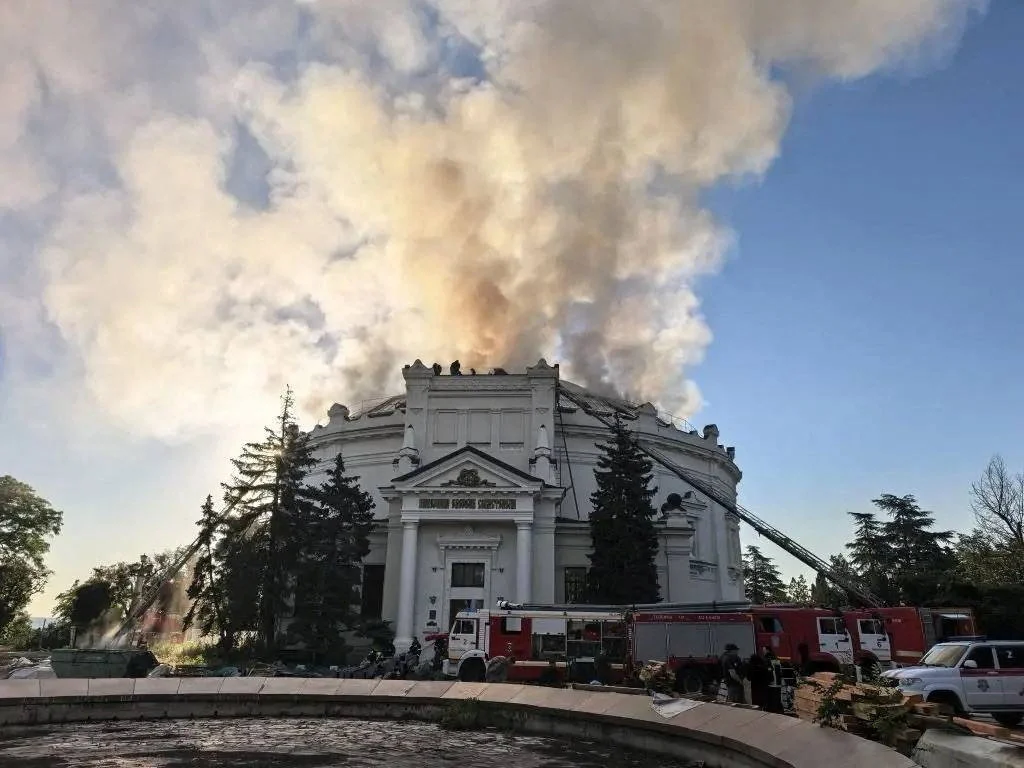
Kyiv, Ukraine – A palpable sense of crisis grips the Crimean Peninsula as Ukrainian drone attacks relentlessly target critical supply routes, plunging the region into severe fuel shortages and exacerbating daily hardships for its inhabitants. For Dilyaver, a 52-year-old Crimean Tatar man from near Simferopol, the administrative capital, the struggle to procure basic necessities has become a stark reality. After nearly seven hours enduring a kilometres-long, snail-paced queue of hundreds of cars at a local gas station, he was fortunate enough to purchase 20 litres (5.3 gallons) of fuel for an exorbitant $22. The desperation was palpable, with teenagers reportedly hawking illicit fuel for 300 rubles ($4.2) a litre, a dangerous enterprise that nearly led to violence in the frustrated queues. Dilyaver, who requested his last name and personal details be withheld due to fears of reprisal for speaking with foreign media, observed that many in line were Russian tourists, their holiday plans abruptly cut short as they sought to flee via the beleaguered Crimean Bridge.
A Peninsula Adrift: Economic and Logistical Fallout
The immediate economic impact is devastating, with the crucial tourism season "ruined," a dire blow to the arid peninsula’s economy, which relies heavily on millions of annual visitors. This economic vulnerability is compounded by pre-existing agricultural challenges stemming from Ukraine’s damming of a key water artery following the 2014 annexation. Dilyaver, who now barely makes ends meet selling deep-fried pies after his grocery store closed under pressure from taxes and corruption, fears the fuel crisis is merely the vanguard of deeper systemic problems.
Nikolay Mitrokhin, a researcher from Germany’s Bremen University specializing in the Russia-Ukraine conflict, asserts that the core issue extends far beyond mere fuel scarcity. "The problem is that Ukrainian drones began barraging over the peninsula’s domestic roads," Mitrokhin told Al Jazeera. Since mid-May, Ukrainian unmanned aerial vehicles (UAVs) have systematically targeted hundreds of trucks carrying essential supplies – fuel, ammunition, and other provisions – traversing the so-called "land bridge" through occupied Ukrainian territories from southwestern Russia. These sophisticated drones, operated from bunkers up to 200km (124 miles) away, also deploy small, 500-gram (1.1-pound) magnetic or motion-sensor mines, further disrupting ground transportation. Maritime supply routes have not been spared either, with cargo ships attempting to deliver fuel and food to Crimea, or transport stolen steel and grain from occupied southeastern Ukraine, also falling victim to attacks.
The Strategic Isolation of Crimea: A Timeline of Vulnerability
The recent escalation in attacks marks a significant shift in the strategic landscape, highlighting Crimea’s profound vulnerability. Volodymyr Fesenko, head of the Kyiv-based Penta think tank, noted, "Ukraine can regularly, daily strike military, infrastructure sites in Crimea… Ukraine turned Crimea into an island surrounded by war and fire." This aggressive campaign is part of a broader Ukrainian strategy to isolate the peninsula, severely impacting Russia’s logistical capabilities and military operations in southern Ukraine.
A Chronology of Escalation:

- 2014 Annexation: Russia illegally annexes Crimea, initiating a massive militarization program. Billions are spent on deploying frigates, diesel submarines, advanced S-400 air defense systems, tens of thousands of servicemen, and constructing new military bases, airfields, radar stations, and garrisons.
- 2022 Full-Scale Invasion: The invasion underscores Crimea’s strategic importance as a staging ground and supply hub for Russian forces pushing into southern Ukraine.
- October 2022: The Kerch Bridge (Crimean Bridge), a critical artery linking Russia to the peninsula, is severely damaged by an explosion, temporarily disrupting traffic and exposing Russia’s logistical fragility.
- Mid-May (Current Year): Ukrainian drone operations intensify, targeting the "land bridge" – the overland route through occupied southern Ukraine – which had become increasingly vital for Russian logistics after the initial Kerch Bridge damage. Hundreds of supply trucks are reported hit.
- Early June (Current Year): Ukraine’s Third Special Battalion claims "aerial control" over the strategic supply route from Melitopol to the Chongar bridge in northern Crimea, releasing footage of exploding and burning trucks.
- Late May/Early June (Current Year): The Chongar bridge, a key entry point to Crimea, is damaged by drones, reducing it to light vehicle traffic and forcing buses and trucks to use a nearby pontoon bridge, causing further delays and bottlenecks.
- Early June (Current Year): Ukrainian drones strike fuel depots, air defense systems, airfields, military bases, command centers, and facilities of Russia’s Black Sea Fleet across Crimea. The Black Sea Fleet, having sustained significant losses, has largely relocated to the Russian port of Novorossiysk.
- Early Monday (Current Reporting Period): A Ukrainian drone strikes a moving train in Crimea, resulting in the death of a driver and prompting Moscow to halt nine other trains, with passengers evacuated by buses.
The Bottleneck of Bridges and Roads
The Chongar bridge, one of only three narrow land strips connecting Crimea to mainland Ukraine across the labyrinthine lagoons of Sivash (The Rotten Sea), is a critical chokepoint. Its damage has severely hampered the flow of heavy vehicles. While one lane is reportedly operational for light vehicles, the impact on overall logistics is significant. The $4 billion, 19km (12-mile) long Crimean Bridge, Moscow’s flagship infrastructure project after the annexation, cannot adequately handle the redirected traffic, with trucks weighing more than 1.5 tonnes now banned from crossing. This forces heavier military and commercial traffic to rely on the increasingly perilous "land bridge" or face severe delays and detours.
The effectiveness of Ukraine’s drone campaign is evident in the panic it has sowed. Igor Girkin, a prominent Russian hardliner and former intelligence officer who led separatists in Ukraine in 2014, articulated the growing alarm from his prison cell, where he is serving a four-year sentence for lambasting Moscow’s military failures. On June 1, he wrote on Telegram, "What’s happening at Crimean gas stations is a real nightmare for locals and servicemen." He condemned Kyiv for acting "brazenly… trying to cut off the peninsula and our southern [military] groups from fuel supply," adding, "To some, Crimea seems like a resort. No, today it’s a front-line region."
The Heavy Price of Militarization
Volodymyr Fesenko’s observation that "Putin turned Crimea into a military base, and thus made it the most vulnerable place in the war with Ukraine" encapsulates the ironic outcome of Russia’s post-2014 strategy. The vast military buildup, intended to secure Russian control and project power, has instead created a dense target-rich environment for Ukrainian forces seeking to reclaim the territory. The relocation of a significant portion of the Black Sea Fleet to Novorossiysk, following the loss of at least a third of its vessels, further underscores the strategic shift and Crimea’s compromised status.
The Enduring Plight of Crimean Tatars
For Crimean Tatars like Dilyaver, the current crisis is not an isolated event but a painful chapter in a decades-long struggle for survival under Moscow’s shadow. Their history is marked by the traumatic 1944 deportation under Soviet leader Joseph Stalin, who viewed their cultural ties to Turkey as a threat. Dilyaver’s parents were born in Soviet Uzbekistan, far from their ancestral homeland.
Since the 2014 annexation, the community of approximately 250,000, or about one-tenth of Crimea’s population, has endured constant pressure and systematic repression. Masked officers routinely raid the homes of community leaders, activists, and observant Muslims at dawn, ostensibly searching for "extremist materials." These often turn out to be religious texts, including even "The Quran for Children," illustrating the broad and arbitrary nature of the crackdown. More than 100 Tatars have been sentenced to jail on spurious charges of "extremism," "separatism," and "terrorism." Another dozen have disappeared without a trace, widely believed to have been abducted and killed by Russian intelligence services.

Dilyaver’s personal story of losing his grocery store to prohibitive taxes and corrupt demands for bribes, a common tactic used to squeeze out independent businesses, reflects the wider economic and political disenfranchisement of the community. His mother, 77-year-old Gulsum, echoes a deep-seated mistrust born of historical trauma: "We have a saying, ‘If a Russian lives next to you, keep an axe ready.’ We suffered from them so much, and it’s far from over."
Broader Humanitarian and Political Implications
The Ukrainian attacks have also triggered wider food shortages. Dilyaver reports that macaroni, flour, canned meat, fish, and vegetables have already been swept off the shelves in some stores and supermarkets. This phenomenon, he quips, invokes a "Soviet mentality" where the immediate response to scarcity is to "buy buckwheat," a cheap and nutritious grain symbolizing resilience in the former Soviet Union. This highlights the fragility of Crimea’s supply chain and the psychological impact of the blockade.
The unfolding crisis carries significant political weight for both Moscow and Kyiv. For Russia, the inability to secure basic supplies for its population and military in Crimea undermines the narrative of stability and prosperity it has sought to project since 2014. It exposes the cost of occupation and the limits of its power projection, particularly in a region it considers sovereign territory. The panic and criticism from figures like Girkin, even from behind bars, indicate growing discontent within the hardline nationalist circles, challenging the Kremlin’s official messaging.
For Ukraine, the systematic targeting of Crimean infrastructure serves multiple objectives. It degrades Russian military capabilities, disrupting logistical support for forces engaged in battles further north and east. It also sends a clear message that Crimea, despite Russia’s annexation, remains Ukrainian territory and will be actively contested. The psychological impact on the occupying forces and the local population under Russian control is also a critical component, aiming to undermine morale and foster a sense of isolation.
As the conflict grinds on, Crimea’s transformation from a militarized resort to a precarious frontline region underscores the evolving dynamics of the war. The deepening isolation and daily hardships faced by its residents, exacerbated by targeted strikes on vital lifelines, illustrate the profound human and strategic costs of the ongoing conflict, with no immediate end in sight.
