

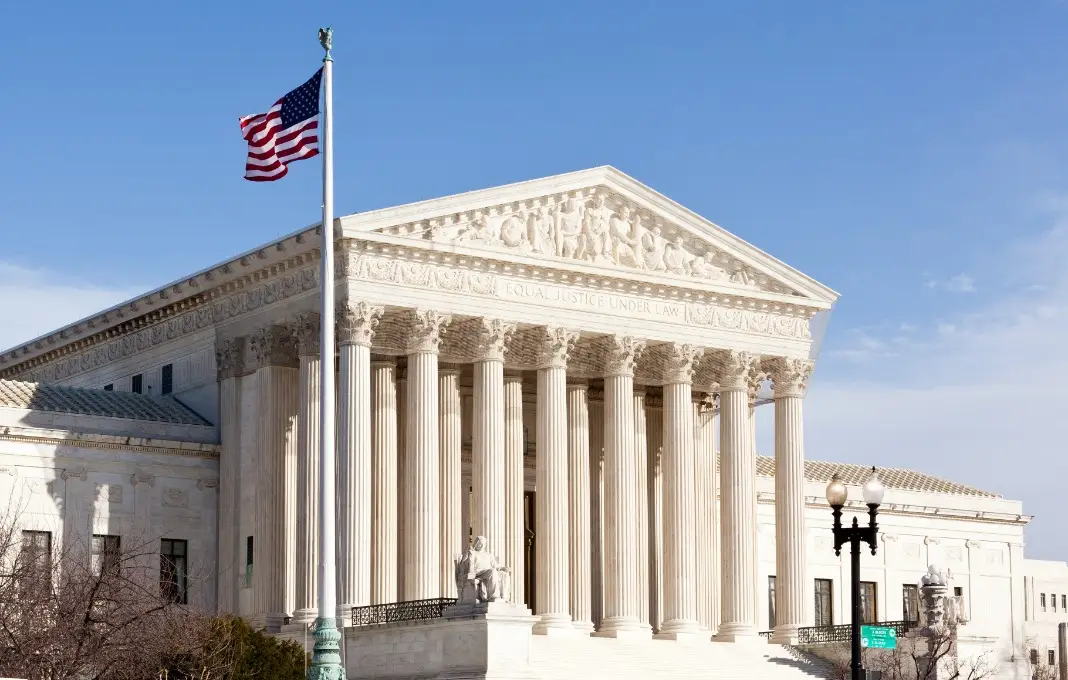
The U.S. Supreme Court finds itself at a critical juncture this term, tasked with adjudicating two landmark cases that could significantly reshape the landscape of civil litigation, state autonomy, and the interpretation of constitutional protections. At the heart of these complex legal battles are the far-reaching implications of climate change lawsuits against major industries and the principle of proportionality in government fines, exemplified by a case involving a modest quantity of beer and a substantial asset seizure. These cases challenge deeply entrenched legal traditions, forcing the justices to grapple with the delicate balance between states’ rights to regulate and protect their citizens, and the potential for overreach that could stifle commerce or infringe upon fundamental liberties.
The Dual Pillars of State Law and Punitive Damages Under Scrutiny
For decades, the Supreme Court has largely deferred to the states in matters of civil litigation. This approach, often referred to as the "50 simultaneous experiments" model, presumes that allowing individual states to develop and refine legal doctrines will, over time, lead to the most effective and equitable solutions. This principle has fostered a diverse and often experimental legal environment across the nation, allowing for varied responses to evolving societal needs and challenges.
Concurrently, the Court has historically tread cautiously when it comes to reviewing the size of punitive damages awards and government fines. While not entirely absent from such considerations, the Court has typically avoided setting rigid numerical limits, preferring a more flexible, case-by-case analysis. A notable instance occurred in 2003 with the State Farm v. Campbell decision, where a $145 million punitive damages award—45 times the actual damages—was deemed excessive. The Court at that time articulated a "single-digit ratio" guideline, suggesting punitive damages should generally not exceed single digits relative to compensatory damages. However, even this guideline has proven to be a flexible standard, not an absolute rule. Earlier, in 1996, the Court had already expressed reservations about a $4 million punitive award stemming from a $4,000 paint job on a BMW, again without establishing a definitive permissible range.
This year, however, the Court appears poised to revisit both of these long-standing traditions. The cases on its docket present direct challenges to the established norms, pushing the justices to consider whether these long-held principles remain adequate in addressing contemporary legal and societal issues.
Sizing Up the States: Climate Change Lawsuits and the Limits of State Power
Two pivotal cases are poised to test the boundaries of state authority in novel and potentially transformative ways. The first, Suncor Energy (U.S.A.) Inc. v. Boulder County, Colorado, delves into the contentious arena of climate change litigation. At issue is whether a county, and by extension, other states, possess the legal standing to sue major oil and gas companies for their alleged role in contributing to global warming.
The core of these lawsuits, which have proliferated across state and local jurisdictions, is the accusation that fossil fuel producers have knowingly marketed products that exacerbate climate change, leading to significant societal and economic harms. These harms, plaintiffs argue, include rising sea levels, extreme weather events, and increased public health costs. The scale of the potential liability for the energy sector is immense, with hundreds of lawsuits pending. This mirrors the more than $40 billion in settlements paid by pharmaceutical companies to resolve lawsuits related to the opioid crisis, highlighting the substantial financial stakes involved in large-scale litigation against major industries.
The Trump administration, along with a broad coalition of business groups, has argued that such climate change lawsuits are preempted by federal law. Their contention is that allowing "every locality in the country" to sue virtually any entity globally for contributing to climate change would create an unmanageable and chaotic legal environment, undermining national and international energy policies. They argue that the issue of climate change, if to be addressed through litigation, should be handled at the federal level, through a uniform policy.
However, the Supreme Court’s conservative justices, often characterized by their deference to state sovereignty, face a complex dilemma. While generally inclined to uphold the rights of states, particularly in matters of public health and safety, they also tend to be wary of using constitutional provisions to interfere in what they might perceive as less weighty matters of civil disputes and regulatory fines. The prospect of states, or even counties, initiating sweeping litigation that could destabilize global energy markets presents a significant challenge to their judicial philosophy.
Adding another layer of complexity, the Colorado Supreme Court has permitted the Boulder County lawsuit to proceed, a decision that provides a potential "easy out" for the U.S. Supreme Court. By allowing the case to advance, the Colorado court enables the U.S. Supreme Court to defer jurisdiction until a final judgment is rendered, thereby avoiding a direct confrontation on the merits at this stage. This procedural avenue could allow the Court to sidestep a definitive ruling on the preemption issue for now, but the underlying legal questions remain unresolved and will likely resurface.
The Beer Battle: Testing the Excessive Fines Clause
The second case, Jouppi v. Alaska, brings the principle of proportionality in government fines into sharp focus, presenting a stark contrast between the alleged offense and the proposed penalty. This case centers on Ken Jouppi, a pilot who faces the potential forfeiture of his $95,000 airplane over a six-pack of beer.
The background of the case involves Alaska’s strict prohibition laws in certain remote villages. Jouppi was transporting supplies to such a village when, unbeknownst to him, a six-pack of beer was secreted within the cargo. He was subsequently charged with violating a law designed to combat bootlegging and the associated "grave societal harm" of alcoholism and fetal alcohol syndrome. The state of Alaska argues that its laws, including asset forfeiture provisions, are necessary to deter such violations and protect its citizens. This argument draws historical parallels, with governments historically employing stringent penalties to enforce laws aimed at public welfare. For instance, a 19th-century Maine law, upheld by the Supreme Court, imposed a $5 fine per under-length lobster, a penalty 100 times the value of the lobster itself, aimed at preserving a vital fishing resource.
Jouppi and his supporters contend that the seizure of his airplane represents a grossly disproportionate penalty for an alleged unintentional offense. They argue that the penalty far exceeds any conceivable harm caused by a few cans of beer, particularly given Jouppi’s claim of ignorance regarding the presence of the alcohol. His legal team emphasizes that he should not be forced to forfeit a valuable asset for what they characterize as an innocent mistake.
The crux of their argument lies in the Eighth Amendment’s Excessive Fines Clause, which prohibits "excessive fines." This constitutional protection has deep historical roots, tracing back to the Magna Carta, which stipulated that a "free man" shall be fined "for a small fault only according to its magnitude." By invoking this historical principle, Jouppi’s advocates hope the Supreme Court will establish a clear standard for proportionality, bringing much-needed predictability to an area of law that has often been subject to wide-ranging government discretion.
The conservative justices, while often emphasizing states’ rights and limited government intervention in economic affairs, also tend to be staunch defenders of constitutional rights. The Eighth Amendment’s prohibition against excessive fines offers a constitutional hook that could resonate with their judicial philosophy. The question is whether they will apply this principle to limit what they may see as an overzealous application of state power, even in the context of well-intentioned public safety measures.
Broader Implications: The Future of Litigation and Constitutional Rights
The outcomes of these two cases, Suncor v. Boulder County and Jouppi v. Alaska, carry profound implications that extend far beyond the immediate parties involved.
For climate change litigation, a ruling that limits states’ ability to sue energy companies could significantly curtail the burgeoning field of climate torts. This would likely shift the focus of accountability to legislative and regulatory bodies, potentially slowing down efforts to hold industries financially responsible for climate-related damages. Conversely, a ruling in favor of the states could embolden further litigation against a wider array of industries, creating a more complex and potentially litigious environment for businesses operating across state lines. The impact on global energy markets and the transition to cleaner energy sources could be substantial, depending on the Court’s decision.
Regarding the Excessive Fines Clause, a strong ruling in favor of Jouppi could establish crucial safeguards against asset forfeiture and other punitive measures that are disproportionate to the offense. This could have a far-reaching impact on how governments enforce a wide range of regulations, from environmental laws to financial reporting requirements. It could lead to a more equitable application of justice, ensuring that penalties are aligned with the severity of the infraction and the harm caused, rather than serving as a tool for disproportionate financial gain or punitive action.
The Supreme Court’s decisions in these cases will undoubtedly shape the future of civil litigation in the United States, influencing how states exercise their regulatory powers, how businesses are held accountable for their actions, and how individuals are protected from excessive government penalties. The justices are faced with the weighty task of balancing competing interests: state sovereignty against individual rights, the need for regulatory enforcement against the principles of fairness and proportionality, and the evolving challenges of climate change against the established legal framework. Their rulings will offer critical insights into the Court’s current interpretation of state power, constitutional protections, and the evolving nature of justice in the 21st century.
