

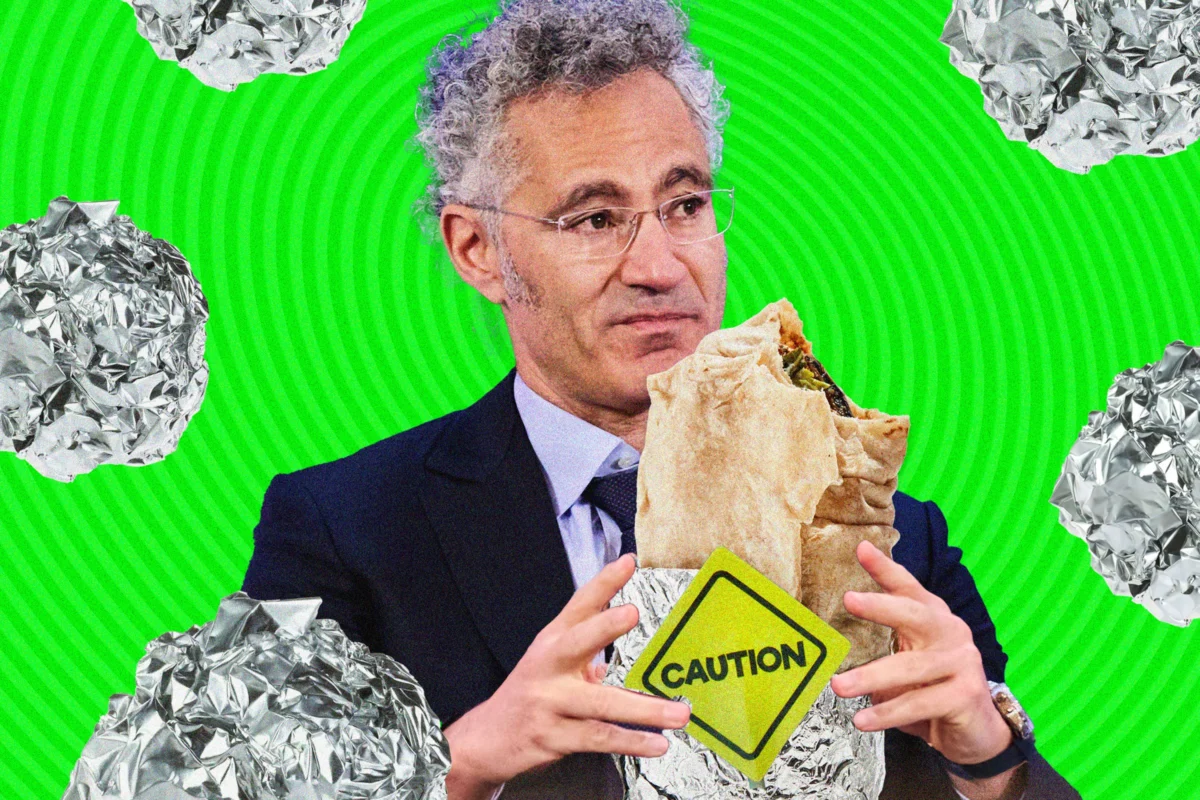
Chipotle Mexican Grill, the California-based fast-casual burrito chain, has entered into a strategic partnership with data infrastructure giant Palantir Technologies to develop and deploy a sophisticated "food safety risk platform." According to internal screenshots and reports, this initiative is hosted on Palantir’s flagship software platform, Foundry, and represents a significant technological leap in how the restaurant industry manages public health risks and supply chain integrity. The platform is designed to aggregate disparate data points—ranging from local health department inspection scores and pest control incidents to internal employee illness logs—to generate a real-time "food safety score" for each of Chipotle’s more than 3,500 locations. This score serves as a predictive risk assessment tool, allowing corporate leadership to identify and mitigate potential outbreaks before they escalate into public health crises.
While Chipotle spokesperson Erin Wolford confirmed the existence of the initiative, the company has declined to provide specific details regarding the depth of the deployment or the exact timeline of the rollout. Palantir, a company known for its deep ties to government intelligence and defense sectors, has also remained tight-lipped regarding the specific parameters of the Chipotle contract. However, the move comes at a critical juncture for the American food industry, which has faced a tumultuous year characterized by widespread contamination incidents and increasingly complex supply chain vulnerabilities.
The Mechanics of Predictive Food Safety
The integration of Palantir’s Foundry software into Chipotle’s operations marks a shift from reactive to proactive risk management. Historically, food safety in the restaurant sector has relied heavily on manual reporting and periodic inspections. By the time a health department identifies a pattern of illness, an outbreak is often already widespread. The Palantir-hosted platform seeks to disrupt this cycle by centralizing data that previously lived in silos.
Foundry’s capability lies in its "ontology"—a data modeling layer that allows non-technical users to visualize complex relationships between different data streams. For Chipotle, this means that a spike in reported employee absences due to illness in a specific region can be immediately cross-referenced with recent delivery logs from a specific vegetable supplier or a dip in refrigeration temperature readings at a particular storefront. By assigning a numerical risk level to each store, Chipotle’s quality assurance teams can prioritize interventions, focusing their resources on the locations most likely to experience a safety breach.
A Turbulent Climate for Foodborne Illness
The timing of this partnership is significant. The United States is currently grappling with a surge in foodborne pathogens that have strained the resources of the Food and Drug Administration (FDA) and the Centers for Disease Control and Prevention (CDC). So far in 2024, the FDA has identified more than 12,800 individual illnesses tied to major foodborne outbreaks. A substantial portion of these cases originated from a massive cyclospora outbreak linked to contaminated iceberg lettuce, which caused widespread gastrointestinal distress across multiple states.
While Chipotle was not directly impacted by the iceberg lettuce recall—as the chain primarily utilizes romaine and other greens—the company has not been immune to the broader trend of supply chain contamination. In July 2024, Chipotle proactively suspended its relationship with a specific jalapeño supplier after the FDA linked the produce to a salmonella outbreak that eventually sickened more than 430 people. This proactive stance, while costly in terms of short-term logistics, reflects a corporate culture still haunted by the high-profile E. coli and norovirus outbreaks that decimated Chipotle’s stock price and brand reputation between 2015 and 2018.
Palantir’s Commercial Pivot and Financial Growth
For Palantir, the Chipotle partnership is another high-profile win in its aggressive expansion into "Corporate America." Long criticized or praised for its secretive work with the CIA and the Department of Defense, Palantir has spent the last five years diversifying its revenue streams. The company’s commercial division now accounts for nearly half of its total U.S. business. In August 2024, Palantir reported that its U.S. commercial revenue reached $764 million in the most recent fiscal quarter, representing a staggering 149 percent year-over-year increase.
Chipotle joins a growing roster of food and beverage titans utilizing Palantir’s analytics. Tyson Foods, the world’s second-largest processor of chicken, beef, and pork, uses Foundry to optimize production yields. Cereal giant General Mills utilizes the software to navigate global supply chain disruptions. Furthermore, the independent purchasing co-op for Wendy’s—the organization responsible for the chain’s supply chain—uses Palantir to predict ingredient shortages. At Wendy’s, the software provides a "control tower" view of the supply chain, allowing the company to pivot its sourcing strategy weeks before a shortage of beef or fresh produce actually hits the kitchen.
The FDA Connection and Modernizing the Food Supply
Palantir’s credibility in the food safety space is bolstered by its existing relationship with federal regulators. In 2022, the FDA awarded Palantir a $22 million contract to help modernize the agency’s approach to food supply chain resilience. This partnership was born out of the lessons learned during the COVID-19 pandemic, which exposed the fragility of global food logistics.
The FDA uses Palantir’s tools to monitor "critical nodes" in the food supply, identifying where a single point of failure—such as a contamination event at a major processing plant—could lead to widespread shortages or public health risks. By adopting the same technology used by its primary regulator, Chipotle is essentially aligning its internal safety standards with the federal government’s emerging digital infrastructure.
Ethical Paradoxes and Workforce Implications
Despite the clear technological advantages, Palantir’s involvement in the restaurant industry is not without controversy. The company remains most famous for its work with Immigration and Customs Enforcement (ICE) and the Department of Homeland Security (DHS). Last year, ICE awarded Palantir a $30 million contract to develop a surveillance platform designed to track and manage individuals who are "self-deporting."
This association is particularly sensitive for the restaurant sector, where immigrants—both documented and undocumented—make up roughly 20 percent of the total workforce. Chipotle has a complex history with immigration enforcement. In 2010 and 2011, the company was the target of a massive ICE audit that resulted in the termination of hundreds of workers in Minnesota and Washington, D.C., who were found to be ineligible to work in the United States.
The potential for Palantir’s data-gathering tools to be used for purposes beyond food safety—such as employee monitoring or assisting in federal audits—has raised concerns among labor advocates. While there is no evidence that the food safety platform is being used for immigration enforcement, the "psychological impact" of such a partnership is a reality that Chipotle’s leadership has acknowledged.
In a 2025 interview with NBC News, Chipotle CEO Scott Boatwright addressed the broader political climate regarding immigration. He noted that it would be "naive" to think that Chipotle’s employees would not be affected by federal immigration crackdowns. "I think it’s a really important moment for us to connect with all individuals in our organization, as a mental check-in," Boatright said, emphasizing the need for corporate support systems during times of heightened federal scrutiny.
Future Outlook: The Predictive Era of Dining
The collaboration between Chipotle and Palantir represents a broader trend toward the "datafication" of the hospitality industry. As profit margins in the fast-casual sector are squeezed by rising labor costs and food inflation, efficiency and risk mitigation become paramount. A single major food safety outbreak can cost a company hundreds of millions of dollars in legal fees, lost sales, and brand devaluation.
By investing in Palantir’s Foundry, Chipotle is betting that the cost of high-end data analytics is far lower than the cost of a salmonella outbreak. If successful, the food safety risk platform could become the industry standard, forcing other major chains to adopt similar predictive models.
However, the success of this initiative will ultimately depend on the accuracy of the data and the transparency with which it is used. As Chipotle continues to refine its "food safety score," the company faces the dual challenge of protecting the health of its customers while maintaining the trust of its diverse and often vulnerable workforce. In the high-stakes world of national food chains, the "burrito of the future" appears to be one that is backed by the same level of data scrutiny as a national security operation.
