

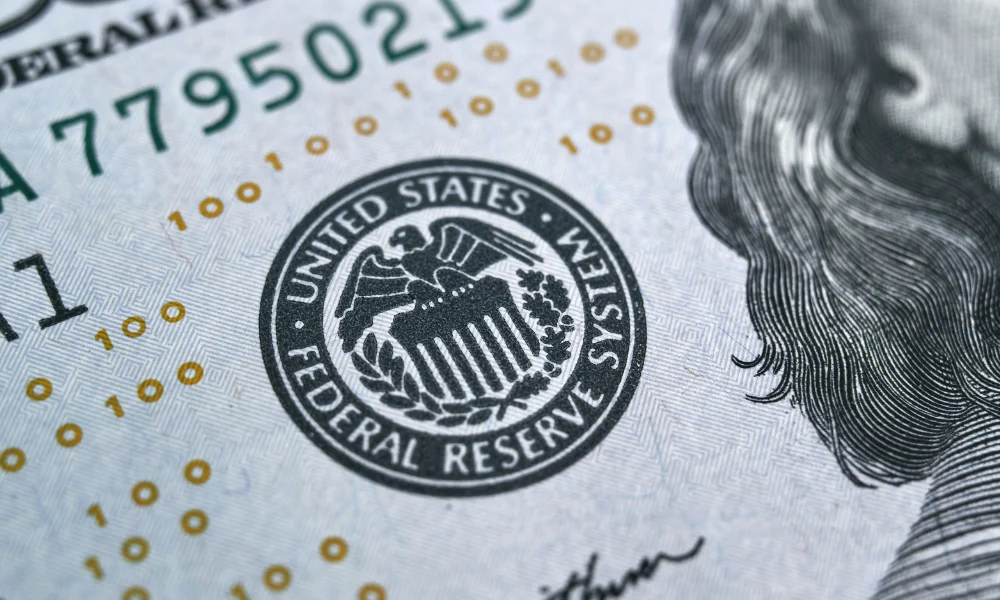
The United States Federal Reserve, under the stewardship of Chair Kevin Warsh, has enacted its first interest rate hike in three years, a move widely anticipated by financial markets. The benchmark overnight rate has been increased by 25 basis points, pushing the target range to between 3.75% and 4%. This decision comes as the nation grapples with stubbornly elevated inflation and a robust, albeit complex, economic landscape, setting the stage for potential friction with the White House and continued volatility in global financial markets.
The market consensus had largely priced in this adjustment, with an estimated 85% probability of a rate hike being factored into trading prior to the Federal Open Market Committee (FOMC) meeting. This expectation was driven by a confluence of factors, most prominently the persistent upward pressure on consumer prices and an economy that, despite some headwinds, continues to demonstrate resilience. The Fed’s accompanying statement underscored this rationale, asserting, "Inflation remains elevated. Today’s policy action will support a timelier return to the Committee’s 2 percent goal. The Committee will deliver price stability." Further signaling its forward-looking stance, the Fed released updated interest rate projections, which suggest another 25-basis-point increase is on the horizon before the close of 2026, a projection that will be closely scrutinized by economists and investors alike.
The Inflationary Crosscurrents: Energy Prices and Core Stability
The latest inflation figures paint a nuanced picture. In August, the annualized Consumer Price Index (CPI) stood at a concerning 3.4%, significantly exceeding the Fed’s long-standing 2% target. A substantial contributor to this elevated figure has been the surge in energy prices, a dynamic amplified by ongoing geopolitical tensions in the Middle East. However, a closer examination of core CPI, which excludes the volatile food and energy components, reveals a more moderate trend, registering at 2.4%. This distinction is crucial, as it suggests that underlying inflationary pressures, excluding external shocks, may be less entrenched.
The Fed’s preferred inflation gauge, the Personal Consumption Expenditures (PCE) price index, also provided impetus for the rate hike. Reaching as high as 3.7% in July, this metric’s upward trajectory directly influenced bond markets, prompting them to begin anticipating a tightening of monetary policy. The Fed’s mandate is clear: to maintain price stability, and these figures indicate that the current inflationary environment necessitates a more assertive stance.
Economic Resilience: A Strong Foundation Amidst Uncertainty
Despite the inflationary concerns, the underlying strength of the U.S. economy, as highlighted by recent data, has provided the Fed with the confidence to proceed with a rate hike. Gross Domestic Product (GDP) growth has been described as expanding at a "solid pace," and unemployment figures remain remarkably low. The Fed’s statement acknowledged this robust performance: "Economic activity is expanding at a solid pace. While uncertainty remains elevated owing, in part, to geopolitical developments, domestic spending has been resilient. Productivity growth is strong, and capital investment is robust. Job gains have kept pace with the workforce, and the unemployment rate has changed little."
This combination of steady economic expansion and a tight labor market suggests that the economy can absorb a modest increase in borrowing costs without triggering a significant downturn. The productivity gains, in particular, are a positive sign, indicating that businesses are becoming more efficient, which can help to mitigate inflationary pressures over the longer term. Robust capital investment further points to businesses’ confidence in future economic prospects.
A Potential Clash of Agendas: Warsh and the White House
The Fed’s decision to raise interest rates could place new Fed Chair Kevin Warsh in a delicate position with the current U.S. President. The President has been an outspoken advocate for lower interest rates, believing they stimulate economic growth and make American goods more competitive internationally. This stance has led to public criticisms of the Fed, particularly of former Chair Jerome Powell, whom the President accused of keeping rates too high for too long, thereby hindering economic recovery.
Warsh, now at the helm, faces the challenge of navigating these political pressures while adhering to the Fed’s statutory mandate of price stability and maximum employment. The President’s desire for lower rates, coupled with his past criticisms of the Fed’s independence, creates a dynamic where Warsh must demonstrate a commitment to his fiduciary responsibilities, even if it diverges from the President’s stated preferences. This tension could become a recurring theme in Fed policy discussions and public statements.
Market Ripples: Volatility in the Bond Arena
The anticipation and eventual announcement of the Fed’s rate hike have already sent ripples through the financial markets, particularly in the bond sector. The past week has witnessed significant volatility in U.S. bond markets, with yields on 10-year U.S. Treasury bonds reaching their highest levels since 2007. This surge in yields is a direct consequence of several factors: the increasing likelihood of a Fed rate hike, the persistent inflation data, and growing concerns about the overall sovereign debt levels in developed economies.
When interest rates rise, the value of existing bonds, which pay a fixed coupon, tends to fall, leading to higher yields for newly issued debt. Investors demand higher returns to compensate for the erosion of purchasing power due to inflation and the increased cost of borrowing. The ascent of long-term yields also signals a growing expectation among market participants that inflation may prove more persistent than previously anticipated, requiring a sustained period of higher interest rates to bring it under control. This has broader implications for borrowing costs across the economy, affecting mortgages, corporate debt, and government financing.
Historical Context: A Gradual Return to Normalcy?
The Fed’s decision to raise rates marks a significant shift from the exceptionally accommodative monetary policy pursued in the wake of the 2008 financial crisis and the COVID-19 pandemic. For over a decade, interest rates remained near historic lows, a strategy designed to stimulate economic activity and combat deflationary pressures. However, the prolonged period of low rates, combined with substantial fiscal stimulus, is widely believed to have contributed to the current inflationary environment.
The Fed’s gradual approach to rate hikes, starting with a 25-basis-point increase, reflects a cautious strategy to avoid shocking the economy. This measured pace allows businesses and consumers time to adjust to higher borrowing costs and provides the Fed with opportunities to assess the impact of its policy actions. The historical precedent of aggressive rate hikes leading to recessions serves as a cautionary tale, prompting the Fed to tread carefully.
Data Snapshot: Key Economic Indicators
To better understand the context of the Fed’s decision, examining key economic indicators provides valuable insight:
- Annualized CPI (August): 3.4% (well above the 2% target)
- Core CPI (August): 2.4% (closer to the target, excluding food and energy)
- PCE Price Index (July): 3.7% (Fed’s preferred inflation measure)
- Unemployment Rate (Latest Available): Remains near multi-decade lows, indicating a tight labor market.
- GDP Growth (Latest Quarter): Shows consistent expansion, demonstrating economic resilience.
- Productivity Growth: Reported as strong, suggesting increased efficiency in the economy.
- Capital Investment: Described as robust, reflecting business confidence.
These figures collectively present a picture of an economy that is growing but also contending with persistent price pressures. The Fed’s challenge is to navigate this duality, ensuring that the economy continues to expand without allowing inflation to become entrenched.
Broader Implications and Future Outlook
The Fed’s rate hike has far-reaching implications. For consumers, it signifies higher borrowing costs for mortgages, car loans, and credit cards. For businesses, it means increased expenses for financing investments and operations. However, for savers, it offers the prospect of higher returns on their deposits and fixed-income investments.
The decision also sends a strong signal to global markets about the Fed’s commitment to fighting inflation. This can influence currency exchange rates, international capital flows, and the cost of borrowing for other nations. The ongoing global economic recovery, which is still facing challenges from supply chain disruptions and geopolitical instability, will be closely watching the Fed’s actions.
Looking ahead, the Fed’s path forward will be heavily influenced by incoming economic data. If inflation proves more stubborn than anticipated, further rate hikes may be necessary. Conversely, if inflation begins to recede more rapidly, the Fed might pause its tightening cycle or even consider rate cuts sooner than currently projected. The balance of risks remains tilted towards inflation, but the Fed’s stated commitment to data-dependent policymaking suggests a flexible approach. The coming months will be critical in determining whether the Fed can achieve its dual mandate of price stability and maximum employment without triggering a significant economic slowdown. The market’s reaction, the President’s pronouncements, and the evolving geopolitical landscape will all play a crucial role in shaping the economic narrative.
