


The National Development and Reform Commission (NDRC) and the National Energy Administration (NEA) have officially released the 15th Five-Year Plan for the development of China’s coal industry, a pivotal document that outlines the nation’s energy strategy for the 2026–2030 period. This plan serves as a critical bridge toward China’s international commitment to peak carbon dioxide emissions before 2030, balancing the urgent requirements of the global energy transition with the domestic necessity for energy self-sufficiency and stability. While previous discourse among government-affiliated think tanks suggested a potential peak in coal consumption as early as 2027, the newly published framework adopts a more flexible approach, prioritizing a "bottom-line guarantee" for energy security while guiding the industry toward a gradual and "clean" evolution.
A Strategic Framework for the 2026–2030 Transition
Five-year plans (FYPs) are the cornerstone of Chinese governance, providing the roadmap for economic and social development across all sectors. The 15th FYP for coal is a subordinate but vital component of the overarching national 15th Five-Year Plan, which will dictate the country’s trajectory through the end of the decade. This specific document arrives at a time when the role of coal in China is undergoing a fundamental shift. For decades, coal has been the bedrock of the Chinese economy, currently responsible for approximately 80% of the nation’s carbon emissions and traditionally providing the lion’s share of its power generation.
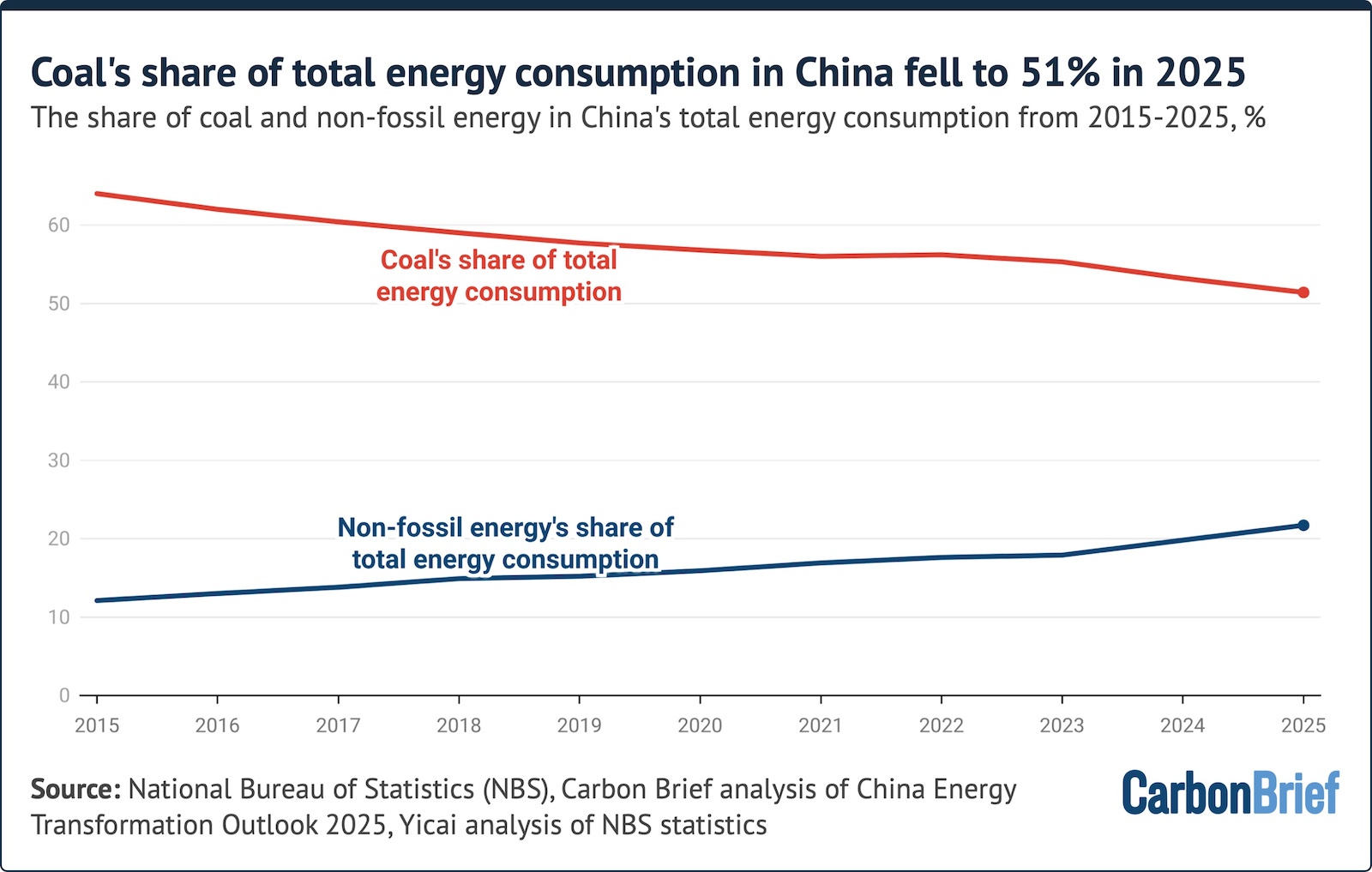
However, data from the first half of 2026 indicates that for the first time, coal’s share of total energy consumption has dipped to 51.4%, while non-fossil energy sources have surged to account for more than half of the country’s installed power capacity. Despite this rapid expansion of renewables, the new plan reaffirms that coal remains a "foundational source of energy" vital to the national economy and livelihoods. The document emphasizes that the 2026–2030 period will be one of "significant transformation," where coal moves from being the primary baseload provider to a supporting and regulating force within a "new-type energy system."
Chronology of China’s Coal Policy Evolution
The trajectory of China’s coal policy has shifted significantly over the last three five-year periods. In the 12th FYP (2011–2015), the focus was primarily on massive capacity expansion to fuel double-digit GDP growth. The 13th FYP (2016–2020) introduced "supply-side structural reform," aimed at closing inefficient, small-scale mines and consolidating the industry. The 14th FYP (2021–2025) began the pivot toward the "Dual Carbon" goals—peaking emissions by 2030 and achieving carbon neutrality by 2060.

The newly released 15th FYP (2026–2030) represents the final phase of the peaking era. Unlike the 12th and 13th plans, which set hard numerical targets for total coal production, the 15th FYP avoids a specific production ceiling. Instead, it focuses on qualitative goals: efficiency, reserve capacity, and systemic resilience. This evolution reflects a sophisticated understanding of the energy trilemma—balancing security, equity, and sustainability—in an increasingly volatile global landscape.
Energy Security Amid Global Volatility
A defining characteristic of the 15th FYP for coal is its heavy emphasis on energy security, a concern exacerbated by geopolitical tensions, specifically the ongoing conflicts in the Middle East. Policymakers in Beijing view coal as the ultimate safeguard against external energy shocks. Wang Hongzhi, head of the NEA, recently described coal as China’s "greatest source of confidence" in ensuring a stable energy supply.
Analysts point out that the volatility in global oil and gas markets has reinforced coal’s role as a "cheap and secure" domestic resource. This perspective has led to the plan’s focus on reinforcing coal’s "bottom-line guarantee" rather than plotting an aggressive phase-down. By maintaining a robust coal infrastructure, China intends to protect its industrial base from the price spikes and supply disruptions that have plagued other major economies in recent years.
Geographic Consolidation and Production Dynamics
The 15th FYP further accelerates the geographic concentration of coal production in northern China. The plan designates Shanxi, Inner Mongolia, Shaanxi, and Xinjiang as "coal-supply security bases." These four regions already accounted for 82% of national output in 2025, and the new target mandates that they provide more than 80% of the country’s coal by 2030.
To ensure efficiency and safety, the plan sets strict standards for new mining operations. With the exception of southern Xinjiang, all new or expanded mines must have a minimum annual production capacity of 1.2 million tonnes. This move is designed to eliminate fragmented, low-efficiency mining and create a "more concentrated, efficient, flexible, and resilient" system. Furthermore, the plan introduces a "single ledger" system, requiring central government approval for all new production capacity, a measure intended to prevent local governments from initiating a "rush" on new projects before consumption starts to plateau.
The Reserve Capacity System
One of the more technical aspects of the plan is the formalization of a coal "reserve-production" system. Initially mooted in 2024, the goal is to establish a reserve capacity of at least 100 million metric tonnes per year by 2030. This system allows mines to maintain "ready-to-use" capacity that can be activated during periods of extreme demand or renewable energy intermittency.
While this 100-million-tonne target is lower than the 300 million tonnes suggested in earlier 2024 discussions, it represents a strategic shift in how coal is used. Rather than running all mines at maximum output, the government will manage a portion of the industry as a strategic backup, allowing for a smoother integration of wind and solar power without risking grid instability.
Environmental Mitigation and Methane Management
Recognizing the environmental impact of coal, the 15th FYP includes robust sections on "clean and efficient use" and methane emission control. Methane, a potent greenhouse gas, is a significant byproduct of coal mining. The plan sets an ambitious target for coalbed methane production at 26 billion cubic metres and mine-gas utilization at 6.5 billion cubic metres by 2030.
The Ordos Basin, spanning several northern provinces, is expected to source at least 18 billion cubic metres of this methane. State media has characterized this push as a "vital strategic move" to optimize the energy mix and ensure domestic gas supply. While the plan does not set an absolute methane reduction target—a point of critique from some climate think tanks—it emphasizes "steadily advancing" emission controls and participating in the reduction of non-carbon dioxide greenhouse gases.
Additionally, the plan advocates for:

- Phasing out inefficient coal-fired equipment.
- Replacing coal in industrial processes with clean energy alternatives.
- Reducing "dispersed coal" use in rural heating.
- Promoting waste heat utilization and distributed solar heating.
The Evolution of Coal Companies
Perhaps the most forward-looking aspect of the plan is its directive for coal companies to evolve. The NDRC urges these enterprises to diversify into "power, new energy, and chemicals." Major coal producers are being encouraged to leverage their existing land and infrastructure to build massive solar and wind farms, effectively becoming integrated energy providers.
The focus on "coal-to-chemicals" is particularly noteworthy. The plan promotes a shift where coal is treated equally as a fuel and a feedstock. By converting coal into oil, gas, and high-value chemicals, China aims to reduce its reliance on imported petrochemicals. The plan calls for the construction of strategic coal-to-oil and gas bases, while simultaneously mandating that these facilities adopt low-carbon technologies like green hydrogen and carbon capture, utilization, and storage (CCUS).
Analytical Outlook and Implications
The 15th Five-Year Plan for coal confirms that China is not pursuing a rapid "phase-out" of coal, but rather a "phased-down transition" characterized by extreme caution. By refusing to set a specific year for the coal peak—choosing instead to aim for a peak "within the period"—Beijing has granted itself maximum flexibility to respond to economic growth needs and international pressures.
From a global climate perspective, the plan is a mixed signal. On one hand, the commitment to peak coal consumption by 2030 is firm and aligns with the nation’s climate pledges. On the other hand, the continued investment in coal infrastructure and the "bottom-line guarantee" approach suggest that coal will remain a massive part of the global emissions equation well into the 2030s.
Ultimately, the success of this plan will depend on the continued "market and technological progress" of renewables. As wind and solar become increasingly cost-competitive and battery storage technology matures, the economic justification for coal may diminish faster than policy dictates. Until then, the 15th FYP ensures that coal will remain the sturdy, if carbon-intensive, pillar of China’s energy security strategy.
