

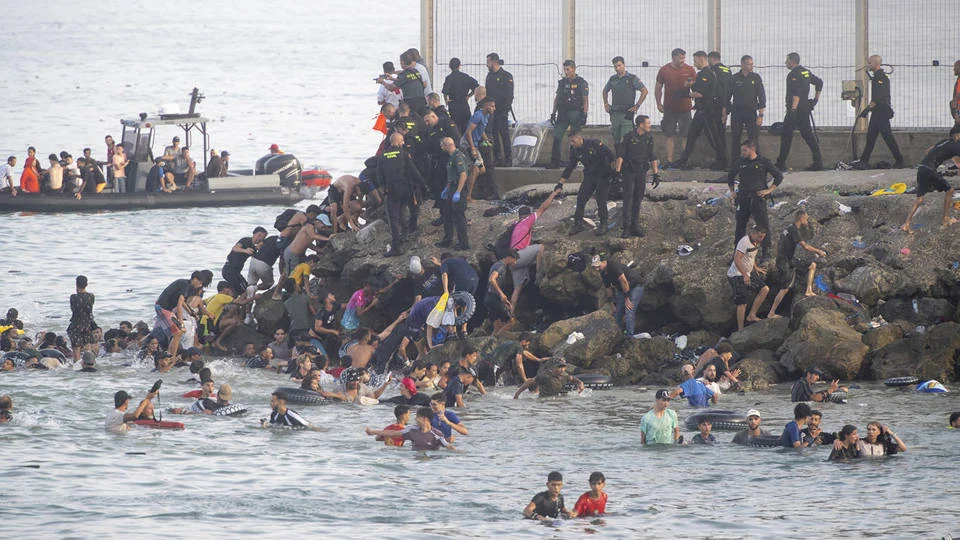
The sight of tens of thousands of people surging into the Spanish enclave of Ceuta from neighboring Morocco was a stark and immediate reminder of Europe’s porous southern frontier. While the sheer scale of the recent influx – reportedly involving over 72,000 individuals – ignited a familiar firestorm of recriminations among European leaders, it simultaneously brought into sharper focus a far more profound and long-simmering territorial dispute between Spain and Morocco, a dispute whose resolution is critical to regional stability.
The events of May 2021, when a sudden and unprecedented surge of migrants, including a significant number of unaccompanied minors, overwhelmed Spanish border guards in Ceuta and Melilla, were not an isolated incident but rather a potent symptom of complex geopolitical and socio-economic realities. This dramatic episode thrust the long-standing territorial claims of Spain over these North African enclaves, and Morocco’s counter-claims, back into the international spotlight, underscoring the fragility of a status quo that has persisted for decades.
The Genesis of a Territorial Dispute
Ceuta and Melilla, along with smaller Spanish territories like the Chafarinas Islands, Perejil Island, and Alhucemas Islands, represent the last vestiges of Spain’s historical colonial presence in North Africa. Their status has been a source of contention since Morocco gained independence from France and Spain in 1956. Morocco asserts sovereignty over these territories, viewing them as integral parts of its national territory unjustly severed during the colonial era. Spain, conversely, maintains that Ceuta and Melilla have been Spanish for centuries, citing historical ties, continuous administration, and the right to self-determination for their predominantly Spanish populations.
The historical roots of Spanish presence in Ceuta trace back to the 15th century, when Portugal captured the city. It later became part of Spain in 1580. Melilla’s history as a Spanish possession is even longer, dating back to 1497. These enclaves, strategically located on the northern coast of Morocco, have served as crucial trading posts and military outposts for Spain for centuries. The decolonization process in the mid-20th century, which saw many European powers relinquish their colonial holdings, did not extend to these territories, largely due to Spain’s assertion of their historical integration into the Spanish state.
The May 2021 Influx: A Catalyst for Renewed Tensions
The dramatic events of May 17-18, 2021, saw Moroccan authorities appear to loosen border controls, leading to an unprecedented wave of arrivals. An estimated 8,000 to 10,000 people, many of them young men and some children, managed to cross into Ceuta on foot or by swimming around the border fence. This sudden surge overwhelmed the local infrastructure and emergency services, creating a humanitarian crisis and sparking a fierce political debate in Spain and across the European Union.
The immediate aftermath was characterized by a torrent of accusations and counter-accusations. Spanish officials, including Prime Minister Pedro Sánchez, accused Morocco of using migration as a political weapon, particularly in response to Spain’s decision to grant entry to Brahim Ghali, the leader of the Polisario Front, for medical treatment in a Spanish hospital. The Polisario Front is a Western Saharan independence movement, and its conflict with Morocco over the disputed territory of Western Sahara has been a long-standing source of friction between Rabat and Madrid.
Moroccan officials, while not explicitly admitting to orchestrating the surge, highlighted Spain’s alleged failure to uphold agreements on migration control and its perceived disregard for Morocco’s interests, particularly concerning the Western Sahara issue. The incident underscored the interconnectedness of migration, territorial disputes, and broader diplomatic relations in the region.
Supporting Data and Context
The scale of the May 2021 influx was exceptional. In a typical month, the number of irregular arrivals in Ceuta and Melilla might be in the hundreds. The sudden surge represented a tenfold or even hundredfold increase, overwhelming the capacity of both the enclaves and Spain to manage the situation. This event was not only a humanitarian challenge but also a security concern, as it exposed the vulnerability of Spain’s southern border.
- Migration Flows: Ceuta and Melilla are significant entry points for sub-Saharan African migrants seeking to reach Europe. The journey is perilous, often involving transit through Morocco, which has become a major staging ground for irregular migration. The economic disparities between Europe and North Africa, coupled with instability and conflict in various African nations, continue to drive these migration flows.
- Economic Factors: Morocco, while experiencing economic growth, faces its own challenges with unemployment and poverty, particularly among its youth. The allure of economic opportunities in Europe remains a powerful motivator for many.
- Geopolitical Leverage: The use of migration as a tool of diplomatic pressure is a recurring theme in international relations. Morocco, as a key partner for the EU on migration control, possesses significant leverage. The May 2021 events demonstrated how this leverage could be exercised, albeit with considerable humanitarian consequences.
Official Responses and International Reactions
The European Union, while expressing solidarity with Spain and condemning the use of migration as a political tool, also found itself in a delicate diplomatic position. Morocco is a crucial partner for the EU in areas such as counter-terrorism, trade, and migration management. The bloc’s response therefore involved a mix of condemnation, calls for dialogue, and an acknowledgment of the need to address the root causes of migration.
Spain, in the immediate aftermath, increased its border security presence and initiated diplomatic efforts to de-escalate tensions with Morocco. The decision to admit Brahim Ghali was a significant diplomatic misstep from Morocco’s perspective, and Spain’s subsequent efforts to mend fences involved both diplomatic engagement and a careful recalibration of its policies.
Moroccan authorities, while not directly taking responsibility for the border breach, reiterated their demands regarding the Western Sahara and criticized Spain’s handling of bilateral relations. The incident highlighted the intricate web of dependencies and sensitivities that define the relationship between Spain and Morocco.
Broader Impact and Implications
The events in Ceuta served as a stark illustration of several critical issues:
- The Need for Comprehensive Migration Management: The crisis underscored the limitations of purely securitized border control. A more holistic approach, encompassing legal migration pathways, integration policies, and addressing the root causes of displacement in countries of origin, is essential.
- The Interplay of Diplomacy and Migration: The incident demonstrated how territorial disputes and diplomatic disagreements can directly influence migration flows. This complex interplay requires nuanced diplomatic solutions that go beyond immediate crisis management.
- The Future of Ceuta and Melilla: While Spain has consistently affirmed its sovereignty over Ceuta and Melilla, the persistent territorial claims by Morocco and the recurrent migration pressures create an ongoing challenge. The long-term stability of these enclaves is intrinsically linked to the broader relationship between Spain and Morocco.
- EU’s Southern Border Vulnerability: The events served as a wake-up call for the EU regarding the vulnerability of its southern borders. It highlighted the need for greater coordination among member states and a more proactive approach to managing external borders and fostering stability in neighboring regions.
The territorial dispute over Ceuta and Melilla is not merely a historical footnote; it is a contemporary reality that continues to shape regional dynamics. The influx of migrants into Ceuta in May 2021 was a dramatic manifestation of this underlying tension, forcing a re-examination of the complex relationship between Spain, Morocco, and the broader European Union. Moving forward, a sustained commitment to dialogue, a nuanced understanding of the interconnected issues at play, and a focus on addressing the root causes of migration will be crucial for fostering long-term stability and security in this strategically vital region. The future of these Spanish enclaves, and indeed the broader relationship between two close neighbors, hinges on the ability to navigate these intricate geopolitical currents with wisdom and foresight.
