

The global landscape of energy storage is on the precipice of a generational shift as Contemporary Amperex Technology Co. Limited (CATL), the world’s largest manufacturer of electric vehicle batteries, formalizes its long-term commitment to lithium-air technology. During the 2026 Powering The Nation forum in China, Wu Kai, the chief scientist at CATL, outlined a strategic roadmap that places lithium-air batteries at the pinnacle of the company’s research and development hierarchy. This announcement marks a significant pivot from incremental improvements in existing lithium-ion chemistries toward a technology that could theoretically match the energy density of fossil fuels, fundamentally altering the trajectory of the global transportation sector.
The significance of lithium-air technology lies in its staggering theoretical energy density of approximately 12,000 Wh/kg. To put this figure in perspective, the energy density of gasoline is roughly 12,200 Wh/kg. Currently, the most advanced mass-produced lithium-ion batteries used in high-end electric vehicles (EVs) hover between 250 and 300 Wh/kg. If CATL or its competitors can successfully commercialize even a fraction of the theoretical potential of lithium-air, the resulting batteries would possess the capacity to power long-haul aircraft, massive cargo ships, and consumer vehicles capable of traveling over 1,000 miles on a single charge.
The Mechanics of Breathable Batteries
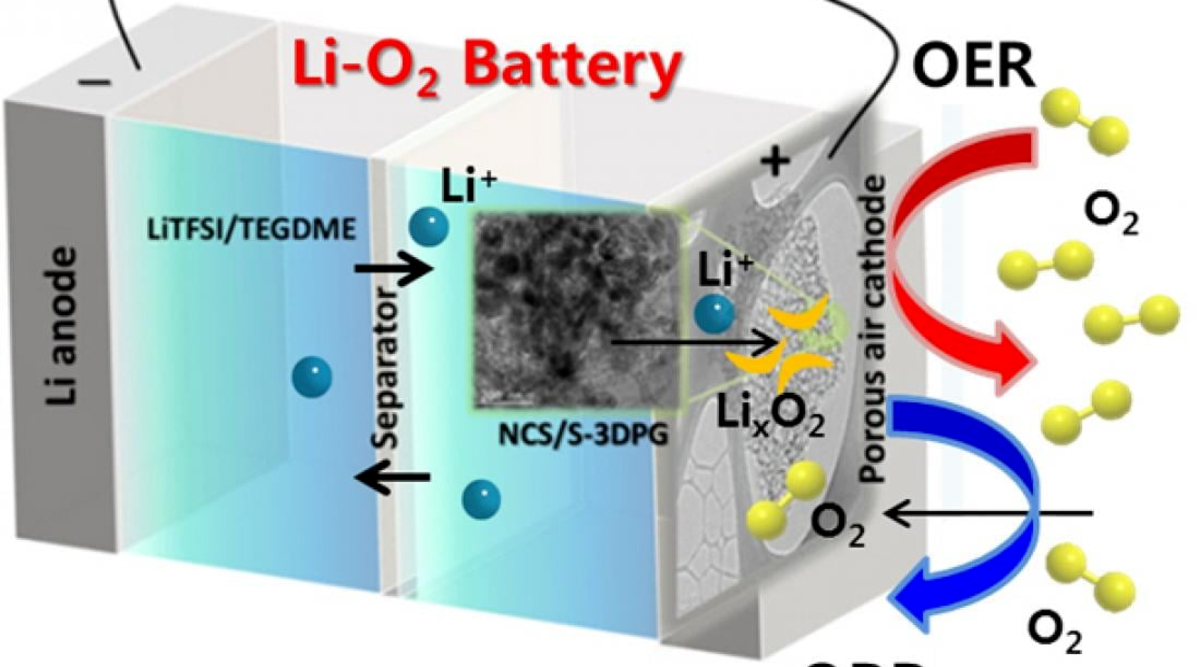
Lithium-air batteries, often referred to as "breathable batteries," differ fundamentally from the sealed lithium-ion cells currently in use. Traditional batteries rely on heavy metal-based cathodes—typically utilizing nickel, cobalt, and manganese—to facilitate the movement and storage of lithium ions. These components add significant weight and volume to the battery pack without contributing directly to energy storage.
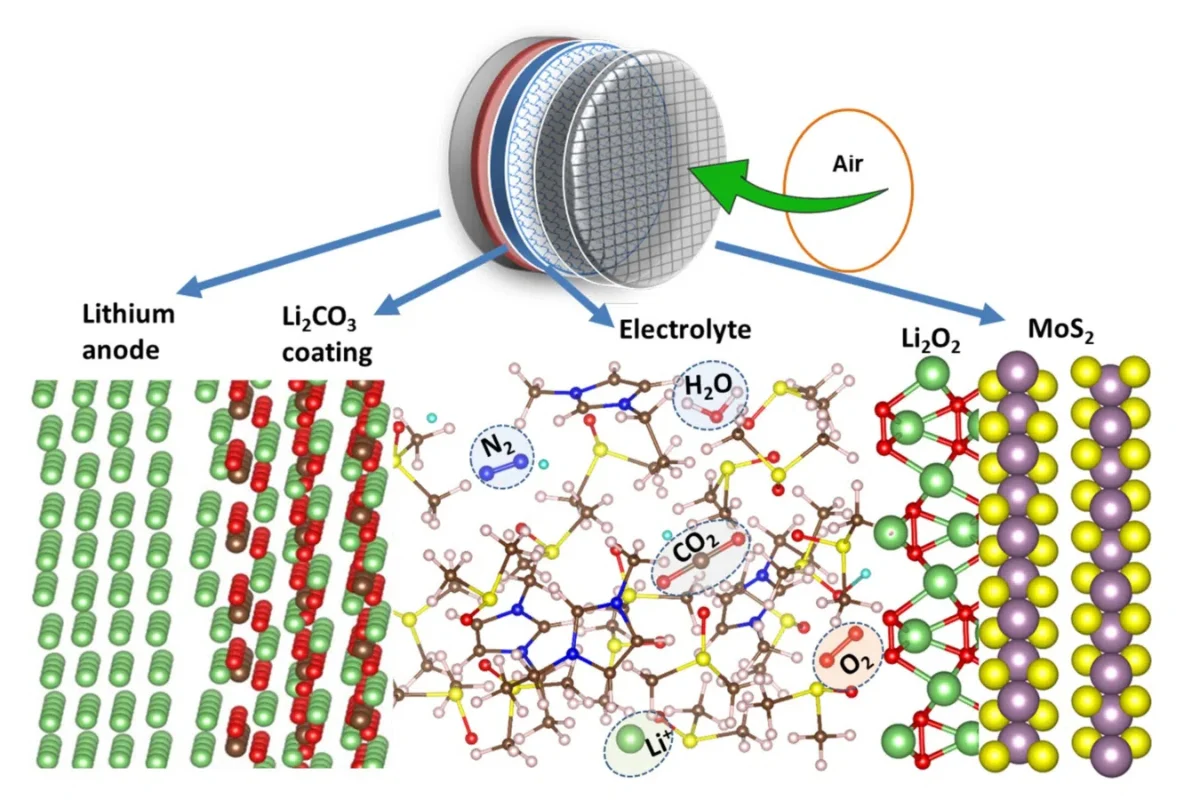
In contrast, a lithium-air system utilizes a lithium metal anode and draws oxygen directly from the surrounding atmosphere to serve as the cathode reactant. By eliminating the need for heavy internal cathode materials, the weight of the battery is drastically reduced. During discharge, lithium ions move from the anode to the cathode, where they react with oxygen to form lithium oxides. During charging, this process is reversed, and the oxygen is released back into the atmosphere. This open-system design is what allows for the astronomical jump in energy density, as the "fuel" (oxygen) is not carried within the battery but harvested from the environment during operation.
A Chronology of Scientific Breakthroughs
The concept of the lithium-air battery is not a recent innovation; researchers have explored its potential since the 1970s. However, for decades, the technology remained confined to laboratories due to severe chemical and structural hurdles. Early prototypes were notoriously unstable, highly sensitive to moisture and carbon dioxide, and suffered from extremely short cycle lives.
The timeline of recent progress indicates that the industry is finally overcoming these historical barriers:
- 2023–2024: A collaborative effort between the University of Illinois Chicago, Argonne National Laboratory, and California State University, Northridge, led to the development of a lithium-air battery that could function in an "air-like" environment. This research was critical because it demonstrated that the battery could operate using ambient air rather than pure oxygen, achieving over 700 stable charge-discharge cycles.
- 2025: Researchers at the Illinois Institute of Technology and Argonne National Laboratory produced a prototype that achieved an energy density of 1,200 Wh/kg. This milestone was reached at room temperature and maintained a lifespan of 1,000 cycles. This was accomplished by unlocking a four-electron chemical reaction pathway, which allowed for the efficient formation and decomposition of lithium oxide, a process that had previously been the primary bottleneck for energy efficiency.
- 2026: CATL announced the successful mass production of sodium-ion batteries for short-range vehicles and stationary storage, while simultaneously designating lithium-air as its "far horizon" objective for 2030 and beyond.
Technical Innovations and Safety Advancements
The transition from 300 Wh/kg to 1,200 Wh/kg and beyond requires more than just a change in reactants; it necessitates a total overhaul of battery architecture. One of the most significant recent breakthroughs involves the electrolyte. Conventional lithium-ion batteries use liquid electrolytes that are often flammable and prone to leakage. In the latest lithium-air prototypes, researchers have replaced these liquids with a solid-state composite matrix.
This matrix consists of a ceramic-polyethylene oxide polymer infused with lithium-rich nanoparticles. This solid-state approach serves multiple purposes: it stabilizes the chemical reactions at the cathode, prevents the formation of dendrites (microscopic spikes that can cause short circuits), and acts as a barrier against moisture and carbon dioxide, which can contaminate the lithium metal. By isolating the reactive processes within a solid framework, engineers have significantly improved both the safety and the longevity of the cells.
The Geopolitical and Economic Landscape
While much of the fundamental research into lithium-air technology originated in the United States—specifically through federally funded institutions like Argonne National Laboratory—the commercialization of these discoveries is increasingly shifting toward China. This trend highlights a growing concern in the global energy market: the "valley of death" between laboratory success and industrial scale.
CATL’s dominance in the battery sector provides it with the capital and the manufacturing infrastructure necessary to take high-risk, high-reward technologies from the lab to the factory floor. The company has adopted a disciplined three-tiered strategy:
- Immediate Term: Scaling mature technologies like Lithium Iron Phosphate (LFP), Nickel Manganese Cobalt (NMC), and the newly commercialized sodium-ion batteries.
- Medium Term: Transitioning to solid-state lithium-ion batteries, with expected commercial availability in the late 2020s, targeting an energy density of 500 Wh/kg.
- Long Term: Developing lithium-air technology for 2030 and beyond to address the most demanding transportation sectors.
In the United States, the future of such research faces a complex political environment. Changes in federal oversight and shifts in funding priorities have created uncertainty for long-term scientific projects. Analysts suggest that if the U.S. does not maintain a consistent policy regarding the commercialization of its domestic research, it risks ceding the next generation of energy dominance to international competitors who are more aggressively integrating science into their industrial policy.
Broader Impact and Industry Implications
The successful deployment of lithium-air batteries would represent the "endgame" for the internal combustion engine. At 12,000 Wh/kg, the weight penalty of batteries—currently the biggest drawback of EVs—virtually disappears. This has profound implications for sectors that have remained largely resistant to electrification:
- Aviation: Current battery technology is too heavy for long-haul commercial flight. Lithium-air batteries could provide the power-to-weight ratio necessary for narrow-body and even wide-body electric aircraft, potentially decarbonizing one of the world’s most difficult-to-abate sectors.
- Maritime Shipping: Massive container ships require immense amounts of energy. Lithium-air packs could replace heavy fuel oil, reducing oceanic pollution and greenhouse gas emissions.
- Long-Haul Trucking: By matching the energy density of diesel, lithium-air would allow class-8 trucks to carry full payloads over thousands of miles without the need for frequent, time-consuming stops for recharging.
Comparative Analysis of Energy Densities
To understand the scale of the lithium-air revolution, one must examine the current hierarchy of energy storage (measured in Wh/kg):
- Lead-Acid: 30–50 Wh/kg
- Lithium Iron Phosphate (LFP): 160–200 Wh/kg
- Nickel Manganese Cobalt (NMC): 250–300 Wh/kg
- Solid-State (Target): 500 Wh/kg
- Lithium-Air (Current Prototypes): 1,200 Wh/kg
- Lithium-Air (Theoretical Limit): 12,000 Wh/kg
- Gasoline: 12,200 Wh/kg
The jump from NMC to the lithium-air theoretical limit is a 40-fold increase. Even achieving 10% of that theoretical limit would double the performance of the best batteries currently on the market.
Conclusion
The announcement by CATL regarding its focus on lithium-air technology signals that the era of incremental battery improvements may soon give way to a radical technological leap. While substantial engineering challenges remain—particularly regarding the stability of the air-breathing cathode and the scalability of solid-state electrolytes—the path forward is becoming clearer.
As the world’s largest battery manufacturer aligns its massive R&D resources with the theoretical limits of chemistry, the goal of a fully electrified global transport system moves from a speculative ambition to a foreseeable reality. The coming decade will determine which nations and corporations will lead this transition, but the scientific foundation for a post-gasoline world is already being laid in the laboratories of today.
