


In a strategic move designed to consolidate its leadership within the rapidly evolving voluntary carbon market, BeZero Carbon, the London-based carbon credit ratings agency, has announced the acquisition of Cedar, a New York-based climate data startup specializing in artificial intelligence. This transaction, finalized in June 2026, marks a significant milestone in the integration of advanced machine learning and climate science, aimed at enhancing the transparency and rigor of environmental asset valuation. The acquisition underscores a broader trend in the financial sector where traditional analytical frameworks are being augmented by "agentic" AI to manage the sheer volume and complexity of global sustainability data.
The acquisition of Cedar brings a suite of proprietary AI-powered tools into the BeZero ecosystem. Founded in 2025 by Farouq Ghandour, Piotr Kosiński, and Raphaël Haupt, Cedar quickly distinguished itself in the "ClimateTech" space by developing AI agents capable of automating highly technical tasks. These include carbon accounting, climate-related due diligence, emissions reporting, and granular renewable energy analysis. Unlike standard data processing software, Cedar’s platform utilizes Large Language Models (LLMs) and specialized algorithms to interrogate vast datasets, providing users with actionable insights into the veracity of carbon claims.
Strategic Integration and the Role of AI in Carbon Markets
BeZero Carbon has built its reputation on providing independent, risk-based ratings for carbon credits, serving a diverse clientele of investors, corporations, and project developers. The agency’s methodology relies on a multidisciplinary approach, combining the expertise of climate scientists, geospatial specialists, and financial analysts. However, as the voluntary carbon market (VCM) scales toward a projected valuation of billions of dollars by the end of the decade, the demand for real-time, scalable due diligence has outstripped traditional manual processes.
By integrating Cedar’s AI capabilities, BeZero aims to transform its platform into a more "self-service" environment. This will allow subscribers to not only view BeZero’s expert-led ratings but also to use automated tools to conduct their own preliminary risk assessments. The goal is to provide a "scientific intelligence" layer that can be accessed instantly, allowing market participants to move with the speed of traditional financial markets without sacrificing the integrity of the underlying environmental data.
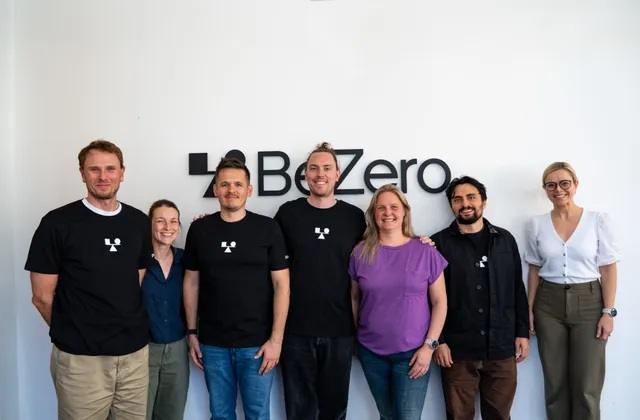
Tommy Ricketts, CEO and co-founder of BeZero Carbon, emphasized that the acquisition is a direct response to the market’s need for greater confidence. "This acquisition will offer our customers better tools to access insights, interrogate data, and have greater confidence when making investment decisions," Ricketts stated. The integration of Cedar’s technology is expected to accelerate the development of BeZero’s "pre-rating scorecards" and its geospatial tooling, which uses satellite imagery to monitor reforestation and avoided-deforestation projects in real-time.
The Evolution of Cedar: From Startup to Acquisition
Cedar’s rapid ascent from its founding in 2025 to its acquisition in 2026 highlights the intense demand for high-fidelity climate data. The company was established with the vision of solving the "data bottleneck" in sustainability reporting. As corporations worldwide face increasing pressure from regulators and shareholders to disclose their carbon footprints, the complexity of Scope 3 emissions—those occurring in the value chain—has become a significant hurdle.
Cedar’s AI agents were designed to solve this by autonomously gathering and verifying data from disparate sources, including supply chain invoices, energy bills, and industrial sensors. Farouq Ghandour, CEO and co-founder of Cedar, noted that the merger with BeZero represents a natural evolution of their mission. "BeZero has built the kind of ratings rails that underpin more mature markets, with a level of scientific rigour we deeply respect," Ghandour said. "We’re joining to make that scientific intelligence more accessible and to expand their platform due-diligence tools that let more of the market act with confidence."
As part of the deal, all three of Cedar’s co-founders will join the BeZero leadership team, ensuring that the technological DNA of the startup is woven into BeZero’s long-term product roadmap.
Market Context: The Push for Integrity and Regulation
The acquisition comes at a critical juncture for the carbon markets. For years, the VCM has been plagued by concerns over "phantom credits"—offsets that do not represent real, additional, or permanent carbon removals. High-profile investigations into major carbon standards have led to a flight to quality, where investors are increasingly unwilling to purchase credits that do not carry a high-conviction rating from a third-party agency like BeZero.

Furthermore, the regulatory landscape is shifting from voluntary guidelines to mandatory oversight. BeZero Carbon has confirmed that it expects to become a regulated entity under the European Union’s new ESG (Environmental, Social, and Governance) rating provider regulations later this year. This regulatory framework aims to bring the same level of scrutiny to ESG ratings that currently exists for credit rating agencies like S&P Global or Moody’s.
The EU’s move to regulate ESG rating providers is intended to prevent conflicts of interest and ensure that the methodologies used to score companies and projects are transparent and scientifically sound. By acquiring Cedar, BeZero is positioning itself to meet these rigorous regulatory standards through enhanced data provenance and automated audit trails, which are essential for compliance under the new EU rules.
Supporting Data: The Growth of Climate Fintech
The synergy between BeZero and Cedar reflects broader economic shifts. According to market analysts, the "Climate Fintech" sector has seen a surge in M&A activity as traditional financial service providers seek to acquire the technical "stack" necessary to navigate the green transition.
- Market Scale: The voluntary carbon market, while currently valued at approximately $2 billion, is estimated by some financial institutions to have the potential to reach $50 billion to $100 billion by 2030, provided that integrity issues are resolved.
- The Efficiency Gap: Research suggests that manual due diligence for a single carbon project can take weeks or even months. AI-driven platforms like Cedar can reduce this timeframe by up to 80%, allowing for more frequent monitoring and faster capital deployment.
- Investment Trends: In 2025 alone, venture capital investment in AI-enabled climate solutions exceeded $12 billion globally, as investors bet on technology to bridge the gap between corporate net-zero pledges and actual atmospheric impact.
Chronology of the BeZero-Cedar Integration
The path to this acquisition was paved by a series of technological milestones and market pressures:
- Early 2024: BeZero Carbon expands its geospatial capabilities, launching tools that allow users to see "under the canopy" of forest projects using LiDAR and satellite data.
- Early 2025: Cedar is founded in New York, focusing on the development of "Agentic AI" for the sustainability sector, moving beyond simple data entry to autonomous analysis.
- Late 2025: The European Parliament reaches a provisional agreement on the regulation of ESG rating activities, creating a countdown for agencies to bolster their methodologies.
- Q1 2026: BeZero and Cedar enter into a strategic partnership to pilot AI-driven pre-rating scorecards for renewable energy projects in emerging markets.
- June 2026: BeZero Carbon officially acquires Cedar, integrating the team and technology to create a unified climate intelligence platform.
Broader Impact and Industry Implications
The implications of this acquisition extend beyond the two companies involved. It signals a "maturation phase" for the carbon market, where the focus is shifting from the quantity of credits to the quality and verifiability of data. For institutional investors, the availability of AI-enhanced ratings means that carbon credits can increasingly be treated as a sophisticated asset class rather than a speculative philanthropic contribution.

Furthermore, the move sets a precedent for how ratings agencies might evolve. As AI agents become more adept at processing unstructured data—such as local government reports, scientific papers, and social media sentiment—the ability of agencies to spot "greenwashing" or project failure before it hits the headlines will improve significantly.
For project developers on the ground, particularly in the Global South, the integration of Cedar’s technology into BeZero’s platform could be a double-edged sword. While it offers the potential for faster certification and access to capital, the bar for data transparency will be raised. Projects that cannot provide the granular data required by AI-driven auditing tools may find themselves excluded from the high-value "rated" market.
Looking Ahead: The Future of Climate Intelligence
As BeZero Carbon prepares for its new status as a regulated entity in the EU, the addition of Cedar provides a competitive moat. In a world where every corporate claim is under a microscope, the winner in the carbon market will be the entity that provides the most reliable, transparent, and scalable "source of truth."
The integration of AI into carbon ratings is not merely an efficiency play; it is a fundamental shift in how humanity measures its progress toward net-zero. By combining the "human-in-the-loop" expertise of BeZero’s scientists with the "always-on" processing power of Cedar’s AI, the industry moves one step closer to a high-integrity carbon market that can genuinely contribute to climate mitigation.
In the coming months, market observers will be watching closely to see how BeZero deploys its new AI capabilities. The success of this acquisition will likely be measured by the agency’s ability to prevent the next major carbon credit scandal and to provide the financial world with the certainty it needs to fund the transition to a low-carbon economy. For now, the BeZero-Cedar deal stands as a definitive statement that the future of climate finance is digital, automated, and deeply rooted in data science.
