

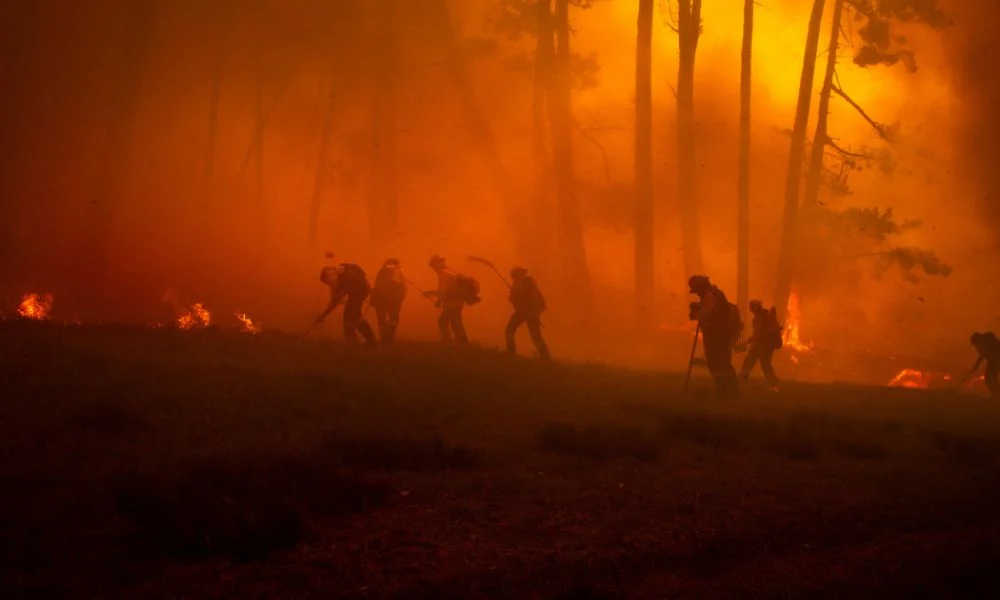
Despite a significant wildfire season that has scorched vast tracts of Canadian wilderness, the nation’s insurance sector is demonstrating resilience and is well-equipped to absorb the projected financial impacts, according to a recent report by Morningstar DBRS. As of mid-year, over 29,500 square kilometers have been consumed by flames across Canada, a figure that typically signals a substantial claims burden. However, the concentration of these fires in remote areas has mitigated the direct impact on urban and commercial properties, a key factor in the positive outlook.
Wildfire Season Dynamics and Insurer Preparedness
The current wildfire season, while extensive in geographical spread, has largely spared major population centers and areas with high concentrations of insured property. This geographic distribution is crucial, as the true financial toll of wildfires is determined less by the total area burned and more by their proximity to insured assets and infrastructure. Morningstar DBRS highlights that the largest fires have predominantly remained in remote, less populated regions, thereby limiting the volume of direct property claims.
Steve Liu, Assistant Vice President of Global Insurance and Pension Ratings at Morningstar DBRS, stated, "Canadian insurers remain well positioned to absorb moderate wildfire losses, given the current development of the wildfire season." This assessment is underpinned by the sector’s robust financial health, characterized by strong underwriting profitability, substantial capital buffers, and combined ratios below 95 percent among major publicly traded property and casualty insurers. These metrics, observed in late 2025 and early 2026, indicate a healthy financial standing capable of managing anticipated claims.
The report further suggests that a significant escalation in major wildfire events and severe weather occurrences would be necessary to deplete insurers’ annual catastrophe budgets, trigger their reinsurance protections, and subsequently increase the cost of reinsurance. This implies that the current level of losses is well within the industry’s risk management framework. The proactive approach of insurers in increasing premiums over recent years on personal property policies has also played a vital role in enabling them to keep pace with rising claims costs, inflation, and the increasing frequency of natural catastrophes.
Beyond Direct Property Damage: Indirect Claims Emerge
While direct property damage claims are expected to remain manageable, the economic repercussions of wildfires extend far beyond the immediate fire perimeter. Insurance claims tied to evacuation orders, additional living expenses for displaced residents, and business interruptions are proving to be significant, even for policyholders whose properties have not been directly affected by the flames.
The Insurance Bureau of Canada (IBC) explains that civil authority coverage can be triggered when a mandatory evacuation order prevents access to an insured premises. This coverage operates independently of standard business interruption policies. Furthermore, contingent business interruption coverage can extend to businesses whose operations are disrupted due to the closure of their suppliers, which may be impacted by fire-related shutdowns elsewhere. This complex web of indirect losses underscores the far-reaching economic consequences of widespread wildfires.
The Lingering Impact of Smoke and Supply Chain Disruptions
The pervasive issue of wildfire smoke also contributes to a prolonged claims tail. Data from Verisk, cited by Insurance Business, revealed that on the 2025 Los Angeles wildfires, smoke damage constituted approximately 30 percent of claims filed within the first 30 days. Critically, in past events, an additional 35 percent of comparable smoke-related claims have surfaced as late as two years after the initial incident. This prolonged claims cycle necessitates sustained financial reserves and meticulous claims management.
Sedgwick, a global provider of claims management, reports that fires disrupting cross-country trucking routes are generating business interruption claims, often from policyholders unaware of the specific blazes impacting their supply chains. The complexities are further amplified by the provincial-by-province adjuster licensing system in Canada, which can impede the rapid expansion of claims handling capacity when multiple major events occur concurrently.

Historical Context: A Season Building on Costly Precedents
The current wildfire season unfolds against a backdrop of escalating insured catastrophe losses in Canada. In 2024, the country experienced its most expensive year on record for insured catastrophe losses, reaching $8.5 billion. This figure underscores a growing trend of severe weather events and natural disasters impacting the Canadian economy.
The 2016 Fort McMurray wildfire serves as a stark reminder of the potential devastation. This event, which led to the evacuation of over 80,000 people and the destruction of more than 2,400 properties, is now valued at over $4.8 billion in insured damages, adjusted for 2025 dollars. Such significant past losses have directly influenced insurance pricing, contributing to a national average increase of 5.28 percent in home insurance rates in 2025, with Alberta experiencing a steeper rise of up to 9.07 percent.
Shifting Commercial Insurance Market Dynamics
While residential insurance rates have seen increases, the wider commercial insurance market is experiencing a softening cycle. Global commercial insurance rates have been on a downward trend, with an average decline of 6 percent in the second quarter of 2026, marking the eighth consecutive quarterly decrease and a steeper drop than the 5 percent recorded in the preceding quarter, according to Marsh’s Global Insurance Market Index.
Canadian composite rates saw a 7 percent decrease, and Canadian property rates fell by 8 percent. In contrast, casualty pricing globally experienced an increase, primarily driven by the United States, which was the only region to buck the downward trend, with a 7 percent rise. This divergence highlights the varied economic and risk factors influencing different insurance segments.
John Donnelly, President of Global Placement at Marsh, noted that insurers are now competing on more than just headline premiums. In many markets, price remains a key differentiator, but insurers are also seeking to distinguish themselves through "broader coverage, expanded policy terms, and lower deductibles." This competitive landscape suggests a market where insurers are actively seeking to retain and attract business by offering enhanced policy benefits.
Mortgage Insurer Outlook: Profitability to Moderate
In a separate analysis, S&P Global Ratings has projected a moderation in profitability for Canada’s mortgage insurers while maintaining a healthy outlook for the sector. The agency forecasts the sector’s combined ratio to rise to between 29 and 32 percent, with a return on equity falling to between 8 and 10 percent across the 2026 to 2028 period. This represents a decrease from the three-year average combined ratio of 23.4 percent and a return on equity of 11.8 percent.
S&P attributes this softer outlook to several factors, including trade uncertainty between Canada and the U.S., a slowdown in population growth, and persistent inflation. Consequently, insurance revenue is expected to remain relatively flat, growing at zero to 3 percent through 2028. Despite these anticipated shifts, recent regulatory changes have expanded the addressable market for mortgage insurers. These include an increase in the price cap for insured mortgages to $1.5 million from $1 million, and expanded eligibility for 30-year amortizations for first-time homebuyers and purchasers of newly built homes, which could provide a counterbalancing effect.
Broader Economic and Weather Influences
The overall stability of the insurance market, particularly in the commercial sector, remains contingent on external factors, notably weather patterns. Brokers anticipate the current soft commercial cycle to persist, provided the weather cooperates. John Donnelly stated that current market conditions are likely to continue, barring a severe northern hemisphere storm season or a series of major natural catastrophes.
The interplay between climate events, economic conditions, and regulatory frameworks continues to shape the Canadian insurance landscape. While the immediate financial impact of the current wildfire season appears manageable for insurers, the long-term trend of increasing natural catastrophes underscores the need for ongoing adaptation, robust risk management, and strategic pricing adjustments to ensure the continued solvency and stability of the insurance sector. The capacity of insurers to absorb losses, coupled with their proactive measures in pricing and coverage, provides a crucial buffer against the escalating risks posed by a changing climate.
