

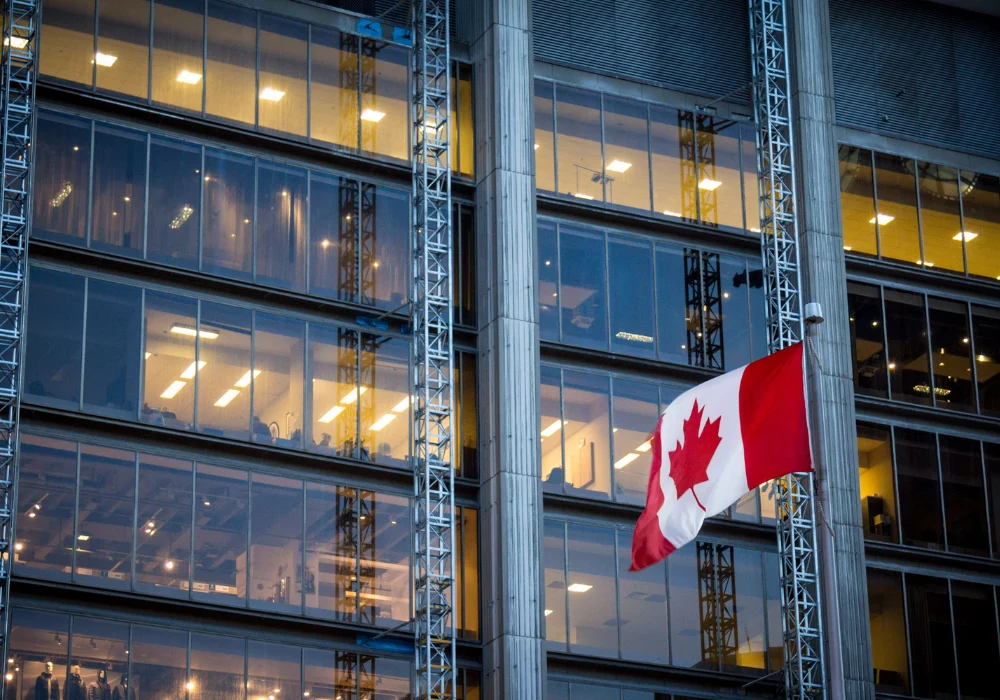
The convergence of a national housing crisis and the escalating frequency of extreme weather events has placed Canada at a precarious crossroads, necessitating an immediate and robust acceleration of the National Adaptation Strategy. Last Tuesday in Ottawa, a high-level assembly of parliamentarians, climate scientists, and municipal leaders convened at a session hosted by the Intact Centre on Climate Adaptation. The consensus among the experts was stark: while the federal government is currently mobilizing billions of dollars toward infrastructure and housing, a failure to integrate climate-proofing measures into these investments threatens to lock the country into a cycle of catastrophic financial loss and social instability.
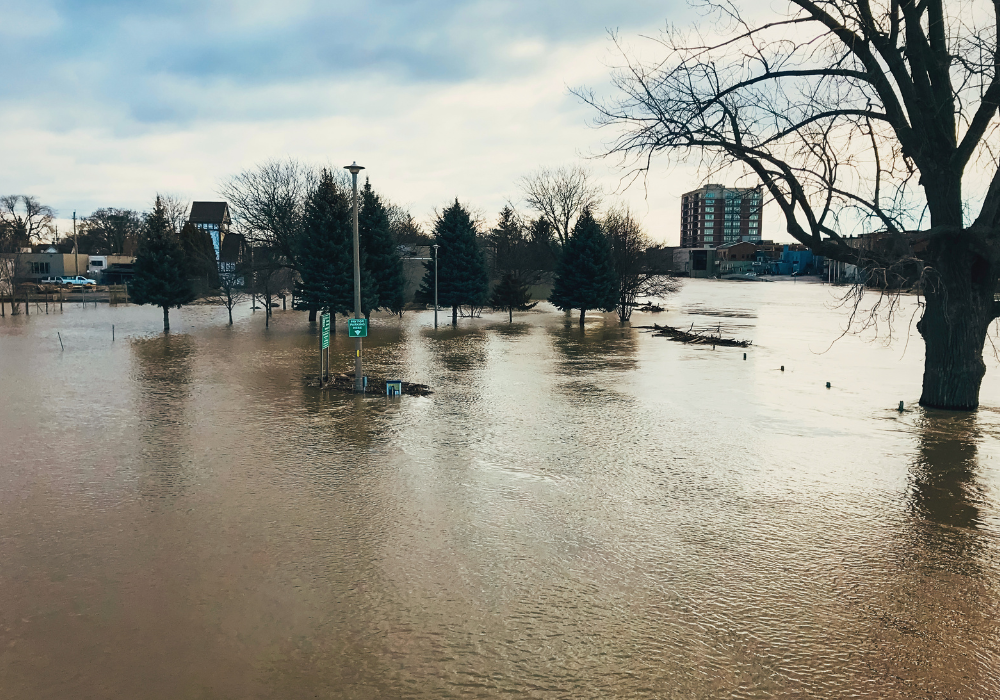
The urgency of the situation is underscored by a growing disconnect between federal growth ambitions and provincial land-use planning. Despite the documented risks of rising sea levels and intensified precipitation patterns, several provinces and municipalities continue to grant development permits for housing on vulnerable floodplains. This practice, driven by the desperate need for affordable housing, is being characterized by experts as a short-sighted strategy that merely trades a current social crisis for a future environmental and economic disaster.
The Infrastructure Paradox Under the Carney Administration
Prime Minister Mark Carney has made infrastructure the cornerstone of his government’s economic agenda, earmarking significant capital for the modernization of ports, the expansion of pipelines, the reinforcement of transmission lines, and the rapid construction of residential units. However, critics and climate adaptation specialists argue that the "bricks and mortar" approach is missing a vital component: resilience. While the capital is flowing into construction, the funding dedicated to ensuring these assets can withstand the "new normal" of the Canadian climate remains disproportionately low.
Senator Mary Coyle, co-chair of the Senators for Climate Solutions group, addressed the assembly with a call for pragmatism. While acknowledging that mitigation—the reduction of greenhouse gas emissions—remains the long-term goal, she emphasized that adaptation is the immediate requirement for survival. "We all know we’re not going to adapt our way out of the climate crisis," Coyle stated, "but what are we going to do right now with these risks that are upon us? The impact of climate change is not up for debate. Extreme weather is a reality; flooding is the most expensive result of this climate crisis, and fire is closely behind."
Coyle’s remarks highlight a shift in the legislative tone in Ottawa, moving from theoretical discussions about 2050 targets to the "bending of the curve" regarding the rising costs of disaster recovery. The Senator argued that the current trajectory of disaster-related spending is unsustainable and that a tri-partisan effort involving the private sector is the only way to bridge the investment gap.
A Chronology of Escalating Financial Exposure
To understand the gravity of the current situation, one must look at the trajectory of insured losses over the last four decades. Data presented by Kathryn Bakos, the Intact Centre’s managing director for resilience and finance, illustrates a precipitous rise in the cost of climate inaction.
Between 1984 and 2008, Canada enjoyed a period of relative atmospheric stability, with annual insured losses from extreme weather averaging between $300 million and $400 million. During this era, weather-related disasters were viewed as "black swan" events—rare occurrences that could be managed through standard insurance pools. However, the period from 2009 to 2025 has seen a paradigm shift. The annual average for insured losses has ballooned to $2.9 billion, a nearly tenfold increase.
The year 2024 stands as a grim benchmark in Canadian history. With $9.2 billion in insured losses, it was the most expensive year on record for the insurance industry. This figure was driven by a series of high-impact events, including the devastating wildfire in Jasper, Alberta, and record-breaking flooding across Toronto, southern Ontario, and parts of Quebec.
However, Bakos warned that the $9.2 billion figure is only the tip of the iceberg. The Intact Centre’s research indicates that for every $1 of insured property damage, there are typically $3 to $4 in uninsured losses. these costs are absorbed by various levels of government through disaster relief programs, by businesses through lost productivity, and by individuals through the loss of personal assets and displacement. When these multipliers are applied, the true economic toll of 2024’s climate events likely exceeds $30 billion.
The Municipal Front Line: Operational Realities
While federal and provincial governments debate policy, Canada’s municipalities are dealing with the logistical nightmare of climate change in real-time. Carole Saab, president of the Federation of Canadian Municipalities (FCM), informed the session that extreme weather has transitioned from a future threat to an "operational reality" for the 2,000 municipalities she represents.
Local and Indigenous governments are currently shouldering the burden of managing emergency evacuations, maintaining the integrity of drinking water systems during floods, and operating cooling centers or emergency shelters during heatwaves and fires. Saab noted that the pace of climate change is now outstripping the capacity of municipal tax bases and existing infrastructure designs.
"Communities certainly understand the risks that are in their faces every day, and they are ready to act," Saab said. "The challenge is the scale and pace of what they’re facing is accelerating faster than existing systems and funding levels were designed to handle."
The FCM is currently lobbying the Carney government for a dedicated annual allocation of at least $2 billion specifically for climate resilience. While this figure is significant, Saab admitted it is likely a conservative estimate of what is truly required to protect 90% of the Canadian population residing in these municipalities. The core of the municipal request is for long-term, predictable funding rather than the current model of reactive, project-based grants.
Legislative Scrutiny and the Path Forward
The federal government’s 2023 National Adaptation Strategy was intended to be the roadmap for a resilient Canada. While the document was praised for its comprehensive acknowledgment of the risks, speakers at the Ottawa session were critical of its implementation. The primary grievances involve a lack of clear leadership to coordinate between jurisdictions and a significant shortfall in the capital required to trigger large-scale adaptation projects.
Liberal MP Shannon Miedema, who chairs the Commons Committee on Environment and Sustainable Development, provided a perspective rooted in her previous experience as a climate planner for the city of Halifax. Miedema’s committee is expected to release a comprehensive report on adaptation in the coming weeks, which is rumored to call for deeper integration between housing policy and environmental risk assessments.
"When it comes to adaptation, we need all our partners to really be collaborating," Miedema said, stressing that top-down federal mandates are less effective than collaborative frameworks that include municipal expertise. "The lessons I took away from working at the city is that you don’t get very far if you don’t bring everybody with you."
Beyond Property: The Human and Social Toll
One of the more innovative areas of research currently being conducted by the Intact Centre involves the quantification of the "soft costs" of climate disasters. Beyond the destruction of physical structures, researchers are now tracking the long-term health impacts on survivors of floods and fires.
Preliminary findings show a significant spike in the use of prescription medications for anxiety and depression, as well as an increased demand for counseling services in the months following a disaster. Furthermore, the loss of work time—not just during the event, but during the months and years of rebuilding—represents a massive, often invisible drain on the national GDP. This holistic view of resilience suggests that investing in flood defenses is not just an infrastructure play, but a public health necessity.
Strategic Recommendations for a Resilient Nation
Blair Feltmate, head of the Intact Centre, outlined a series of cost-effective measures that could be implemented immediately to mitigate the rising tide of losses. At the top of the list is a moratorium on building on current or future river and coastal floodplains. Feltmate argued that continuing to build in these areas is a policy failure that creates "uninsurable" communities.
To incentivize the private sector and individual homeowners, Feltmate proposed a "National Home Flood and Wildfire Preparedness Campaign." This would involve:
- Financial Incentives: Tax breaks and direct subsidies for homeowners who perform resilience upgrades, such as installing backwater valves or removing flammable vegetation.
- Market Transparency: Training for real estate brokers and mortgage providers to ensure that a property’s climate resilience—or lack thereof—is reflected in its market value and lending terms.
- Infrastructure Standards: Updating building codes to ensure that new "affordable" housing is not built to obsolete environmental standards.
The overarching theme of the Ottawa session was a call for a shift in economic philosophy. As Kathryn Bakos noted, spending on resilience is not a "sunk cost" but an investment that pays dividends across the entire economy. By spending millions today on diversion channels, forest management, and resilient grid technology, Canada can avoid the tens of billions in recovery costs that are currently projected for the next decade.
As the Carney government prepares its next budget, the eyes of the climate community are on the capital. The message from the experts is clear: Canada cannot afford to build its way out of a housing crisis by building its way into a climate catastrophe. The synergy of housing, infrastructure, and adaptation must become the new standard for Canadian governance if the country is to remain prosperous in an increasingly volatile environment.
