

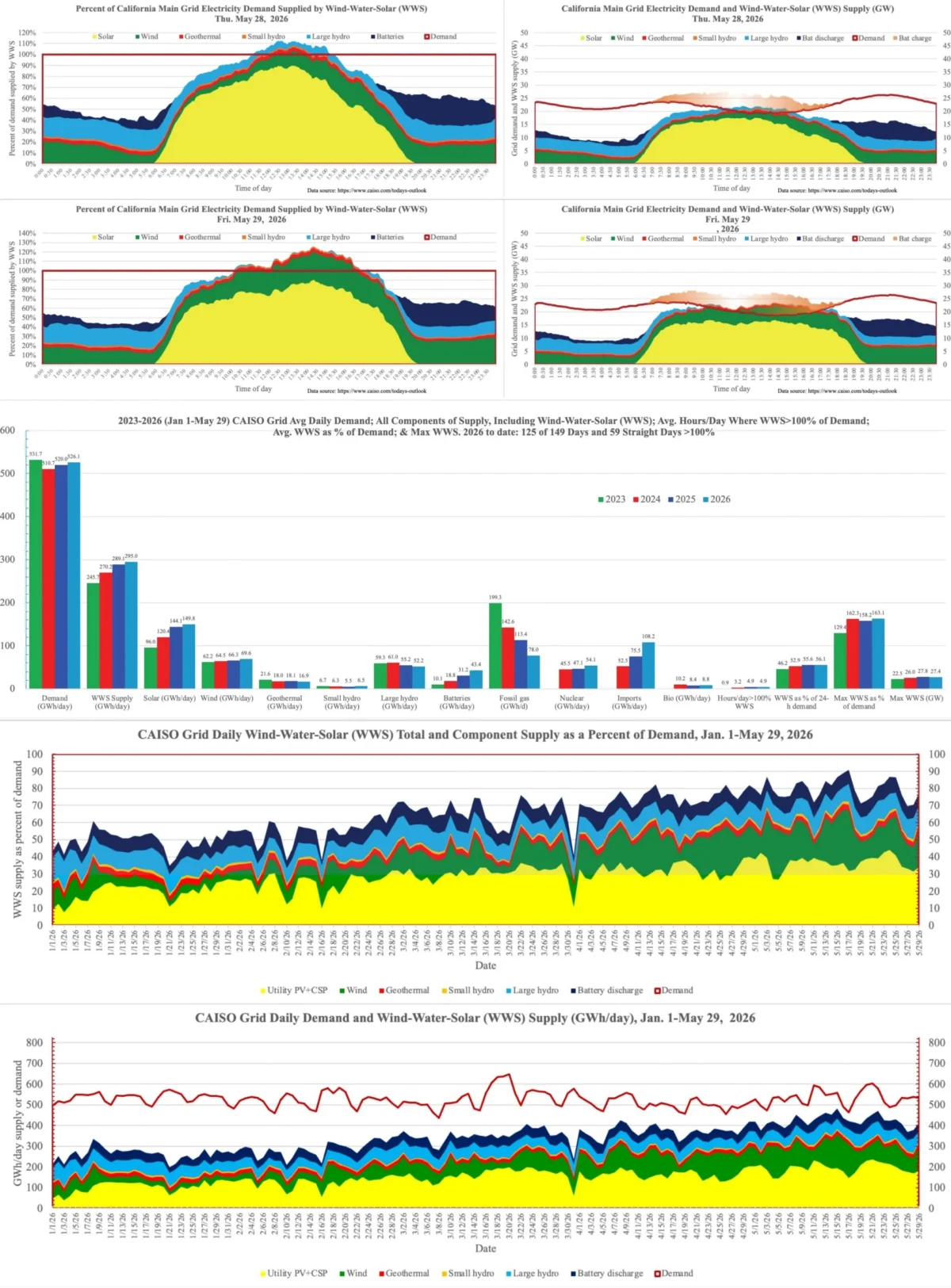
California’s aggressive transition toward a carbon-free power grid has reached a significant economic and operational milestone, with the state’s wholesale electricity prices dropping to the lowest levels in the United States during the 2025-2026 period. This shift, driven by a massive influx of solar, wind, and hydroelectric power, marks a turning point for the California Independent System Operator (CAISO) grid, which manages the flow of electricity for approximately 80% of the state and a small portion of Nevada. According to data analyzed by Stanford University Professor Mark Z. Jacobson and supported by figures from the U.S. Energy Information Administration (EIA), the abundance of renewable energy has not only lowered costs at the wholesale level but has also fortified the grid against the types of outages that plagued the state in previous years.
The Economic Impact of "Free Fuel"
The primary catalyst for California’s record-low wholesale prices is the proliferation of "zero-marginal-cost" energy sources. Unlike natural gas or coal-fired power plants, which require continuous expenditures on fuel, solar, wind, and hydroelectric installations operate on "free fuel." Once the initial capital investment for the infrastructure is made, the cost of producing an additional megawatt-hour of electricity is effectively zero.
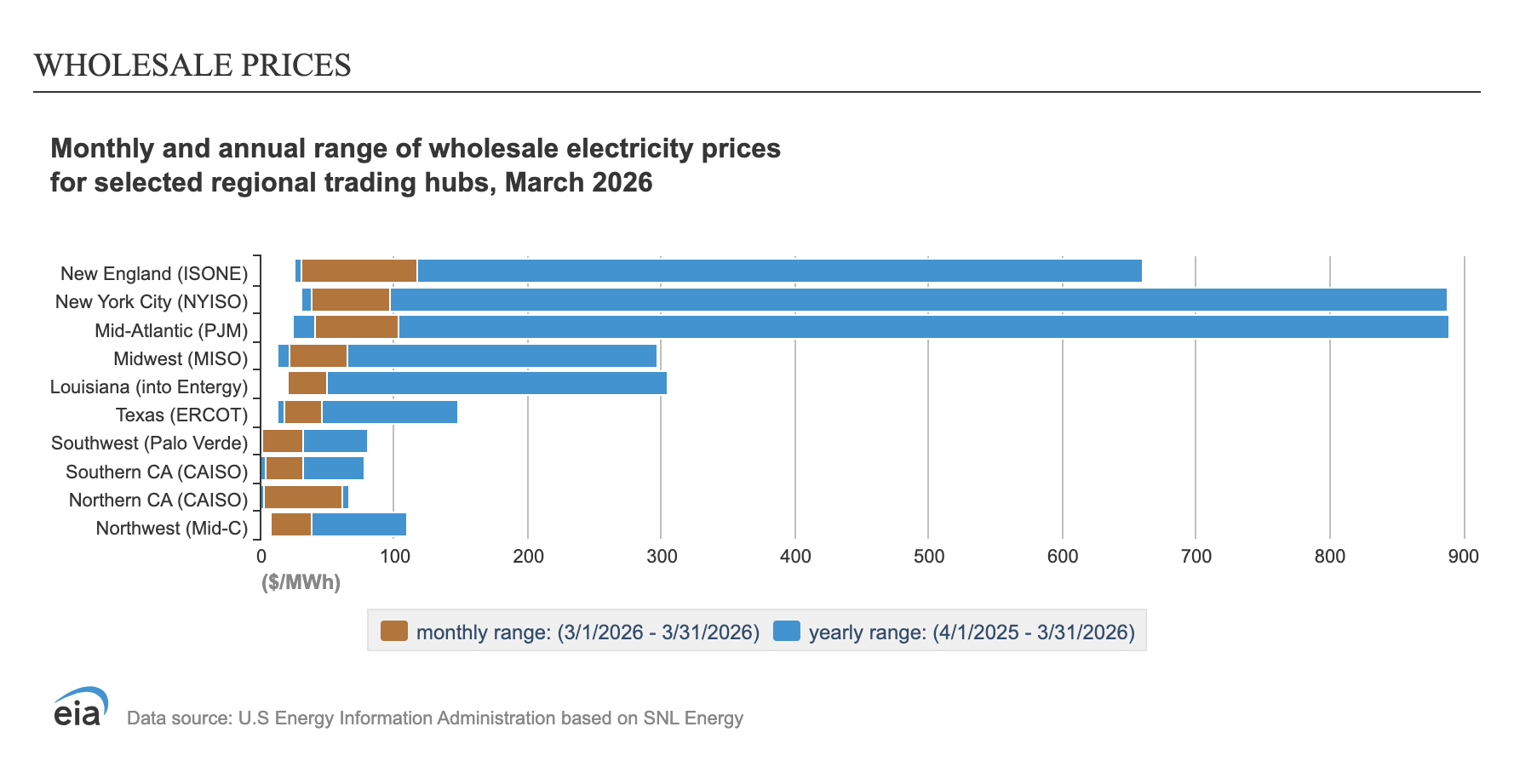
During periods of high renewable generation, particularly during the sun-drenched midday hours, the supply of electricity frequently exceeds the immediate demand. In a competitive market like CAISO, this oversupply drives wholesale prices down, occasionally even into negative territory, where producers pay the grid to take their power to avoid shutting down inflexible units. Professor Jacobson, a leading expert on civil and environmental engineering and director of Stanford’s Atmosphere/Energy Program, highlighted that this trend was most pronounced throughout 2025 and the first half of 2026. The CAISO grid’s ability to leverage these low-cost resources has resulted in a wholesale price profile that is more competitive than any other regional transmission organization (RTO) in the country, including those in traditional energy hubs.

A Record-Breaking 2026 Performance
The operational data for 2026 reveals an unprecedented streak of renewable energy dominance. For a period of 59 consecutive days, the combination of Wind, Water, and Solar (WWS) met or exceeded 100% of the total demand on the CAISO grid for portions of the day. This streak is part of a broader trend in which WWS met more than 100% of demand on 125 out of the first 149 days of the year—roughly 84% of the time.
On average, during these 149 days, renewable sources exceeded the state’s total electricity demand for 4.9 hours per day. This surplus is not merely a statistical anomaly but a functional reality that allows California to export excess clean energy to neighboring states through the Western Energy Imbalance Market (WEIM) or store it for later use. The consistency of this performance demonstrates that the state’s renewable portfolio is no longer just a supplemental source of power but has become the backbone of the energy system.
Chronology of Grid Stability: From 2020 to Present
To understand the magnitude of this achievement, one must look back at the state’s energy challenges at the start of the decade. In August 2020, California experienced its first rotating outages in nearly 20 years. A record-breaking heatwave across the Western United States led to a surge in demand for air conditioning that exhausted the available supply during the evening hours, specifically when solar production dropped off but temperatures remained high.
Following the 2020 crisis, state regulators and CAISO implemented a series of rapid interventions:

- 2021-2022: The state accelerated the procurement of battery storage capacity. In 2020, California had approximately 250 megawatts (MW) of grid-scale battery storage. By late 2022, that number had climbed to over 4,000 MW.
- 2023-2024: Battery storage capacity continued to double, reaching nearly 10,000 MW. This allowed the grid to "shift" the midday solar surplus into the evening peak, effectively smoothing out the "Duck Curve"—a phenomenon where net demand drops during the day and spikes at sunset.
- 2025-2026: The integration of long-duration storage and offshore wind experiments, combined with high hydroelectric output from favorable winters, pushed the grid into its current state of surplus.
Since the 2020 event, the CAISO grid has maintained a perfect record of reliability regarding supply-driven blackouts. This stability, coupled with the lowest wholesale prices in the nation, contradicts long-standing criticisms that a renewable-heavy grid would be inherently unstable and prohibitively expensive.
Supporting Data: Wholesale vs. Retail Disparity
While wholesale prices in California are the lowest in the nation, many residents note that their monthly utility bills remain among the highest. This disparity is a point of frequent public debate and is driven by factors outside of electricity generation.
Wholesale prices reflect the cost of the energy itself at the point of production. However, retail rates in California include several "non-bypassable" charges:
- Wildfire Mitigation: Billions of dollars are being spent by utilities like Pacific Gas & Electric (PG&E) to underground power lines and clear vegetation to prevent catastrophic wildfires.
- Transmission Infrastructure: The cost of building high-voltage lines to connect remote solar and wind farms to urban centers is factored into retail rates.
- Public Purpose Programs: California mandates various social programs, including low-income assistance and energy efficiency rebates, which are funded through per-kilowatt-hour charges.
Data from the EIA confirms that while the "commodity" cost of electricity in the CAISO market has plummeted due to WWS, the "delivery" and "safety" costs remain high. Nevertheless, the low wholesale prices act as a crucial buffer; without them, retail rates would likely be significantly higher given the rising costs of climate adaptation and infrastructure maintenance.

Expert Analysis and Official Reactions
Professor Mark Z. Jacobson’s analysis of the CAISO data serves as a real-world validation of his long-standing theoretical models. For over a decade, Jacobson has published research suggesting that a 100% WWS grid is not only technically feasible but economically superior. "CAISO having the lowest U.S. wholesale electricity prices in 2025-26 indicates a most stable grid," Jacobson noted. His findings suggest that the "intermittency" of renewables—often cited by critics as a fatal flaw—has been effectively mitigated by a combination of diverse geographic locations for wind and solar, robust hydroelectric baseload, and the world’s largest deployment of battery storage.
Energy officials within the state government have echoed this sentiment. The California Energy Commission (CEC) and the California Public Utilities Commission (CPUC) have pointed to these milestones as proof that the state is on track to meet its goal of 100% clean energy by 2045, as mandated by Senate Bill 100. The success of the CAISO grid in 2026 provides a blueprint for other regions, demonstrating that high penetrations of renewables can coexist with—and even enhance—grid reliability and market efficiency.
Broader Implications for the Global Energy Transition
The implications of California’s 2026 energy performance extend far beyond the state’s borders. As the world’s fifth-largest economy, California serves as a primary test case for the global energy transition.
1. Decarbonization of Other Sectors:
With wholesale prices hitting record lows during the day, California is uniquely positioned to accelerate the decarbonization of other sectors. Low-cost daytime electricity makes the production of "green hydrogen" through electrolysis more economically viable. Furthermore, it provides a strong incentive for "smart charging" of electric vehicles (EVs), where owners are encouraged to charge during midday hours when power is cheapest and cleanest.
2. The End of the Fossil Fuel "Baseload" Myth:
For decades, energy policy was dictated by the need for "baseload" coal or gas plants that run 24/7. California’s 2026 data shows that a combination of variable renewables and storage can fulfill the grid’s needs more cheaply and reliably than traditional thermal plants. The fact that WWS met >100% of demand for nearly five hours a day on average means that natural gas plants are increasingly being pushed into a "peaker" role or toward retirement.
3. Economic Competitiveness:
Low wholesale electricity prices are a significant draw for energy-intensive industries, such as data centers and advanced manufacturing. If California can continue to provide low-cost wholesale power while managing its retail delivery costs, it may see a resurgence in industrial activity driven by the "green discount" of its power grid.
As California moves into the latter half of the decade, the focus will shift from proving that renewables can power the grid to optimizing the massive surpluses they generate. With the 2026 milestones now on the books, the CAISO grid stands as a definitive answer to the question of whether a modern, industrialized economy can run—and thrive—on the power of the sun, wind, and water.
