

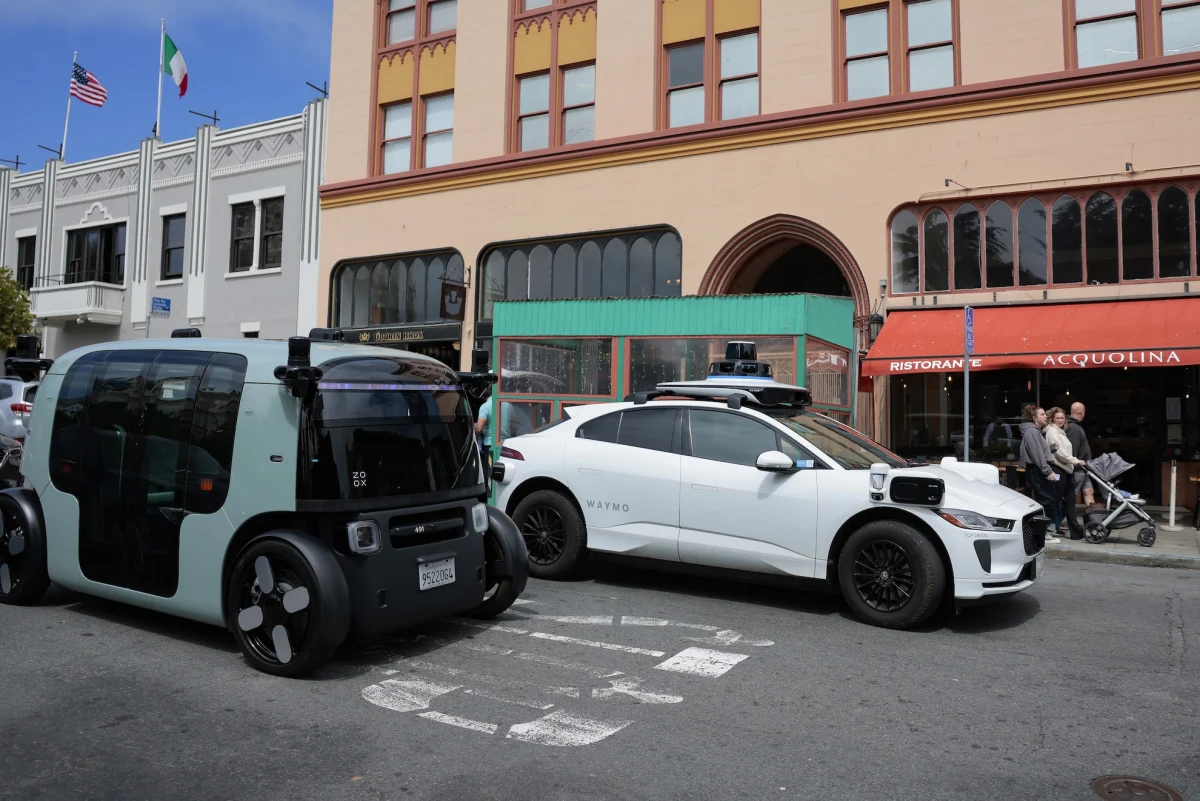
California Governor Gavin Newsom has signed Senate Bill 1246 into law, establishing a landmark regulatory framework for the autonomous vehicle (AV) industry that prioritizes public safety and emergency response coordination. The legislation arrives at a critical juncture for the mobility sector, as robotaxis become a common sight in metropolitan hubs like San Francisco and Los Angeles, bringing both technological progress and unforeseen logistical challenges to urban infrastructure. The law is specifically designed to address a growing catalog of incidents where driverless vehicles have obstructed emergency services, entered active crime scenes, or remained immobilized in high-traffic corridors, necessitating manual intervention from first responders.
Under the provisions of SB 1246, autonomous vehicle developers, including prominent industry leaders such as Waymo, Zoox, and Tesla, will be held to rigorous new standards of accountability. Most notably, the law mandates that companies provide local, on-the-ground support when a vehicle becomes disabled or interferes with emergency operations. If a robotaxi obstructs police, fire, or medical personnel for more than 30 minutes, the operating company could face significant financial penalties. This measure aims to shift the burden of roadside assistance from public taxpayers and emergency departments back onto the private entities profiting from the technology.
Strengthening Oversight and Operational Standards
Beyond immediate roadside response, SB 1246 introduces structural requirements for the remote operation of AVs. The law stipulates that any remote drivers employed by AV developers must be based within the United States and possess a valid U.S. driver’s license. This requirement addresses concerns regarding jurisdictional accountability and the technical nuances of navigating American roadways. Furthermore, companies are now required to maintain a transparent line of communication with local jurisdictions, providing real-time data on vehicle status and location during system-wide technical failures.
The legislation also calls for the deployment of "local incident technicians"—personnel trained to assist with accidents and obstructions in real-time. While the California Department of Motor Vehicles (DMV) remains the primary regulator of autonomous technology in the state, it has been tasked with refining the specific technical details of these requirements before the law officially takes effect in July 2028. This four-year lead time is intended to allow the industry to scale its support infrastructure and integrate these safety protocols into their operational models.
The broader implication of SB 1246 extends beyond California’s borders. As the state often serves as a bellwether for technological regulation, industry analysts are watching closely to see if other states—or the federal government—will adopt similar mandates. The tension between fostering innovation and ensuring public safety remains a central theme in the "robotaxi era," and California’s proactive legislative stance marks a significant shift toward stricter oversight.
Significant Capital Influx in the Electric and Maritime Sectors
While the regulatory environment tightens, the mobility industry continues to attract substantial investment, signaling long-term confidence in electric and autonomous systems. Harbinger, an electric vehicle (EV) startup focused on the medium-duty truck market, recently secured a $300 million agreement to supply FedEx with 2,000 electric trucks. This deal represents a major milestone for Harbinger and highlights the accelerating transition toward zero-emission logistics among global shipping giants.

In the maritime and aerospace sectors, the flow of venture capital remains robust. Quartermaster, a maritime intelligence startup based in Arlington, Virginia, closed a $140 million Series B funding round. The investment, led by Insight Partners, Overmatch Ventures, and First Round Capital, includes a $40 million debt facility from Stifel. The funds are earmarked for the development of advanced data analytics for global shipping lanes, a sector increasingly vital to national security and supply chain resilience.
Other notable financial movements include:
- HyperGuest: The Israeli travel technology startup raised $25 million from AMI, the investment arm of Apax Partners, to scale its B2B travel distribution platform.
- REGENT Craft: The manufacturer of the all-electric "Seaglider" extended its collaboration with the U.S. Marine Corps Warfighting Lab, bringing the total contract value to $19.25 million. This technology aims to revolutionize coastal transport by combining the speed of an aircraft with the efficiency of a boat.
- Voltaback: This French fleet management startup raised €2.8 million from Serena to expand its EV charging reimbursement software across Europe, addressing a key pain point for corporate fleets transitioning to electric power.
Strategic Shifts in Autonomous Freight and Logistics
The autonomous trucking sector is also reaching new heights of operational maturity. Aurora Innovation has reaffirmed its ambitious goal of deploying 30,000 autonomous trucks by the end of 2030. Aurora’s Chief Financial Officer, David Maday, recently defended the feasibility of this target, citing the company’s focus on high-volume freight corridors and strategic partnerships with equipment manufacturers.
Simultaneously, Kodiak Robotics has announced a high-profile partnership with Ikea. Later this year, Kodiak will begin driverless deliveries of Ikea products on a 219-mile stretch of Interstate 45 between Houston and Dallas. Unlike pilot programs that require a safety driver, these trucks are expected to operate without any human presence in the cab, marking a definitive step toward the commercialization of Level 4 autonomous trucking.
Consumer Trends and the Competitive Landscape of EVs
In the passenger vehicle market, established automakers and startups alike are navigating a complex landscape of pricing, data privacy, and reliability. BMW recently unveiled its 2027 3 Series, notable for offering identical designs for both internal combustion engine (ICE) and electric variants. In a surprising turn for the industry, the electric version is priced approximately $4,400 lower than its gasoline counterpart, a move likely intended to stimulate EV adoption and simplify the consumer transition.
However, the rapid integration of technology in vehicles has raised significant privacy concerns. A study by Northeastern University, which examined 21 late-model vehicles and 30 mobile apps, revealed that modern cars are collecting vast amounts of personal data. This information is frequently shared with third-party tech giants, including Meta, Google, and Microsoft, often without explicit or clear consumer consent. This finding adds pressure on regulators to address data sovereignty in the "connected car" era.
Rivian, meanwhile, reported a record-breaking sales quarter, driven largely by the successful launch of its R2 SUV. The company remains on track to produce between 65,000 and 70,000 vehicles this year. Despite this momentum, Rivian recently issued a recall for the R2 due to improperly tightened fasteners on high-voltage battery packs, highlighting the manufacturing hurdles that accompany rapid scaling.

Tesla’s Pivot Toward AI and Robotics
Tesla continues to dominate headlines with a blend of strong sales performance and high-stakes pivots. The company delivered over 480,000 electric vehicles in the third quarter, maintaining its lead in the global EV market. However, CEO Elon Musk has made it clear that Tesla’s future lies in artificial intelligence and robotics rather than traditional automotive manufacturing.
To support this vision, Tesla recently secured $30 billion in new credit lines. These funds are expected to fuel the development of the "Cybercab" robotaxi and the "Optimus" humanoid robot. While Musk’s "Master Plan" promises an era of abundance through automation, the company faces ongoing scrutiny regarding the timeline of these projects. The recent delay of the Roadster 2 event, attributed to weather conditions, serves as a reminder of the logistical and technical complexities inherent in Musk’s ambitious roadmap.
The Gig Economy and Legal Precedents
In the ride-hailing sector, Lyft has agreed to a $272.5 million settlement to resolve a long-standing lawsuit in California. The suit accused the company of misclassifying drivers as independent contractors rather than employees, thereby avoiding the costs of benefits and labor protections. While the settlement addresses violations that occurred prior to the passage of Proposition 22—which allows platforms to maintain the contractor model—it underscores the persistent legal tensions surrounding the gig economy and worker rights.
Aerospace Achievements and Future Infrastructure
SpaceX achieved a significant milestone as its Starship rocket reached Earth orbit for the first time. Although the mission involved technical drama, the successful orbit is a prerequisite for future lunar and Mars missions, as well as the deployment of larger Starlink satellites.
Closer to the ground, DoorDash is expanding its "DoorDash Air" drone delivery business. By utilizing autonomous aircraft and a ground-based systems approach, the company aims to reduce delivery times and costs for small-package logistics. This development mirrors the broader trend of "multimodal autonomy," where drones, trucks, and robotaxis converge to create a seamless, automated supply chain.
Conclusion: A Maturing Ecosystem
The mobility sector is no longer defined solely by the promise of future technology; it is now defined by the realities of implementation, regulation, and scale. California’s SB 1246 represents a necessary maturation of the industry, acknowledging that as autonomous systems become part of the social fabric, they must adhere to the same safety and accountability standards as human-driven enterprises. With billions of dollars in new capital and major milestones in autonomous freight and aerospace, the path toward a highly automated future is becoming clearer, even as the regulatory hurdles become more defined.
