

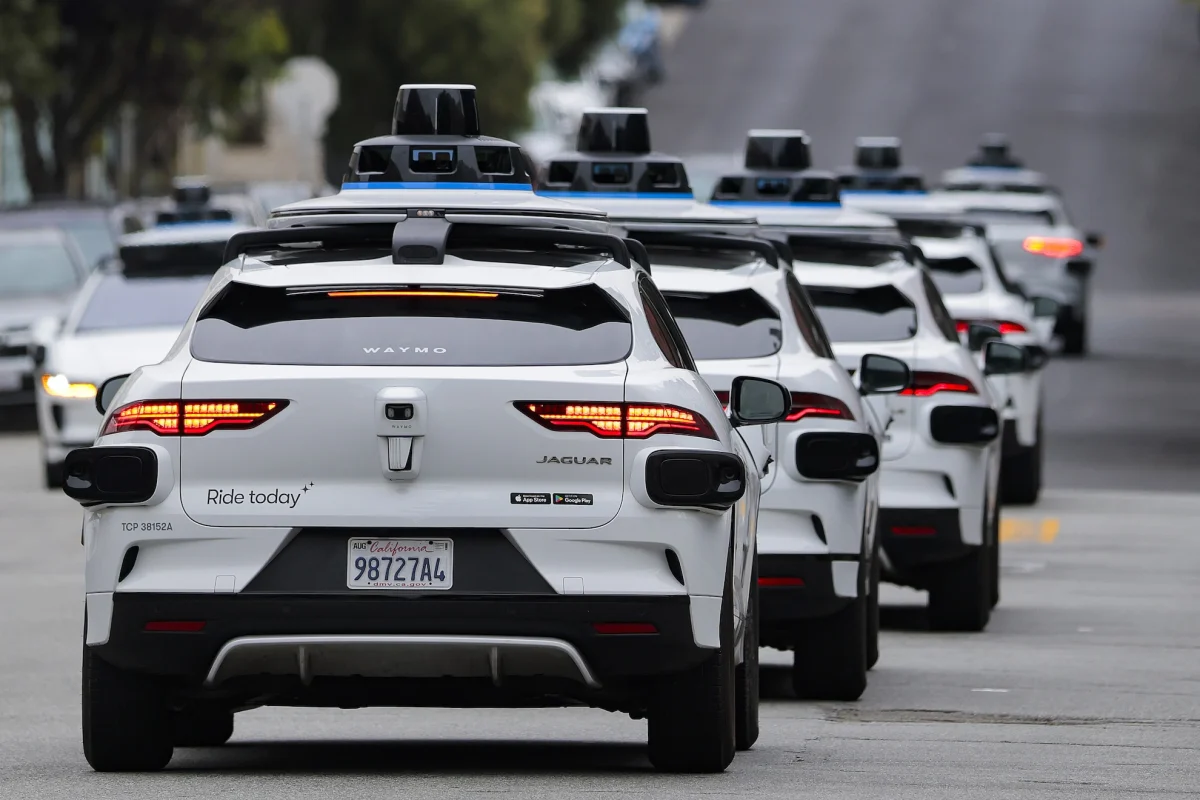
Governor Gavin Newsom has officially signed Senate Bill 1246 into law, establishing a rigorous new regulatory framework for autonomous vehicle (AV) companies operating within California. The legislation represents a significant shift in the state’s approach to self-driving technology, moving from a period of relatively permissive experimentation toward a mandate for direct accountability. Under the new provisions, industry leaders such as Tesla, Waymo, and Zoox will be legally required to provide localized, on-the-ground support to assist emergency personnel and will face stiff financial penalties if their vehicles obstruct first responders during critical incidents.
The law arrives at a pivotal moment for the autonomous vehicle industry, which has seen rapid expansion in metropolitan areas like San Francisco and Los Angeles. While proponents of the technology argue that robotaxis will eventually lead to safer roads by eliminating human error, a series of high-profile disruptions involving emergency services has fueled public and legislative concern. SB 1246 is designed to bridge the gap between technological innovation and municipal safety, ensuring that when an autonomous system fails or encounters a complex environment it cannot navigate, a human-led solution is immediately available.
A Response to Rising Urban Disruptions
The genesis of SB 1246 can be traced to a troubling timeline of incidents involving autonomous vehicles and emergency services over the past two years. In San Francisco, which serves as the primary testing ground for Waymo’s commercial fleet, first responders have frequently reported instances of robotaxis "bricking"—becoming suddenly immobile—in the middle of active fire scenes or blocking ambulance routes.
According to a TechCrunch investigation cited during the bill’s drafting, autonomous vehicles have frequently relied on police officers or firefighters to manually intervene. In several documented cases, first responders had to physically enter the vehicles to drive them out of the way of emergency operations because the companies’ remote assistance teams could not resolve the issues quickly enough. Waymo, which currently operates approximately 1,200 vehicles in the San Francisco Bay Area and a total of 4,000 nationwide, has been at the center of many of these reports.
The disruption reached a tipping point in late 2023 and early 2024, when federal authorities at the National Highway Traffic Safety Administration (NHTSA) issued a formal demand to AV developers. The agency insisted that companies provide concrete "solutions" to prevent their vehicles from interfering with law enforcement and fire departments. California’s new law codifies these expectations into state mandate, providing a legal mechanism to penalize non-compliance.
The Mandate for Local Support and Incident Technicians
One of the most significant pillars of SB 1246 is the requirement for "local incident technicians." The law stipulates that AV companies must maintain a presence of trained personnel who can arrive at the scene of an accident or obstruction to provide physical assistance. This move addresses a major pain point for cities: the delay caused when a vehicle is stuck and the company attempts to troubleshoot the issue via software from a remote location.
The law also introduces a specific "30-minute rule." If an autonomous vehicle blocks police, firefighters, or ambulances for more than 30 minutes during an emergency, the operating company can face substantial fines. This timeframe is intended to incentivize companies to prioritize rapid physical response over prolonged remote diagnostics.
State Senator Dave Cortese, the primary author of the bill, emphasized that while California remains a hub for innovation, the safety of the public cannot be compromised. "When an autonomous vehicle crashes, breaks down, blocks a roadway in an emergency, or gets in the way of law enforcement or first responders, there must be clear accountability," Cortese stated. The legislation aims to ensure that the burden of managing a malfunctioning robotaxi does not fall on the shoulders of public servants who are already managing life-and-death situations.
Redefining Remote Operations and Driver Requirements
SB 1246 also introduces strict new standards for the individuals who monitor and control these vehicles from afar. The law requires that all "remote drivers"—defined as humans who directly operate or drive a vehicle from a distant location—must be based within the United States and hold a valid U.S. driver’s license.
This provision targets the nebulous world of "remote assistance." Currently, different companies use different models for human oversight. Tesla has publicly acknowledged employing remote operators who can take direct control of its vehicles. In contrast, Waymo utilizes a "remote assistance" model where a human provides guidance or software commands, but the vehicle’s self-driving system remains the primary pilot.
The requirement for U.S.-based licensing and residency is a direct response to concerns regarding jurisdictional accountability and communication. Waymo, for instance, maintains a global support network with staff in countries including the Philippines, while operating command centers in Arizona and Michigan. By mandating U.S. licensure for direct remote drivers, California ensures that those with the power to steer a vehicle through American streets are subject to the same regulatory standards and background checks as local drivers.
Data Sharing and Municipal Transparency
Beyond immediate incident response, the new law mandates a higher level of transparency between AV companies and local governments. Moving forward, developers must notify cities, towns, and other local jurisdictions about the status and location of their vehicles during system-wide failures.
In the past, mass "stall-outs"—where multiple vehicles from the same fleet stop working simultaneously due to connectivity or software issues—have paralyzed entire city blocks. Under SB 1246, companies must provide real-time data to local authorities during these events, allowing emergency dispatchers to reroute traffic and first responders more effectively. This data-sharing requirement is expected to improve urban planning and emergency management in the "smart cities" of the future.
Industry Reactions and the Path to Compliance
Major players in the AV space have expressed a willingness to adapt to the new regulations, albeit after successfully lobbying for certain amendments during the legislative process. A spokesperson for Waymo noted the company’s commitment to safety and expressed gratitude for amendments that ensured operators could "still feasibly serve Californians."
Zoox, the Amazon-owned autonomous vehicle company, has similarly indicated its intent to comply. Zoox already maintains its remote operations teams within the United States, positioning it well to meet the new labor requirements. The industry’s shift toward cooperation suggests a realization that public trust is the most valuable currency in the race to deploy autonomous fleets.
However, the path to compliance will involve significant operational shifts. Companies will need to invest in localized fleets of service vehicles and staff them with technicians capable of reaching any point in their operational geofence within a strict timeframe. This "boots on the ground" requirement adds a layer of traditional logistics to what has largely been marketed as a software-driven industry.
Implementation Timeline and Regulatory Oversight
The law is scheduled to go into full effect in July 2028. This four-year lead time is intended to allow the California Department of Motor Vehicles (DMV) to develop specific guidelines and technical standards. The DMV, which holds the authority to issue and revoke permits for autonomous testing and deployment in the state, will be responsible for defining the exact response times required for local incident technicians and the specific protocols for reporting system failures.
This implementation period also gives AV companies time to build out the necessary infrastructure. The 2028 deadline acknowledges that while the technology is moving fast, the physical logistics of maintaining a massive robotaxi fleet require a different kind of scaling than simply updating code.
Analysis: A Precedent for the Nation
California’s decision to pass SB 1246 is likely to have ripple effects across the United States. As the state with the highest concentration of AV testing, California often serves as a regulatory bellwether. Other states, such as Arizona and Texas, which have also welcomed autonomous fleets, may look to California’s model if they face similar challenges with emergency service interference.
From a policy perspective, the law represents a move away from the "move fast and break things" ethos of Silicon Valley. By imposing fines and requiring localized human support, California is asserting that the digital autonomy of a vehicle does not exempt its corporate owner from the physical realities of the road.
The long-term impact on the AV industry’s profitability remains to be seen. The requirement for U.S.-based, licensed drivers and local technicians increases the "cost per mile" of operating a robotaxi fleet. However, if these measures successfully reduce the number of high-profile incidents and improve public perception, they may ultimately accelerate the widespread adoption of the technology.
Conclusion
Senate Bill 1246 marks a new chapter in the integration of autonomous technology into society. By focusing on the interface between AI and emergency services, California is addressing one of the most critical friction points in the deployment of self-driving cars. As the 2028 deadline approaches, the eyes of the global tech community will be on California to see if these mandates can truly harmonize the promise of autonomous mobility with the non-negotiable requirements of public safety. For first responders in cities like San Francisco, the law offers a much-needed assurance that in a crisis, they will no longer be left to troubleshoot a multi-ton computer on wheels alone.
