

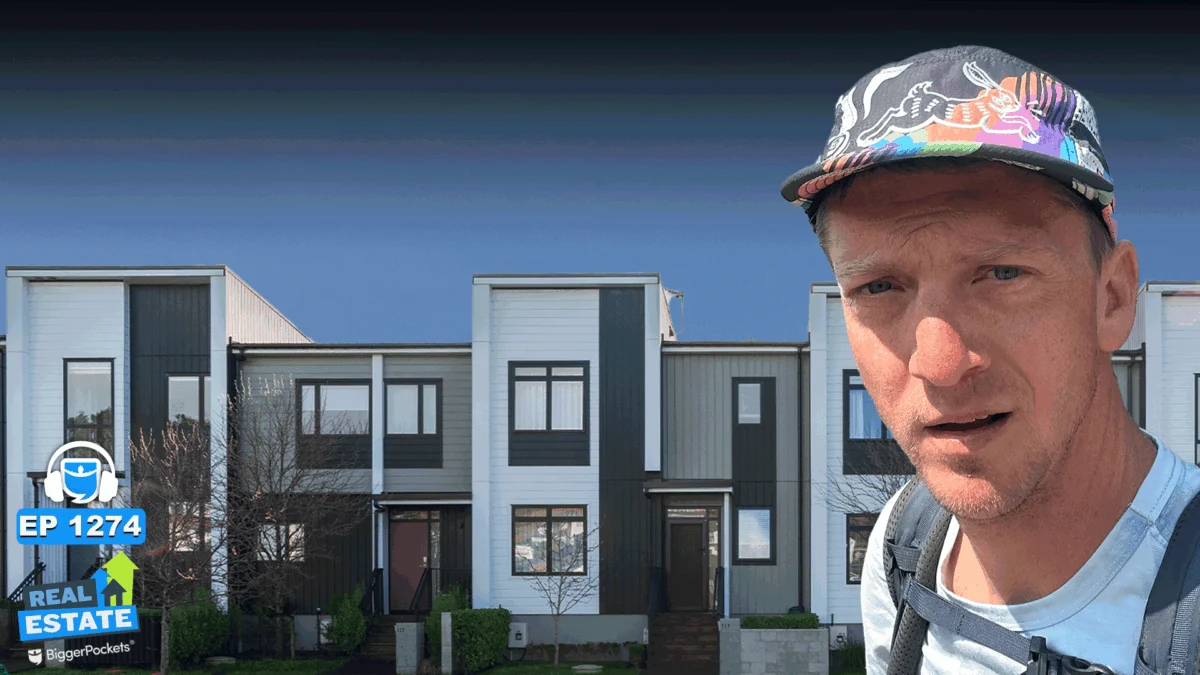
Financial insecurity remains a pervasive concern for the majority of Americans, with recent data indicating that concerns over monthly obligations, retirement readiness, and emergency liquidity dominate the national psyche. This systemic anxiety often stems from multi-generational cycles of financial mismanagement, where households witness a "keeping up with the Joneses" mentality that prioritizes conspicuous consumption over long-term stability. Joel Larsgaard, co-host of the How to Money podcast, recently detailed his transition from a childhood defined by financial volatility to a career built on the principles of financial literacy and conservative real estate acquisition. His narrative serves as a blueprint for utilizing rental properties not as a get-rich-quick scheme, but as a stabilizing force against the cognitive and emotional tolls of economic stress.
The Cognitive Burden of Financial Stress
The impact of financial worry extends far beyond emotional discomfort; it has measurable effects on human biology and cognitive performance. Research published in the journal Science by economists and psychologists, including Sendhil Mullainathan and Eldar Shafir, suggests that chronic financial stress creates a "bandwidth tax." This scarcity mindset can effectively lower an individual’s functional IQ by as much as 13 points. When the brain is preoccupied with survival—such as calculating how to cover a mortgage or an unexpected medical bill—it has fewer resources available for complex problem-solving, professional performance, and long-term planning.
Dave Meyer, Chief Investment Officer at BiggerPockets, notes that this creates a vicious cycle. Individuals experiencing financial strain are statistically more likely to make suboptimal decisions, which in turn exacerbates their financial situation. Breaking this cycle requires more than just increased income; it necessitates a fundamental shift in financial education and the implementation of automated, low-risk wealth-building strategies.
A Chronology of Financial Transformation
Joel Larsgaard’s journey began in a household that mirrored the struggles of many middle-class Americans. His parents, influenced by traditional but often flawed advice, frequently overextended themselves. This included purchasing homes at the absolute limit of their borrowing capacity and acquiring luxury vehicles under the assumption that future salary increases would eventually make the payments manageable. When these promotions failed to materialize or were interrupted by layoffs, the result was a persistent atmosphere of conflict and anxiety.
Vowing to avoid this trajectory, Larsgaard sought a different path through the study of personal finance. His professional background in talk radio, specifically working for consumer advocate Clark Howard for 14 years, provided him with a front-row seat to the mechanics of wealth preservation and consumer protection.
In September 2009, amidst the fallout of the Great Recession, Larsgaard made his first real estate acquisition in Atlanta, Georgia. At the time, the market was characterized by high foreclosure rates and significant uncertainty. While many investors were retreating, Larsgaard utilized a "house hacking" strategy—buying a primary residence and renting out rooms to cover the mortgage. This initial move reduced his living expenses to near zero, allowing him to redirect his income toward further investments.
Over the next sixteen years, Larsgaard followed a disciplined acquisition schedule:
- 2009: Purchased a single-family home sub-$100,000 in an emerging Atlanta neighborhood.
- 2011–2015: Transitioned his primary residence into a rental every two years, acquiring a new property with low-interest owner-occupied financing.
- 2016–2020: Expanded into small multi-family units, including duplexes, while maintaining a full-time career in media.
- 2021–2026: Focused on portfolio stabilization, professional property management, and debt reduction during a period of rising interest rates and market volatility.
The 2026 Real Estate Landscape: Necessity Over Opportunity
As of 2026, the real estate market presents a vastly different set of challenges than those found in the post-2008 era. High interest rates, elevated property valuations, and a shortage of inventory have made the "barrier to entry" significantly higher for new investors. However, Larsgaard argues that these conditions make real estate investment a necessity rather than an elective luxury in today’s economy.
The current macroeconomic climate is defined by the erosion of traditional safety nets. Social Security’s long-term viability remains a point of contention for younger generations, and the shift from defined-benefit pensions to defined-contribution plans (like 401(k)s) has placed the onus of retirement entirely on the individual. Larsgaard emphasizes that while it is "harder" to invest now, the cost of inaction—relying solely on a single income stream in an inflationary environment—is a greater risk.
Supporting data suggests that Gen Z and Millennial investors are increasingly aware of this reality. According to recent demographic shifts in investment behavior, Gen Z is more prone to early-stage investing than any previous generation. This is partly driven by a lack of faith in institutional stability and an increased reliance on personal agency.
Strategies for a Conservative Rental Portfolio
The Larsgaard methodology avoids the high-leverage, high-risk strategies often promoted by speculative real estate influencers. Instead, it focuses on "stealth wealth" and foundational financial health. Key components of this strategy include:
1. The "Table Stakes" of Personal Finance
Before acquiring property, Larsgaard insists on a solid financial foundation. This includes maintaining a robust emergency fund and maximizing employer-sponsored retirement matches. Real estate should be viewed as a supplement to, rather than a replacement for, diversified stock market investments.
2. Conservative Underwriting
In the current 2026 market, Larsgaard advises planning for higher vacancy rates and increased maintenance costs. While the 2010s were characterized by near-instantaneous tenant placement in many markets, current conditions require investors to have the cash reserves to withstand several months of non-occupancy or significant capital expenditures, such as roof replacements or HVAC upgrades, which have seen costs skyrocket in recent years.
3. The Power of Long-Term Horizons
Real estate is a forgiving asset class if the investor has the luxury of time. Larsgaard posits that "time heals all wounds" in real estate. Even a property purchased at a market peak can become a cornerstone of a portfolio if held for 10 to 20 years, as inflation erodes the real value of the debt while rents and equity typically trend upward.
4. Lifestyle Moderation
Central to Larsgaard’s philosophy is the rejection of lifestyle inflation. He famously continues to drive a 20-year-old Toyota 4Runner despite his financial success. By decoupling self-worth from material possessions, investors can maintain a higher savings rate, which provides the "dry powder" necessary to capitalize on market downturns.
Analysis of Broader Implications
The shift toward individual real estate ownership as a primary vehicle for financial independence has broader societal implications. As more individuals adopt the "landlord-investor" model, the relationship between housing as a human right and housing as an investment vehicle continues to be a point of national debate. However, from a personal finance perspective, the diversification into tangible assets provides a hedge against the volatility of the equity markets and the diminishing purchasing power of the dollar.
Furthermore, the integration of financial literacy into the workplace is becoming a trend among top-tier employers. Recognizing that financially stressed employees are less productive, many corporations are now offering emergency fund assistance and financial coaching as part of their benefits packages. Larsgaard’s mission with the How to Money podcast aligns with this corporate shift, aiming to democratize the financial strategies once reserved for the wealthy.
Conclusion: Financial Independence as a Spectrum
The conversation between Joel Larsgaard and Dave Meyer underscores a critical truth: financial independence is not a binary state but a spectrum. Every rental property acquired, every debt paid down, and every dollar saved moves an individual further along that spectrum, granting them increased "optionality."
In 2026, the goal for the average American should not necessarily be the attainment of billionaire status, but the elimination of the "financial cloud" that hung over previous generations. By adopting a slow, scalable, and conservative approach to real estate, individuals can reclaim their cognitive bandwidth, improve their professional and personal lives, and ensure a stable future regardless of macroeconomic headwinds. As Larsgaard concludes, optimism is a choice backed by preparation. While the market may be unpredictable in the short term, the long-term trajectory of the U.S. economy remains a compelling case for those willing to invest in their own financial education and asset base.
