

The promise of carbon markets as a primary vehicle for channeling private finance into environmental conservation is facing a significant test in Brazil, a nation that holds a pivotal role in the global fight against climate change. As home to the Amazon rainforest, the world’s largest terrestrial carbon sink, Brazil has long sought to position itself as a global leader in climate finance. However, this ambition is currently colliding with systemic governance failures, market design flaws, and a series of high-profile scandals that have cast a shadow over the integrity of the country’s carbon credit systems. From the shortcomings of its regulated biofuel program to the emergence of criminal "carbon cowboy" networks in the voluntary market, the nation’s path toward a credible green economy is proving to be fraught with complexity.
The Sea of Uncertainty: Federal Audit Findings
The stability of Brazil’s carbon market was called into question in early 2024 when Vital do Rêgo Filho, a minister of the Federal Audit Court (TCU), characterized the country’s flagship carbon program as a "true sea of uncertainty." This assessment followed an extensive audit of RenovaBio, a state-mandated program designed to reduce emissions in the transportation sector. The audit revealed that the program suffers from weak metrics, insufficient oversight, and a lack of transparency regarding its actual climate impact.
RenovaBio operates by requiring fuel distributors to purchase decarbonization credits, known as CBIOs, from certified biofuel producers. Each CBIO represents one metric tonne of avoided carbon dioxide. Since its inception in 2020, the program has facilitated the transfer of approximately $2.2 billion from fossil fuel distributors to the biofuel industry. However, the TCU report highlighted that the program’s reliance on a single carbon-intensity indicator fails to account for net emissions across the entire lifecycle of production. Furthermore, auditors discovered that nearly 60% of the biomass used by certified producers is not adequately tracked for links to deforestation, raising the alarming possibility that some biofuel production may actually be contributing to native vegetation loss.
The Influence of the Green Lobby
The rapid implementation of RenovaBio has been cited by experts as both a technical achievement and a cautionary tale of industry influence. While the average piece of legislation in Brazil takes over three years to pass, the RenovaBio law was approved in just 28 days. This accelerated timeline is largely attributed to what researchers call "sophisticated green lobbying" by the powerful agribusiness and biofuel sectors.
Industry groups, such as the Sugarcane Industry Association (UNICA), were the dominant voices during the legislative process, while environmental organizations and academic researchers were largely sidelined. Lira Luz Benites Lazaro, a researcher at the University of São Paulo, notes that the program was less a response to the Paris Agreement and more a strategic push for regulatory certainty to benefit the ethanol industry. This industry-led design has resulted in a system that focuses narrowly on carbon metrics while ignoring broader ecological and social dimensions, such as water usage and land-use competition.
The Rise of Carbon Cowboys and Operation Greenwashing
While the regulated market struggles with structural flaws, the voluntary carbon market in Brazil has become a frontier for criminal activity. The voluntary market allows corporations to purchase credits from private projects to offset their emissions. In the absence of robust federal oversight, this sector has seen the emergence of "carbon cowboys"—unregulated brokers and developers who exploit legal loopholes and land tenure insecurity.
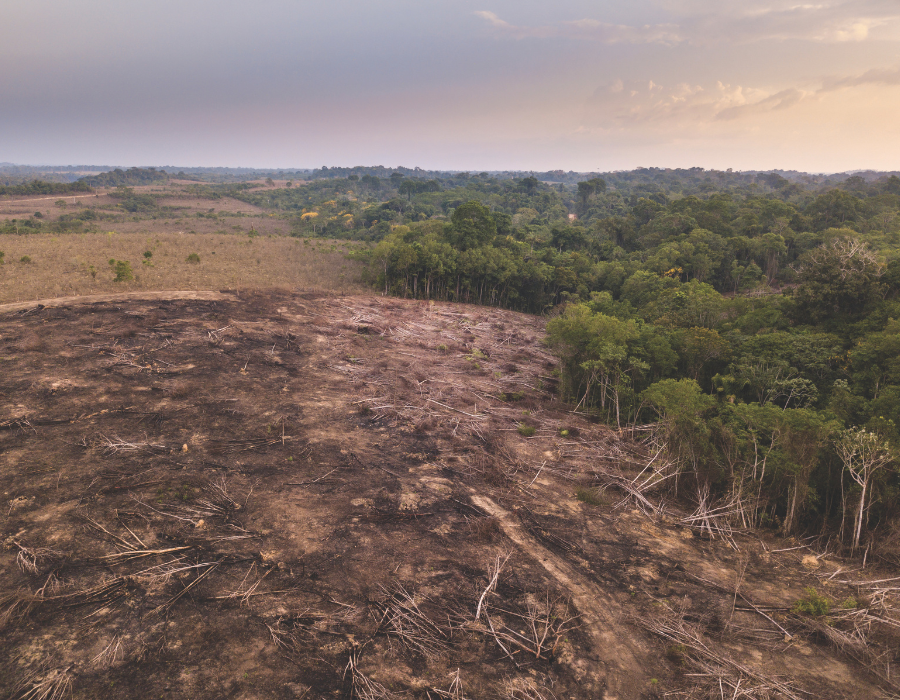
In June 2024, the Federal Police launched "Operation Greenwashing," the largest investigation of its kind in Brazil’s history. The operation targeted a criminal network that had allegedly used forged land titles and the complicity of public officials to seize more than 500,000 hectares of public land in the Amazon. This area, roughly the size of Canada’s Prince Edward Island, was used to generate fraudulent carbon credits. These credits, valued at an estimated $33 million, were then sold to major international corporations seeking to bolster their sustainability credentials.
The investigation revealed a sophisticated modus operandi: the criminal organization would identify disputed or federal lands, create "grilagem" (fraudulent land registrations), and then bind local forest communities to exploitative, decades-long contracts. These projects often lacked the "additionality" required for legitimate carbon credits—meaning the forests would have remained standing regardless of the project—or worse, involved areas that were actively being degraded.
Chronology of Brazil’s Carbon Market Evolution
To understand the current crisis, it is necessary to examine the timeline of Brazil’s climate policy and its attempts to integrate into the global carbon economy:
- 2015: Brazil signs the Paris Agreement, committing to reduce greenhouse gas emissions by 37% by 2025 and 43% by 2030 (relative to 2005 levels).
- 2017: The RenovaBio law is passed in a record 28 days, establishing the first major regulated carbon credit system in the country.
- 2020: RenovaBio becomes fully operational, with the first CBIOs traded on the B3 stock exchange.
- 2022-2023: Voluntary carbon projects in the Amazon explode in number, fueled by corporate "net-zero" pledges, leading to reports of land grabbing and community exploitation.
- June 2024: Operation Greenwashing is executed by Federal Police, exposing a $33 million fraudulent credit scheme.
- December 2024: The Brazilian government passes a landmark law establishing a National Emissions Trading System (SBCE), aiming to align the country with the European Union’s carbon market standards.
- March 2026: The Ministry of Finance installs the first civil society and government committee to draft the specific operational rules for the newly regulated market.
The Land Tenure Trap
At the heart of the instability in Brazil’s carbon markets is the chronic issue of land tenure in the Amazon. Decades of overlapping claims, poorly maintained land registries, and the historical practice of land grabbing have created a landscape where ownership is often impossible to verify with certainty.
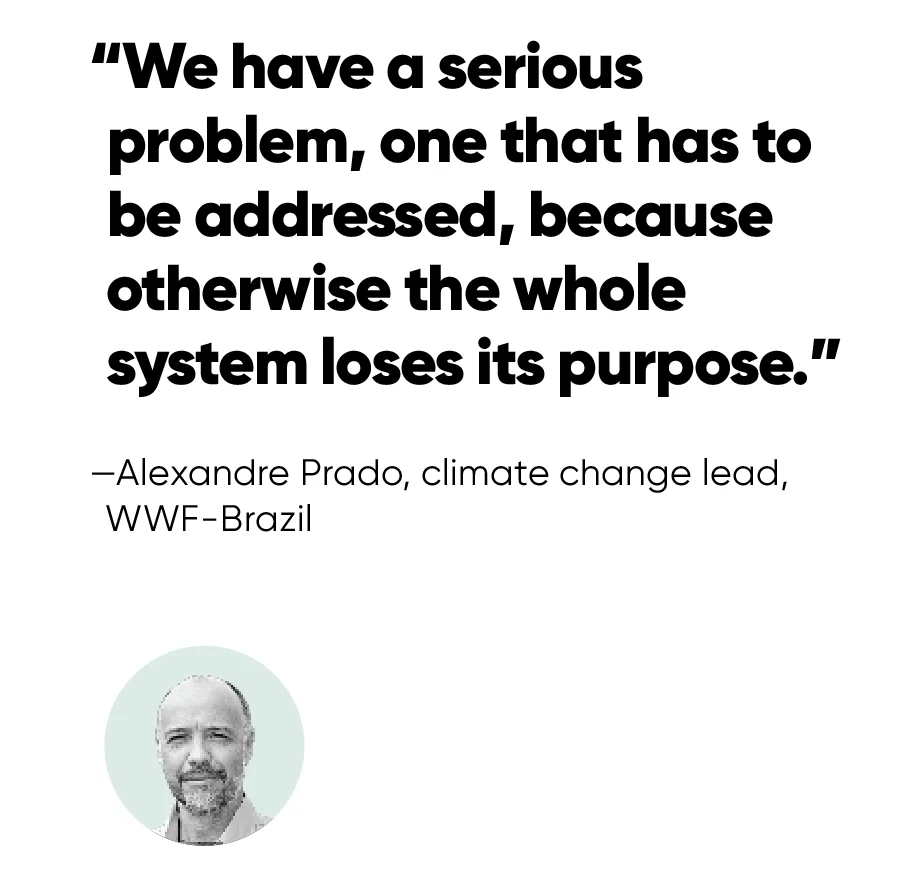
"How can you sell credit for avoided deforestation if you don’t know who owns the land?" asks Alexandre Prado, the climate change lead for WWF-Brazil. He argues that land regularization is a prerequisite for any credible carbon project. Without a clear legal title, there is no way to ensure that the person receiving the carbon finance is the legitimate steward of the forest, nor is there a way to hold them accountable if the forest is cleared.
International certifiers, such as Verra, which handles over 90% of the forest carbon projects in Brazil, have faced criticism for their inability to navigate these local complexities. While Verra maintains that it requires project developers to demonstrate legal rights and obtain community consent, critics argue that the verification bodies often rely on flawed local documentation, inadvertently legitimizing "carbon cowboy" operations.
The New Regulatory Framework: A Path Forward?
In an attempt to restore credibility, Brazil has moved to establish a comprehensive regulated market. The new law passed in late 2024 seeks to bring both regulated and voluntary projects under a single legal framework. This system will be a "cap-and-trade" model, similar to the EU Emissions Trading System, where the government sets an overall limit on emissions and issues tradable allowances to companies.
However, the new framework is not without its controversies. During the legislative process, heavy lobbying by the agribusiness sector—which accounts for a significant portion of Brazil’s emissions—secured a total exemption for primary agricultural production. This means that while industrial and energy sectors must comply with emission caps, the sector most closely linked to deforestation remains largely outside the mandatory system.
Despite this exemption, the law introduces stricter penalties for fraud and requires voluntary projects to adhere to the same rigorous methodologies as the regulated market. The government has also begun a process of public consultation through BNDES, the national development bank, to identify ways to improve the certification process and reduce the country’s reliance on a single international certifier.
Global Implications and the Road to COP30
As Brazil prepares to host the COP30 climate summit in Belém in 2025, the integrity of its carbon markets will be under intense global scrutiny. The success or failure of Brazil’s efforts will have profound implications for the global carbon trade. If the world’s most significant "carbon superpower" cannot guarantee the validity of its credits, it could undermine the entire concept of carbon offsetting as a viable tool for climate mitigation.
The current transition period is critical. Federal authorities are working to tighten oversight of auditing firms and improve data sharing between environmental agencies and financial regulators. The Supreme Court’s recent decision to lift injunctions that allowed non-compliant fuel distributors to avoid purchasing CBIOs is seen as a positive step toward enforcing market rules.
Ultimately, the goal is to transform the "sea of uncertainty" into a transparent and robust system that provides genuine environmental benefits. For environmentalists like Alexandre Prado, the current crisis is a necessary growing pain. By identifying the failures in regulation, land tenure, and oversight, Brazil has the opportunity to build a second-generation carbon market that serves as a global gold standard rather than a cautionary tale. The next two years will determine whether Brazil can successfully leverage its natural wealth to fund the protection of the Amazon or if the market will remain a playground for industry lobbyists and criminal networks.
