

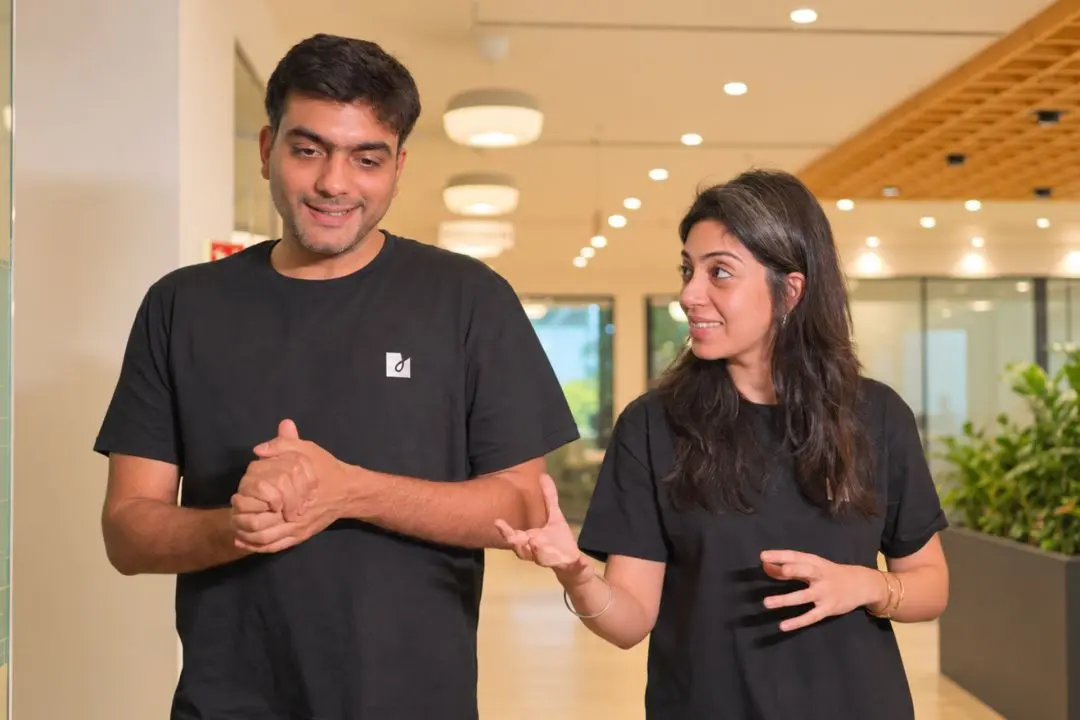
Bharat Semi, an emerging Indian semiconductor startup, has successfully closed a $24 million seed funding round aimed at accelerating the development of its proprietary AI-enabled image sensors. This significant capital injection arrives as the New Delhi-based firm prepares to compete on the global stage, targeting high-growth sectors in the United States and international markets. The investment marks a pivotal moment for the Indian technology ecosystem, which is currently undergoing a massive transformation under the government’s ambitious semiconductor manufacturing and design incentives.
The all-equity funding round was led by a consortium of prominent investors, including Info Edge Group, South Park Commons, and Indus Bridge Ventures. Other participants in the round included Valour Capital, Micromax, Gaingels, and several strategic individual investors. According to co-founder Vrinda Kapoor, the proceeds will be utilized to bolster the company’s engineering capabilities, finalize product development, and facilitate a comprehensive market entry strategy. With a current workforce of approximately 75 employees distributed between India and the United States, Bharat Semi plans to expand its presence in Santa Clara, California, and begin aggressive recruitment across Europe.
A Paradigm Shift in Image Sensing Technology
At the core of Bharat Semi’s value proposition is the development of programmable image sensors that integrate image capture, signal processing, and artificial intelligence capabilities onto a single piece of silicon. Traditionally, visual data systems require three distinct components: an image sensor to capture the light, an image signal processor (ISP) to convert that light into data, and a system-on-chip (SoC) to run AI algorithms and make decisions.
By consolidating these functions, Bharat Semi aims to eliminate the latency and power consumption associated with transferring massive amounts of raw data between separate chips. Vrinda Kapoor, who co-founded the company in late 2021, highlighted that this integrated approach could reduce overall system costs by at least 70% compared to conventional multi-chip architectures. "Our aim here is to move from sensors to sense-making solutions," Kapoor stated, emphasizing that the future of hardware lies in its ability to interpret data at the point of origin rather than merely recording it.
This "edge AI" approach is particularly critical for applications where bandwidth is limited or where immediate decision-making is required. For instance, in autonomous drones or sophisticated surveillance systems, the ability to process visual information locally without relying on expensive external computing hardware can be the difference between operational success and failure.
Strategic Partnerships and Defense Implications
Despite being in the pre-revenue stage, Bharat Semi has already secured significant design wins that underscore the potential of its technology. The startup has entered into agreements with General Atomics, a major U.S. defense and diversified technologies company, and Kaynes Semicon, a leading Indian electronics manufacturer. These partnerships suggest that Bharat Semi’s sensors are being eyed for critical infrastructure and national security applications.
The collaboration with General Atomics is particularly noteworthy. As the U.S. and India deepen their defense ties through initiatives like the Initiative on Critical and Emerging Technology (iCET), startups like Bharat Semi are positioned as vital links in a resilient, non-China-centric supply chain. The defense sector requires specialized sensors that can operate in harsh environments with high reliability and low power signatures—requirements that Bharat Semi’s integrated AI sensors are designed to meet.
In addition to defense, the startup is targeting the smart home, industrial automation, and aerospace sectors. Kapoor provided illustrative examples of the technology’s utility, such as air conditioning units equipped with sensors that can autonomously detect room occupancy and adjust settings without the need for a complex external computer, or industrial robots that can identify and sort objects with minimal lag.
The Roadmap to Commercial Production
Bharat Semi’s path to market is characterized by a multi-generational product roadmap. The company’s first-generation sensors are currently in the prototyping phase. These initial models serve as a proof of concept for the integrated architecture. The second-generation sensors, which will feature more advanced AI processing capabilities and higher resolutions, are expected to reach the prototype stage by mid-2027.
The startup has set a target for initial commercial production and delivery to customers by the end of 2027. This timeline reflects the intensive nature of semiconductor research and development, which involves rigorous testing, tape-outs, and validation cycles. To support this trajectory, Bharat Semi is scaling its U.S. operations in Santa Clara, which focus on both high-end engineering and business development. The company expects its American headcount to double to approximately 20 personnel by 2027, ensuring proximity to the world’s largest tech buyers and talent pools.
Contextualizing India’s Semiconductor Ambitions
Bharat Semi’s rise comes at a time when the Indian government is aggressively pushing to establish the country as a global semiconductor hub. Through the India Semiconductor Mission (ISM), the government has committed roughly $10 billion in incentives to attract chip manufacturers and design firms. While much of the global attention has been focused on large-scale fabrication plants (fabs) being planned by giants like Micron and the Tata Group, the "fabless" design sector—where Bharat Semi operates—is equally crucial for the country’s long-term sovereignty in technology.
India has historically been a powerhouse for semiconductor design talent, with nearly every major global chipmaker hosting significant R&D centers in cities like Bengaluru and Hyderabad. However, most of this intellectual property (IP) has traditionally been owned by foreign multinationals. Bharat Semi represents a new wave of homegrown startups seeking to retain that IP within India, creating "global technology companies out of India," as Kapoor described the vision.
The geopolitical landscape further favors Bharat Semi’s growth. As U.S. and European companies seek to diversify their supply chains under the "China Plus One" strategy, India is positioning itself as a reliable alternative. By developing specialized chips that cater to global standards, Indian startups can bypass the commoditized segments of the market and focus on high-margin, specialized AI hardware.
The Fabrication Project and Global Strategy
In 2024, Bharat Semi made headlines by announcing plans for a semiconductor fabrication project in India involving a technology partnership with the U.S. Space Force. This initiative aimed to create a domestic facility capable of producing specialized chips for aerospace and defense. However, Kapoor clarified that this fabrication project is distinct from Bharat Semi’s core image-sensor business.
Bharat Semi intends to remain a "fabless" entity for its sensor line, outsourcing the actual manufacturing of the silicon to established foundries while focusing its internal resources on design, software integration, and AI architecture. This model allows the startup to remain asset-light and agile, focusing on the high-value intellectual property rather than the capital-intensive demands of operating a multi-billion-dollar factory. The $24 million seed funding will not be diverted toward the fabrication facility project; instead, Bharat Semi is working to identify domestic partners in India who would build and operate that infrastructure.
Leadership and Technical Pedigree
The credibility of Bharat Semi is bolstered by a leadership team with deep roots in both business and specialized engineering. Vrinda Kapoor, a South Park Commons fellow, previously built a career in healthcare technology, bringing a focus on high-stakes, precision-driven systems. Managing Director Vinayak Dalmia brings a background in private equity and management consulting from McKinsey, providing the strategic oversight necessary to navigate the complex global semiconductor market.
Crucially, the company’s technical direction is overseen by Chief Technology Officer Boyd Fowler. Fowler’s appointment is a significant "talent win" for the startup, as he previously served as the CTO of OmniVision, one of the world’s largest and most successful image-sensor manufacturers. Fowler’s expertise in CMOS image sensor design is expected to be a primary driver in Bharat Semi’s ability to successfully integrate AI logic directly into the sensor pixel array—a feat that remains a significant engineering challenge in the industry.
Analysis of Market Implications
The success of Bharat Semi’s $24 million seed round reflects a broader trend in the venture capital landscape: a shift toward "deep tech" and hardware. After years of focusing on software-as-a-service (SaaS) and consumer internet platforms, investors are increasingly drawn to the fundamental hardware that powers the AI revolution.
However, the road ahead is not without challenges. The semiconductor industry is notoriously capital-intensive and dominated by entrenched incumbents like Sony, Samsung, and STMicroelectronics. These giants have massive R&D budgets and long-standing relationships with hardware manufacturers. Bharat Semi’s success will depend on its ability to prove that its "sense-making" integrated architecture offers a performance-per-watt and cost-per-unit advantage that these incumbents cannot easily replicate with their existing legacy architectures.
Furthermore, the 2027 production target means the company must navigate several years of development without significant commercial revenue. This requires disciplined capital management and the continued support of investors through subsequent funding rounds.
If Bharat Semi succeeds, it could serve as a blueprint for other Indian deep-tech startups. By focusing on high-value niches like AI-integrated sensors and leveraging international partnerships, Indian firms can move beyond being the "back office" of the world and become the architects of the next generation of global hardware. As Kapoor noted, this is more than just a business venture; it is a test of whether India can transition from a consumer of technology to a global provider of critical high-tech components.
