

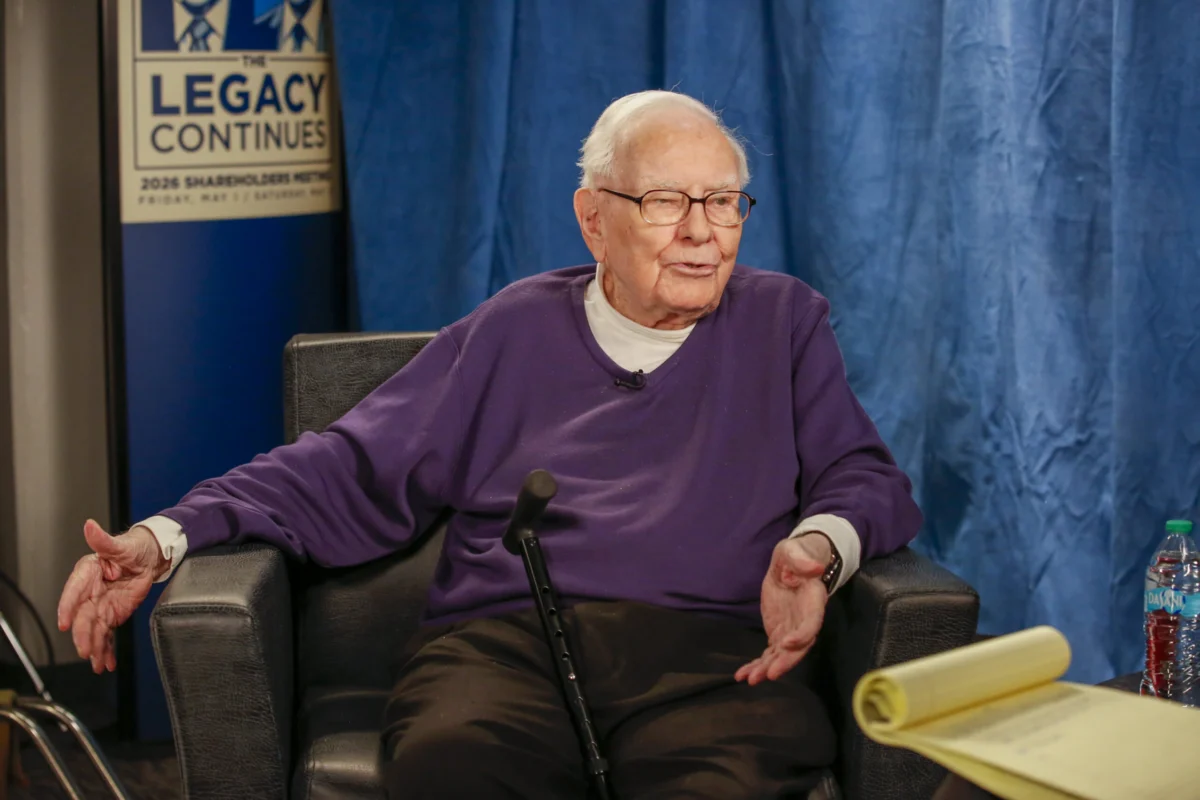
A recent regulatory filing has shed light on Berkshire Hathaway’s latest investment activities, revealing a modest, yet strategically intriguing, stake in the iconic department store chain Macy’s. This disclosure comes months after billionaire investor Warren Buffett hinted at a "tiny purchase" during a March interview, a statement that has now found a potential match in the roughly $55 million position initiated in Macy’s during the first quarter. Concurrently, the filing also showcased a far more substantial re-engagement with the airline industry through a $2.6 billion stake in Delta Air Lines, underscoring Berkshire’s nuanced and often contrarian approach to capital allocation, even as the conglomerate navigates a significant leadership transition.
Decoding the "Tiny Purchase": The Macy’s Revelation
The "tiny purchase" Buffett alluded to in March, expressing Berkshire’s ongoing struggle to find genuinely attractive investment opportunities amidst elevated market valuations, appears to be the newly disclosed position in Macy’s. Valued at approximately $55 million, this investment represents a mere fraction of Berkshire Hathaway’s sprawling investment portfolio, which exceeds $300 billion. Such a small stake is indeed a "sliver" by Berkshire’s standards, perfectly aligning with Buffett’s description of a "tiny" addition.
Macy’s, Inc. (M) is a venerable name in American retail, operating Macy’s, Bloomingdale’s, and Bluemercury brands. The retail sector has faced significant headwinds in recent years, including intense competition from e-commerce giants, evolving consumer preferences, and the lingering impacts of the global pandemic. For a company like Macy’s, which relies heavily on brick-and-mortar sales and discretionary consumer spending, the environment has been particularly challenging. Analysts and market observers often view traditional department stores as struggling to adapt to the modern retail landscape.
Given these challenges, Berkshire’s investment, however small, could be interpreted in several ways. It might signal a belief in Macy’s turnaround strategy, which has included initiatives to optimize its store footprint, invest in omnichannel capabilities, and monetize its extensive real estate portfolio. Alternatively, it could be a value play, betting on the intrinsic worth of Macy’s assets, particularly its prime real estate holdings, which are often cited as undervalued by the market. Historically, Buffett has shown an appreciation for companies with significant, tangible assets that might not be fully reflected in their stock price. This move, therefore, might reflect a deep-value approach, characteristic of certain Berkshire investments, where the potential for long-term recovery or asset realization outweighs current operational struggles.
Aviation Re-engagement: The Substantial Delta Air Lines Investment
In stark contrast to the modest Macy’s stake, the regulatory filing also unveiled a significant re-entry into the airline sector with a roughly $2.6 billion position in Delta Air Lines (DAL). This investment is substantial enough to be considered a major new holding and is highly unlikely to be the "tiny purchase" Buffett mentioned. The re-engagement with airlines is particularly noteworthy given Berkshire Hathaway’s dramatic divestment from the entire sector during the early stages of the COVID-19 pandemic in 2020. At that time, Buffett expressed profound concerns about the future of air travel, stating that the "world has changed" for airlines and admitting that his initial investment in the industry had been a mistake.
Berkshire had previously built up significant stakes in all four major U.S. airlines—Delta, American, Southwest, and United—only to liquidate them entirely in a widely publicized move. This abrupt reversal underscored the unpredictable nature of global events and their profound impact on industries. The decision to now invest heavily in Delta suggests a revised outlook on the airline industry’s resilience and recovery trajectory. The global travel sector has shown robust signs of recovery in the years following the pandemic, with passenger volumes steadily increasing and airlines adapting to new operational realities. Delta Air Lines, in particular, has often been lauded for its operational efficiency, strong brand loyalty, and disciplined capacity management, distinguishing itself within a highly competitive industry.
This renewed confidence in Delta might reflect Berkshire’s belief that the industry has fundamentally stabilized and that strong operators like Delta are well-positioned to capitalize on sustained demand for air travel. The timing also coincides with a period where many airlines have significantly deleveraged and restructured, potentially presenting more attractive valuations compared to pre-pandemic levels. For market watchers, this move by Berkshire is a powerful signal, suggesting that even after a previous cautious exit, the "Oracle of Omaha" and his team see compelling value in select segments of the recovering global economy.
The Oracle’s Enduring Influence: Buffett’s Continued Role in Investment Strategy
The revelation of these new stakes comes amidst a pivotal period for Berkshire Hathaway, following Warren Buffett’s step down as chief executive at the start of 2026, handing the reins to Greg Abel. Despite this significant leadership transition, the regulatory filing and Buffett’s own recent statements underscore his enduring and profound involvement in the conglomerate’s investment decisions.
Buffett, now 95 years old, has affirmed that he remains deeply engaged in overseeing investments and market activity. He has stated that he continues to come into the office daily, working alongside his colleagues on trading decisions. His routine reportedly includes regular discussions with Mark Millard, Berkshire’s director of financial assets, before the opening bell to deliberate on market developments. Millard, whose office is said to be just 20 feet from Buffett’s, then executes trades based on these conversations. This close collaboration highlights that while Abel now holds the CEO title, Buffett’s seasoned judgment and strategic insights continue to guide the allocation of Berkshire’s vast capital.
Crucially, Buffett emphasized a collaborative approach with his successor: "I won’t make any [investments] that Greg thinks are wrong. … Greg gets the sheet every day." This statement indicates a harmonious working relationship and a clear line of communication, ensuring that major investment decisions align with the broader strategic vision under Abel’s leadership. It reassures investors that Berkshire’s hallmark meticulous approach to capital allocation remains intact, benefiting from the synergistic wisdom of both the legendary investor and his chosen successor. This dual oversight provides a unique blend of historical experience and forward-looking leadership.
Strategic Portfolio Adjustments: Exits and Managerial Shifts
Beyond the new acquisitions, the first quarter also saw Berkshire Hathaway actively rebalancing its portfolio through strategic divestments. The regulatory filing indicated sales of several prominent stocks, including Mastercard (MA) and Visa (V). These divestitures are part of a broader effort to unwind positions previously managed by Todd Combs, a longtime investment manager for Berkshire and former CEO of Geico, who departed for JPMorgan at the end of 2025.
Combs, along with Ted Weschler, was one of two key investment lieutenants entrusted with managing a portion of Berkshire’s extensive equity portfolio, allowing Buffett to delegate some responsibilities. His departure marked a significant shift in Berkshire’s internal investment management structure. The sale of positions like Mastercard and Visa, which are typically high-growth financial technology companies, suggests a recalibration of the portfolio following Combs’ exit. While these were profitable and well-regarded holdings, their divestment indicates a move to consolidate or reallocate capital under the remaining investment team or directly under Buffett and Abel’s guidance.
Ted Weschler continues to oversee approximately 6% of Berkshire’s holdings, maintaining his important role in the investment framework. The transition underscores Berkshire’s adaptability and its methodical approach to managing its vast assets, ensuring that the investment strategies align with current leadership and market outlooks. The unwinding of Combs’s legacy positions is a natural consequence of his departure, allowing for a fresh assessment of these holdings against Berkshire’s evolving investment criteria.

Historical Context: Berkshire Hathaway’s Investment Philosophy
To fully appreciate these latest moves, it is essential to contextualize them within Berkshire Hathaway’s enduring investment philosophy. Under Warren Buffett’s leadership, Berkshire has become synonymous with value investing, a strategy focused on identifying undervalued companies with strong fundamentals, durable competitive advantages (moats), and competent management. This approach typically involves a long-term horizon, often measured in decades, and a willingness to hold significant stakes in a concentrated portfolio of businesses.
Berkshire’s portfolio includes iconic American companies like Apple, Bank of America, Coca-Cola, and American Express, many of which have been held for extended periods, generating substantial returns. The conglomerate’s history is replete with examples of contrarian bets that eventually paid off handsomely, as well as periods of significant cash accumulation when attractive opportunities were scarce. This disciplined approach has allowed Berkshire to weather numerous economic cycles and emerge as one of the most successful investment vehicles globally.
The recent Macy’s investment, though small, resonates with a classic value-investing theme: seeking out overlooked or out-of-favor assets that might be undervalued by the broader market. The Delta investment, on the other hand, represents a more complex narrative of re-evaluation and adaptation, particularly given the previous public acknowledgment of a mistaken investment in the sector. These moves collectively demonstrate that while the world changes, the core tenets of Berkshire’s investment strategy—patience, thorough analysis, and a focus on intrinsic value—remain steadfast.
Macy’s in Focus: A Deeper Look at the Retail Sector
Macy’s, a cornerstone of American retail for over a century, has been navigating a turbulent period marked by declining foot traffic in malls, intense competition from online retailers, and shifting consumer preferences towards experiential spending and discount options. The company’s market capitalization, which has seen significant fluctuations over the past decade, reflects the challenges inherent in its business model. Despite these hurdles, Macy’s has actively pursued strategic initiatives aimed at revitalization.
These efforts include closing underperforming stores, investing in its digital platform, and exploring opportunities to monetize its valuable real estate assets, particularly those in prime urban locations. The company has also experimented with new store formats, loyalty programs, and curated product offerings to re-engage customers. For Berkshire to take even a "tiny" stake suggests a belief that these turnaround efforts, or the underlying asset value, hold potential for long-term appreciation. It could be a signal that Macy’s is seen as approaching an inflection point, or that its current valuation offers a sufficient margin of safety for a patient investor. The investment might also reflect a nuanced view that while the broader retail sector faces challenges, specific companies with strong brands and valuable assets can still present compelling opportunities.
Delta Air Lines: Navigating the Airline Industry Landscape
The decision to reinvest substantially in Delta Air Lines marks a significant strategic pivot for Berkshire Hathaway concerning the aviation sector. The airline industry, historically characterized by high capital expenditures, susceptibility to economic downturns, and sensitivity to fuel price fluctuations, is not typically seen as a classic "Buffett stock." However, Delta has distinguished itself through several factors. It boasts a strong domestic network, a robust loyalty program, and a reputation for operational reliability and customer service. Its management team has also been praised for its financial discipline and strategic foresight.
Since the severe disruption of 2020, the airline industry has embarked on a remarkable recovery. Global passenger traffic has largely rebounded, driven by pent-up demand for leisure travel and a gradual return of business travel. Airlines have adapted by streamlining operations, optimizing routes, and leveraging technology to enhance efficiency. For Berkshire to re-enter this sector, and specifically with Delta, suggests a profound conviction in the industry’s newfound stability and Delta’s superior competitive position within it. This move could also be interpreted as a bet on continued global economic recovery and the enduring human desire for travel, which translates into sustained demand for air services. The previous divestment, which Buffett characterized as an acknowledgment of a changed world, appears to have been reassessed in light of the industry’s robust rebound and Delta’s specific strengths.
The Broader Market Implications and Investor Sentiment
Berkshire Hathaway’s investment disclosures are meticulously scrutinized by investors and market analysts worldwide, often serving as bellwethers for broader market trends or specific sector valuations. The "Oracle of Omaha’s" moves are widely considered to be highly influential, and his imprimatur can significantly impact investor sentiment towards the companies he chooses to back.
For Macy’s, even a relatively small stake from Berkshire Hathaway could act as a significant catalyst, potentially boosting investor confidence and attracting further attention to the stock. It might lead to a re-evaluation of Macy’s intrinsic value and its turnaround prospects by other institutional investors. For Delta Air Lines, the substantial investment is an undeniable vote of confidence in its management, its business model, and the ongoing recovery of the airline industry. This could reinforce positive sentiment around airline stocks and potentially influence other large institutional investors to consider similar positions.
Conversely, the sale of Mastercard and Visa, while attributed to the unwinding of positions linked to Todd Combs’ departure, might still prompt some market observers to question the broader outlook for these high-growth financial services companies, even if the primary driver was internal portfolio management. Overall, these transactions provide valuable insights into Berkshire’s current assessment of various industries and specific companies, reflecting a careful balancing act between seeking deep value, participating in robust recoveries, and optimizing portfolio management in response to internal shifts.
The Future of Berkshire’s Portfolio Under Dual Leadership
The period ahead will be crucial for observing the evolution of Berkshire Hathaway’s investment portfolio under the shared oversight of Warren Buffett and Greg Abel. While Buffett remains actively involved, Abel’s influence as CEO is expected to grow, potentially shaping future investment directions. Abel, known for his operational acumen and experience across Berkshire’s diverse non-insurance businesses, brings a complementary skill set to Buffett’s legendary investment prowess.
The collaborative framework described by Buffett suggests a continued adherence to Berkshire’s core principles, but with a potential for new perspectives on growth areas, technological advancements, and international opportunities. Investors will be keen to identify any shifts in investment focus, particularly in sectors where Buffett has historically been more cautious, such as technology or highly regulated industries. The challenge for Abel will be to maintain Berkshire’s exceptional track record while subtly evolving its strategy to navigate an increasingly complex global economic landscape. The interplay between Buffett’s long-standing wisdom and Abel’s forward-looking leadership will define Berkshire’s capital allocation strategy in the coming years.
Conclusion: A Meticulous Approach to Capital Allocation
Berkshire Hathaway’s latest regulatory filing paints a picture of a conglomerate meticulously navigating a dynamic market environment. The initiation of a "tiny" stake in Macy’s underscores a continued hunt for undervalued assets in challenged sectors, while the substantial re-entry into Delta Air Lines signals renewed confidence in the travel industry’s recovery and specific strong operators. These moves, coupled with the strategic divestitures of positions previously managed by a departed executive, highlight Berkshire’s ongoing portfolio optimization efforts.
Crucially, these activities affirm Warren Buffett’s enduring influence and active participation in Berkshire’s investment strategy, even as Greg Abel assumes the helm as CEO. The collaborative decision-making process ensures continuity and leverages the strengths of both leaders. As Berkshire Hathaway moves forward, its investment choices will continue to be closely watched, offering valuable insights into the minds of some of the world’s most astute investors and providing a barometer for broader market trends and opportunities. The meticulous approach to capital allocation, characterized by patience, thorough analysis, and strategic adaptability, remains the bedrock of Berkshire Hathaway’s enduring success.
