

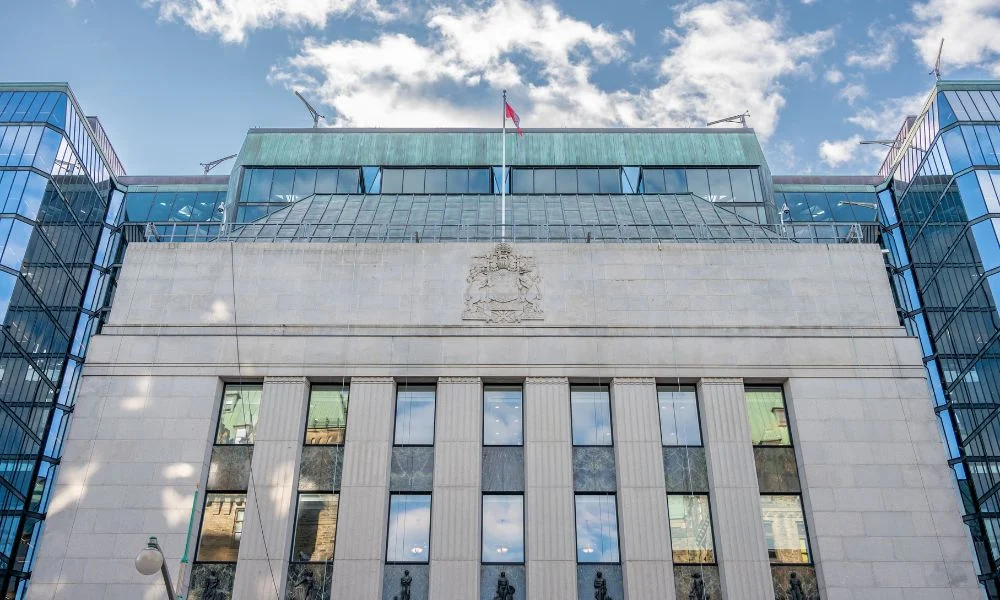
The Bank of Canada’s future monetary policy path has become a subject of intense debate among economists, with projections now ranging from an immediate interest rate hike in December to a prolonged period of no change until the end of 2027. This stark divergence in forecasts emerged following Governor Tiff Macklem’s recent press conference, where he signaled the central bank’s readiness to act if inflationary pressures prove persistent. The Bank of Canada maintained its key interest rate at 5.00% for a seventh consecutive decision, but Macklem’s accompanying remarks injected a hawkish tone, suggesting that further rate increases are on the table.
"Certainly, if we felt that inflation was going to remain too high, yes, we are prepared to raise interest rates," Macklem stated to reporters, as quoted by Reuters. "And if it takes more than one increase, we’re prepared to do that." This explicit acknowledgment of potential further tightening has sent ripples through financial markets and fueled a wide spectrum of economic predictions.
Market Reactions and Shifting Forecasts
In the immediate aftermath of the Bank’s announcement, money markets began pricing in a 25-basis-point rate increase by December. Furthermore, projections suggest approximately three additional quarter-point hikes throughout the following year. This sentiment was echoed by Stephen Brown, chief North America economist at Capital Economics, who described the Bank’s message as "more hawkish" in a note cited by Reuters.
Capital Economics has notably revised its own forecast, pulling forward its projection for the first rate hike. Previously set for the second quarter of 2027, the firm has now adjusted its call to December. This aggressive shift underscores the market’s interpretation of the Bank’s renewed vigilance on inflation. However, Brown also noted that policymakers would likely await further improvements in key economic indicators, such as unemployment rates and overall economic growth, before enacting any policy changes, according to The Canadian Press.
Expert Opinions and Divergent Scenarios
The spectrum of expert opinion highlights the prevailing uncertainty. Derek Holt, vice-president and head of capital markets economics, noted in a research note to CBC News that the Bank of Canada has "left itself room to tighten as soon as the next meeting if everything co-operates." Holt indicated that upcoming inflation, jobs, and GDP data, due before October 28, will be crucial in shaping the Bank’s immediate course of action. His personal forecast anticipates 75 basis points of increases commencing in the fourth quarter of 2026.
Scotiabank’s economists, as reported by The Financial Post, have a slightly more aggressive outlook, expecting the policy rate to reach 2.75% by the end of the year and climb to 3.00% in 2027. However, Royce Mendes, managing director and head of macro strategy at Scotiabank, cautioned that market pricing anticipating a peak rate of 3.00% might be "excessive." Despite this, he still anticipates 50 basis points of increases in the first half of 2027.
On the other end of the spectrum, David Rosenberg, president of Rosenberg Research & Associates Inc., suggested in a note to The Financial Post that the Bank’s statement offered "doves plenty to work with." He pointed to the absence of inflation spillover beyond fuel prices, the temporary nature of factors contributing to second-quarter economic strength, and subdued labor demand as indicators that support a "stand-pat policy stance, but with a bias more to ease than tighten down the road." CIBC chief economist Avery Shenfeld foresees little prospect of any rate movement, either up or down, in 2026, citing trade uncertainties as a significant dampening factor on a definitive outlook.
Context: The Inflation Battle and Economic Landscape
The Bank of Canada’s current stance is a response to a prolonged period of elevated inflation, which has necessitated a series of interest rate hikes since early 2022. The key policy rate, which began at a historically low 0.25% in March 2022, was progressively increased to its current 5.00% level as the central bank sought to cool down an overheated economy and bring inflation back to its 2% target.
Recent economic data has presented a mixed picture. While inflation has shown signs of moderating from its peak, it remains above the Bank’s target. The Canadian economy has demonstrated resilience, with stronger-than-expected GDP growth in the second quarter. However, labor market conditions have shown some signs of softening, and wage growth, while present, has not been as robust as some had anticipated.
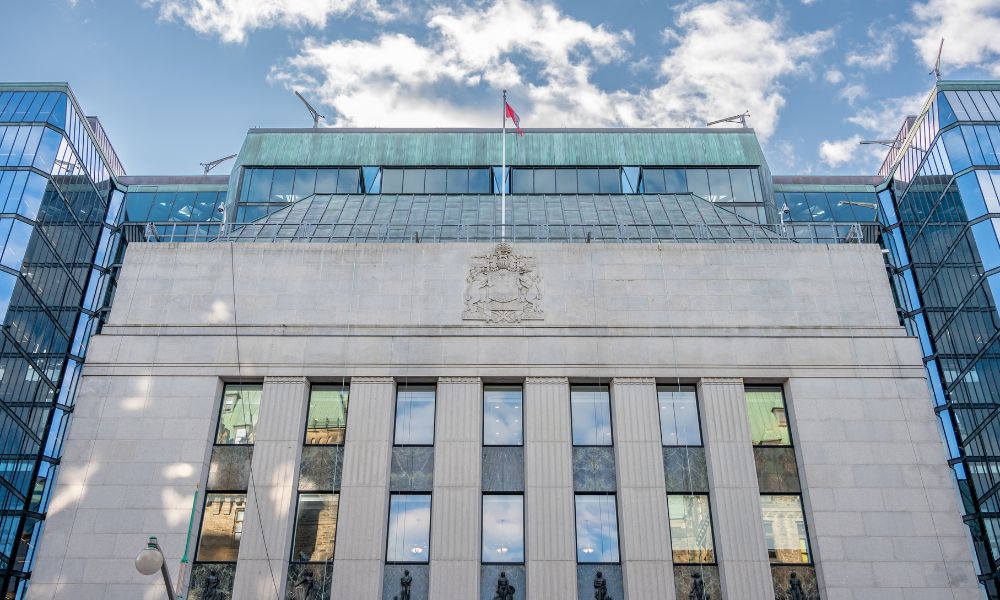
The global economic backdrop also plays a significant role. Lingering supply chain issues, geopolitical uncertainties, and the ongoing impact of interest rate hikes in other major economies contribute to a complex and unpredictable environment. The Bank of Canada, like its counterparts globally, is navigating a delicate balance between controlling inflation and avoiding a severe economic downturn.
Implications for Consumers and Businesses
The divergent outlooks on interest rates have significant implications for Canadian households and businesses. For consumers, particularly those with variable-rate mortgages or planning to purchase property, the prospect of further rate hikes means continued pressure on borrowing costs. Fixed-rate mortgage holders may face increased premiums if lenders anticipate future rate increases.
Businesses, especially those reliant on debt financing, will also be closely watching the Bank’s moves. Higher interest rates can increase the cost of capital, potentially impacting investment decisions and expansion plans. The uncertainty surrounding the future path of interest rates can also create challenges for financial planning and risk management.
The Role of Data and Future Indicators
The Bank of Canada’s monetary policy decisions are data-dependent. Key indicators that will be closely monitored include:
- Inflation Data: Monthly and annual inflation figures, particularly core inflation measures that exclude volatile components like food and energy, will be critical.
- Labor Market Statistics: Employment figures, unemployment rates, and wage growth will provide insights into the health of the Canadian workforce.
- Gross Domestic Product (GDP): Quarterly GDP growth will indicate the overall pace of economic activity.
- Consumer Spending and Business Investment: Data on retail sales and capital expenditures will offer clues about domestic demand.
- Global Economic Conditions: Developments in major economies, particularly the United States, will influence Canada’s economic trajectory.
The upcoming economic data releases in the lead-up to the Bank’s next policy decision will be pivotal in shaping market expectations and potentially narrowing the wide divergence in current forecasts.
The Trade-Off: Credibility vs. Action
The current situation presents a classic dilemma for central banks: how to maintain credibility while responding effectively to evolving economic conditions. As Etienne Bordeleau-Labrecque of Ninepoint observed, the Bank’s assessment of tariff impacts might be perceived as "pretty sanguine," and the overall tone as hawkish without immediate action. This strategy, often termed "talking hawkish and doing nothing," aims to manage expectations and influence behavior without enacting potentially disruptive policy changes.
Andrew DiCapua, principal economist at the Business Data Lab and the Canadian Chamber of Commerce, views the current hold as "the safest course of action right now." He emphasizes that Canada is not facing the same inflationary pressures as some other central banks, suggesting a more measured approach is warranted. While stronger outlooks may pull forward rate hike expectations on the calendar, DiCapua believes rates are unlikely to move higher this year.
Near-Term Outlook for Fixed and Variable Rates
For consumers, the immediate focus may shift towards fixed-rate mortgages. Clay Jarvis, a mortgage and finance expert at NerdWallet Canada, anticipates variable rates to remain relatively stable, hovering around 3.4%. However, he warns that an upward swing in bond yields, even a modest one, could prompt lenders to increase their fixed mortgage rates. The five-year Government of Canada yield, a key benchmark for fixed-rate mortgages, recently reached its highest point in over two years, underscoring this potential for increased borrowing costs.
Conclusion
The Bank of Canada finds itself at a critical juncture, with economists offering a wide array of predictions for its next move. Governor Macklem’s assertive stance on inflation control has injected a hawkish element into the discourse, but the nuanced economic data and persistent global uncertainties create a complex landscape. The coming months will be crucial, with upcoming economic reports likely to provide greater clarity on whether the Bank will indeed raise rates in December, maintain its current stance, or begin to signal a path towards eventual easing – a scenario that, for some, extends as far as 2027. The ongoing interplay between inflation, economic growth, and global events will ultimately dictate the Bank’s path and its impact on Canadians.
