

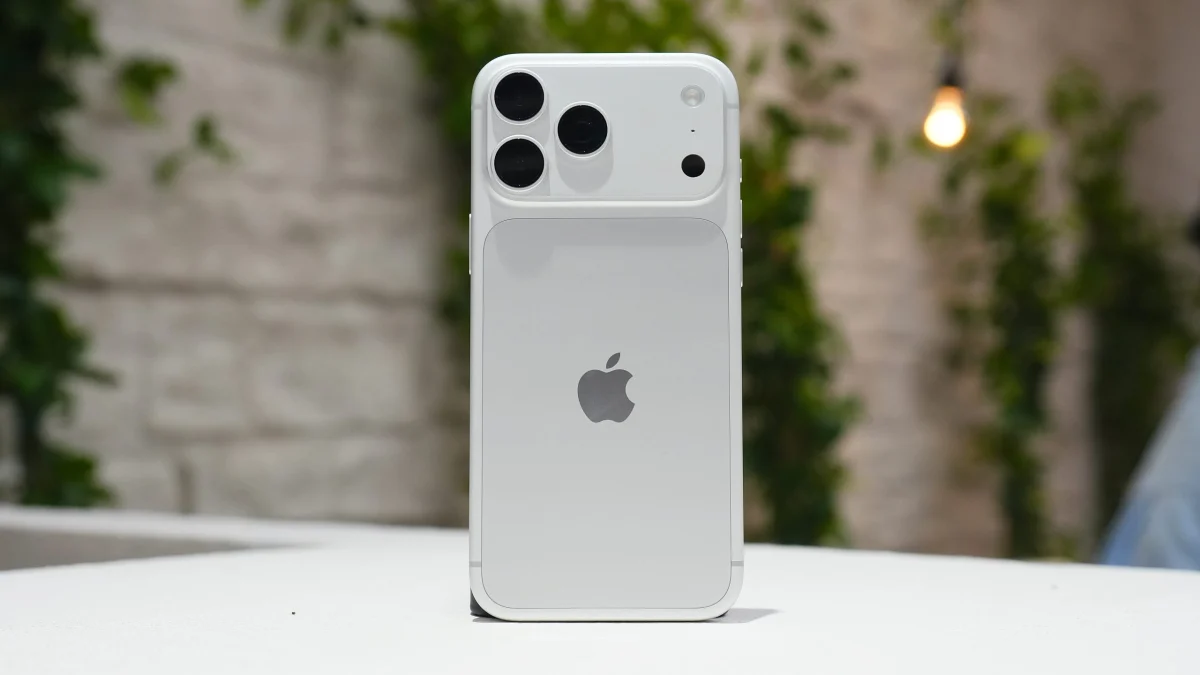
The technology landscape was recently jolted by reports of significant connectivity failures affecting Apple’s latest flagship, the iPhone 18 Pro Max, specifically for customers on the AT&T network. While software updates are a standard remedy for post-launch glitches, Apple has officially confirmed that for a subset of users, the damage to cellular functionality is irreversible via software alone. In a rare admission of a hardware-linked failure triggered by network conditions, the Cupertino-based tech giant has announced a free replacement program for those whose devices have already lost the ability to connect to cellular towers. This development follows weeks of mounting frustration from consumers who found themselves unable to make calls, send text messages, or access mobile data, including critical emergency services.
The Scope of the Connectivity Crisis
The issue first surfaced on community forums and social media platforms such as Reddit, where iPhone 18 Pro Max owners began documenting a sudden and total loss of cellular service. For these users, the device’s signal indicator would switch to "SOS" mode, a status typically reserved for areas without carrier coverage where only emergency calls via other available networks are permitted. However, in this instance, many users reported that even 911 calls were failing, raising serious safety concerns.
While the devices remained functional on Wi-Fi, the core purpose of the smartphone—mobile connectivity—was effectively neutralized. Initially, AT&T and Apple support channels provided standard troubleshooting steps, such as resetting network settings or re-provisioning eSIMs. When these measures failed, it became clear that the problem was deeper than a mere configuration error. Apple’s subsequent investigation revealed that the issue is localized to the iPhone 18 Pro Max model operating on AT&T’s specific infrastructure, suggesting a complex interplay between the phone’s high-frequency antenna array and the carrier’s network signaling.
A Chronology of the Failure and Response
The timeline of the "SOS" crisis highlights the rapid escalation from isolated complaints to a formal hardware replacement program.
Early October: Initial reports emerge on Reddit and Apple Support Communities. Users describe "random" signal drops that do not recover even after toggling Airplane Mode or restarting the device.
Mid-October: AT&T begins sending targeted text messages to iPhone 18 Pro Max users. These messages urge customers to update to iOS 27.0.1 "immediately," citing a risk of losing access to 911 services. This marks the first public acknowledgement of the severity of the bug.
Late October: Apple releases a statement to major tech outlets, including ZDNET, confirming that a "small number" of users are affected. Simultaneously, Apple and AT&T roll out a two-pronged software approach: iOS 27.0.1 and a specific carrier settings update.

Current Status: Apple clarifies that while the software updates are designed to "prevent" the issue from occurring on healthy devices, they cannot "repair" devices that have already entered the permanent failure state. For those users, the only path forward is a full hardware replacement.
Technical Analysis: The Snapdragon X80 and mmWave Factors
While Apple has not disclosed the exact technical "root cause," industry analysts and teardown experts have pointed to several potential culprits within the iPhone 18 Pro Max’s internal architecture. According to teardowns conducted by iFixit, the U.S. version of the iPhone 18 Pro Max utilizes Qualcomm’s Snapdragon X80 5G Modem-RF System. This modem is the pinnacle of current mobile connectivity, designed to handle massive data throughput and complex 5G standalone (SA) architectures.
However, a secondary teardown by TechInsights noted a significant change in the iPhone 18 Pro Max’s design compared to its predecessor: a revised millimeter-wave (mmWave) antenna module. mmWave is the ultra-fast, short-range frequency band that AT&T has heavily integrated into its "5G+" urban deployments. The working theory among hardware engineers is that a software-level handshake error between the X80 modem and AT&T’s network may have caused the antenna or the modem’s power management integrated circuit (PMIC) to operate outside of safe parameters, leading to a permanent hardware "latch-up" or failure.
In such a scenario, the software update (iOS 27.0.1) likely contains code to throttle certain frequencies or adjust the voltage sent to the cellular components to prevent this physical degradation. For devices where the component has already failed, no amount of code can restore the physical integrity of the silicon or the antenna’s signal path.
Official Guidance for AT&T Customers
Apple and AT&T have coordinated a specific protocol for iPhone 18 Pro Max users to protect their devices and seek redress if they are already affected.
1. Mandatory Software Updates
Apple "strongly encourages" all users on the AT&T network to install iOS 27.0.1. This update can be found by navigating to Settings > General > Software Update. Beyond fixing restart issues, this version contains the critical logic required to shield the cellular hardware from the failure-inducing network signals.
2. Carrier Settings Update
In addition to the OS update, a carrier settings update is being deployed. While these often download automatically in the background, users can manually trigger the prompt by going to Settings > General > About. If an update is available, a pop-up will appear within seconds. Apple notes that this update will be pushed to all AT&T users over a 14-day window, but manual installation is recommended for immediate protection.
3. The Replacement Process
For those who have already lost service, the instructions are clear: software will not help. Apple has confirmed that these users are eligible for a free replacement device. Affected customers should:

- Contact Apple Support via the "Support" app on another device or through the official website.
- Schedule an appointment at an Apple Store Genius Bar.
- Clearly state that the iPhone 18 Pro Max has lost AT&T cellular service and mention the "SOS" mode issue.
- Provide documentation of the current software version (even if it is 27.0.1) to prove the hardware failure persists.
Broader Implications for the Smartphone Industry
This incident underscores the increasing complexity of modern telecommunications. As smartphones move toward more integrated 5G technologies, the margin for error in the "handshake" between a device’s hardware and a carrier’s software becomes razor-thin.
From a consumer rights perspective, Apple’s decision to offer free replacements without an official "recall" label suggests a desire to handle the matter through standard warranty channels while acknowledging the unique nature of the fault. However, for a flagship device costing upwards of $1,199, a hardware failure of this magnitude is a significant blow to the "Pro Max" brand’s reputation for reliability.
Furthermore, the involvement of the Snapdragon X80 modem puts Qualcomm in a delicate position. If the issue is found to be a fundamental flaw in the modem’s interaction with specific 5G bands, it could have ramifications for other manufacturers using the same chip. However, since the problem appears isolated to the iPhone 18 Pro Max on AT&T, the consensus remains that this is a specific integration or configuration conflict rather than a global component defect.
Market and Regulatory Context
The cellular failure has also caught the attention of regulatory observers. In the United States, the Federal Communications Commission (FCC) maintains strict guidelines regarding the reliability of 911 services on mobile devices. AT&T’s warning that the bug "could prevent calls to 911" is a high-stakes admission that could theoretically lead to regulatory scrutiny if not handled swiftly. By offering free replacements and pushing immediate software patches, Apple and AT&T are likely aiming to mitigate any potential legal or regulatory fallout.
Market analysts suggest that while this "small number" of affected users might not significantly impact Apple’s quarterly earnings, it highlights the risks of the annual release cycle. The pressure to innovate with new antennas and modems every twelve months leaves limited time for the exhaustive, multi-environment testing required to catch every possible carrier-specific edge case.
Conclusion: Ensuring Future Connectivity
As the iPhone 18 Pro Max remains the centerpiece of Apple’s mobile lineup, the company is moving aggressively to close the chapter on this connectivity crisis. For the vast majority of users who have not yet experienced a loss of service, the message is simple: update immediately. For the "small number" who find themselves with a silent device, the path to a functional phone is now open, albeit through the inconvenience of a hardware swap.
The "SOS" incident serves as a reminder that even in an era of cloud computing and advanced AI, the fundamental "phone" aspect of a smartphone relies on a delicate balance of physical hardware and invisible radio waves—a balance that, when broken, requires more than just a reboot to fix. Apple and AT&T continue to monitor the situation, and further updates may be issued as more data from the replacement program becomes available. For now, the focus remains on containment and ensuring that every user regains the ability to stay connected when it matters most.
