

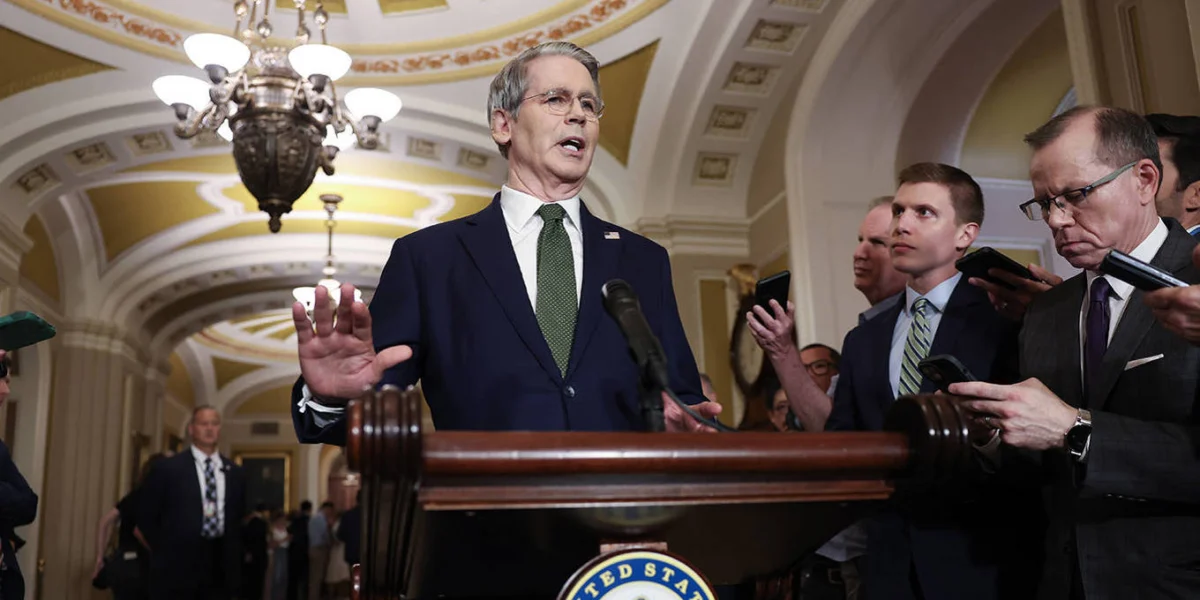
The federal deficit, now hovering near a precarious 6% of the Gross Domestic Product (GDP), and a national debt that has surged past the $40 trillion mark, paint an increasingly grim fiscal picture for the United States. In this volatile economic climate, Treasury Secretary Scott Bessent’s recent maneuvers, perceived by some as an attempt to strong-arm the bond market rather than tackle the root causes of the fiscal imbalance, may have critically undermined his hard-earned credibility. This development raises profound questions about the sustainability of US fiscal policy and its implications for global financial stability.
The Specter of Rising Interest Rates
CAMBRIDGE – The United States, a nation long accustomed to its position as the world’s preeminent debtor, is beginning to feel the sting of rising global long-term interest rates. As articulated by prominent economist Kenneth Rogoff, this trend, which he has persistently predicted, is now manifesting as palpable economic distress. The administration’s response, particularly Secretary Bessent’s actions, suggests a potential undercurrent of unease within the Treasury Department, hinting at the initial stages of panic in the face of an escalating fiscal challenge.
Understanding the US Fiscal Position
To comprehend the gravity of the situation, it is essential to examine the key metrics defining America’s fiscal health. The federal deficit represents the annual shortfall between government spending and revenue. A deficit of 6% of GDP signifies that the government is spending significantly more than it is taking in, necessitating borrowing to cover the difference. This annual borrowing adds to the national debt, the cumulative total of all past deficits.
As of late 2026, the national debt stands at an unprecedented $40 trillion. This figure represents a substantial portion of the nation’s economic output. For context, a debt-to-GDP ratio of 100% is often considered a threshold for fiscal concern. The current trajectory places the US well above this benchmark, raising alarms among economists and investors alike.
The Inevitable Rise of Interest Rates
Kenneth Rogoff, a distinguished Professor of Economics and Public Policy at Harvard University, has long been a vocal proponent of the view that global long-term interest rates were destined to rise. His academic work, including a notable paper published in the American Economic Review, details the confluence of factors driving this expectation. These include demographic shifts, increased demand for capital from emerging economies, and evolving monetary policy landscapes.
The consequence of rising interest rates for a heavily indebted nation like the United States is significant. The cost of servicing the national debt escalates. As existing debt matures and needs to be refinanced, it will be at higher rates, leading to increased interest payments. This creates a vicious cycle: higher interest payments consume a larger portion of the federal budget, potentially necessitating further borrowing or cuts to essential services, thereby exacerbating the fiscal deficit and debt.
Secretary Bessent’s Bond Market Strategy
The specifics of Secretary Bessent’s approach to the bond market have not been fully detailed in public statements, but the implication is that he has engaged in tactics designed to exert downward pressure on yields. This could involve various strategies, such as direct intervention in markets, public pronouncements aimed at influencing investor sentiment, or adjustments to the pace and composition of Treasury debt issuance.
However, attempting to "strong-arm" the bond market, as suggested by the analysis, carries considerable risks. The bond market is a sophisticated and global entity, driven by a multitude of factors including inflation expectations, economic growth prospects, and perceived risk. Attempting to artificially suppress yields without addressing the fundamental drivers of borrowing costs—namely, the size of the deficit and the overall debt burden—can be a futile endeavor.
The Erosion of Credibility
When a Treasury Secretary attempts such forceful interventions and these efforts prove ineffective or counterproductive, it can lead to a significant erosion of credibility. Investors, both domestic and international, rely on the perceived fiscal responsibility and sound economic management of the US Treasury. If the market perceives that the Treasury is resorting to short-sighted tactics rather than implementing sustainable fiscal reforms, confidence can wane.
This loss of confidence can have tangible consequences. It can lead to higher risk premiums demanded by investors, pushing interest rates up further. It can also trigger capital flight as investors seek more stable or predictable investment environments. For the world’s largest debtor, the loss of investor trust is a particularly perilous outcome.
Historical Context of US Debt and Deficits
The current fiscal situation is not an overnight development. The United States has experienced a persistent trend of budget deficits for decades, with periods of relative fiscal consolidation interspersed with significant increases in borrowing.
Key Milestones in US Debt Accumulation:
- Late 20th Century: The national debt began a steady ascent, driven by a combination of tax cuts and increased spending, particularly on defense.
- Early 21st Century: The early 2000s saw further increases in the debt due to tax cuts enacted under the George W. Bush administration and the significant costs associated with the wars in Iraq and Afghanistan.
- 2008 Financial Crisis: The global financial crisis of 2008 led to a surge in government spending on financial bailouts and economic stimulus programs, further expanding the deficit and debt.
- 2010s: While there were some efforts to reduce deficits, particularly in the mid-2010s, the debt continued to grow.
- Late 2010s/Early 2020s: Further tax cuts in 2017, followed by unprecedented spending to combat the economic fallout from the COVID-19 pandemic, dramatically increased both the deficit and the national debt to record levels.
- Mid-2020s (Projected): The current situation, as described, shows a deficit near 6% of GDP and a debt exceeding $40 trillion, reflecting ongoing spending commitments and the structural challenges in revenue generation relative to expenditure.
This historical trajectory highlights a recurring pattern of fiscal challenges that have been addressed, to varying degrees, through a combination of economic growth, policy adjustments, and increased borrowing. However, the current scale of the debt and the deficit suggests that past approaches may no longer be sufficient.
Broader Implications for the Global Economy
The fiscal health of the United States has profound implications that extend far beyond its borders. As the issuer of the world’s primary reserve currency, the US dollar, and the world’s largest economy, any instability in its fiscal position can ripple through the global financial system.
Impact on Global Interest Rates
The rising long-term interest rates that Kenneth Rogoff has predicted are not solely an American phenomenon. They are influenced by a complex interplay of global economic forces. However, the actions and fiscal health of the US Treasury play a significant role in setting global benchmarks. If US Treasury yields rise, it tends to pull up borrowing costs for governments and corporations worldwide. This can slow global economic growth by making investment more expensive.
The Dollar’s Role and Investor Confidence
The US dollar’s status as the world’s reserve currency means that central banks and investors globally hold vast amounts of dollar-denominated assets, including US Treasury bonds. A loss of confidence in the fiscal sustainability of the US could lead to a sell-off of these assets. This could weaken the dollar, increase inflation in the US, and create significant volatility in global currency markets. Conversely, if the US is perceived as unable to manage its debt, investors may seek to diversify away from dollar holdings, further pressuring the currency.
Geopolitical Ramifications
The economic power of the United States is intertwined with its geopolitical influence. A prolonged period of fiscal distress could weaken America’s ability to project power and influence on the global stage. It could embolden rivals and create opportunities for other nations to increase their own economic and political sway.
Potential Responses and the Path Forward
Addressing the current fiscal predicament requires a multi-faceted approach that goes beyond market intervention. Economists and policymakers generally agree that sustainable solutions involve a combination of strategies:
- Fiscal Consolidation: This involves a deliberate effort to reduce the budget deficit. This can be achieved through a combination of spending cuts and revenue increases.
- Spending Restraint: Reviewing and potentially reducing government expenditures across various sectors, including defense, social programs, and discretionary spending. This requires difficult political choices and prioritization of national objectives.
- Revenue Enhancement: Increasing government revenue through measures such as tax reform, closing loopholes, or adjusting tax rates. Any significant revenue increases would likely require bipartisan consensus and careful consideration of their impact on economic growth.
- Economic Growth Initiatives: Policies aimed at fostering robust and sustainable economic growth can help increase tax revenues without necessarily raising tax rates. This includes investments in infrastructure, education, research and development, and regulatory reform.
- Debt Management Strategies: While not a solution in itself, prudent debt management can help mitigate the impact of rising interest rates. This can involve extending the maturity of debt, diversifying the investor base, and actively managing the Treasury’s debt portfolio.
The Stakes for the Future
The current fiscal situation in the United States represents a critical juncture. The persistent deficits and escalating national debt, coupled with the observable rise in global interest rates, present a significant challenge. Treasury Secretary Bessent’s perceived attempts to manipulate the bond market, rather than address the underlying fiscal imbalances, risk further damaging investor confidence and exacerbating the problem.
The path forward demands a clear-eyed assessment of the fiscal realities and a commitment to responsible policy-making. Failure to act decisively could lead to a cascade of negative consequences, impacting not only the American economy but the stability of the global financial system as a whole. The coming months and years will be crucial in determining whether the United States can navigate this complex fiscal landscape and secure its long-term economic prosperity. The credibility of the US Treasury and the future of its economic leadership hang in the balance.
