

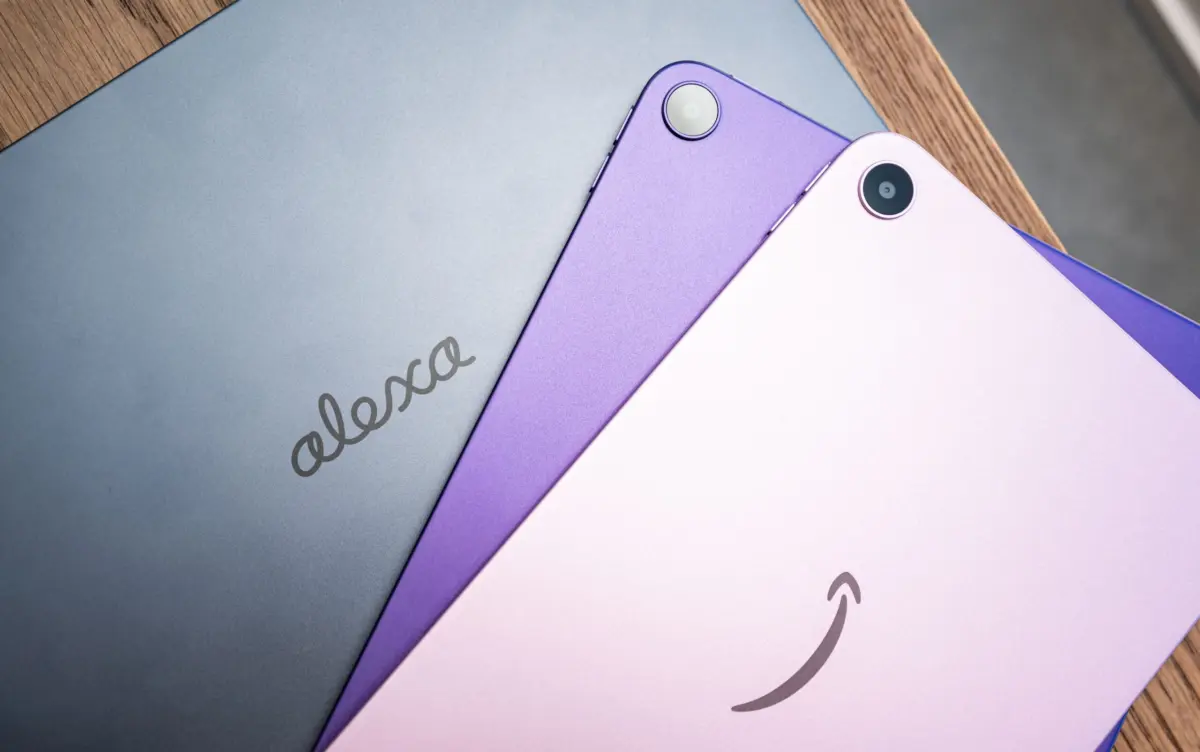
Amazon is fundamentally restructuring its consumer hardware division, signaling a sophisticated and high-stakes return to the smartphone market through a project codenamed Transformer. This strategic pivot is characterized by the retirement of the long-standing Fire brand, a transition toward premium hardware aesthetics, and the integration of a heavily overhauled artificial intelligence assistant, Alexa+. By abandoning the budget-friendly "Fire" moniker in favor of "Alexa Tablets" that run a full version of the Android operating system with Google Play Store access, Amazon is creating a blueprint for a mobile device designed to compete directly with the Apple-Samsung duopoly. This move addresses the primary failure of Amazon’s 2014 Fire Phone—a lack of a robust app ecosystem—while positioning the company to capitalize on the burgeoning "AI-first" hardware trend.
The Evolution of Alexa+: From Voice Assistant to On-Screen Intelligence
Central to Amazon’s new hardware strategy is the rollout of Alexa+, a "souped-up" version of the company’s ubiquitous voice assistant. Unlike the original iteration of Alexa, which functioned primarily as a reactive tool for setting timers or playing music, Alexa+ is designed to be a proactive, contextual partner. On the newly announced Alexa Tablets, this manifests as a persistent "Ask Alexa" widget and a suite of features categorized as On-Screen Intelligence.
This new capability allows the AI to "read" what is happening on the user’s display, providing a level of contextual awareness similar to Google’s Gemini on Android or Apple’s Siri with Apple Intelligence. For instance, if a user is viewing a restaurant review on a lifestyle website, Alexa+ can automatically identify the location and offer to book a reservation or calculate the commute from the user’s office. In a shopping context, the AI can scan a YouTube product review and instantly check if the item is available on Amazon’s retail platform, even offering to add it to a digital cart without the user ever leaving the video app.
Furthermore, Amazon has introduced "live sessions" for Alexa+, mirroring the conversational fluency found in ChatGPT’s Advanced Voice Mode or Gemini Live. This allows for free-form, back-and-forth dialogue where the AI can provide step-by-step instructions for complex DIY projects or identify objects through the device’s camera to offer repair advice. Kevin Keith, Amazon’s Vice President of Devices, has noted that the company previously lacked the "right product" to showcase these multimodal AI capabilities, a gap that the new Android-based tablets—and the rumored Transformer phone—are intended to fill.

The Panos Panay Influence: A Shift to Premium Hardware
The transformation of Amazon’s hardware philosophy coincides with the 2023 appointment of Panos Panay as the head of Devices & Services. Panay, the former Microsoft executive credited with the creation and success of the Surface line, has brought a focus on "premium" builds that contrasts sharply with the plastic, budget-oriented design of the original Fire tablets.
Under Panay’s leadership, Amazon’s 2025 and 2026 hardware cycles have seen a marked shift toward aluminum chassis, thinner profiles, and higher price points. The latest Echo speakers and Kindle e-readers, including the sleek aluminum Paperwhite and Colorsoft variants, reflect a desire to move Amazon hardware out of the "disposable" category and into the "luxury" or "prosumer" space. The new Alexa Tablets follow this trend, featuring iPad-esque industrial design and significantly more powerful processors.
This shift is crucial for a potential smartphone launch. The 2014 Fire Phone failed partly because it felt like a mid-range device sold at a premium price, burdened by gimmicks like "Dynamic Perspective" 3D head-tracking. By establishing a reputation for high-quality tablet and e-reader hardware first, Panay is preparing the market for an Amazon phone that could be perceived as a legitimate alternative to the iPhone or the Samsung Galaxy S-series.
A Chronology of Amazon’s Mobile Ambitions
To understand the significance of the "Transformer" project, one must look at the timeline of Amazon’s turbulent history in the mobile and AI space:
- June 2014: Amazon launches the Fire Phone. Despite heavy promotion, the device is criticized for its limited "Fire OS" (a forked version of Android without Google services) and its lack of essential apps.
- August 2015: Amazon officially discontinues the Fire Phone after a $170 million write-down on unsold inventory.
- 2015–2022: Amazon pivots to the "Echo" ecosystem, making Alexa the dominant home AI assistant while keeping its tablet line focused on low-cost consumption devices for Prime members.
- Late 2023: Panos Panay joins Amazon, signaling a shift toward premium hardware design.
- Early 2025: Reports emerge of project "Transformer," a smartphone focused on a "Generative User Interface" (GUI) that prioritizes AI interactions over traditional app-grid navigation.
- Late 2025: Amazon announces the rebranding of its tablet line, killing the "Fire" name and adopting standard Android with the Google Play Store.
- 2026 (Projected): The expected rollout of the Alexa+ subscription model and the potential unveiling of the Transformer handset.
Analyzing the Market: Why Now?
The smartphone market in the United States is currently experiencing a period of stagnation and consolidation. Data from IDC indicates that smartphone shipments have faced declines for several consecutive quarters, exacerbated by a "memory crisis" and rising component costs that have driven retail prices higher. Simultaneously, the market has seen the exit of notable players; OnePlus significantly scaled back its presence in certain markets in mid-2025, and HMD Global (the former licensee of Nokia) shifted its strategy away from competitive flagships.

This leaves a vacuum in the US market. While Apple and Samsung control the vast majority of the premium segment, Google (with Pixel) and Motorola have struggled to capture a dominant third-place position. Amazon, a US-based company with unparalleled retail dominance and a massive existing user base of Prime subscribers, is uniquely positioned to fill this gap.
Furthermore, consumer habits have shifted decisively toward mobile commerce. A 2022 Pew Research Center survey found that 76% of Americans make purchases using their smartphones. For Amazon, the smartphone is not just a piece of hardware; it is the ultimate "point of sale." By controlling the hardware and the AI assistant that lives on it, Amazon can ensure that its storefront is the first and most convenient option for three-quarters of the shopping public.
The Business Logic of Alexa+ and the "Generative UI"
The Reuters report regarding the Transformer phone suggests that Amazon may be moving toward a "Generative User Interface." This concept represents a departure from the traditional smartphone experience, where users manually navigate through various apps to complete tasks. In a Generative UI environment, the AI assistant acts as the primary layer of the OS, pulling data from various services and presenting it to the user in a unified stream.
This model aligns with Amazon’s broader business goals. Alexa+ is expected to be a paid service, likely bundled with Amazon Prime or offered as a standalone subscription. By providing the AI for "free" on Amazon-branded hardware, the company creates a powerful incentive for users to stay within its ecosystem.
The transition to standard Android on its tablets is a "silent admission" that the previous strategy of forking Android and excluding Google services was a mistake. By allowing the Google Play Store on its devices, Amazon removes the "app gap" that killed the Fire Phone. This allows the company to focus its engineering efforts on the AI layer (Alexa+) rather than the impossible task of convincing every developer in the world to optimize their apps for a proprietary Amazon store.

Broader Impact and Industry Implications
If Amazon successfully launches the Transformer phone, it could disrupt the current hardware landscape in several ways. First, it would represent the first major challenge to the app-centric model that has dominated the industry since the launch of the iPhone in 2007. If Alexa+ can truly perform tasks—booking flights, ordering groceries, or managing schedules—across different platforms without the user opening individual apps, the "app store" itself becomes less relevant.
Second, Amazon’s move to premium hardware puts pressure on Google and Samsung to justify their price points. Amazon has the financial flexibility to subsidize hardware costs through its retail and cloud (AWS) profits, a luxury that companies like Motorola or even Samsung do not always have in the same way.
Finally, the geopolitical landscape plays a role. As concerns over data privacy and manufacturing origins continue to influence consumer and regulatory behavior in the US, an Amazon-branded phone—positioned as a secure, American-engineered AI device—could appeal to a segment of the market wary of Chinese-based competitors.
While Amazon’s Vice President Kevin Keith has remained tight-lipped, laughing off direct questions about a smartphone by calling it an "interesting idea," the evidence provided by the Alexa Tablet rebrand suggests that the pieces are already on the board. The "Transformer" is not just a phone; it is Amazon’s attempt to redefine the personal computer as a proactive AI companion, finally moving past the shadow of the Fire Phone and into a new era of ambient computing.
