

The recent rebound in AI-related stocks last week revealed a significant divergence within the optical networking sector, highlighting an evolving investor landscape that is beginning to distinguish between the intricate layers of artificial intelligence infrastructure. While the broader AI market experienced renewed buoyancy, companies providing the critical optical backbone did not participate equally in this upswing. This selective recovery, observed by market analysts as of September 23, 2026, suggests a maturing investment approach, moving beyond a blanket endorsement of all AI-adjacent technologies to a more granular assessment of specific value propositions.
Lumentum Holdings Inc. (NASDAQ: LITE), a key player in advanced optical components, led the S&P 500’s Wednesday trading with an impressive jump of nearly 10%. Its peer, Coherent Corp., also saw a robust increase of 6.9%. In stark contrast, Corning Incorporated (NYSE: GLW), a diversified technology company with significant exposure to optical fiber and connectivity infrastructure, managed only a marginal gain of 0.4% and remained sharply down for the week. All three entities are integral to the vast AI-connectivity buildout, yet their disparate performances underscore a crucial shift in investor sentiment: the market is now scrutinizing the specific roles and direct exposure of these companies within the complex AI supply chain rather than bundling them together under a singular "optics" umbrella.
The AI Infrastructure Imperative: Bandwidth at the Core
The exponential growth of artificial intelligence, particularly in areas like large language models, generative AI, and advanced analytics, has fundamentally redefined the requirements for data center infrastructure. At the heart of this transformation is an insatiable demand for bandwidth and low-latency communication. AI clusters, which consist of thousands of Graphics Processing Units (GPUs) or other specialized accelerators, must communicate seamlessly and at incredibly high speeds to process massive datasets and execute complex algorithms efficiently. This unprecedented need for rapid data exchange across increasingly larger physical distances within and between data centers is driving an unparalleled demand for advanced optical connections.
Optical networking components, such as high-speed transceivers, sophisticated lasers, and other photonic devices, are the unsung heroes enabling this AI revolution. These components are essential for interconnecting accelerators, servers, and storage units, facilitating the lightning-fast data flow required for AI workloads. Without robust, high-capacity optical links, the computational power of modern AI accelerators would be severely bottlenecked, hindering the scalability and performance of AI applications. Industry projections, like those from market research firms, indicate that the global optical transceiver market, specifically driven by data center and AI applications, is expected to grow at a compound annual growth rate (CAGR) exceeding 20% through the late 2020s, potentially reaching tens of billions of dollars. This underscores the critical, foundational role these technologies play in the future of AI.
Lumentum: Precision Exposure to High-Speed Photonics
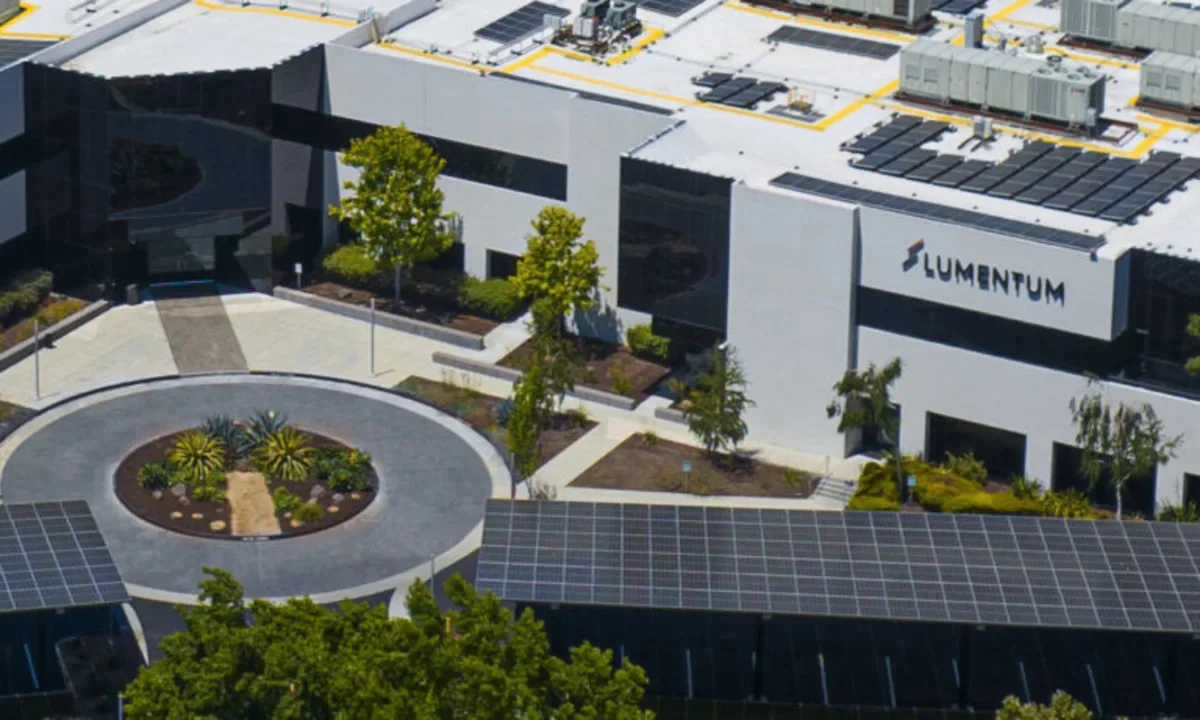
Lumentum Holdings Inc. stands out in this evolving landscape due to its highly concentrated exposure to the cutting-edge of optical networking. The company specializes in the design and manufacture of high-performance optical components, including coherent optical transceivers, tunable lasers, and photonic integrated circuits. These products are directly utilized in the highest-value segments of the AI infrastructure stack, specifically for interconnecting AI accelerators within hyperscale data centers. As AI clusters grow larger and more distributed, the demand for Lumentum’s solutions, which enable faster generations of optical links, escalates commensurately.
This concentrated exposure presents both a significant attraction and an inherent risk for investors. On one hand, robust spending by hyperscale cloud providers—the titans building the foundational AI infrastructure—can translate into powerful operating leverage for Lumentum. The company benefits directly from the rapid adoption of new, higher-speed optical technologies (e.g., 400G, 800G, and beyond) as data center operators upgrade their networks to keep pace with AI’s escalating bandwidth requirements. Lumentum’s technological leadership in advanced photonics positions it favorably to capture market share in this premium segment. However, this same concentration means that Lumentum’s performance can be highly sensitive to fluctuations in hyperscaler capital expenditure cycles or any perceived slowdowns in AI adoption and deployment. When investors begin to question the pace of AI spending or customer deployments, Lumentum’s stock can experience violent corrections, reflecting the market’s sensitivity to its direct, high-beta linkage to AI’s front lines.
Corning: Foundation Builder in Optical Fiber and Connectivity
In contrast to Lumentum’s specialized focus, Corning Incorporated offers a broader and more diversified business model within the optical networking sphere. Corning is globally recognized for its innovations in specialty glass, ceramics, and optical physics, with its optical communications segment being a significant contributor. The company’s primary participation in the AI-connectivity buildout comes through its leadership in optical fiber, fiber optic cables, and comprehensive connectivity infrastructure solutions.
Corning benefits from the fundamental expansion of digital infrastructure. As hyperscalers build new data center campuses, expand existing facilities, and connect larger networks across vast geographical distances, the demand for Corning’s optical fiber and cable solutions surges. This includes the fiber optic backbone connecting different data centers, metropolitan networks, and the internal cabling within these massive computing hubs. While indispensable for the overall physical buildout, Corning’s exposure is less directly tied to the highest-value, bleeding-edge transceiver components that drive Lumentum’s growth. Its revenue streams are more correlated with the broader, long-term construction and expansion cycles of network infrastructure rather than the rapid, generational upgrades of specific high-speed components within AI clusters. This broader exposure provides a degree of stability but might offer less immediate upside during periods of intense, component-specific AI demand surges.
Unpacking the Recent Market Movements: A Chronological Analysis
The market’s reaction last week, with Lumentum’s near 10% surge and Corning’s modest 0.4% uptick, provides a clear timestamp for this emerging investor discernment. The broader AI market had seen a period of significant volatility preceding this rebound, with investors grappling with valuation concerns, the pace of AI adoption, and the substantial capital expenditures required to sustain the AI boom. When the market found its footing and AI stocks began to recover, the allocation of capital within the optical networking space became highly selective.
Lumentum’s strong performance, alongside Coherent’s solid gain, signaled that investors were specifically rewarding companies with direct, high-impact contributions to the immediate, pressing bandwidth demands of AI compute. These companies are seen as beneficiaries of the "hot spots" of AI infrastructure, where the most intense data flows occur. Conversely, Corning’s relatively muted response, coupled with its overall decline for the week, suggested that while its fundamental role in AI infrastructure remains critical, its returns might be perceived as more long-term and less volatile, making it less attractive during a rapid, speculative rebound focused on immediate AI catalysts. This indicates a shift from a generalized "AI rising tide lifts all boats" mentality to a more analytical approach, where market participants are actively differentiating between various segments of the AI value chain based on their perceived proximity to core AI innovation and immediate revenue generation opportunities.
Capital Strategy and Dilution Concerns: Corning’s Equity Distribution
Adding a fresh layer of complexity to Corning’s investment profile was a September filing detailing an equity distribution agreement. This agreement allows the company to sell up to $2 billion of stock through Goldman Sachs, providing Corning with significant capital flexibility for large projects and strategic investments. While such an agreement can be a prudent financial tool for funding growth and maintaining a strong balance sheet, it introduces the potential for stock dilution.
In an environment where investors are already meticulously scrutinizing the substantial costs associated with AI infrastructure expansion, the prospect of potential equity issuance can temper enthusiasm. The market is increasingly sensitive to how companies finance their growth, especially when capital-intensive projects are involved. For Corning, a company deeply involved in the foundational, long-cycle buildout of networks, access to capital is crucial. However, the timing of this filing, coinciding with a period of heightened market scrutiny on AI infrastructure economics, likely contributed to the lukewarm investor reception compared to its more direct AI component peers. The market’s perception of "cost of AI infrastructure expansion" is now a key determinant in valuing related companies, and any factor that suggests increased shareholder dilution can weigh on sentiment, irrespective of the strategic necessity of the capital raise.
Professional Investor Disparity: Hedge Funds and Short Interest
The divergence in stock performance is further corroborated by varying sentiment among professional investors, as revealed by hedge fund activity and short interest data. According to Insider Monkey’s database, Lumentum saw a slight decrease in hedge fund ownership, falling from 123 funds in Q1 to 111 funds in Q2. This net reduction, however, was not universal, as Arrowstreet Capital notably increased its position in LITE sharply during the quarter, signaling a conviction in its concentrated exposure to AI. This indicates a bifurcation even within institutional investment strategies, with some funds potentially de-risking or taking profits, while others double down on its high-growth potential.
Conversely, Corning experienced an increase in hedge fund holders, rising from 91 to 99 funds over the same period. Tairen Capital, for instance, boosted its GLW position by approximately 9%. This suggests that while Lumentum might attract more aggressive, growth-oriented bets, Corning continues to appeal to a broader base of institutional investors who might favor its more diversified business, established market position, and foundational role, perhaps viewing it as a more stable, long-term play within the AI buildout.
Further illustrating the polarized views on Lumentum, its short interest as of August 31 stood at about 7.12 million shares, representing nearly 8% of its public float, with approximately 1.7 days to cover. This level of short interest is meaningfully heavier than what is typically observed in many large-cap AI infrastructure names. High short interest can indicate a significant segment of the market betting against the stock, or it can be a result of hedging strategies. In Lumentum’s case, it points to a strong divergence of opinion, where some investors see substantial upside from AI, while others foresee potential headwinds or believe the stock is overvalued given its concentrated exposure and sensitivity to spending cycles. This makes Lumentum a stock with a high degree of conviction, both positive and negative, reflecting its high-risk, high-reward profile.
The Broader Implications: A Maturing AI Infrastructure Investment Landscape
The market’s increasingly selective approach to optical networking companies is a powerful indicator of a maturing investment landscape within the broader AI sector. The initial phase of AI investment, characterized by a general enthusiasm and a tendency to invest broadly across the AI ecosystem, appears to be giving way to a more sophisticated, granular analysis. Investors are no longer simply seeking "AI exposure" but are meticulously dissecting the value chain to identify companies with the most direct, high-impact, and sustainable contributions to the AI revolution.
This shift has profound implications for how capital will be allocated in the future. Companies offering highly specialized, performance-critical components—like Lumentum’s high-speed transceivers—are likely to be rewarded during periods of intense technological upgrade cycles and aggressive hyperscaler spending. Their direct link to solving the immediate "bandwidth problem" of AI clusters makes them prime beneficiaries. Meanwhile, companies like Corning, which provide the foundational, long-term infrastructure, will continue to be essential. Their value proposition lies in the sheer scale and ongoing expansion of the physical network, benefiting from the sustained growth of data centers and broader connectivity needs.
The long-term demand drivers for both segments remain robust. AI’s evolution guarantees continuous demand for faster, more efficient optical interconnects, pushing the boundaries of photonic technology. Simultaneously, the physical expansion of global data infrastructure will require ever-increasing quantities of optical fiber and connectivity solutions. However, the market’s differentiation suggests that investors will increasingly demand clarity on a company’s specific position, competitive advantages, and financial strategy within this complex ecosystem. The "AI trade" is becoming more nuanced, requiring deeper due diligence and a precise understanding of where each player sits in the intricate architecture of artificial intelligence.
In conclusion, the recent market rebound did not simply declare a "winner" and a "loser" between Lumentum and Corning. Instead, it underscored their fundamentally different economic exposures and strategic positions within the vast AI infrastructure buildout. Lumentum offers a more concentrated, high-beta exposure to the rapidly evolving, high-speed optical components essential for AI’s immediate computational demands. Corning, conversely, provides broader, more foundational exposure to the fiber-heavy physical buildout underneath, representing a more long-term, stable investment in the overall digital infrastructure. As the AI trade continues to evolve and mature, this distinction will only grow in importance, demanding a more discerning and analytical approach from investors navigating the complexities of the AI supply chain.
