

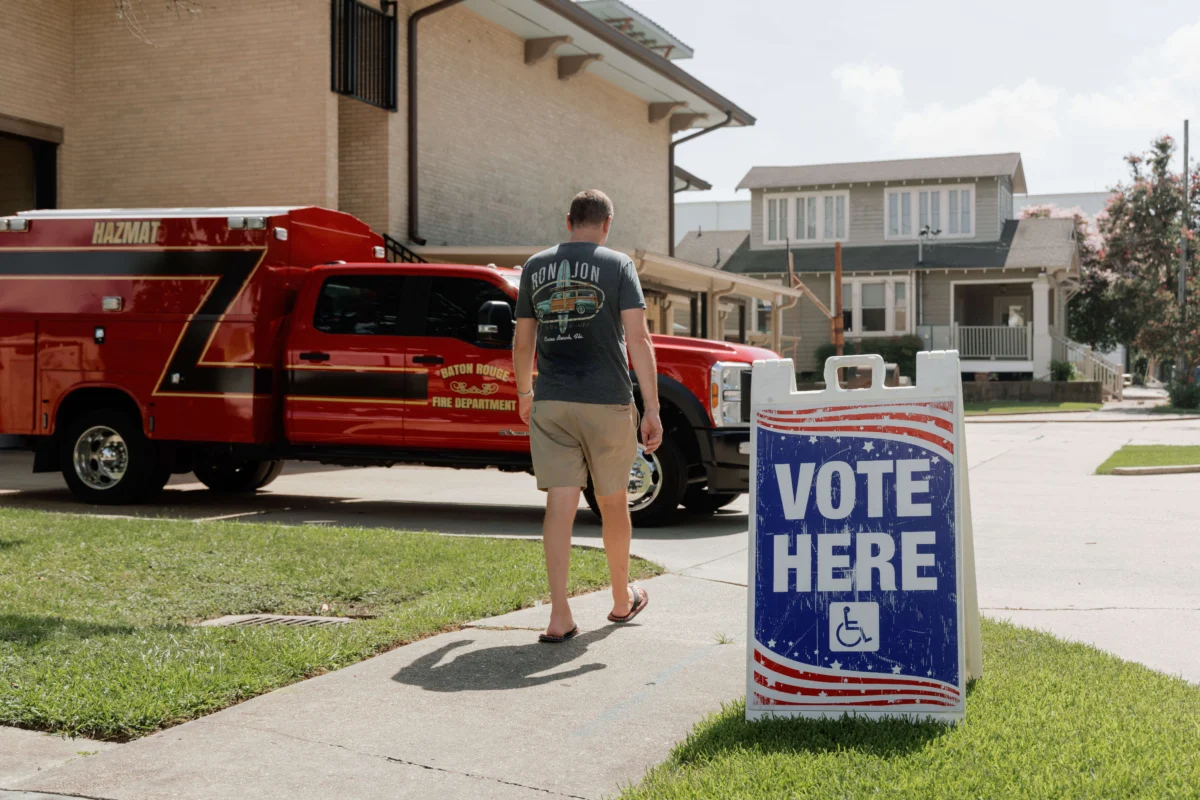
As Americans prepare to cast their ballots this November, they will encounter a rare and impactful opportunity to directly influence tax policy across the nation. Driven by persistent concerns over ballooning government spending and the growing tax burdens on households, particularly working-class and middle-class individuals, a remarkable 26 ballot initiatives concerning tax rates are set for a vote across 13 states. These measures will serve as a critical barometer of voter sentiment regarding the scope of government expenditure and the preferred sources of its funding, impacting an estimated 128 million eligible voters.
The Landscape of Tax Initiatives: A Shift Towards Rollbacks
While certain high-profile proposals, such as California’s Prop. 40, which seeks to authorize a one-time 5% "wealth tax" on the state’s billionaire residents, have captured significant public attention, the overwhelming majority of these ballot initiatives do not aim to expand existing tax regimes. Instead, they represent a concerted effort to roll back current tax obligations, with a particular focus on reducing the burden associated with homeowners’ most valuable asset: their property. This emphasis reflects a growing sentiment among taxpayers that property taxes, often seen as an inescapable annual levy, are becoming unsustainable.
States like Florida, Georgia, Louisiana, Oklahoma, North Carolina, Tennessee, and Wyoming have placed proposals on their ballots designed to significantly curb property tax expenditures. The mechanisms for achieving this relief vary, including increasing the property assessment threshold for existing tax exemptions, creating entirely new exemptions tailored for senior citizens, and, in a more radical move, Tennessee’s proposal to instill outright prohibitions on state property taxes. These diverse approaches underscore a broad, multi-state movement to address what many perceive as excessive property taxation.
The "Most Egregious Tax": Arguments for Property Tax Reform
The philosophical underpinnings of this push for property tax reform are articulated by proponents who view property taxes as fundamentally unjust. Tennessee State Senator Brent Taylor, speaking in support of his state’s Amendment 2 prior to its initial legislative passage in 2025, passionately argued, "The property tax is the most egregious tax there is because you never own your property. You’re only paying rent to the government. And if you don’t think you’re just paying rent to the government, try not paying your property taxes." This sentiment resonates with many homeowners who feel a sense of perpetual obligation despite having paid off their mortgages.
Historically, Tennessee has not had a state-level property tax since 1949, with property taxes largely administered by local governments based on market value and municipal budget needs. While Tennessee’s Amendment 2 is largely symbolic, aiming to constitutionally eliminate the possibility of a state-imposed property tax, other ballot initiatives across the country carry far more tangible and significant risks for local government revenues. This creates a complex dilemma for homeowners: the prospect of lowered personal expenditures must be weighed against the potentially damaging losses in local government funding and the subsequent impact on public services.
Fiscal Headwinds: Local Governments Brace for Impact
Local political leaders find themselves on both sides of this debate, with stark disagreements over which priority—taxpayer relief or stable public services—should take precedence. Mayors, city council members, and county commissioners are expressing grave concerns about the potential fallout from these tax rollbacks.
Jacksonville Mayor Donna Deegan, leading Florida’s largest city, voiced her apprehension regarding Florida’s proposed Amendment 3. This amendment seeks to increase the maximum property assessment needed to qualify for the state’s homestead tax exemption from $150,000 to $250,000. According to Mayor Deegan, such a change would result in a staggering one-third reduction to the Jacksonville city budget, amounting to a projected $300 million hit. "A $300 million hit is not a small hit," Mayor Deegan stated, emphasizing the dire consequences. "This proposed reduction will inevitably result in roads deteriorating, libraries, pools, and parks closing, public safety response times going up, housing affordability worsening, and more homeless on our streets." Her remarks highlight the direct link between property tax revenues and the essential services that underpin community well-being.
Echoing these concerns, Hallandale Beach Mayor Joy Cooper took an even more direct approach, posing a pointed question to her constituents in a Nextdoor post following the state legislature’s passage of Amendment 3: "What city services do people want to cut?" The responses she received, largely suggesting salary reductions for city officials, underscore the public’s frustration with government spending but also a potential lack of understanding regarding the intricate balance of municipal budgets.
Economic analyses of the proposed property tax measures support the mayors’ concerns, projecting substantial revenue reductions. Estimates indicate that the eight property tax ballot initiatives across six states could collectively deprive their respective state and local governments of at least hundreds of millions and potentially as much as tens of billions of dollars in the coming years. Florida’s Amendment 3 leads these projections, with an estimated loss of around $46 billion by 2032. Florida’s Exempt Tangible Personal Property Used for Agriculture or Agritourism from Property Taxes Amendment is projected to lose $96.9 million by 2030, while Wyoming’s Homeowner’s Primary Residence Property Tax Exemption Initiative could result in a minimum of $188 million in losses by 2030. Many other measures, such as those in Louisiana, are still awaiting comprehensive cost appraisals but are nonetheless projected to curb local government revenue streams significantly.
Proponents’ Counterarguments: Efficiency and Taxpayer Empowerment

Despite the warnings from local officials, proponents of the tax reductions argue that these fiscal costs are a necessary and small price to pay for eliminating wasteful spending and directly alleviating crushing cost-of-living expenses. They posit that governments can operate more efficiently and that taxpayers deserve to retain more of their earnings.
North Carolina Treasurer Brad Briner articulated this perspective, telling CNBC that his state has seen "egregious over-taxing by some of our municipalities." He referenced North Carolina’s proposed constitutional amendment directing state legislators to pass laws limiting property tax levy increases, asserting that such practices are "not fair to homeowners who are already stretching their budgets, and it makes it impossible for some potential new homeowners to consider jumping into the housing market." Briner, who serves on North Carolina’s Local Government Commission, acknowledged that while most municipalities are financially well-managed, some have resorted to supplemental revenue-raising to "cover their mistakes." He emphasized that a top priority for his administration is financial literacy, a basic principle of which is to "live within your means," suggesting that municipalities, too, must find alternative avenues to balance their budgets without an over-reliance on property taxes.
Florida Governor Ron DeSantis has been one of the loudest voices advocating for property tax reductions. His state has two amendments dedicated to property tax reductions slated for voters to weigh in on. Highlighting a projected increase in local government revenue from $32 billion to $83 billion over a 12-to-13-year period, DeSantis argued at a May roundtable event, "I think everybody understands that [basic services could be provided] at a lower level than $83 billion." He further contended that if people could keep that money "in their pockets," it would be "put to use," imagining the positive economic impact if individuals owing $2,000 a year in property taxes suddenly had that disposable income. DeSantis’s initial plan for property tax reform was even more ambitious, proposing a complete elimination of property taxes on primary homes without any carve-out for school budget property taxes. "What the Legislature did wasn’t my proposal," the governor stated during a bill signing event in Tampa, expressing uncertainty about the current Amendment 3’s passage but confidence that his more extensive plan "would have passed, because we did a lot of research on exactly how to structure it."
The Political Climate and Voter Trends
The path to passage for these amendments varies by state. In Florida, amendments to the state constitution require 60% voter support, necessitating a decisive sway of Floridian taxpayers. In other states, a simple 50%-plus-one majority is sufficient, offering a seemingly easier path for Republican legislative leaders hoping to enact their proposals. The question remains: how likely are these measures to pass?
The outlook is complex and nuanced. Geographically, with the exceptions of North Carolina and Georgia, the states featuring property tax initiatives lean heavily conservative. This political alignment suggests that, even amidst a national political climate that might favor Democratic voter turnout, the electorates in states like Wyoming and Oklahoma will likely be more receptive to tax rollbacks and share the sentiments of the Republican leaders who placed these initiatives on the ballot.
However, recent precedents offer a mixed bag of voter behavior. Two ballot initiatives concerning taxation have already been voted on this year, both of which failed. Oregon’s Measure 120, which would have increased the state’s fuel tax and public transportation payroll tax, was overwhelmingly rejected by voters in May. Similarly, Louisiana’s Amendment 4, which aimed to allow local governments to exempt business inventory from property taxes, was defeated by a 2:1 margin. On their own, these results might suggest a cautious electorate largely hesitant to alter the existing tax status quo, whether for expansion or reduction.
Yet, election precedents more closely resembling the upcoming property tax measures paint a more favorable picture for large-scale property tax reductions. In 2025, Texas’ Proposition 13, which increased the state’s homestead property tax exemption from $100,000 to $140,000 of a homestead’s market value, was approved overwhelmingly with nearly 80% voter support. In 2024, Georgia’s Referendum A, which raised the state’s personal property tax exemption from $7,500 to $20,000, passed with over 64% voter support. That same year, Arizona voters approved an initiative allowing homeowners to apply for property tax refunds in municipalities that do not enforce public nuisance laws. These successes demonstrate a clear appetite for property tax relief when the measures are perceived as directly benefiting homeowners without fundamentally dismantling government services.
Conversely, even in highly conservative states, voters have shown caution when property tax rollbacks are seen as potentially too drastic. North Dakota’s 2024 Initiated Measure 4, which would have effectively banned local governments from imposing property taxes, was soundly defeated amidst widespread concerns about its severe impact on local government budgets.
A recent poll conducted by the University of North Florida Public Opinion Research Lab further illuminates this nuanced voter sentiment. Initially, when respondents were informed that Florida’s Amendment 3 would "phase out taxes on homestead property, other than those directed to schools," a strong 61% indicated support, with only 32% opposed. However, when subsequently informed of the projected budget shortfalls for city and county governments across the state, support plummeted to 45%, while opposition rose significantly to 47%. This poll highlights the critical role of voter education regarding the full implications of such measures. Florida Senate Minority Leader Lori Berman underscored this point, telling local Tampa NPR station WUSF 89.7, "We will really have to spend the summer and the early fall educating voters about what’s going to happen as a result of this bill. I’m really worried about the impact on our local counties and cities. I think it could bankrupt some."
Broader Implications and the Road Ahead
The November elections represent more than just a series of votes on individual tax rates; they constitute a broad referendum on the role and funding of government at the local level. The outcome will have profound economic and social implications. Significant revenue losses could lead to direct cuts in public services, impacting the quality of education, the responsiveness of emergency services, the maintenance of public infrastructure like roads and parks, and even the availability of social safety nets. This could, in turn, affect housing affordability, public health, and overall community well-being.
The long-term financial stability of local governments is also at stake. Property taxes are typically the most stable and predictable source of revenue for municipalities, underpinning their ability to issue bonds for major capital projects like new schools, libraries, and fire stations. Disrupting this revenue stream could jeopardize future development and even impact municipal bond ratings, making it more expensive for local governments to borrow money.
This ongoing debate highlights a fundamental tension: the desire for taxpayer relief and fiscal responsibility versus the necessity of funding essential public services. As campaigns intensify, the clarity and effectiveness of voter education will be paramount. The results of these ballot initiatives will not only reshape state and local fiscal landscapes but could also set precedents, signaling a nationwide trend toward or away from significant property tax reform, with ripple effects across the entire U.S. economy and its communities.
