

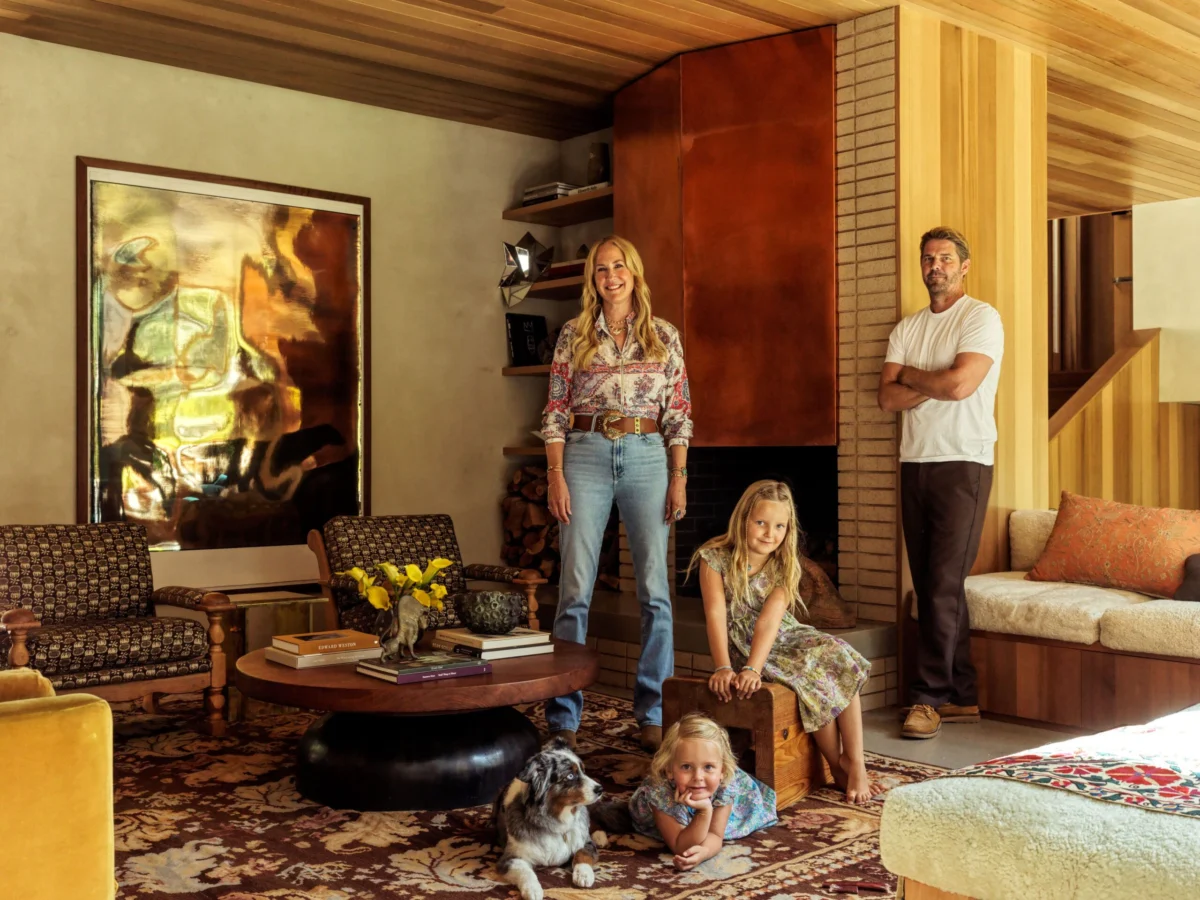
In the affluent enclave of Pacific Palisades, California, a rare horticultural and architectural anomaly serves as the backdrop for a significant restoration project led by Lela Becker, cofounder of the influential denim brand Mother. The property, anchored by a mature grove of Sequoia sempervirens—Coast Redwoods—planted experimentally in the late 19th century, represents a unique intersection of botanical history and mid-century modernist design. Centered around a 1955 residence originally designed by the San Francisco-based architect Mario Corbett, the project highlights a meticulous effort to synthesize Northern California’s rugged aesthetic with the sophisticated, laid-back atmosphere of Southern California. The residence, which miraculously survived the destructive wildfires that plagued the region in recent years, has been reimagined by a collaborative team including architect Jed Lind, interior designer Kelsey Sundberg, and the landscape firm Terremoto.
The Architectural Provenance of the Mario Corbett Estate
The house was originally commissioned in the mid-1950s, a period when the Pacific Palisades was becoming a laboratory for experimental residential architecture, most notably through the Case Study House program. However, Mario Corbett brought a distinct Bay Area sensibility to the site. Known for his work in Northern California, Corbett’s designs often emphasized a "steamship" profile—characterized by horizontal lines, cantilevered decks, and a seamless integration with sloping terrains.

When Lela Becker and her husband, David, acquired the property in 2019, the structure required a delicate balance of modernization and preservation. The couple, who previously resided nearby, were drawn to the site’s "hidden" quality. The grove, which dates back to the late 1800s, creates a microclimate that feels detached from the typical arid landscape of Los Angeles. This specific grove is believed to be part of an early forestry experiment; during the late 19th century, the California Board of Forestry established stations in the Santa Monica Mountains to test the viability of various timber species. The survival of these redwoods into the 21st century is considered a biological triumph, providing a lush, shaded canopy that significantly lowers the ambient temperature of the property.
Chronology of the Restoration and Expansion
The renovation process began shortly after the 2019 acquisition, with a focus on restoring the redwood-clad exterior while updating the interior to meet contemporary family needs. Architect Jed Lind was tasked with the structural evolution of the home.
- Phase I: Structural Assessment and Light Integration (2019-2020): The initial phase focused on the home’s "bones." Lind introduced additional windows to capitalize on the unique woodland views and natural light, which was previously obstructed by the dense canopy.
- Phase II: Footprint Expansion (2020-2021): The team expanded the home’s footprint slightly and completed a second story that had remained underutilized. This allowed for better connectivity between the private quarters and the surrounding forest.
- Phase III: Material Selection and Interior Narrative (2021-2022): Working with designer Kelsey Sundberg, the owners selected materials that would patina over time, including cedar, eucalyptus, teak, and copper.
- Phase IV: Landscape and Final Integration (2022-2023): The landscape firm Terremoto was brought in to stabilize the hillside and introduce native flora that would complement the non-native redwoods.
Materiality and the Influence of Rudolph Schindler
A defining feature of the restoration is the use of materials that reference the broader history of California modernism. A prominent example is the copper fireplace hood in the living area, which serves as a direct homage to Rudolph Schindler’s 1922 Kings Road House. Schindler, a pioneer of the West Coast modern movement, frequently used industrial materials in residential settings to create a sense of "honest" architecture.

The choice of wood was equally deliberate. The exterior remains clad in redwood, honoring the original Corbett design. Internally, the use of teak in the kitchen and ebonized oak for the dining furniture provides a warm, textural contrast to the concrete and metal elements. The commitment to local sourcing is evidenced by the involvement of Angel City Lumber, a Los Angeles-based company that diverts fallen city trees from landfills. A bench carved from a single felled trunk greets visitors at the entry, grounding the home in its local ecological context.
Interior Design: The "West Côte" Aesthetic
Interior designer Kelsey Sundberg, an alumna of the renowned AD100 firm Studio Shamshiri, developed a narrative for the home she describes as "West Côte." This concept blends French Provençal charm, Scandinavian minimalism, and California Modernism. The goal was to create an environment that felt like the home of well-traveled expatriates who had returned to Los Angeles with a curated collection of global artifacts.
The living room serves as the centerpiece of this aesthetic. It features 1950s Danish oak easy chairs and a custom shearling-upholstered sectional designed to maximize comfort without sacrificing form. The inclusion of a Jean Lurçat tapestry and a BDDW console—noted for its intricate "tattooed" flora and fauna motifs—adds a layer of artisanal craftsmanship.

Becker’s personal aesthetic, which has driven the success of her brand Mother, is felt in the "easy California" vibe of the family room. This space features a sofa slipcovered in a patchwork of paisley tablecloths, nodding to the bohemian spirit of the 1970s. The room is a high-low mix of fine art and functional comfort, including a custom Dan John Anderson table inset with abalone shell and brass, and various crystals and gemstones collected by the family.
Landscape Ecology and Fire Resilience
The landscape design, executed by Terremoto, was faced with the challenge of maintaining a historic redwood grove in a fire-prone region. While redwoods are notoriously resilient to fire due to their thick, tannin-rich bark and lack of resin, the surrounding undergrowth in Southern California often poses a risk.
Terremoto’s project lead, Samuel Webb, implemented a strategy of "amplification." By planting swaths of native ferns and live oaks, the team created a multi-layered ecosystem that supports local biodiversity while framing the redwoods. The inclusion of a bubbling creek provides a constant auditory backdrop, masking the sounds of the surrounding city and reinforcing the property’s status as a sanctuary.

From a data perspective, the property benefits significantly from its shade cover. Urban heat island effects in Los Angeles can raise temperatures by several degrees in paved areas, but the Becker estate’s dense canopy and proximity to the creek create a natural cooling effect, reducing the home’s reliance on mechanical climate control.
Market and Cultural Implications
The restoration of the Corbett house reflects a growing trend among creative professionals in Los Angeles to preserve mid-century assets rather than opting for "mansionization" or new construction. In the Pacific Palisades, where the median home price often exceeds $4 million, the decision to maintain a smaller, historically significant footprint is a statement on the value of architectural integrity.
Industry analysts suggest that properties with "celebrity" designer pedigrees—both in terms of original architecture and contemporary interior design—retain value more effectively during market fluctuations. Furthermore, the integration of sustainable practices, such as using reclaimed lumber and native landscaping, aligns with the evolving priorities of luxury homeowners who are increasingly concerned with climate resilience.

Broader Impact on Modernist Preservation
Lela Becker’s project serves as a case study for the sensitive adaptation of mid-century homes. By respecting Mario Corbett’s original "steamship" vision while introducing contemporary narratives like the "West Côte" style, the team has ensured the home’s relevance for another generation.
The successful preservation of the redwood grove also highlights the importance of historic landscapes. As Southern California continues to grapple with extreme weather patterns, these pockets of ancient and "experimentally" planted forests offer valuable insights into species adaptability. The property remains a testament to the fact that architecture and nature, when treated with equal reverence, can create a living environment that is both a historical document and a functional family home.
For Becker, the house is more than an aesthetic achievement; it is a sensory experience defined by the sound of the creek, the texture of the shearling, and the sight of the redwoods through newly expanded glass. It represents a "miraculous" survival of both a botanical experiment and a modernist masterpiece, standing as a quiet, shaggy sentinel in the hills of the Pacific Palisades.
