

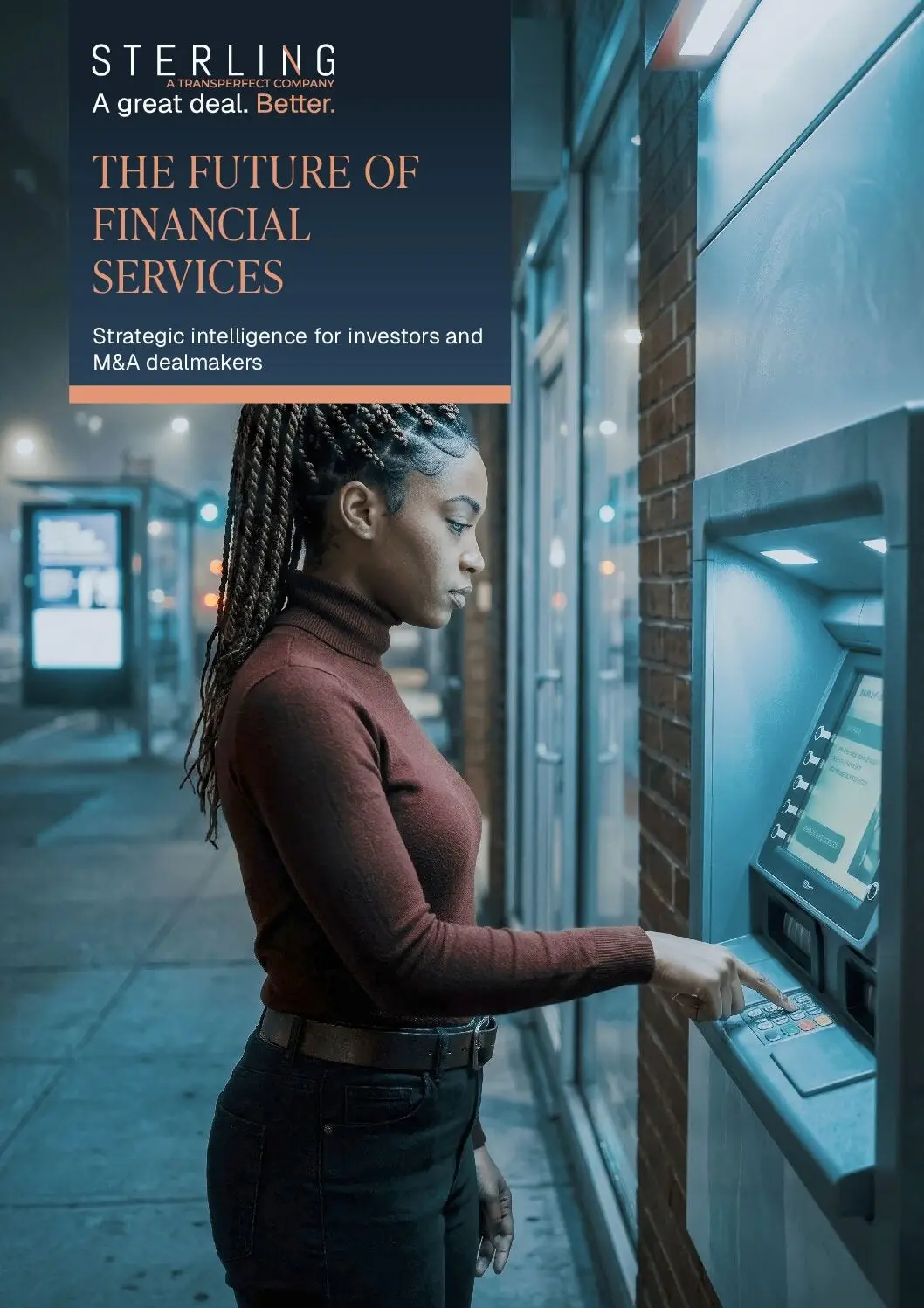
The financial services industry stands at a precipice of unprecedented global transformation, a period characterized by rapid technological advancement that is not only driving operational efficiencies but also unlocking significant new avenues for value creation. While the pervasive influence of Artificial Intelligence (AI) is often highlighted, the sector’s dynamic evolution extends far beyond this singular technology, encompassing a broad spectrum of innovative shifts that will redefine how value is generated, capital is allocated, and strategic deals are forged over the next decade, from 2025 to 2035.
This profound reshaping of the financial landscape is the central focus of a compelling new podcast episode, produced in collaboration with Sterling Technology. The initiative is meticulously crafted to provide critical insights for a discerning audience comprising investors, M&A dealmakers, and corporate strategists who are tasked with navigating this complex and rapidly evolving terrain. The episode promises to illuminate the most pivotal themes driving seismic changes within the banking and insurance sectors, meticulously dissecting the emerging opportunities that accompany these transformations. Furthermore, it offers a forward-looking SWOT (Strengths, Weaknesses, Opportunities, Threats) analysis specifically tailored for the year 2027, providing a timely snapshot of the industry’s strategic positioning.
The esteemed guest lending his expertise to this crucial discussion is Douglas Blakey, a respected authority and the editor of GlobalData’s influential banking and payments titles. Blakey’s deep understanding of the industry’s intricacies and future trajectory provides a valuable lens through which listeners can comprehend the multifaceted challenges and opportunities that lie ahead.
The Shifting Sands of Financial Services: A Decade of Transformation
The period between 2025 and 2035 is poised to be one of the most dynamic in the history of financial services. This era is not merely about incremental improvements but about fundamental paradigm shifts driven by a confluence of technological innovation, evolving customer expectations, and a changing global economic order. The podcast episode delves into the intricate interplay of these forces, aiming to equip industry leaders with the foresight needed to adapt and thrive.
Key Drivers of Change:
- Digitalization and Automation: The relentless march of digital transformation continues to be a primary catalyst. From hyper-personalized customer experiences powered by AI and machine learning to the streamlining of back-office operations through robotic process automation (RPA), efficiency gains are paramount. This extends to areas like fraud detection, risk management, and compliance, where advanced analytics are becoming indispensable.
- Emergence of New Business Models: Traditional banking and insurance models are being challenged by agile fintech disruptors and the evolving demands of a digitally native customer base. The rise of embedded finance, where financial services are seamlessly integrated into non-financial platforms, is a prime example. Open banking initiatives, driven by regulatory mandates and technological capabilities, are fostering greater competition and innovation by allowing third-party providers to access banking data with customer consent.
- Data as a Strategic Asset: In the digital age, data is often referred to as the new oil. Financial institutions are increasingly recognizing the immense value locked within their vast datasets. Advanced analytics, predictive modeling, and AI are being deployed to derive actionable insights, enabling more informed decision-making, personalized product offerings, and enhanced customer engagement.
- Evolving Regulatory Landscape: Regulators worldwide are grappling with the implications of technological advancements, aiming to strike a balance between fostering innovation and ensuring financial stability, consumer protection, and market integrity. This dynamic regulatory environment presents both challenges and opportunities for financial institutions, requiring constant adaptation and strategic engagement.
- Sustainability and ESG Imperatives: Environmental, Social, and Governance (ESG) factors are no longer niche concerns but are becoming central to investment strategies and corporate responsibility. Financial institutions are increasingly expected to integrate ESG principles into their operations, lending practices, and investment portfolios, driving a shift towards sustainable finance.
A Detailed Chronology of Expected Shifts (2025-2035)
The podcast’s forward-looking analysis provides a framework for understanding the anticipated evolution of the financial services sector over the next decade. While precise predictions are inherently challenging, a chronological perspective can illuminate the likely progression of key trends:
2025-2027: The Acceleration of Digital Integration and Foundational AI Adoption
This initial phase is expected to see a significant acceleration in the adoption of technologies that were gaining traction in the preceding years.
- Widespread AI Deployment: AI will move beyond experimental stages to become an integral part of core banking and insurance operations. This will include enhanced customer service through AI-powered chatbots, sophisticated fraud detection systems, and personalized financial advice platforms.
- Open Banking Maturity: Open banking frameworks will become more robust and widely adopted, leading to a surge in innovative third-party applications and services that leverage customer data (with consent) to offer tailored financial solutions. This will foster greater competition and potentially lead to a commoditization of some traditional banking services.
- Embedded Finance Expansion: The integration of financial services into non-financial platforms (e.g., e-commerce, ride-sharing apps) will become more prevalent, offering seamless payment, lending, and insurance solutions at the point of need.
- Data Analytics Sophistication: Financial institutions will deepen their investment in data analytics capabilities, moving from descriptive to predictive and prescriptive analytics to better understand customer behavior, manage risk, and optimize product development.
- Early ESG Integration: While still evolving, ESG considerations will begin to be more formally integrated into investment decisions and corporate strategies, driven by investor demand and emerging regulatory frameworks.
2027: A Strategic Snapshot (SWOT Analysis Preview)
The podcast’s specific focus on 2027 suggests a critical juncture where the impacts of the initial wave of transformation will be more evident, providing a clear picture of the industry’s strengths, weaknesses, opportunities, and threats.
- Strengths: Enhanced operational efficiencies, improved customer personalization, data-driven decision-making capabilities, and a growing ecosystem of innovative partnerships.
- Weaknesses: Legacy IT infrastructure in some institutions, potential skills gaps in emerging technologies, and the ongoing challenge of regulatory adaptation.
- Opportunities: New revenue streams from digital products and services, expansion into underserved markets through technology, and the development of sustainable finance solutions.
- Threats: Increased competition from agile fintechs and Big Tech firms, evolving cybersecurity risks, and the potential for regulatory arbitrage.
2028-2030: The Rise of Generative AI and Decentralized Finance
As the decade progresses, more advanced technologies will begin to mature and impact the industry.
- Generative AI’s Impact: Generative AI will start to move beyond content creation to more complex tasks, such as automated report generation, synthetic data creation for training models, and even assisting in the development of new financial products.
- Decentralized Finance (DeFi) Exploration: While still nascent and facing regulatory hurdles, elements of decentralized finance will begin to be explored and integrated into traditional financial systems, particularly in areas like cross-border payments, asset tokenization, and smart contract-based financial instruments.
- Hyper-Personalization at Scale: Leveraging advanced AI and data analytics, financial institutions will be able to offer truly hyper-personalized financial experiences, tailoring every interaction, product, and recommendation to individual customer needs and life stages.
- Advanced Risk Management: AI-powered risk management systems will become more sophisticated, capable of identifying and mitigating complex, systemic risks with greater precision and speed.
2031-2035: A New Era of Intelligent Finance and Sustainable Growth
The latter half of the decade is anticipated to see the full realization of many of these transformative trends.
- AI as a Strategic Partner: AI will become a fundamental strategic partner for financial institutions, assisting in everything from long-term strategic planning to real-time operational adjustments.
- Ubiquitous Embedded and Contextual Finance: Financial services will be seamlessly embedded into virtually every aspect of consumers’ and businesses’ digital lives, becoming an invisible yet indispensable part of their daily activities.
- Tokenization of Assets: The tokenization of traditional assets (real estate, equities, bonds) on blockchain or distributed ledger technology (DLT) will become more mainstream, increasing liquidity and enabling fractional ownership.
- Sustainable Finance as the Norm: ESG considerations will be fully integrated into all financial decision-making, with a significant shift towards investments in green technologies, social impact initiatives, and responsible corporate governance.
- Evolving Role of Human Capital: While automation will transform many roles, human expertise will remain critical for strategic decision-making, complex problem-solving, relationship management, and ethical oversight, leading to a redefinition of job roles within the sector.
Supporting Data and Market Trends
The trends discussed are not merely speculative but are underpinned by significant market data and observable shifts:
- Global Fintech Investment: According to Statista, global investment in fintech reached over $128 billion in 2022, indicating a sustained interest and growth trajectory. While there can be quarterly fluctuations, the long-term trend points to continued innovation and capital inflow.
- AI in Banking Market Size: The AI in banking market is projected to grow significantly. Reports suggest a compound annual growth rate (CAGR) exceeding 20% in the coming years, driven by demand for enhanced customer experience, fraud detection, and operational efficiency. For instance, MarketsandMarkets projected the AI in banking market to grow from USD 8.3 billion in 2021 to USD 30.3 billion by 2026.
- Growth of Open Banking: The adoption of open banking has seen a steady increase globally. Regions like Europe, with PSD2 regulations, have been at the forefront, but the concept is gaining traction in North America, Asia, and other parts of the world.
- ESG Investment Surge: Assets under management in sustainable funds have seen exponential growth. Reports from organizations like the Global Sustainable Investment Alliance consistently highlight a multi-trillion-dollar market for sustainable investments, with clear indications of continued expansion.
- Digital Payments Dominance: The shift towards digital and contactless payments has been accelerated by the pandemic and continues to be a dominant trend, with projections indicating a continued rise in transaction volumes and value.
Implications for Stakeholders
The transformative decade ahead carries significant implications for various stakeholders within the financial services ecosystem:
- For Investors: The period presents both opportunities for significant returns through investments in innovative fintech companies and established institutions that successfully adapt, as well as risks associated with companies that fail to evolve. A deep understanding of technological trends and regulatory shifts will be crucial for informed investment decisions.
- For M&A Dealmakers: The landscape will be ripe for strategic mergers, acquisitions, and partnerships. Companies will seek to acquire new technologies, expand their market reach, and consolidate their positions in a rapidly changing environment. Identifying target companies with strong technological capabilities, robust data strategies, and a clear vision for the future will be paramount.
- For Corporate Strategists: The need for agility and forward-thinking strategies has never been greater. Companies must proactively assess their digital capabilities, invest in talent development, foster a culture of innovation, and continuously monitor the evolving competitive and regulatory landscape. Strategic agility will be a key differentiator for success.
- For Consumers and Businesses: The ultimate beneficiaries of these transformations are expected to be consumers and businesses, who will experience more personalized, convenient, efficient, and potentially more affordable financial services. However, concerns around data privacy, cybersecurity, and the digital divide will need to be addressed.
The podcast episode featuring Douglas Blakey, produced in association with Sterling Technology, serves as an essential guide for navigating this complex yet exciting future. By dissecting the key themes, providing a strategic roadmap, and offering a detailed SWOT analysis, it aims to equip industry leaders with the knowledge and foresight necessary to not only survive but to thrive in the decade of disruption that lies ahead for global financial services. The journey from 2025 to 2035 promises to be one of profound change, redefining value creation, capital allocation, and the very essence of how financial services operate.
