

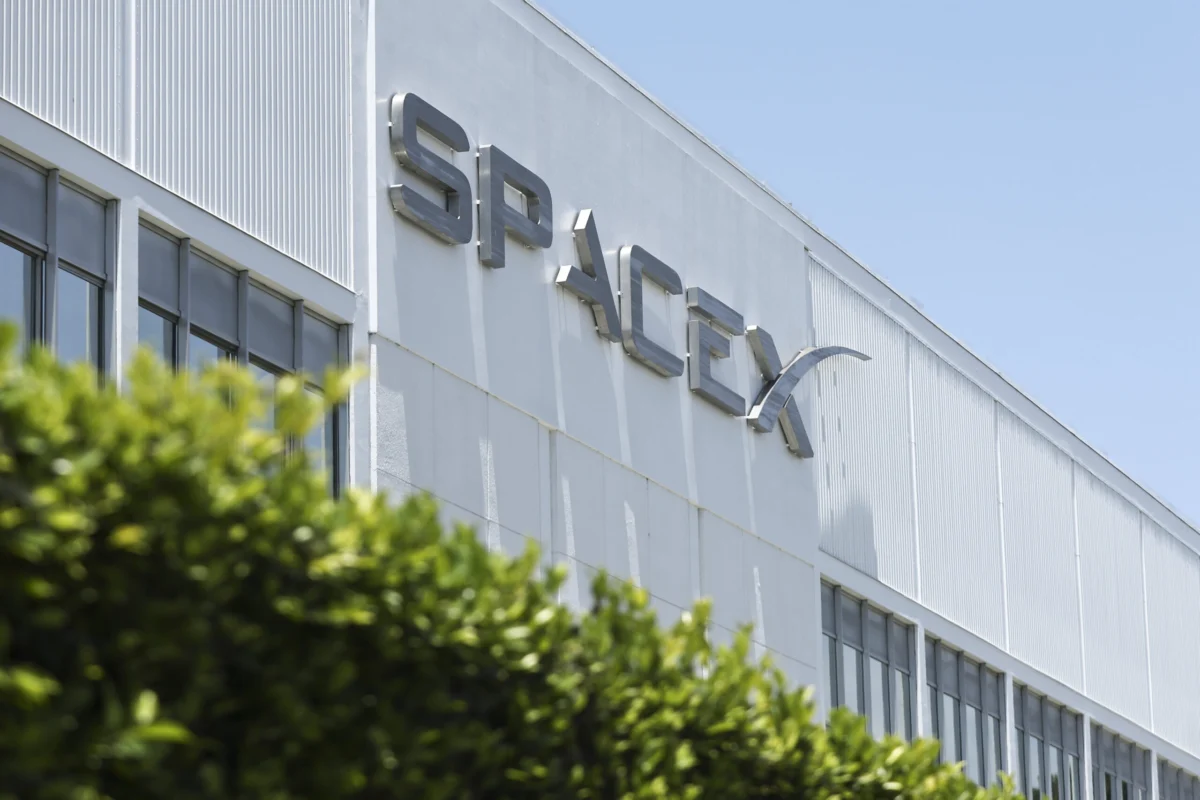
Americans have more money invested for retirement in passive S&P 500 Index funds than any other investment, underscoring the profound influence of this benchmark on the nation’s financial landscape. behemoths like the Vanguard S&P 500 ETF (VOO) and BlackRock’s iShares Core S&P 500 ETF (IVV) collectively manage nearly $2 trillion in assets, with VOO alone recently crossing the monumental $1 trillion mark. These funds, along with State Street’s SPDR S&P 500 Trust (SPY), form the bedrock of countless investment portfolios, offering broad market exposure and often serving as the default choice for long-term wealth accumulation. However, a significant recent development has highlighted the inherent limitations of these widely held instruments: they will not be managing SpaceX shares any time soon, despite the aerospace giant’s historic mega-cap initial public offering (IPO) on Friday, June 12, 2026. This decision has sent ripples through the investment community, forcing retail investors eager for a piece of the action to look beyond their traditional S&P 500 holdings.
The S&P 500’s Stance: A Firm No, For Now
The index committee that meticulously oversees the rules for new stock inclusion in the S&P 500 Index delivered a decisive "no" to the biggest IPO in market history, at least for the first year of its public market trading. This refusal, announced on June 5, 2026, ahead of SpaceX’s Nasdaq debut, means that investors in S&P 500-tracking funds will be waiting until at least mid-2027 for any potential exposure to the Elon Musk-led company. The S&P Dow Jones Indices, the entity behind the S&P 500, maintains stringent criteria for inclusion, which typically include a minimum market capitalization, sufficient liquidity, a U.S. domicile, and perhaps most critically in this instance, a track record of profitability over the preceding four consecutive quarters, with the most recent quarter being positive. While SpaceX’s market capitalization easily qualifies, its financial performance and the index’s standard 12-month waiting period for new listings proved to be insurmountable hurdles for immediate inclusion.
A New Era of Mega-Cap IPOs and Index Pressure
SpaceX’s monumental IPO, which saw the company valued at $1.77 trillion and its shares initially surge to over $2 trillion on the Nasdaq, marks a new chapter in the financial markets. It joins a burgeoning class of "mega-cap" companies hitting the public markets with unprecedented valuations. Adding to this trend, artificial intelligence pioneers OpenAI and Anthropic are also expected to follow suit with their own massive offerings, potentially pushing them into the ranks of the largest publicly traded companies in the U.S. on their first day of trading. This influx of colossal, high-growth, yet often unprofitable, enterprises has placed immense pressure on index managers to reassess their traditional inclusion methodologies. The S&P committee, faced with this evolving landscape, was compelled to make a critical decision: whether to accelerate its standard 12-month waiting period for new stocks to accommodate these market-defining companies. Ultimately, they chose to uphold their existing framework, prioritizing consistency and established financial metrics over immediate market sentiment.
Divergent Paths: Other Benchmarks Adapt
In stark contrast to the S&P 500’s steadfast adherence to its rules, other prominent market benchmarks have demonstrated greater flexibility. The index committees for the Nasdaq and Russell market benchmarks swiftly announced updates to their rules, specifically designed to account for newer, larger company IPOs with fast tracks for inclusion. This divergence in strategy means a vastly different experience for investors. As Todd Sohn, chief ETF strategist at Strategas Securities, articulated on the "ETF Edge" program, "If you want SpaceX, you’re not buying the S&P 500. You’re going to buy the NASDAQ 100 or the Russell 1000." Indeed, SpaceX shares commenced trading on the Nasdaq, instantly becoming a component of Nasdaq-tracking funds, allowing investors in the NASDAQ 100 (.NDX) and Russell 1000 to gain immediate exposure to the burgeoning space exploration and satellite internet behemoth. This dichotomy sets the stage for potential performance disparities and an intriguing "index war," as Sohn suggests.
Understanding the S&P 500’s Influence and Criteria
The S&P 500 Index, managed by S&P Dow Jones Indices, is widely considered the best gauge of large-cap U.S. equities and a proxy for the overall health of the U.S. economy. Its rigorous inclusion criteria are designed to ensure that it represents established, financially sound companies. Key requirements include:
- Market Capitalization: A minimum unadjusted market cap of $14.6 billion (as of the most recent update, though this fluctuates). SpaceX comfortably exceeds this.
- Liquidity: Sufficient public float and trading volume to ensure ease of trading.
- Domicile: Must be a U.S. company.
- Sector Representation: Companies are selected to maintain balanced sector representation.
- Profitability: The most contentious point for many new tech giants. Companies must have positive reported earnings in the most recent quarter, as well as positive aggregate earnings over the past four consecutive quarters.
- Public Float: At least 50% of the company’s shares must be available to the public.
- Waiting Period: Historically, new listings are subject to a waiting period, often around 12 months, to assess market stability and sustained performance.
SpaceX’s significant net loss of $4.28 billion in its latest quarter, despite its massive valuation and revenue generation, directly conflicts with the S&P 500’s profitability test. This hurdle, coupled with the standard waiting period, sealed its fate for immediate exclusion.
The Precedent Question: Profitability, Global Context, and Disagreement
The decision to maintain the long window before SpaceX’s potential S&P 500 inclusion has not been universally applauded. Peter Haynes, head of index and market structure research at TD Securities, expressed his disagreement, stating on "ETF Edge," "Personally, I didn’t agree with the decision." He characterized the discussion as "controversial" but argued that, in his view, it represents "a natural extension of what exists already in global benchmarks." Haynes cited the example of Saudi Aramco’s 2019 IPO, which at the time was the largest in history. Both FTSE and MSCI, leading global index providers, created fast-track models to add the stock to their indexes within 5 to 10 days of its public debut. Haynes posited that U.S. benchmarks were historically "geared to follow the lead of global benchmarks" and that a "Made in the USA" stock of SpaceX’s caliber "is sizable and belongs in benchmarks."
The S&P committee’s decision, therefore, sets a significant precedent. Todd Sohn warned that this move indicates the S&P "will not add OpenAI and Anthropic when those IPOs happen" if they, too, fail to meet the profitability test or are still within the initial waiting period. This implies a prolonged absence of these cutting-edge companies from the most widely tracked U.S. benchmark, potentially for "much longer" than a year, as Haynes suggested, given their current cash-burning growth strategies.
The "Index War" and Performance Dispersion
The diverging approaches of the S&P 500 versus the Nasdaq and Russell benchmarks could indeed ignite an "index war," leading to notable performance dispersions. The S&P 500, by excluding these mega-cap, high-growth, yet currently unprofitable companies, might lag indexes that embrace them sooner. For instance, if SpaceX, OpenAI, and Anthropic deliver substantial returns in their early years as public companies, the Nasdaq 100 and Russell 1000, which are more likely to include them, could outperform the S&P 500. This scenario forces investors to critically evaluate their index fund choices, potentially prompting a shift from pure S&P 500 exposure to a more diversified index strategy or targeted thematic investments to capture growth opportunities. This performance divergence could also highlight the inherent trade-offs in index construction: stability and profitability versus growth and innovation.
SpaceX’s Financials: A Closer Look at Risk and Reward
SpaceX’s $1.77 trillion valuation at IPO and its initial climb past $2 trillion underscores immense investor confidence in its future potential across satellite internet (Starlink), space transportation, and deep-space exploration. However, the company’s financial profile, characterized by a net loss of $4.28 billion in its latest quarter, points to the significant capital expenditure and research & development investments required to fuel its ambitious projects. While SpaceX generates substantial revenue, particularly from its Starlink satellite internet service and Falcon rocket launches, it remains a high-risk investment due to its aggressive growth strategy and capital-intensive operations. This financial reality directly clashes with the S&P 500’s profitability mandate, reinforcing the committee’s decision. Similarly, OpenAI and Anthropic, though generating significant revenue, are known for "burning through cash at a significant rate and racking up losses" in their pursuit of AI dominance. They are expected to face the same scrutiny from the S&P 500, making their immediate inclusion equally unlikely.
Navigating the Market: Alternatives for Investors
For fund investors seeking exposure to SpaceX without waiting for potential S&P 500 inclusion, several alternative avenues have emerged. These can serve as complements to a core portfolio position in an S&P 500 fund.
- Thematic Space and Tech Innovation ETFs: A handful of specialized ETFs have already been holding SpaceX through pre-IPO direct stakes, offering investors an immediate entry point. The demand for "space stocks" and space-focused ETFs surged in the weeks leading up to SpaceX’s IPO. For instance, Tema ETFs’ Space Innovators ETF (NASA), which launched on May 30, rapidly accumulated $2.6 billion in assets, partly due to its direct access to SpaceX before the IPO. Other innovation-focused ETFs may also hold private stakes in similar high-growth companies.
- Nasdaq and Russell Index Funds: As Todd Sohn highlighted, investing in funds that track the NASDAQ 100 or Russell 1000 provides direct exposure to SpaceX and potentially other high-growth tech companies sooner than the S&P 500.
- Leveraged and Inverse ETFs: For risk-oriented investors and active traders, a new wave of leveraged ETFs is launching to offer up to 2x daily performance of SpaceX shares, allowing for both bullish and bearish bets. ProShares is set to launch the Ultra SpaceX ETF (SPCF), aiming for 2x the daily performance of the stock. GraniteShares will introduce two similar funds: GraniteShares 2x Long SpaceX Daily ETF (SPAL) and GraniteShares 2x Short SpaceX Daily ETF (SNK). These instruments cater to sophisticated traders looking to amplify short-term gains or hedge positions.
Risks and Rewards of Alternative Investments
While these alternative investments offer immediate exposure, they come with distinct risk profiles. Thematic ETFs, while providing targeted exposure, often carry higher expense ratios and can be more volatile than broad market index funds. Leveraged and inverse ETFs, in particular, are highly specialized and intended for short-term trading, typically by day traders. Sohn cautioned that these "levered investments come with big boom-and-bust cycles." Their daily rebalancing mechanisms can lead to significant decay over longer periods, meaning losses compound rapidly, and their performance often deviates from the underlying asset’s long-term returns. Expense ratios for these funds are also generally higher, reflecting their complex structure and active management requirements. They are fundamentally designed as trading vehicles, not core long-term holdings for diversification.
The Future of Index Investing and ETF Innovation
The S&P 500’s decision to exclude SpaceX for the foreseeable future underscores a fundamental tension in modern finance: the desire for broad, passive market exposure versus the pursuit of high-growth, innovative companies that may not fit traditional financial molds. For the majority of investors who rely on the S&P 500 to capture the biggest names in the U.S. market, the biggest takeaway is that their core index is sitting this one out. However, the investment industry, particularly the ETF sector, is renowned for its creativity and responsiveness to investor demand. Sohn predicts that this situation will spur further innovation: "I would think some of the smaller independent [ETF] issuers will go to another index provider and they will create an ‘S&P+SpaceX … ‘large-cap+SpaceX’ … ‘+Anthropic.’ … There is nothing the ETF industry can’t do in terms of creativity." This suggests that even if the benchmark indexes remain conservative, innovative financial products will emerge to bridge the gap, offering investors tailored solutions to access the next generation of market leaders. The landscape of index investing is continuously evolving, and while traditional benchmarks provide stability, the dynamism of the ETF market ensures that investors will always find avenues to participate in the most exciting growth stories, albeit with varying risk considerations.
Sign up for our weekly newsletter that goes beyond the livestream, offering a closer look at the trends and figures shaping the ETF market.
Disclaimer
