

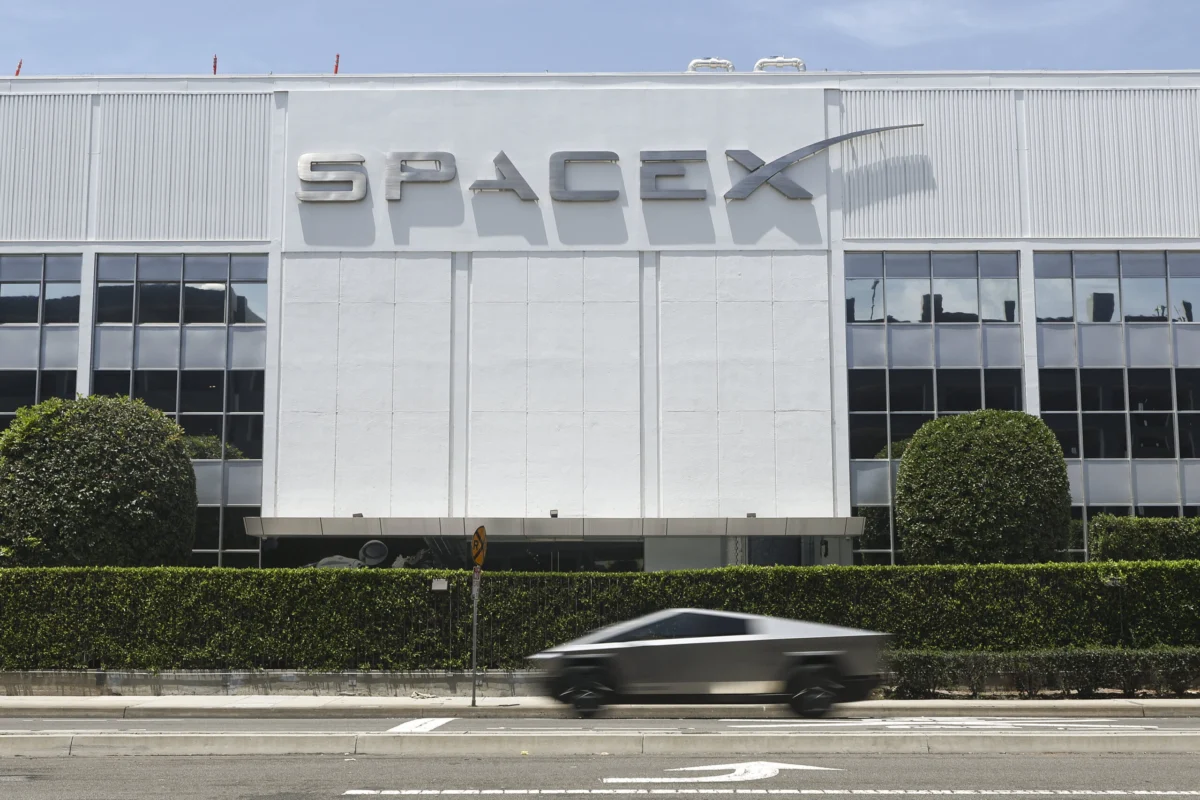
The highly anticipated initial public offering (IPO) of SpaceX, the aerospace giant led by visionary entrepreneur Elon Musk, is poised to reshape the capital markets, with new details emerging regarding its share allocation strategy. Sources familiar with the matter indicate that the company plans to direct a smaller-than-expected portion of its monumental offering to retail investors, specifically targeting a percentage in the low 20s. This allocation encompasses a diverse group of individual buyers, including international investors, clients of online brokerages, and private-bank clientele. The revised figure represents a notable departure from earlier market expectations, which had projected that approximately 30% of the deal would be reserved for the retail segment. While these allocation decisions are nearing finalization, the possibility of minor adjustments remains as the company prepares for its landmark trading debut.
The Anticipation: A Trillion-Dollar Debut
SpaceX’s public market entry, slated for trading this Friday, is not merely another IPO; it is widely regarded as one of the most significant public offerings in financial history. The company is expected to command an staggering valuation of approximately $1.8 trillion, a figure that places it among the world’s most valuable enterprises even before its first public trade. This valuation reflects not only the company’s current technological prowess and market dominance in the commercial space sector but also the immense future potential embedded in its ambitious projects, including the Starlink satellite internet constellation and the Starship program aimed at Mars colonization. The sheer scale of this IPO has generated an unprecedented level of investor excitement, creating a competitive environment where demand for shares far outstrips supply, particularly among institutional players.
A Shift in Allocation Strategy
The decision to scale back the retail allocation to the low 20s percentage range, down from an anticipated 30%, underscores the intense institutional interest that has characterized the run-up to this IPO. Institutional investors, typically comprising large asset managers, mutual funds, hedge funds, and sovereign wealth funds, are often prioritized in major public offerings due to their capacity to absorb large blocks of shares, their long-term investment horizons, and their perceived stabilizing influence on a stock’s aftermarket performance. The reduced allocation for retail investors, while potentially disappointing for individual buyers hoping for greater access, is a clear indicator of the robust demand from these cornerstone institutions. Despite the reduction, the retail tranche for SpaceX’s IPO is still expected to rank among the largest ever for a U.S.-based public offering of this magnitude, reflecting the company’s broad appeal across all investor classes.
The Rationale Behind Institutional Priority
Market analysts and investment bankers often point to several strategic reasons for prioritizing institutional investors in high-profile IPOs. Firstly, institutional investors typically conduct extensive due diligence and possess sophisticated valuation models, contributing to a more stable and informed investor base. Secondly, their large capital reserves allow them to commit to substantial investments, ensuring the success of the offering in terms of capital raised. Thirdly, a strong institutional presence can lend credibility and long-term stability to a newly listed stock, potentially reducing volatility in the initial trading days. For an IPO of SpaceX’s scale and strategic importance, securing a solid foundation of institutional support is paramount. This approach also helps manage the initial price discovery process, ensuring a smoother transition from private to public markets. Sources close to the underwriting syndicate, speaking anonymously due to the sensitive nature of the discussions, have indicated that the overwhelming demand from global institutions necessitated a recalibration of the allocation strategy to balance broad market access with foundational stability.
SpaceX’s Meteoric Rise: A Chronology
The journey to this historic IPO has been a long and groundbreaking one, marked by audacious goals and significant technological achievements.
- 2002: Elon Musk founds Space Exploration Technologies Corp. (SpaceX) with the ambitious goal of reducing space transportation costs and enabling the colonization of Mars.
- 2006-2008: Early Falcon 1 rocket launches face failures, but the fourth launch in 2008 successfully reaches orbit, making it the first privately developed liquid-fueled rocket to do so. This breakthrough secures a NASA contract worth $1.6 billion.
- 2010: The Falcon 9 rocket, a larger and more powerful launch vehicle, makes its maiden flight.
- 2012: SpaceX’s Dragon spacecraft becomes the first commercial vehicle to deliver cargo to the International Space Station (ISS) and return safely to Earth.
- 2015: SpaceX achieves a monumental milestone: the first successful vertical landing of a Falcon 9 first stage after delivering its payload to orbit, ushering in the era of reusable rockets and significantly reducing launch costs.
- 22016: The company begins development of Starship, a fully reusable super-heavy launch system designed for deep-space missions, including lunar and Martian voyages.
- 2018: The Falcon Heavy, currently the world’s most powerful operational rocket, makes its inaugural flight, carrying Musk’s personal Tesla Roadster into space.
- 2019: SpaceX launches its first batch of Starlink satellites, beginning the deployment of its global broadband internet constellation. This project rapidly scales, attracting millions of subscribers worldwide.
- 2020: The Dragon 2 spacecraft (Crew Dragon) successfully transports NASA astronauts to the ISS, marking the first time a private company has sent humans to orbit.
- 2021-Present: Rapid expansion of Starlink services globally, continued development and testing of Starship prototypes, and an increasing cadence of Falcon 9 and Falcon Heavy launches. Discussions and rumors about a potential SpaceX IPO intensify in financial circles.
- Early 2026: Formal preparations for the IPO accelerate, with investment banks engaged and regulatory filings commencing. Market speculation about valuation and allocation strategies reaches a fever pitch.
- This Week: Final allocation decisions are made, with the retail portion confirmed to be in the low 20s percentage, leading up to Friday’s trading debut.
This timeline showcases SpaceX’s consistent innovation and growth, transforming it from a fledgling startup into a multi-faceted aerospace behemoth poised for public market scrutiny.
Underlying Strength: Financials and Future Prospects
While specific financial figures for private companies like SpaceX are often closely guarded, industry estimates and public statements from Musk himself paint a picture of robust growth and profitability, especially driven by its Starlink division. Starlink alone is projected to generate billions in revenue annually, with a rapidly expanding subscriber base exceeding millions globally. The company’s launch services, fueled by contracts with NASA, the U.S. military, and commercial satellite operators, provide a steady stream of income. The reusability of its Falcon rocket family has dramatically lowered launch costs, giving SpaceX a significant competitive edge.

The anticipated $1.8 trillion valuation is not solely based on current revenue but heavily factors in the long-term potential of Starship and its applications for lunar missions, Mars colonization, and even point-to-point Earth travel. Furthermore, the company’s cutting-edge satellite manufacturing capabilities and its position at the forefront of space technology innovation contribute significantly to its perceived future worth. This blend of established revenue streams and ambitious future projects makes SpaceX a unique proposition for investors, appealing to those seeking both immediate growth and transformative long-term returns.
The Retail Investor Landscape
The reduced retail allocation comes at a time when individual investors have become an increasingly powerful force in the financial markets. Fueled by accessible trading platforms, commission-free trading, and the widespread dissemination of financial information (and speculation) through social media, retail participation in IPOs and public markets has surged in recent years. This phenomenon, often dubbed "democratization of finance," has led to heightened expectations for individual investors to gain access to high-demand offerings. Companies like Airbnb and Snowflake, for example, previously allocated more significant portions of their IPOs to retail investors, recognizing this growing segment.
For SpaceX, a company with a strong brand identity and a charismatic leader in Elon Musk, retail interest has been exceptionally high. Many individual investors view an investment in SpaceX as an opportunity to participate directly in the future of space exploration and technological advancement, rather than merely a financial transaction. The smaller allocation, therefore, might lead to significant aftermarket trading activity as retail investors who missed out on the initial offering scramble to acquire shares once they begin trading on the open market, potentially driving initial volatility.
Industry Reactions and Expert Commentary
While SpaceX has not issued a formal statement specifically addressing the allocation breakdown, market observers and financial analysts have been quick to weigh in. "The intense institutional demand for SpaceX shares is hardly surprising," noted Dr. Evelyn Reed, a senior analyst specializing in aerospace finance at Global Market Insights. "This company isn’t just a launch provider; it’s a multi-faceted technology powerhouse fundamentally altering access to space and global connectivity. Institutional investors recognize the long-term, transformative potential, making it a must-have in their portfolios."
Other experts highlight the balance required in such a high-profile offering. "Underwriters face the delicate task of satisfying both institutional giants and the growing retail army," commented Mr. David Chen, a veteran investment banker. "Prioritizing institutional allocations helps ensure price stability and builds a robust foundation for the stock. However, ignoring retail entirely would be a misstep, given their collective buying power and the symbolic importance of democratizing access to such a visionary company." Representatives from major online brokerages, while refraining from direct comments on SpaceX’s specific strategy, have consistently emphasized the surging client interest in innovative tech and space ventures, confirming the widespread individual investor appetite for companies like SpaceX.
Implications for the Space Economy
SpaceX’s IPO is expected to have far-reaching implications beyond just its own balance sheet. Its massive valuation and successful public debut will likely serve as a powerful validation for the burgeoning commercial space industry. This could catalyze further investment into other private space companies, from satellite manufacturers and launch startups to in-orbit servicing providers and space tourism ventures. The "Space Economy," already experiencing rapid growth, could see an acceleration in venture capital and private equity funding as investors seek the next SpaceX.
Moreover, the capital raised through this IPO will provide SpaceX with substantial resources to accelerate its ambitious projects. Funding for the development of Starship, the expansion of the Starlink constellation, and future R&D into advanced propulsion and extraterrestrial resource utilization will be significantly bolstered. This influx of capital could fundamentally alter the pace of space exploration and development, potentially bringing humanity closer to multi-planetary existence faster than previously imagined.
Looking Ahead: The Post-IPO Era
As SpaceX transitions from a privately held titan to a publicly traded entity, it will face new levels of scrutiny and accountability. Quarterly earnings reports, analyst calls, and increased transparency will become standard. While Elon Musk’s leadership remains a constant, the dynamics of satisfying public shareholders will add a new layer of complexity to the company’s strategic decisions. The success of its IPO, particularly its ability to command a staggering $1.8 trillion valuation, sets a formidable benchmark for future high-growth technology companies.
The focus will now shift to how SpaceX performs in the aftermarket, how it manages investor expectations, and how it continues to innovate while delivering on its ambitious promises. For retail investors, the challenge will be navigating potential volatility as the market absorbs the new shares. For the broader financial world, SpaceX’s debut will serve as a definitive testament to the immense value and transformative power of the commercial space industry, marking a pivotal moment in both financial and technological history.
