

The convergence of an unprecedented housing crisis and an accelerating climate emergency has placed Canada at a critical policy crossroads. As the federal government aggressively pursues a multi-billion-dollar infrastructure and housing expansion, a growing chorus of parliamentarians, economists, and climate experts is warning that these investments may be squandered if they are not shielded from the intensifying realities of extreme weather. At a high-level briefing hosted by the Intact Centre on Climate Adaptation in Ottawa, stakeholders emphasized that the window for proactive planning is closing, and the cost of inaction has already reached record-breaking heights.
The central tension lies in the disconnect between the urgency to build and the necessity to protect. With the national housing shortage driving provinces and municipalities to expedite development permits, residential projects are increasingly being approved on vulnerable floodplains and in high-risk wildland-urban interfaces. Experts argue that while the government’s current infrastructure agenda is ambitious, it remains dangerously under-funded in the specific areas of climate resilience and adaptation.
The Infrastructure Gap and the Carney Administration Strategy
The administration under Prime Minister Mark Carney has committed billions of dollars toward a sweeping modernization of the nation’s core economic pillars, including ports, pipelines, transmission lines, and high-density housing. However, critics at the Ottawa session noted a significant discrepancy between capital expenditure for new builds and the resources allocated for "climate-proofing" those same assets.
Senator Mary Coyle, co-chair of the Senators for Climate Solutions group, addressed the assembly with a sobering assessment of the current trajectory. While reinforcing the necessity of reducing greenhouse gas emissions to mitigate future warming, she stressed that adaptation is no longer a secondary concern. According to Coyle, the impacts of climate change are no longer a matter of theoretical debate but an operational reality that demands immediate fiscal and regulatory shifts. She noted that flooding has emerged as the most financially devastating consequence of the climate crisis, with wildfires following closely as a secondary driver of economic loss.
The federal government’s 2023 National Adaptation Strategy (NAS) was intended to be the roadmap for this transition. While the strategy was lauded for acknowledging the scale of the threat, participants at the Intact Centre session argued that it lacks the "teeth" required to influence provincial and municipal decision-making. Without robust funding mechanisms and centralized leadership, the NAS remains a framework rather than a functional shield for Canadian communities.
A Chronology of Escalating Disaster Costs
To understand the urgency of the current call for action, one must look at the dramatic shift in Canada’s disaster loss profile over the last four decades. Data presented by Kathryn Bakos, the Intact Centre’s managing director for resilience and finance, illustrates a stark and accelerating trend in insured losses.
Between 1984 and 2008, the Canadian insurance industry saw a relatively stable environment, with annual average losses from extreme weather events hovering between $300 million and $400 million. This era was characterized by predictable seasonal cycles and manageable recovery periods. However, the period from 2009 to 2025 saw a fundamental shift. The annual average for insured losses ballooned to $2.9 billion, a nearly ten-fold increase that has strained the insurance sector and forced a reassessment of property viability in many regions.
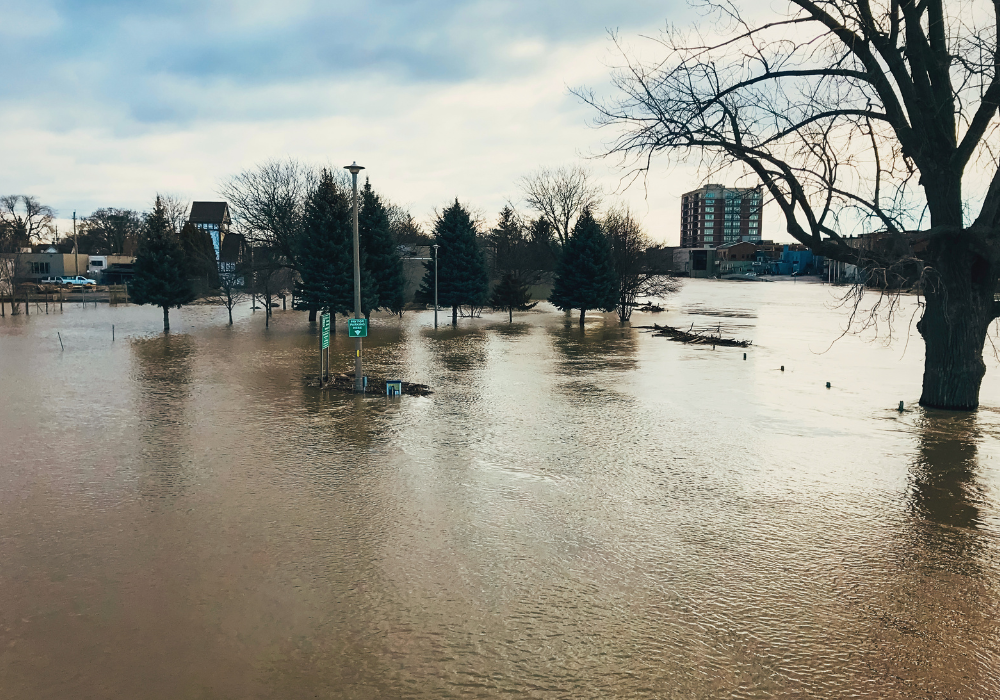
The year 2024 stands out as a watershed moment in Canadian climate history. Total insured losses reached a staggering $9.2 billion, driven by a series of catastrophic events that spanned the country. The devastating wildfire in Jasper, Alberta, which decimated significant portions of the historic townsite, was compounded by record-breaking flooding across Toronto, southern Ontario, and Quebec. These events served as a proof of concept for the "worst-case scenarios" climate scientists had long predicted.
Crucially, Bakos noted that insured losses are only the tip of the iceberg. The Intact Centre’s research indicates that for every $1 in insured property damage, there are typically $3 to $4 in uninsured losses borne by governments, businesses, and private individuals. These "hidden costs" include the destruction of public infrastructure, lost economic productivity, and the long-term erosion of the tax base in affected municipalities.
The Municipal Frontline and the Burden of Responsibility
While federal and provincial governments debate policy frameworks, Canada’s municipalities are currently bearing the brunt of the climate crisis. Carole Saab, CEO of the Federation of Canadian Municipalities (FCM), which represents over 2,000 local and Indigenous governments, described a state of perpetual emergency for many communities.
Saab emphasized that climate change is no longer a future threat for local leaders; it is a daily operational reality. Municipalities are now tasked with managing complex evacuations, protecting aging drinking water systems from contamination, and operating emergency shelters during extreme heat or cold events. These responsibilities are stretching local budgets to the breaking point.
The FCM is currently urging the federal government to allocate at least $2 billion annually specifically for local resilience building. While Saab acknowledged that even this figure is likely insufficient to meet the total need, it would provide a necessary foundation for long-term planning. The federation’s primary concern is that the pace of climate change is outstripping the design specifications of existing infrastructure and the speed of current funding cycles.
One of the most contentious issues raised by Saab is the continued development of floodplains. In the rush to address the affordable housing crisis, many jurisdictions are ignoring the long-term risks of building in low-lying areas. Saab argued that solving the housing shortage by creating "uninsurable" homes is a counterproductive strategy that will only result in future humanitarian and financial crises.
Legislative Outlook and Committee Perspectives
The federal government’s internal response is currently being shaped by the Commons Committee on Environment and Sustainable Development. Liberal MP Shannon Miedema, who chairs the committee and recently represented Halifax, brought a local perspective to the national stage. Having worked on Halifax’s municipal climate plan prior to her election, Miedema highlighted the necessity of radical collaboration.
Miedema noted that her committee is set to release a comprehensive report on adaptation in the near future. Her core message echoed the sentiment of the Intact Centre session: adaptation efforts fail when they are siloed. She argued that the federal government must act as a convener, bringing together private sector investors, municipal planners, and provincial regulators to ensure that every dollar spent on infrastructure is a "resilient dollar."
Strategic Recommendations for a Resilient Future
Blair Feltmate, head of the Intact Centre, outlined a series of cost-effective measures that could be implemented immediately to "bend the curve" of rising disaster costs. He called for a comprehensive "National Home Flood and Wildfire Preparedness Campaign" that moves beyond awareness and into the realm of incentivized action.
Key recommendations from the Intact Centre include:
- A Moratorium on Floodplain Development: Strictly prohibiting the construction of new housing on current or projected river and coastal floodplains.
- Property-Level Resilience Incentives: Implementing tax breaks, subsidies, and grants for homeowners who perform climate retrofits, such as installing backwater valves or using fire-resistant roofing materials.
- Financial Sector Integration: Training real estate brokers, mortgage providers, and property appraisers to recognize and value resilience upgrades, ensuring that climate-proofed homes command a premium in the market.
- Natural Infrastructure Investment: Prioritizing the restoration of wetlands and the creation of "sponge cities" to manage stormwater naturally rather than relying solely on traditional concrete sewers.
Broader Economic and Social Implications
The implications of failing to adopt a national adaptation strategy extend far beyond property damage. The Intact Centre has begun tracking the longitudinal health impacts of climate disasters on Canadians. Preliminary findings show a marked increase in prescriptions for anti-anxiety medications, a surge in the need for mental health counseling, and significant lost work time in communities hit by major fires or floods.
From an economic perspective, the failure to adapt threatens Canada’s long-term fiscal stability. As disaster costs rise, the "uninsured" portion of the bill increasingly falls to the federal and provincial treasuries. This creates a cycle of reactive spending where "emergency relief" replaces "strategic investment."
The consensus among the experts convened in Ottawa is clear: Canada cannot afford to treat adaptation as a luxury. As the Carney government continues its massive infrastructure push, the integration of climate resilience must move from the margins of policy to the center of the national economic strategy. Investing in protection today is the only way to ensure that the housing and infrastructure of tomorrow remain standing in the face of an increasingly volatile climate. Without a rapid, well-funded, and coordinated National Adaptation Strategy, the very foundations of Canadian prosperity remain at risk.
