

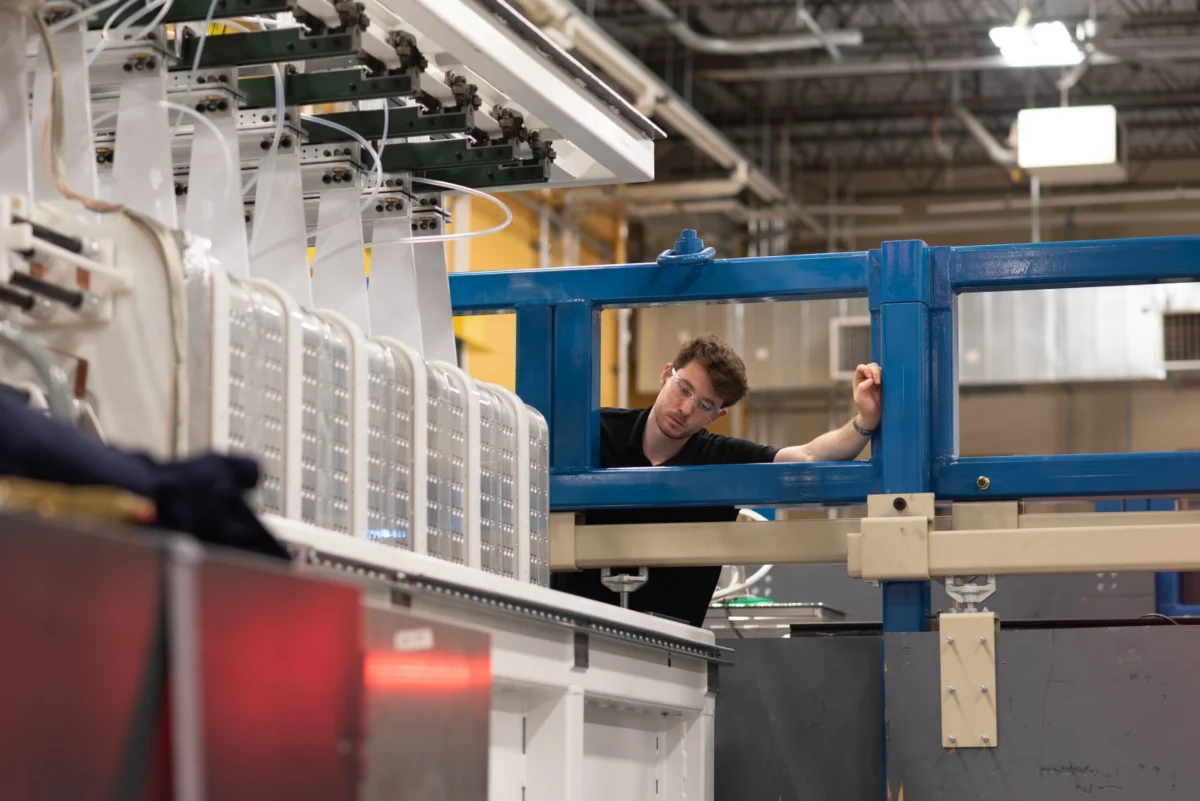
The pursuit of clean, limitless energy reached a significant milestone this week as Xcimer Energy, a California-based fusion startup, announced the successful activation of its Phoenix laser system. Positioned as the largest privately owned laser system in the world, Phoenix represents a critical pivot in the global effort to transition fusion energy from a theoretical scientific pursuit into a viable commercial reality. By successfully "flipping the switch" on this massive infrastructure, Xcimer has moved beyond the conceptual phase, entering a rigorous testing period intended to prove that its unique approach to inertial confinement fusion can overcome the economic and engineering hurdles that have historically stalled the industry.
The activation of Phoenix is not merely a technical achievement for a single company; it is a signal to the broader energy sector that the race for fusion is accelerating within the private sphere. While government-funded laboratories have long dominated the field, Xcimer’s latest development highlights a growing trend of venture-backed startups attempting to refine and scale the breakthroughs achieved by public institutions. The Phoenix system, with its 38-meter core, is designed to validate the physics of excimer laser amplification—a technology that Xcimer believes will be the key to producing more energy from a fusion reaction than the system consumes, a threshold known as "ignition."
The Scientific Foundation: Learning from the National Ignition Facility
To understand the significance of Xcimer’s Phoenix system, one must look toward the National Ignition Facility (NIF) at the Lawrence Livermore National Laboratory. In December 2022, the NIF achieved a historic breakthrough by producing a fusion reaction that yielded more energy than the laser energy used to spark it. This "net energy gain" was a proof of concept for inertial confinement fusion (ICF), the method of using high-powered lasers to compress a fuel target—typically a mixture of deuterium and tritium—until the atoms fuse.
The NIF’s approach involves 192 individual laser beams focused onto a tiny gold cylinder called a hohlraum, which contains the fuel pellet. When the lasers strike the gold, they create a "bath" of X-rays that causes the fuel pellet to implode at incredible speeds. While scientifically successful, the NIF system is widely regarded as too complex and expensive for commercial use. It relies on solid-state glass lasers that take hours to cool down between shots, making it impossible to achieve the rapid-fire repetition required for a power plant.
Xcimer Energy’s strategy is to simplify and scale this process. Rather than using the complex, multi-beam architecture of the NIF, Xcimer is betting on fewer, more powerful laser pulses. By streamlining the delivery of energy to the fuel target, the company aims to reduce the capital costs of a fusion plant while increasing the frequency of the reactions. The Phoenix system serves as the primary testbed for this streamlined architecture, focusing on the efficiency of the laser medium and the speed of compression.
Technical Specifications: The Power of Excimer Amplification
The "Phoenix" system utilizes a technology known as excimer amplification. The term "excimer" is a contraction of "excited dimer," referring to the short-lived dimeric or heterodimeric molecules used as the lasing medium. In Xcimer’s case, the system employs a krypton-fluoride (KrF) gas laser. While excimer lasers are common in industrial applications—such as the manufacturing of semiconductors and LASIK eye surgery—the scale of the Phoenix system is unprecedented in the private sector.
At its current stage, the Phoenix laser generates over 1 kilojoule of energy. While 1 kilojoule is a substantial amount of power for a private laboratory, it is only a precursor to the requirements of a commercial-scale facility. Xcimer’s internal projections suggest that a functional power plant will require an energy output exceeding 12 megajoules—a factor of 12,000 times greater than the current output of the Phoenix prototype.
The physical dimensions of the Phoenix system are equally impressive. The laser core stretches 38 meters, a length necessary to facilitate the amplification of light through the gas medium. The company’s design calls for two primary lasers that fire in microsecond-long pulses. These pulses are then fed through a sophisticated compression system that "squeezes" the light, delivering the total energy to the fuel target in a matter of nanoseconds. This rapid delivery is essential; the faster the fuel is compressed, the more likely the atoms are to overcome their natural electromagnetic repulsion and fuse, releasing a burst of kinetic energy.
A Strategic Timeline: From Prototype to Commercial Grid
The activation of the Phoenix system is the first major milestone in a decade-long roadmap outlined by Xcimer Energy. The company has structured its development into three distinct phases:
- Phase I: The Phoenix Testbed (2024–2027): This current phase focuses on validating the KrF laser technology and the pulse compression system. Engineers will use Phoenix to refine the "gain" of the laser—ensuring that the amplification process is stable and repeatable.
- Phase II: The Integrated Prototype (2028–2032): Following the success of Phoenix, Xcimer plans to construct a larger, integrated prototype. This system is intended to achieve "breakeven" or "net gain," demonstrating that the company’s specific laser architecture can produce a self-sustaining fusion reaction on a scale that could support electricity generation.
- Phase III: Commercial Scale Deployment (Mid-2030s): The final goal is the construction of the first commercial fusion power plant. Xcimer anticipates that by the mid-2030s, the engineering challenges of heat extraction and fuel pellet injection will be solved, allowing the plant to provide carbon-free baseload power to the grid.
This timeline is ambitious but reflects the growing urgency within the energy sector to find alternatives to fossil fuels. The mid-2030s target aligns with various international climate goals, including the push for net-zero emissions by 2050.
Economic and Industrial Implications
The move toward larger, less complex lasers is a calculated economic decision. One of the primary criticisms of fusion energy has been its projected cost. Traditional designs, such as the Tokamak (which uses magnetic fields to contain plasma), require massive superconducting magnets and complex cooling systems. By contrast, Xcimer’s laser-driven approach could potentially use simpler materials.
A key component of Xcimer’s long-term plan involves the use of "molten salt waterfalls" inside the reaction chamber. These waterfalls of liquid salt would serve a dual purpose: they would protect the structural walls of the reactor from the high-energy neutrons released during fusion, and they would absorb the heat of the reaction. This heat would then be used to boil water, driving a conventional steam turbine to generate electricity. This integration of fusion technology with established steam-cycle power generation is seen as a way to lower the barrier to entry for utility companies.
Industry analysts suggest that if Xcimer can prove the efficiency of its KrF laser system, it could significantly reduce the "Levelized Cost of Energy" (LCOE) for fusion. Currently, the LCOE for fusion is non-existent because no commercial plants exist, but early estimates for other designs have often exceeded the cost of solar, wind, and even traditional nuclear fission. Xcimer’s focus on industrial-scale, high-power lasers aims to bring those costs down to competitive levels.
Reactions and the Broader Fusion Landscape
The activation of Phoenix has drawn attention from both the scientific community and private investors. While Xcimer has not released formal statements from external partners regarding this specific "switch-flip," the broader sentiment in the fusion industry is one of cautious optimism. The Department of Energy (DOE) has increasingly supported private-public partnerships through programs like the Milestone-Based Fusion Development Program, which provides funding to companies that hit specific technical targets.
Xcimer is competing in a crowded field of well-funded startups. Companies like Commonwealth Fusion Systems (CFS), Helion Energy, and TAE Technologies are all pursuing different pathways to the same goal. CFS is focusing on high-temperature superconducting magnets, while Helion is working on a non-thermal approach to fusion. Xcimer’s reliance on laser-driven inertial confinement sets it apart, positioning it as the primary private-sector heir to the research performed at the NIF.
The primary challenge remaining for Xcimer—and for the industry at large—is the "engineering gap." While the physics of fusion have been proven at the NIF, the engineering required to run a plant 24/7 is a different matter. A commercial plant would need to ignite several fuel pellets every second, a massive leap from the NIF’s current rate of roughly one shot per day.
Conclusion: A Step Toward Energy Independence
The activation of the Phoenix laser system marks a definitive transition for Xcimer Energy from a design-heavy startup to a hardware-testing powerhouse. By building the world’s largest private laser, the company has created the infrastructure necessary to challenge the status quo of energy production.
As Phoenix begins its series of test fires, the data collected will be vital for the next generation of fusion scientists. If Xcimer can bridge the gap between its 1-kilojoule prototype and the 12-megajoule requirement for a commercial plant, the mid-2030s could see the dawn of a new era in energy. For now, the successful operation of the 38-meter Phoenix core stands as a testament to the scale of human ambition in the face of the global climate crisis. The journey to a fusion-powered future is long, but with the activation of Phoenix, the path has become considerably clearer.
