

The global wearable technology market has witnessed a significant shift toward premium materials and specialized utility, a trend exemplified by the release of the Amazfit Cheetah 2 Pro. Positioned as a high-performance successor to the 2024 Amazfit Cheetah, this latest iteration represents a strategic pivot for Zepp Health, the parent company of Amazfit. By transitioning from the enthusiast-level plastic builds of previous generations to a more robust titanium and sapphire glass construction, the Cheetah 2 Pro seeks to compete directly with established industry leaders such as Garmin and Coros. Priced at $449.99, the device enters a crowded mid-to-high-tier market, offering a blend of endurance-focused features and everyday smartwatch utility.
The Evolution of the Cheetah Series: A Two-Year Chronology
The trajectory of the Cheetah line reflects the broader maturation of the Amazfit brand. In 2024, the original Amazfit Cheetah was launched as a focused, lightweight tool for runners, emphasizing GPS accuracy and affordable pricing. While successful, that model was often criticized for its utilitarian aesthetic and plastic-heavy design. By 2026, Zepp Health responded to consumer demand for "lifestyle-integrated" sports watches—devices that are rugged enough for ultramarathons but elegant enough for professional environments.
The Cheetah 2 Pro arrives two years after its predecessor, doubling down on durability. The introduction of a titanium alloy bezel and sapphire crystal glass serves a dual purpose: increasing the watch’s resistance to environmental hazards and elevating its status in the premium wearable segment. This chronological progression suggests a move away from the high-volume, low-margin strategy that defined Amazfit’s early years, focusing instead on long-term value and hardware longevity.
Technical Specifications and Hardware Performance
At the core of the Cheetah 2 Pro is a suite of hardware upgrades designed to maximize battery life and sensor precision. The device is powered by a 540 mAh high-capacity battery, which represents a significant jump over the previous generation. In standard operation modes, including intermittent activity tracking, the watch is capable of maintaining a 14-day charge cycle. For endurance athletes, the most critical metric is GPS battery life; the Cheetah 2 Pro offers up to 31 hours of continuous dual-band, multi-frequency GPS tracking.
The display utilizes a high-definition AMOLED panel protected by sapphire glass, ensuring visibility in direct sunlight—a critical requirement for golfers and runners alike. The 43mm chassis is notably lightweight despite its titanium components, a design choice intended to ensure comfort during 24/7 wear, including sleep tracking. Furthermore, the inclusion of a dedicated microphone and speaker allows for Bluetooth telephony and voice assistant integration, features often omitted in pure "sports" watches.
Integrated Utility: The Emergence of the Wrist-Based Flashlight
One of the standout hardware features of the Cheetah 2 Pro is the integrated LED flashlight. While once considered a niche addition, dedicated physical flashlights have become a staple in the 2025-2026 wearable market. The Cheetah 2 Pro improves upon this concept by offering both white and red light modes.
The inclusion of red light functionality is specifically aimed at two demographics: outdoor enthusiasts who need to preserve night vision and pet owners navigating low-light environments. Beyond simple illumination, Zepp Health has integrated the flashlight into its safety ecosystem. Through the "Safety Light" settings, users can customize the LED to flash in specific patterns during nighttime workouts. This serves as a passive safety measure, increasing the visibility of runners or cyclists to motorists. This level of hardware-software integration reflects a growing industry focus on "active safety" features for solo athletes.
Specialized Activity Tracking: From the Track to the Green
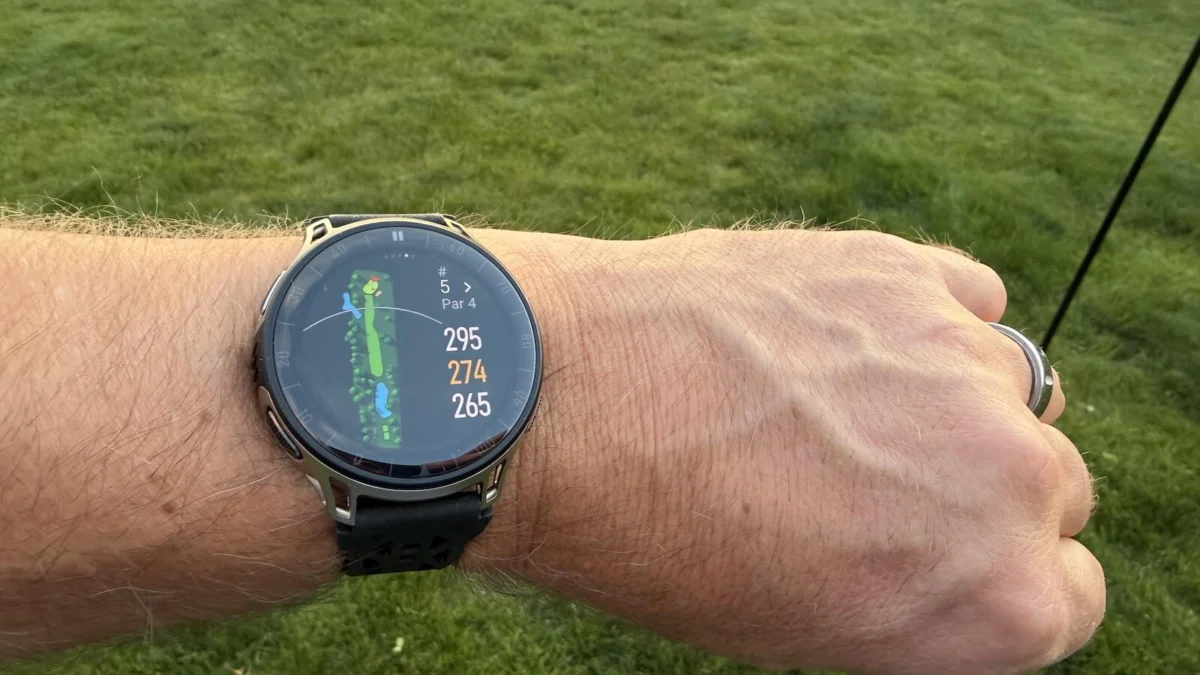
While the "Cheetah" moniker implies a focus on speed and running, the Cheetah 2 Pro supports over 170 distinct activity modes. Significant development resources have been allocated to the golf interface, a sport where Amazfit has historically lagged behind Garmin’s specialized Approach series.
The 2026 firmware updates have introduced several sophisticated golfing tools:
- Hazard and Target Mapping: Quick-swipe gestures allow players to view distances to bunkers, water hazards, and lay-up targets.
- Dynamic Green View: The map view automatically adjusts and zooms as the golfer approaches the green, providing more accurate pin positioning.
- Manual Shot Tracking: An intuitive interface for entering shot data allows for post-round analysis of club distances and accuracy.
For runners, the watch remains a powerhouse. It supports advanced training platforms such as TrainingPeaks and Runna, allowing for seamless synchronization of professional training plans. The "Zepp Coach" feature utilizes artificial intelligence to analyze recovery metrics and heart rate variability (HRV), adjusting the intensity of suggested workouts in real-time. This prevents overtraining, particularly for athletes recovering from injuries, such as hip or joint issues, where load management is critical.

Navigation and Geospatial Accuracy
Geospatial tracking remains the most vital component of any pro-level sports watch. The Cheetah 2 Pro utilizes dual-band (L1 and L5) circular-polarized GPS antenna technology. This system is designed to reduce multi-path interference, which often occurs in "urban canyons" with tall buildings or in dense forests.
Testing data indicates that the Cheetah 2 Pro maintains a signal lock significantly faster than its predecessors. The watch also supports offline map downloads and turn-by-turn navigation. This ensures that hikers and trail runners can navigate remote areas without a cellular connection, utilizing the "Breadcrumb" feature to return to their starting point.
The Zepp OS Ecosystem and AI Integration
The software experience is centered around Zepp OS, which has evolved into a highly customizable platform. The "Zepp Flow" feature provides offline voice control, allowing users to initiate workouts or check weather data without physical interaction. This is particularly useful in cold weather when users may be wearing gloves.
However, the ecosystem also includes a tiered service model. The "Zepp Aura" subscription service, priced at approximately $70 per year, offers an advanced layer of biometric analysis. Subscribed users receive:
- Weekly Sleep Health Assessments: Detailed breakdowns of sleep stages and respiratory quality.
- AI-Driven Performance Analysis: Predictive modeling for race times based on current fitness levels.
- Premium Content: A library of relaxation and focus-enhancing audio content.
While the core metrics remain free, the move toward a subscription-based "wellness-as-a-service" model reflects a broader trend in the tech industry, where hardware sales are supplemented by recurring software revenue.
Market Implications and Competitive Analysis
The release of the Cheetah 2 Pro at the $449.99 price point places it in direct competition with the Garmin Forerunner 570 and the Coros Apex 4. Historically, Garmin has held the advantage in ecosystem depth and mapping, while Coros has been favored for battery life and simplicity.
Amazfit’s strategy with the Cheetah 2 Pro appears to be a "middle path." It offers more premium materials (titanium and sapphire) than the entry-level Garmin Forerunners at a similar price, while providing a more vibrant AMOLED display than many of Coros’s endurance-focused models.
Industry analysts suggest that Amazfit’s aggressive feature-set—including the LED flashlight and AI coaching—is designed to lure "prosumer" athletes who want the aesthetics of a high-end luxury watch without the $800+ price tag associated with the Garmin Fenix or Epix series. The Cheetah 2 Pro successfully bridges the gap between a dedicated sports tool and a lifestyle accessory.
Official Response and Future Outlook
While Zepp Health has not issued a formal statement regarding the specific sales targets for the Cheetah 2 Pro, company executives have previously highlighted their commitment to "democratizing professional health monitoring." The integration of advanced sensors and AI-driven insights into a sub-$500 device is a clear execution of that mission.
Looking forward, the success of the Cheetah 2 Pro will likely depend on the continued refinement of the Zepp app. While the app is praised for its depth of data, some users find the interface overwhelming. Ongoing updates are expected to streamline the user experience, making the vast amount of collected data more actionable for the average fitness enthusiast.
In conclusion, the Amazfit Cheetah 2 Pro is a testament to the rapid pace of innovation in the wearable sector. By combining premium build quality with specialized features like the dual-mode flashlight and enhanced golf tracking, Amazfit has moved beyond its "budget-friendly" roots. The device stands as a formidable option for athletes who require a high degree of accuracy and durability, but who also value the elegance of a titanium timepiece. As the brand continues to expand its presence in the Western market, the Cheetah 2 Pro will serve as a benchmark for its ability to compete at the highest levels of the industry.
