

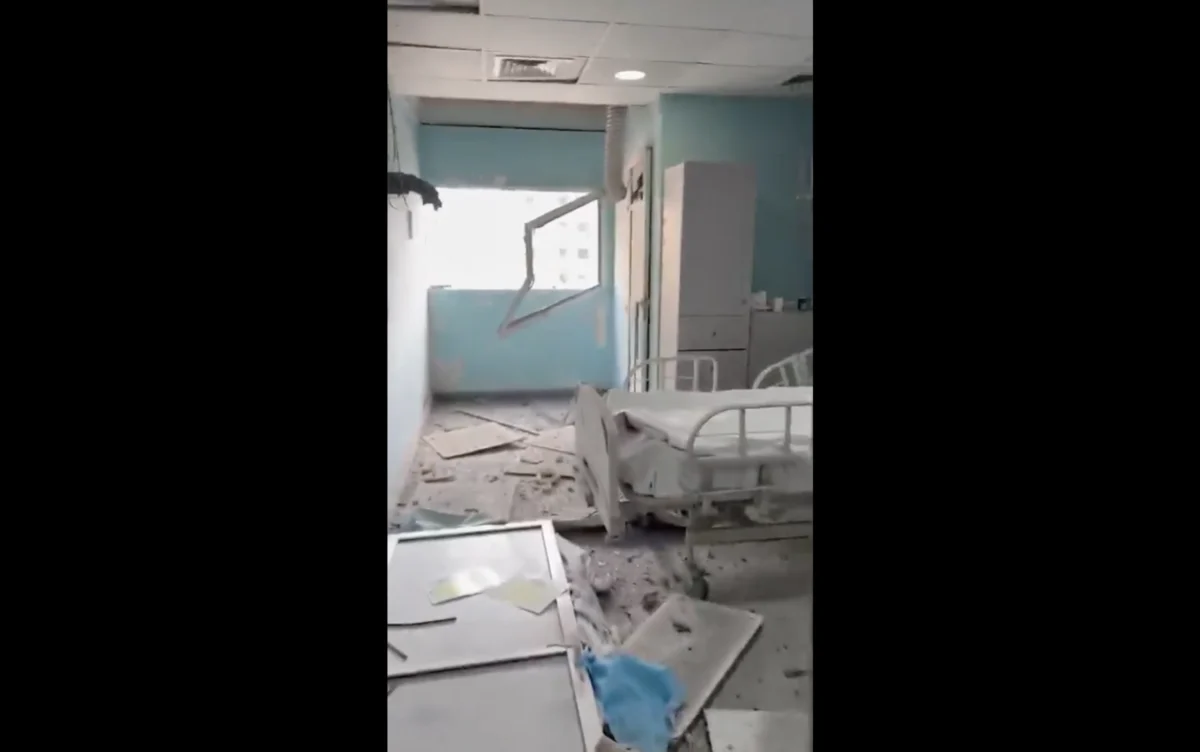
An Israeli military strike near the Jabal Amel Hospital in Tyre, southern Lebanon, on June 1, 2026, has resulted in significant damage to multiple wards and critical medical equipment, according to initial reports from local authorities and hospital administration. The incident marks a severe escalation in the ongoing cross-border hostilities, which have seen an increasing intensity of Israeli operations targeting southern Lebanon and, notably, also extending to the capital city of Beirut. This development raises profound concerns regarding the protection of civilian infrastructure, particularly healthcare facilities, under international humanitarian law, and threatens to exacerbate an already fragile humanitarian situation in the region.
The precise circumstances leading to the strike remain under investigation, but eyewitness accounts and preliminary assessments indicate that the impact occurred in close proximity to the hospital, causing extensive structural damage to several wings and rendering vital medical apparatus inoperable. The Jabal Amel Hospital, a crucial healthcare provider in the Tyre district, serves a significant population, including internally displaced persons and vulnerable communities. Its operational capacity has been severely compromised, potentially leaving thousands without immediate access to essential medical care. No immediate casualty figures among patients or staff were reported from within the hospital itself, but the psychological impact on those present during the attack is expected to be profound.
Background of Heightened Tensions
The strike on June 1, 2026, unfolds against a backdrop of persistently escalating tensions between Israel and various armed factions in Lebanon, primarily Hezbollah. Southern Lebanon has long been a flashpoint in the broader Israeli-Lebanese conflict, characterized by intermittent cross-border skirmishes and more substantial military engagements. Over recent months, there has been a discernible uptick in military activities from both sides, with Israel citing security concerns related to the presence and alleged activities of militant groups along its northern border. Lebanese authorities, conversely, have consistently condemned what they describe as Israeli violations of their sovereignty and international law.
This current wave of escalation has seen Israeli forces conducting aerial bombardments and artillery strikes deep into Lebanese territory, often targeting what they identify as militant infrastructure. However, the scope of these operations has recently expanded, with reports indicating strikes closer to urban centers and, critically, near civilian installations. The mention of attacks reaching Beirut in the initial reports underscores a broadening of the conflict’s geographical reach, signaling a dangerous new phase that carries significant risks of wider regional destabilization. The motivations behind this intensification are complex, rooted in long-standing grievances, security dilemmas, and evolving geopolitical dynamics in the Middle East.
Chronology of the Incident and Immediate Aftermath
The incident at Jabal Amel Hospital occurred in the early hours of June 1, 2026. Local residents reported hearing several loud explosions in quick succession, followed by the immediate deployment of emergency services to the vicinity of the hospital. While the specific trajectory and nature of the ordnance are still being determined, the resulting damage suggests a powerful impact.
- Pre-dawn, June 1, 2026: Reports of heightened aerial activity over southern Lebanon.
- Early Morning, June 1, 2026: Residents in Tyre report multiple explosions.
- Immediately Post-Strike: Hospital staff initiate emergency protocols, evacuating critical patients to safer areas within the facility or preparing for transfer to other hospitals, if feasible. Damage assessment teams from local civil defense and the Lebanese Ministry of Health begin their work, documenting the destruction.
- Throughout June 1, 2026: International humanitarian organizations and the United Nations Interim Force in Lebanon (UNIFIL) are notified and begin to assess the situation and potential humanitarian needs. Lebanese government officials prepare statements condemning the attack and calling for an international investigation.
The immediate aftermath saw scenes of chaos and apprehension, as hospital personnel scrambled to ensure the safety of patients, many of whom were already in critical condition. The destruction of wards, including what are believed to be specialized treatment areas and intensive care units, means that the hospital’s ability to handle new emergencies or continue existing treatments is severely hampered. Furthermore, the loss of diagnostic equipment, surgical tools, and pharmaceutical supplies poses a direct threat to public health in the region.
The Humanitarian Toll and Impact on Healthcare
The targeting of or damage to healthcare facilities in conflict zones carries severe humanitarian consequences. The Jabal Amel Hospital is a cornerstone of public health infrastructure in Tyre, providing a range of services from emergency care to specialized treatments. Its impairment means that:
- Reduced Capacity: The hospital’s ability to admit new patients or continue ongoing treatments for existing ones will be drastically reduced, if not entirely halted in affected areas. This places immense strain on other medical facilities in the region, which are often already operating at or near capacity.
- Loss of Essential Services: The destruction of medical equipment can range from basic diagnostic tools like X-ray machines to life-saving ventilators and surgical suites. The long-term impact on patient outcomes for chronic conditions, emergency trauma, and routine medical needs is substantial.
- Disruption of Supply Chains: Damage to storage facilities for medicines and medical supplies could lead to critical shortages, further hindering healthcare delivery.
- Psychological Impact: The staff and patients who experienced the strike will likely suffer significant psychological trauma. Healthcare workers, already under immense pressure, face increased risks and moral dilemmas.
- Exacerbated Vulnerabilities: The region hosts a significant number of refugees and internally displaced persons who are particularly reliant on public health services. This incident further compounds their vulnerability.
The Lebanese Ministry of Health is anticipated to issue a detailed report on the damage and its projected impact on healthcare access for the population of Tyre and its surrounding areas. Preliminary estimates suggest that restoring the hospital to full operational capacity could take months, if not longer, and require substantial international assistance.
International Law and Civilian Protection
Under international humanitarian law (IHL), specifically the Geneva Conventions and their Additional Protocols, medical facilities, personnel, and transport are granted special protection in armed conflicts. Attacks directed against hospitals are strictly prohibited unless they are being used, outside their humanitarian function, to commit acts harmful to the enemy. Even in such cases, warnings must be issued, and proportionality and precaution must be observed.
The strike near Jabal Amel Hospital immediately triggered calls from international bodies for a thorough and impartial investigation. The deliberate or indiscriminate targeting of civilian infrastructure, particularly healthcare facilities, can constitute a war crime. The United Nations and various human rights organizations are expected to emphasize the imperative for all parties to the conflict to uphold their obligations under IHL and ensure the protection of civilians and civilian objects. The incident serves as a stark reminder of the devastating consequences when these fundamental principles are disregarded.
Reactions and Calls for Accountability
The Lebanese government is expected to issue a strong condemnation of the Israeli strike, denouncing it as a flagrant violation of its sovereignty and international law. The Ministry of Foreign Affairs is likely to lodge a formal complaint with the United Nations Security Council, demanding an immediate cessation of hostilities and an investigation into the incident. Health officials are anticipated to appeal for urgent international humanitarian aid to assist in the recovery and rebuilding efforts.
While Israeli officials had not issued an immediate direct comment specifically on the Jabal Amel Hospital incident as of the latest reports, their customary response to such allegations typically involves asserting the right to self-defense, targeting what they claim are legitimate military objectives, and often stating that any civilian casualties or damage are unintended and regrettable, or that militant groups operate from within civilian areas. The Israel Defense Forces (IDF) often claim to take precautions to avoid civilian harm, placing the blame on adversaries for operating within civilian populations.
The United Nations Secretary-General, along with the head of UNIFIL, is expected to express grave concern over the escalation and specifically the damage to a healthcare facility. Calls for de-escalation, adherence to international humanitarian law, and respect for the Blue Line are anticipated. Humanitarian organizations such as the International Committee of the Red Cross (ICRC) and Doctors Without Borders (MSF) are likely to reiterate the sanctity of medical missions and the need for unimpeded access to aid those affected. Regional powers and international allies are also expected to weigh in, with many calling for restraint and a return to diplomatic efforts to prevent further deterioration of the security situation.
A History of Tensions in Southern Lebanon
The history of southern Lebanon is inextricably linked to the broader Arab-Israeli conflict. Since the 1970s, the region has been a battleground, witnessing multiple Israeli invasions, occupations, and ongoing skirmishes. The presence of various Palestinian factions and, more prominently since the 1980s, Hezbollah, has often drawn Israeli military responses. The 2006 Lebanon War, which saw extensive Israeli bombardment and a ground invasion, left vast swathes of southern Lebanon in ruins and led to the deployment of UNIFIL under UNSCR 1701 to monitor the cessation of hostilities and assist the Lebanese Armed Forces.
Despite UNIFIL’s presence, sporadic cross-border incidents have continued, often involving rocket fire from Lebanon into Israel and retaliatory Israeli strikes. The current escalation, however, appears to be more widespread and intense than many of the localized flare-ups witnessed in recent years, hinting at a potentially more significant shift in the regional security landscape. The expansion of Israeli strikes to Beirut, as mentioned in the initial report, suggests a strategic broadening of targets, potentially indicating a move to pressure the Lebanese government or Hezbollah more directly.
Regional Implications and Calls for De-escalation
The strike on Jabal Amel Hospital carries profound regional implications. It risks further destabilizing a Lebanese state already grappling with a severe economic crisis, political paralysis, and the immense burden of hosting a large refugee population. An intensified conflict could trigger new waves of displacement, both internally and across borders, adding to the humanitarian crises in the Levant.
Politically, the incident places immense pressure on the Lebanese government to respond, potentially fueling domestic discontent and calls for stronger action against Israeli incursions. It also complicates regional diplomatic efforts aimed at reducing tensions and finding pathways to stability. For Israel, such strikes, particularly those affecting civilian infrastructure, can lead to international condemnation and potentially undermine its stated security objectives by alienating international allies and further entrenching animosity.
There is an urgent need for all parties to exercise maximum restraint and de-escalate the situation. International diplomatic channels, including the United Nations, will likely intensify their efforts to mediate and prevent a full-scale regional conflict. The protection of civilians and critical infrastructure, especially healthcare facilities, must remain paramount, and adherence to international humanitarian law is non-negotiable. The long-term stability of the Middle East hinges on respecting these fundamental principles and finding sustainable political solutions to underlying grievances, rather than resorting to military escalation that disproportionately impacts civilian lives. The damage to Jabal Amel Hospital serves as a stark and tragic reminder of the human cost of unchecked conflict.
