

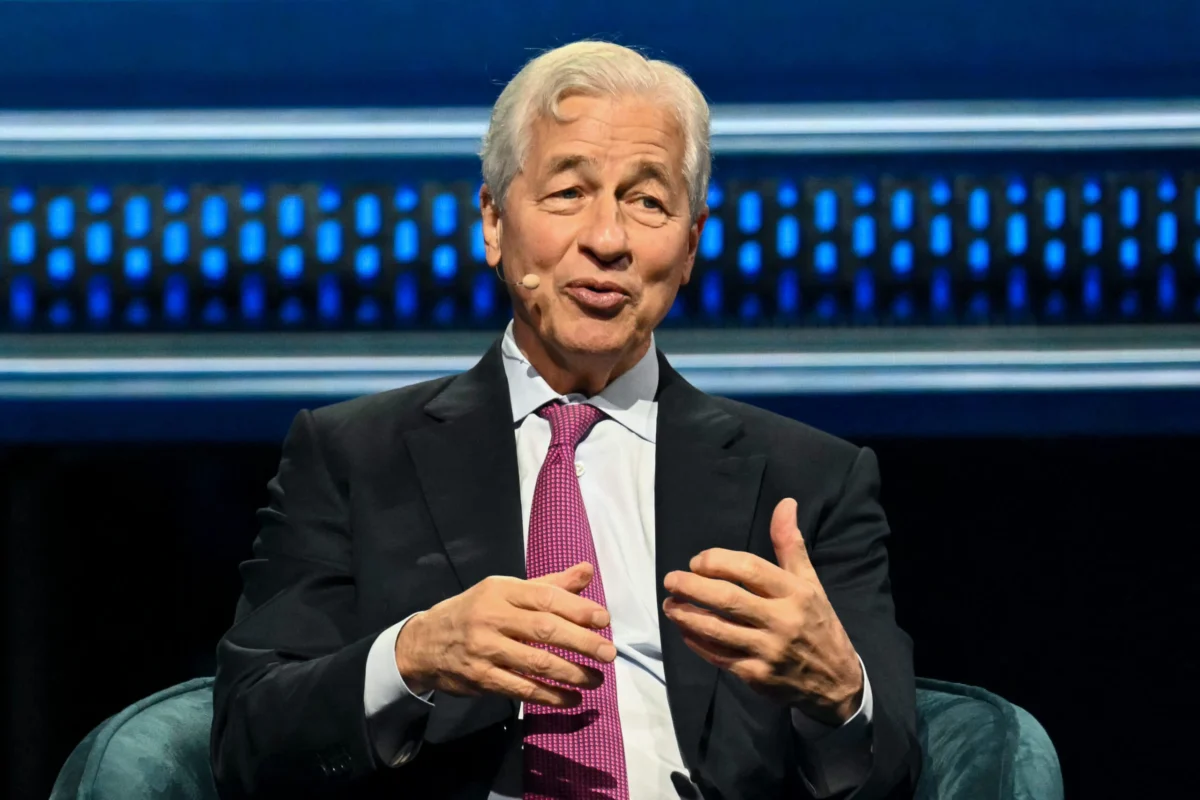
JPMorgan Chase CEO Jamie Dimon indicated on Wednesday that the financial behemoth could allocate up to $20 billion for a strategic acquisition in the coming years, a move that would represent the largest such transaction during his two-decade tenure at the helm of the nation’s largest bank. Speaking to analysts at a New York financial conference, Dimon underscored the bank’s readiness to seize opportunities, stating, "I do think there might be opportunities, and so we are on the lookout. There might be, in the next couple years, a chance to put $10 [billion] or $20 billion to work buying something." This potential investment would not only reshape JPMorgan’s already vast operations but also serve as a significant test of regulators’ evolving appetite for further consolidation among the largest U.S. financial institutions.
Dimon’s Strategic Philosophy: Organic Growth First, M&A as a Supplement
Despite the considerable sum mentioned, Dimon was quick to frame acquisitions as a strategic tool of last resort rather than a primary driver of growth. His remarks highlighted a deep-seated philosophy within JPMorgan Chase that prioritizes robust organic expansion over inorganic means. He cautioned against corporate leaders who lean too heavily on dealmaking to mask underlying deficiencies in organic business development. "You sit around a lot of management meetings, the first thing they do when they’re not doing well in organic growth is they start to bulls–t about [mergers and acquisitions]," Dimon asserted, mincing no words. "I don’t want to hear about M&A… What are you doing to grow your business – sales, branches, tech, profits, products, services?"
This perspective reinforces JPMorgan’s long-standing commitment to nurturing its existing franchises through internal investment, innovation, and customer-centric strategies. For any potential takeover target, Dimon outlined stringent criteria: seamless integration into JPMorgan’s existing operations, alignment with the bank’s deeply ingrained corporate culture, and a clear capacity to enhance core businesses rather than operating as a disconnected, standalone unit. "It can’t be just a pie-in-the-sky type of thing," he emphasized, signaling a highly disciplined and pragmatic approach to potential dealmaking. The overarching message is clear: M&A, for JPMorgan, is about strategic enhancement and filling specific gaps, not about chasing fleeting trends or compensating for a lack of internal vitality.
A History of Opportunistic Acquisitions: Crisis-Era Expansion
JPMorgan Chase, under Jamie Dimon’s leadership, has predominantly pursued organic growth in recent years. However, its M&A history is marked by several high-profile, often crisis-driven, acquisitions that have profoundly shaped its current stature. These deals, characterized by their strategic timing and frequently facilitated by regulatory intervention, underscore the bank’s capacity to act decisively during periods of market turmoil.
The most prominent examples include:
- Bear Stearns (2008): In March 2008, amidst the burgeoning financial crisis, JPMorgan Chase acquired the ailing investment bank Bear Stearns for a mere $2 per share (later revised to $10), a deal brokered by the Federal Reserve to prevent a systemic collapse. This acquisition significantly bolstered JPMorgan’s investment banking capabilities and proprietary trading desk, integrating a major Wall Street player into its diversified operations. The deal was a pivotal moment, showcasing Dimon’s willingness to step in when others hesitated, albeit with substantial government backing.
- Washington Mutual (2008): Just six months later, in September 2008, JPMorgan Chase acquired the banking operations of Washington Mutual (WaMu) from the FDIC for $1.9 billion, marking the largest bank failure in U.S. history. This move massively expanded JPMorgan’s retail banking footprint, particularly on the West Coast, adding over 2,200 branches and millions of new customers. Similar to Bear Stearns, this was an FDIC-assisted acquisition of a distressed entity, further solidifying JPMorgan’s position as a dominant force in consumer banking.
- First Republic Bank (2023): The most recent example occurred in May 2023, when JPMorgan Chase again stepped in to acquire the substantial majority of First Republic Bank’s assets in an FDIC-assisted transaction. This deal, for which JPMorgan made a $10.6 billion payment to the regulator, came amid a regional banking crisis triggered by the failures of Silicon Valley Bank and Signature Bank. The acquisition, which included approximately $173 billion of loans, $30 billion of securities, and $92 billion of deposits, further demonstrated JPMorgan’s role as a consolidator of last resort, capable of absorbing large, distressed institutions with minimal market disruption.
Beyond these crisis-era mega-deals, JPMorgan has also engaged in a string of smaller, more targeted acquisitions, particularly in the burgeoning fintech sector. These included firms like WePay (a payments company) and InstaMed (healthcare payments). However, this strategy faced a notable setback with the 2021 acquisition of Frank, a college financial aid platform, for $175 million. The deal later unravelled when it was revealed that Frank’s reported user base was largely fabricated, leading to allegations of fraud and a legal battle, underscoring the due diligence challenges even for sophisticated acquirers in the fast-paced tech landscape. This experience likely informs Dimon’s current cautious stance and emphasis on thorough integration and cultural fit.
The Regulatory Gauntlet: A Stiff Test for Mega-Bank M&A
Any potential $20 billion acquisition by JPMorgan Chase would face intense scrutiny from U.S. financial regulators, who have maintained a cautious stance on large bank mergers, particularly since the 2008 financial crisis. The "too big to fail" doctrine and concerns about systemic risk, market concentration, and competitive impact remain central to their oversight.
Key regulatory bodies such as the Federal Reserve, the Office of the Comptroller of the Currency (OCC), and the Federal Deposit Insurance Corporation (FDIC) would all have a significant say. Their concerns typically revolve around:

- Systemic Risk: Whether combining two large entities creates a new, even larger institution whose failure could destabilize the entire financial system. Post-2008, regulations like Dodd-Frank aimed to mitigate this, and regulators are wary of any actions that could reverse these gains.
- Market Concentration: The potential for a merger to reduce competition in specific financial markets (e.g., lending, deposits, investment banking) to the detriment of consumers and smaller businesses.
- Financial Stability: Ensuring that the combined entity would be adequately capitalized, liquid, and manageable in terms of complexity.
- Consumer Protection: Assessing whether the merger would negatively impact access to banking services, pricing, or product offerings for various customer segments.
In recent years, the regulatory environment for bank mergers has tightened considerably. In July 2023, the Federal Reserve and the OCC, alongside the FDIC, proposed stricter guidelines for bank mergers, signaling a clear intent to elevate scrutiny. While these proposals primarily targeted smaller and mid-sized bank mergers for certain aspects, the underlying sentiment against unchecked consolidation, especially involving the largest institutions, is palpable. Regulators have expressed concerns about the pace of mergers and the potential for reduced competition. An acquisition of the magnitude Dimon suggested would undoubtedly test these boundaries and trigger a rigorous, potentially lengthy, review process. The implicit challenge in Dimon’s statement is a direct inquiry into how far regulators are willing to let the largest banks expand their already dominant market share.
JPMorgan’s Financial Prowess: The Capacity for a Mega-Deal
JPMorgan Chase stands as a financial colossus, possessing the capital and operational capacity to contemplate an acquisition of the scale Dimon mentioned. With assets exceeding $3.9 trillion as of late 2023, and a market capitalization consistently ranking among the world’s largest companies, the bank generates substantial profits annually, fueling its growth and enabling strategic investments.
In the first quarter of 2024, for instance, JPMorgan Chase reported net income of $13.4 billion, reflecting its diversified revenue streams across consumer and community banking, corporate and investment banking, asset and wealth management, and commercial banking. The bank maintains robust capital ratios, with its Common Equity Tier 1 (CET1) ratio typically well above regulatory minimums, providing a significant buffer for both organic growth and strategic acquisitions. Its strong liquidity position, underpinned by a massive deposit base, further enhances its financial flexibility. A $20 billion acquisition, while substantial, represents a manageable proportion of JPMorgan’s overall balance sheet and earnings power, especially if structured over time or financed through a combination of cash and equity. The bank’s ability to generate significant internal capital makes such an investment feasible, provided the strategic rationale and regulatory approvals align.
Potential Strategic Targets and Future Trajectory
Given Dimon’s strict criteria – enhancing core businesses, cultural fit, and seamless integration – the types of entities JPMorgan might target for a $10-$20 billion acquisition would likely fall into specific categories:
- Specialized Wealth Management Firms: To further bolster its already formidable asset and wealth management division, especially in high-growth or underserved client segments, or to acquire specialized talent and technology.
- Niche Lending Platforms or Investment Banks: Targets that offer unique capabilities in areas like middle-market lending, specific industry verticals, or particular regions where JPMorgan seeks to deepen its footprint, potentially avoiding direct overlap with its existing, broad-based corporate and investment bank.
- Advanced Fintech Companies with Proven Scale: While the Frank debacle highlights risks, JPMorgan remains keen on leveraging technology. A target with a demonstrated, scalable platform in areas like payments processing, blockchain applications, or AI-driven financial services, that could be integrated to enhance existing offerings, could be appealing. The emphasis would be on proven technology and a strong client base, mitigating "pie-in-the-sky" risks.
- International Expansion Opportunities: While challenging due to varying regulatory landscapes and cultural differences, an acquisition could accelerate JPMorgan’s presence in key strategic international markets, particularly in regions where it currently has a lighter footprint.
- Distressed Regional Banks (in a future crisis): While not actively sought, JPMorgan’s history suggests a willingness to act as a consolidator of last resort during periods of financial instability, especially if regulatory assistance and favorable terms are involved. This pattern is a significant part of their M&A DNA.
Any such acquisition would need to offer clear synergies, either through cost efficiencies, revenue enhancement, or technological advancement, directly contributing to JPMorgan’s core businesses. The overarching goal would be to strengthen existing franchises rather than venturing into entirely new, unproven territories.
Market Reactions and Broader Implications
Jamie Dimon’s remarks, while cautious, are likely to resonate across the financial industry. For investors, the prospect of a significant, well-executed acquisition could be viewed positively, signaling JPMorgan’s continued ambition and capacity for growth, potentially boosting shareholder value. However, concerns regarding integration risks, the premium paid, and the arduous regulatory approval process would also weigh on market sentiment. Analysts would meticulously scrutinize the strategic rationale and financial impact of any proposed deal.
More broadly, Dimon’s statement could reignite the debate about consolidation in the U.S. banking sector. If JPMorgan were to successfully execute a mega-acquisition, it could embolden other large banks to explore similar opportunities, potentially leading to a new wave of M&A activity, albeit one that would face intense regulatory headwinds. It also underscores the widening gap between the largest, most diversified financial institutions and smaller, regional players, highlighting the competitive pressures within the industry. The ongoing discussion about "too big to fail" and the optimal structure of the banking system would inevitably intensify, with implications for future policy decisions and the overall stability of the financial landscape.
In conclusion, Jamie Dimon’s candid disclosure reveals a JPMorgan Chase that, while committed to organic excellence, remains strategically alert to external growth opportunities. The potential for a $20 billion acquisition speaks to the bank’s immense financial strength and its leader’s long-term vision. However, the path to such a deal is fraught with significant regulatory hurdles and Dimon’s own stringent criteria for strategic fit and seamless integration. It signals a disciplined pursuit of value, where M&A is a carefully considered tactical instrument, not a primary engine of growth, ultimately seeking to enhance the formidable institution that JPMorgan Chase has become under his stewardship.
