

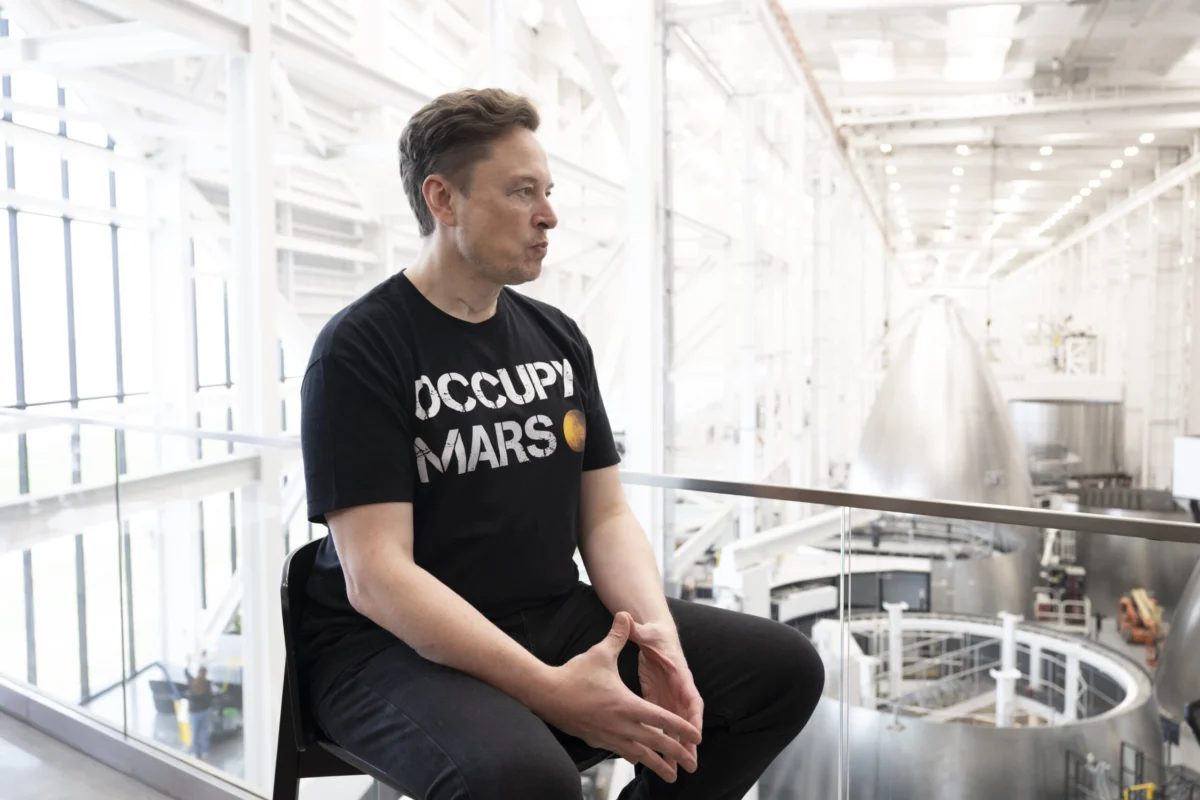
The multi-billion-dollar trajectory of Space Exploration Technologies Corp., better known as SpaceX, has hit a significant snag of uncertainty just days before the company is scheduled to begin its formal investor roadshow. Elon Musk, the company’s founder and Chief Executive Officer, has ignited a wave of confusion regarding the financial specifics of a major partnership with the artificial intelligence startup Anthropic. This development comes as SpaceX attempts to navigate the regulatory and financial complexities of what is expected to be the largest Initial Public Offering (IPO) in history, with a targeted valuation exceeding $1.25 trillion.
The discrepancy centers on a high-stakes agreement involving the leasing of compute capacity at SpaceX’s "Colossus 1" data center in Memphis, Tennessee. According to the formal S-1 registration statement filed with the Securities and Exchange Commission (SEC) last week, Anthropic had committed to a long-term arrangement, paying SpaceX approximately $1.25 billion per month through May 2029. However, in a series of late-night posts on the social media platform X—which is itself owned by Musk and integrated into the broader SpaceX corporate umbrella—Musk contradicted these figures, describing the arrangement as a "180-day lease" with a "90-day mutual cancellation" clause.
This contradiction has left prospective investors and legal analysts scrambling to determine the true nature of SpaceX’s revenue projections. If the S-1 filing is accurate, the Anthropic deal represents a staggering $15 billion in annual recurring revenue, a figure that would radically transform SpaceX’s financial profile. If Musk’s social media comments are the accurate reflection of the deal, the revenue is far more volatile and short-term than previously disclosed.
The Discrepancy in Financial Disclosures
The stakes for SpaceX’s financial transparency are uniquely high given the company’s recent transformation. In February 2024, Musk orchestrated a merger between SpaceX and his artificial intelligence venture, xAI. The merger valued xAI at $250 billion, contributing to the combined entity’s $1.25 trillion valuation. As part of this integration, SpaceX has pivoted toward becoming a "neocloud" provider, competing with firms like CoreWeave and Nebius by leasing out massive amounts of GPU-driven compute capacity.
The IPO prospectus filed last week was intended to provide a clear roadmap for this new business model. The document stated that Anthropic agreed to pay a "reduced fee" during a capacity ramp-up period in May and June 2026, followed by the $1.25 billion monthly installments. Crucially, the filing mentioned a 90-day termination notice but did not characterize the entire deal as a short-term, 180-day lease.
Musk’s intervention on X late Wednesday suggested a much more tentative relationship. "SpaceX has not committed to leasing Colossus for years," Musk wrote, adding that the company might need to reclaim the compute capacity for its own internal AI models if "compute gets super tight." This statement directly challenges the narrative of long-term, stable cash flow that typically justifies a trillion-dollar valuation.
Chronology of the SpaceX IPO and xAI Integration
To understand the gravity of the current confusion, it is necessary to examine the timeline of SpaceX’s transition from a launch-services provider to an AI and data powerhouse:

- July 2023: Elon Musk launches xAI to compete with OpenAI and Google, utilizing resources and data from the X platform.
- Late 2023: Construction begins on the Colossus data center in Memphis, designed to house 100,000 Nvidia H100 GPUs, making it one of the most powerful AI clusters in the world.
- February 2024: SpaceX and xAI formally merge. The deal is structured to leverage SpaceX’s capital to fund xAI’s massive infrastructure needs, resulting in a combined valuation of $1.25 trillion.
- May 6, 2024: Reports surface that SpaceX is in talks to lease unused capacity at Colossus to Anthropic, a primary competitor to OpenAI.
- May 9, 2024: The deal with Anthropic is internally finalized. Ark Invest’s Cathie Wood praises the move, suggesting it turns "massive losses at Colossus" into "significant profitability."
- May 20, 2024: SpaceX files its S-1 prospectus with the SEC, detailing the $1.25 billion monthly revenue stream from Anthropic.
- Late May 2024: Elon Musk posts on X, claiming the deal is a short-term 180-day lease, contradicting the multi-year timeline in the prospectus.
- June 12, 2024: The scheduled date for SpaceX to begin trading on public markets.
Financial Analysis: Revenue vs. Burn Rate
The financial health of SpaceX remains a point of contention among institutional investors. While the company recorded $18.7 billion in total revenue for 2025, its capital expenditures have skyrocketed. In the first quarter of 2024 alone, capital expenditures reached $10.1 billion, a more than 100% increase from the previous year.
A significant portion of this spending—approximately $7.7 billion—is directly tied to the development of SpaceXAI (formerly xAI). The AI unit recorded an operating loss of $2.5 billion in the first quarter, highlighting the "burn" associated with maintaining world-class data centers. The Anthropic deal was viewed by many as the essential bridge to profitability, potentially bringing in $5 billion to $6 billion in annual revenue in its early stages and scaling up to $15 billion.
If the deal is indeed subject to a 180-day limit as Musk suggests, the "neocloud" revenue stream becomes a speculative variable rather than a foundational asset. This is particularly concerning for investors who are already wary of SpaceX’s lack of "unit economics" transparency. Analysts from PitchBook have noted that the S-1 filing fails to provide granular data on "subscriber churn" for Starlink or the specific profit margins for the Falcon 9 and Starship programs.
Legal and Regulatory Implications
Musk’s penchant for communicating material corporate information via social media has long been a thorn in the side of regulators. Under SEC rules, companies entering an IPO are subject to a "quiet period," during which they are restricted from making statements that could artificially inflate stock prices or mislead investors outside of the official prospectus.
Eric Talley, a professor at Columbia Law School and an expert in corporate governance, noted that the situation presents a "lose-lose" scenario for the company’s credibility. "The odd thing is that either Musk is correct and the S-1 is materially misleading, or the S-1 is correct and Elon is up to his old hijinx," Talley said. "But more than that, it’s confusing to investors who are trying their best to put a valuation on SpaceX."
Legal experts suggest that SpaceX may be forced to file an amendment to its S-1 to reconcile Musk’s public comments with the formal document. Ann Lipton, a law professor at the University of Colorado, emphasized that the company should "file the tweet with an explanation." Failure to clarify these terms could lead to post-IPO litigation from shareholders if the Anthropic revenue fails to materialize as described in the original filing.
Broader Market Impact and the "Neocloud" Pivot
The confusion surrounding SpaceX’s IPO comes at a time when the market for AI infrastructure is reaching a fever pitch. Traditional cloud providers like Amazon Web Services (AWS) and Microsoft Azure are facing stiff competition from a new generation of "neocloud" providers—specialized firms that focus exclusively on providing the high-density compute power required for Large Language Models (LLMs).
SpaceX’s entry into this market via the Colossus data center was seen as a disruptive force. By leasing to Anthropic, SpaceX signaled that it was willing to monetize its hardware even if its own AI models, such as Grok, had not yet achieved dominant market share. Musk’s recent comments, however, suggest that he views this leasing model as a temporary "off-ramp" rather than a core business pillar.

"We won’t leave them hanging and will provide a reasonable off-ramp," Musk wrote regarding Anthropic. "But if compute gets super tight I said we might need it back at some point."
This "internal first" strategy may reassure those who believe in the long-term value of SpaceX’s proprietary AI, but it undermines the immediate financial stability required for a successful IPO. Investors seeking exposure to the AI boom are looking for predictable, scalable revenue. A "180-day lease" introduces a level of volatility that is often penalized by public markets.
Investor Reaction and the Path Forward
Despite the confusion, some high-profile investors remain steadfast in their support. Cathie Wood of Ark Invest has been a vocal proponent of the SpaceXAI pivot, arguing that the monetization of Colossus is a masterstroke of infrastructure management. In her analysis, the move allows SpaceX to offset the multi-billion-dollar costs of Nvidia hardware while maintaining the flexibility to use that hardware for Starlink’s autonomous systems or xAI’s future iterations.
However, the broader investment community remains cautious. The lack of "AI segment granularity" and the omission of "unit economics" for the Starship program—the vehicle intended to carry humans to Mars and deploy the next generation of Starlink satellites—remain significant hurdles.
As the June 12 IPO date approaches, SpaceX faces the daunting task of harmonizing the vision of its eccentric founder with the rigid requirements of Wall Street. The coming days will likely see a flurry of amended filings and private briefings as the company attempts to reassure the market that its trillion-dollar valuation is built on a foundation of solid data, not just social media posts.
For now, the Anthropic deal stands as a microcosm of the SpaceX investment thesis: a high-reward, high-risk venture where the line between revolutionary corporate strategy and regulatory liability is thinner than a rocket’s heat shield. Whether SpaceX can successfully launch its IPO amidst this atmosphere of confusion will depend on its ability to provide clear, consistent, and verifiable financial truths to a world watching with both awe and skepticism.
