

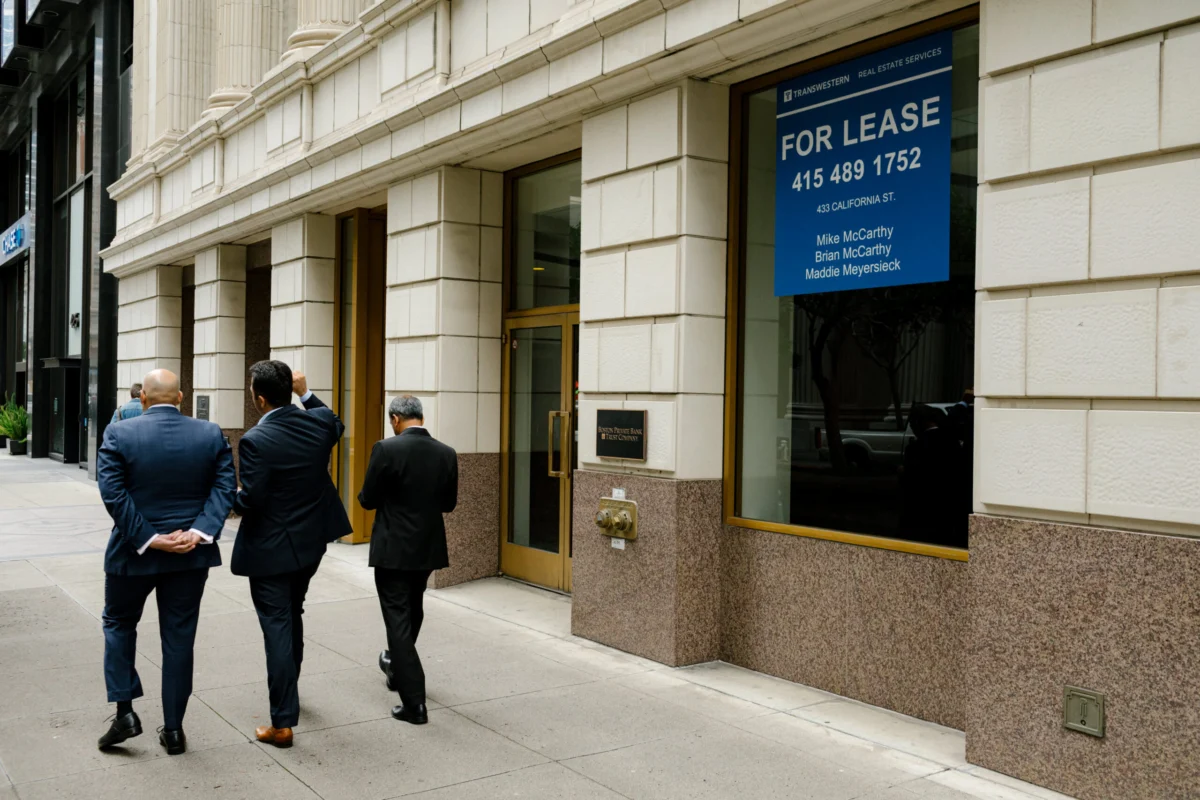
Despite a complex tapestry of global geopolitical concerns and persistent economic uncertainties within the United States, the commercial office space market demonstrated a remarkable and unexpected recovery in the first quarter of 2023. This resurgence, evidenced by a significant uptick in both in-person and virtual office tours, signals a potential turning point for an industry that has grappled with transformative shifts since the onset of the global pandemic.
The Post-Pandemic Office Landscape: A Retrospective
The commercial real estate sector, particularly office spaces, faced an unprecedented crisis with the rapid onset of the COVID-19 pandemic in early 2020. Mandated lockdowns and the swift pivot to remote work models emptied city centers globally, sparking widespread predictions about the "death of the office" and the permanent decentralization of work. Companies rapidly divested of excess space, deferred expansion plans, and explored hybrid work arrangements, leading to a dramatic surge in office vacancy rates across major metropolitan areas. For nearly three years, the narrative was dominated by challenges: declining foot traffic, struggling ancillary businesses in central business districts (CBDs), and a fundamental reevaluation of the purpose and necessity of physical office environments. Many employers grappled with how to entice employees back, with some offering lavish amenities and others issuing strict return-to-office mandates, often meeting resistance from a workforce accustomed to newfound flexibility. This period saw a significant divergence in office quality, with older, less amenitized buildings suffering disproportionately, while a "flight to quality" began to emerge for premium, technologically advanced, and well-located spaces designed for collaboration and employee well-being. The long-term implications for urban economies, public transport systems, and the valuation of commercial real estate portfolios remained a subject of intense debate and concern for investors and policymakers alike.
A Turning Tide: Q1 2023 Data Reveals Surprising Resilience
Against this backdrop of prolonged uncertainty, data from the first quarter of 2023 has unveiled a compelling shift in market dynamics. The VTS Office Demand Index (VODI), a crucial forward-looking indicator that tracks new in-person and virtual office tours, reached its highest level since the pandemic began. This index, which serves as a bellwether for lease signings approximately a year or more into the future, posted an impressive 18% increase from the fourth quarter of 2022 and a robust 13% rise compared to the same quarter in the previous year. These figures suggest a renewed appetite for physical office space, moving beyond the pandemic’s immediate impact and reflecting evolving corporate strategies. The VODI’s methodology, which aggregates anonymized data from over 90% of Class A office buildings in major U.S. markets, provides a granular and timely insight into tenant demand, offering a more immediate read than lagging indicators like signed leases or absorption rates. This upward trend, particularly given the prevailing economic climate characterized by inflationary pressures, rising interest rates, and geopolitical tensions, underscores a fundamental recalibration in corporate real estate strategies.
Nick Romito, CEO of VTS, a leading commercial real estate software company, commented on this development, stating, "Although tested against a turbulent backdrop, demand for office space has seen an exceptional start to the year. What perhaps is most notable about this quarter’s positive performance is that it was led not just by tech’s sustained AI boom – but also by finance and legal companies entering the market as well." Romito’s observations highlight a crucial aspect of this recovery: its broadening base beyond just the traditionally robust technology sector.
Beyond Tech: Diversified Demand Drivers
While the technology sector, particularly in areas fueled by the artificial intelligence (AI) boom, continues to be a significant driver of office demand, the Q1 2023 data reveals a more diversified recovery. The resurgence of interest from finance and legal companies marks a critical expansion of the demand base, indicating a wider corporate embrace of the return to office. For financial institutions, the necessity of in-person collaboration, robust security protocols, and client-facing interactions often makes a strong case for physical office presence. Similarly, the legal sector, with its emphasis on mentorship, complex document handling, and hierarchical structures, frequently benefits from a shared physical environment. This diversification suggests that the perceived benefits of office space are extending beyond purely innovative or project-based tech roles to more traditional, service-oriented industries where structured environments and direct interaction remain paramount. The AI boom, however, cannot be understated. Markets with a strong AI presence, such as San Francisco and parts of Seattle, are seeing increased demand from tech firms expanding their R&D and operational footprints to accommodate growing teams and specialized infrastructure, reinforcing the idea that cutting-edge innovation often thrives in collaborative, physical hubs. This dual-pronged recovery, driven by both established and emerging sectors, lends greater stability and credibility to the overall market rebound.
The Paradox of Employment and Demand
The surge in office demand presents a curious paradox when viewed against the backdrop of office-using employment statistics. According to the Bureau of Labor Statistics (BLS), office-using employment remained approximately 2% below its 2022 levels in the first quarter of 2023. Typically, a decline or stagnation in employment within sectors that traditionally utilize office space would correlate with a decrease in demand for that space. However, the current market appears to defy this conventional wisdom.
One plausible explanation for this disconnect lies in the evolving power dynamic between employers and employees. With a slightly softer labor market and lingering economic uncertainties, employers may be gaining more leverage to encourage or even mandate a return to the office. Companies that previously offered fully remote or highly flexible hybrid models might now be tightening their policies, requiring more days in the office to foster corporate culture, enhance collaboration, and improve productivity. This shift isn’t necessarily driven by a significant expansion of the workforce but rather by a strategic decision to re-consolidate existing teams within a physical environment. Furthermore, the "flight to quality" trend plays a role: even if overall employment isn’t growing robustly, companies that are retaining or modestly expanding their workforce are increasingly seeking premium, amenity-rich spaces. This means that even with stable or slightly declining headcounts, the demand for new or better space can still increase, as businesses shed outdated or inefficient offices in favor of modern, attractive environments designed to entice employees back and support new work methodologies. This strategic relocation and upgrading of space contributes to tour activity, even if overall square footage occupied doesn’t expand proportionally with employment growth.
National Vacancy Trends and the "Flight to Quality"
While demand is showing promising signs of recovery, the national office vacancy rate remains elevated, reflecting the significant structural changes precipitated by the pandemic. According to a report from JLL, a leading commercial real estate services and investment management company, the national office vacancy rate stood at 22.2% in the first quarter of 2023. This figure represents a slight improvement, falling 14 basis points from the previous quarter and a more substantial 30 basis points from its most recent peak in Q2 2022.
However, a critical nuance in this overall vacancy rate is its hyper-concentration. JLL’s analysis reveals that a disproportionate amount of the vacant space – over 60% of the total national vacancy – is concentrated within just 10% of office buildings. These are predominantly larger-scale, aging properties with financially constrained owners, often lacking the capital to invest in necessary upgrades to meet contemporary tenant expectations. This phenomenon underscores the pronounced "flight to quality" trend that has become a hallmark of the post-pandemic office market. Tenants, when considering a return to the office or a new lease, are increasingly prioritizing buildings that offer superior amenities (e.g., fitness centers, communal lounges, high-quality food options), advanced technology infrastructure, improved air quality and sustainability features, and flexible workspace designs. These Class A and A+ properties are not only more attractive to employees but also serve as a tool for companies to reinforce culture and attract talent in a competitive environment. Conversely, older, less-modernized buildings, often referred to as Class B or C, struggle to compete, leading to prolonged vacancies and downward pressure on rents. This bifurcation of the market means that while prime assets are seeing renewed interest and even rising rents in some cases, a significant portion of the older office stock faces an uncertain future, potentially necessitating adaptive reuse or even demolition in the long term.

Regional Disparities: A Patchwork Recovery
As with virtually all aspects of real estate, the office market’s recovery is highly localized, presenting a patchwork of performance across major U.S. cities.
Leading Markets:
- San Francisco: This iconic tech hub is experiencing a notable resurgence, primarily fueled by the accelerating AI boom. The rapid expansion of AI companies and related startups is driving a demand for specialized office and lab spaces, attracting significant investment and talent. Despite lingering concerns about the city’s downtown core, the allure of being at the epicenter of the next technological revolution is proving to be a powerful magnet for office users. While the city still faces challenges from past tech layoffs and remote work trends, the concentrated growth in AI is creating pockets of strong demand, leading to increased tour activity and absorption in key submarkets.
- New York City: The nation’s financial capital demonstrates consistent strength due to its exceptionally diverse economic base. Beyond finance and tech, industries like media, fashion, healthcare, and professional services contribute to a broad and resilient demand for office space. The city’s dense urban environment and the inherent advantages of in-person networking and collaboration for its varied industries make a full pivot to remote work less feasible for many firms. NYC continues to see robust activity in its premium office towers, particularly in Midtown and Hudson Yards, as companies seek to consolidate operations into modern, well-located spaces that can attract and retain top talent.
- Los Angeles: The "City of Angels" saw double-digit increases in office demand on a quarterly basis, largely propelled by significant growth in its creative industries. The entertainment sector, encompassing film, television, music, and digital content creation, thrives on collaborative environments for brainstorming, production, and post-production. As studios and streaming services expand their original content pipelines, the demand for office and studio space in areas like Hollywood, Burbank, and Santa Monica has intensified. Additionally, LA’s growing tech scene, particularly in areas like Silicon Beach, contributes to this positive momentum, showcasing a diversified growth story.
Struggling Markets:
- Boston: In stark contrast, Boston emerged as the worst-performing market in the VTS report. A primary factor for this decline is the significant hit taken by its once-booming life science office sector. Government funding cuts, coupled with a more cautious investment environment for biotech startups, have led to a slowdown in expansion plans and even some contraction. While Boston remains a global leader in life sciences, the recent retrenchment highlights the vulnerability of markets heavily reliant on a single dominant industry, especially when faced with external funding shocks.
- Seattle, Washington D.C., and Chicago: These major metropolitan areas are experiencing contracting demand, primarily due to a lack of strong, consistent employment growth. Seattle, while still a tech hub, has been impacted by major tech company layoffs and the widespread adoption of hybrid work models by its largest employers. Washington D.C., heavily reliant on government and lobbying sectors, faces a more conservative return-to-office approach and slower growth in these established industries. Chicago, with its traditional strengths in finance, manufacturing, and logistics, has seen slower overall employment growth, which translates directly into reduced demand for office space. These markets lack the specific "growth lever" – like AI in San Francisco or creative industries in LA – that is currently propelling other cities forward, making their recovery more protracted and challenging.
Expert Perspectives and Future Outlook
Ryan Masiello, Chief Strategy Officer of VTS, further elaborated on these regional nuances, stating, "The AI boom continues to be a dominant headline for office, and markets that lack a major tech presence, or are without a primary growth lever in another industry, are seeing declines in demand. LA’s positive performance this time around was a new bright spot – and it remains to be seen if Los Angeles can sustain growth in the near term." His comments underscore the increasingly bifurcated nature of the market, where specialization and innovation drive success, while generalist markets struggle.
From the perspective of landlords, the current environment necessitates a strategic pivot. Owners of Class A properties are focused on enhancing amenity packages, implementing flexible lease terms, and investing in building-wide technology to attract and retain high-value tenants. For those with older, less competitive assets, the focus is shifting towards significant capital expenditure for modernization, or exploring alternative uses such as residential conversions, particularly in struggling downtown areas. Commercial real estate brokers are adapting by becoming consultants, guiding tenants through complex hybrid work strategies and helping them right-size their portfolios while maximizing employee experience.
Major corporate tenants, meanwhile, are balancing the desire for cost efficiency with the need to foster culture and collaboration. Many are embracing a "hub-and-spoke" model, maintaining a central headquarters for core functions while also offering smaller, satellite offices closer to employee residences. The overarching goal is to create spaces that are compelling destinations, rather than mere requirements, thereby justifying the commute for their workforce. Economists and urban planners are closely monitoring these trends, understanding that the health of the office market directly impacts urban economies, public transit ridership, and the vitality of downtown retail and service sectors. The long-term implications for tax revenues and municipal budgets in cities with high office vacancy rates are a significant concern.
Challenges and Opportunities Ahead
Despite the encouraging signs, the office market faces formidable challenges and unique opportunities. The long-term impact of hybrid work models remains a fundamental unknown. While many companies are recalling employees to the office, the permanence of a full five-day return for all is questionable. This means a continued re-evaluation of office footprints, potentially leading to smaller but higher-quality spaces that prioritize collaboration over individual workstations.
The fate of Class B and C office spaces, particularly those in less desirable locations or with aging infrastructure, represents a significant hurdle. These properties are increasingly difficult to lease and command lower rents, leading to financial distress for their owners. This situation presents an opportunity for adaptive reuse, converting obsolete office buildings into much-needed residential units, particularly in supply-constrained urban centers, or even into specialized lab or light industrial spaces where demand exists. However, such conversions are often complex, costly, and require significant regulatory navigation.
For commercial real estate investors, the market is becoming increasingly bifurcated. Investment strategies are shifting towards prime assets in resilient, growing markets, where the "flight to quality" offers more secure returns. There’s also a growing emphasis on properties that can demonstrate strong environmental, social, and governance (ESG) credentials, aligning with corporate sustainability goals. Lending for commercial real estate is also tightening, particularly for older assets, as banks become more cautious about exposure to struggling properties. The interplay of interest rates, inflation, and broader economic stability will continue to shape investor confidence and capital flows into the sector.
The office of the future will likely be characterized by flexibility, technology integration, and a focus on employee well-being. Smart building technologies, advanced air filtration systems, and adaptable layouts will become standard rather than exceptional. The human-centric design, promoting wellness and a sense of community, will be paramount in attracting and retaining talent, making the office a strategic asset for businesses.
Conclusion
The first quarter of 2023 delivered a surprising and nuanced recovery for the U.S. office market, showcasing a resilience that many had doubted. Driven by a diversified set of industries, including an accelerating AI sector and a renewed commitment from finance and legal firms, demand for office space is undeniably on the rise. However, this recovery is not uniform, with stark regional disparities and a pronounced "flight to quality" reshaping the landscape. While national vacancy rates remain elevated, the concentration of this vacancy in older, less competitive buildings points to a market in transition rather than decline. The ongoing evolution of work models, coupled with economic uncertainties, ensures that the office market will continue to be a dynamic and complex sector, demanding strategic foresight and adaptive approaches from all stakeholders as it navigates its path forward.
